Whether a Belgian Malinois Can Parachute
The idea of a Belgian Malinois parachuting out of an airplane might sound like something straight out of a Hollywood action movie, but for handlers in elite military and law enforcement units, it’s a very real, highly specialized, and incredibly demanding part of their K9 partner's job description. Many people wonder if it's even possible or safe, and the truth is, while extraordinary, it speaks volumes about the breed's incredible capabilities and the intense training involved. This guide will take a deep dive into the world of K9 parachuting, exploring why Malinois are chosen, how they're trained, and the immense trust required for such high-stakes operations.
Why Belgian Malinois Are Chosen for Aerial Operations
When an operation requires a K9 unit to enter a hot zone from the sky, whether it's for search and rescue, apprehension, or special reconnaissance, the dog isn't just a passenger; it's a vital member of the team. The Belgian Malinois, with its unparalleled drive, intelligence, and physical prowess, is often the breed of choice for these demanding roles. They bring a unique combination of traits to the table that few other breeds can match, making them indispensable in situations where ground access is impossible or too risky.
Unmatched Drive and Mental Fortitude
One of the primary reasons Malinois excel in roles that involve aerial insertion is their phenomenal drive. These dogs are practically born with an "on" switch that's always engaged, a relentless desire to work and please their handler. This isn't just about physical energy; it's a deep-seated mental toughness that allows them to remain focused and perform under extreme pressure. Imagine the sensory overload of a plane, the noise, the wind, the sudden drop – a lesser dog would crumble, but a well-trained Malinois channels that energy. They are so fixated on their job and their handler's commands that the environment becomes secondary. This intense focus is cultivated from puppyhood, often starting with activities like Channeling a Belgian Malinois's Prey Drive Into a Tug, building that foundational drive that will eventually translate to high-stakes scenarios.
Furthermore, their mental fortitude means they can process and adapt to rapidly changing situations. They don't panic; they react with trained precision. This isn't something you can teach overnight; it's the result of years of careful breeding, early neurological stimulation, and consistent, challenging training that builds resilience. These dogs are not just physically tough; they are psychologically robust, a crucial trait when you're literally jumping out of a plane.
Physical Agility and Sound Structure
Beyond their mental game, Belgian Malinois possess the physical attributes necessary for high-impact activities like parachuting. They are athletic, compact, and incredibly agile, making them ideal for navigating complex terrains immediately after landing. Their lean, muscular build means they are strong enough to handle the forces involved in a jump, yet light enough to be manageable for their handler in a tandem rig. A typical male Malinois might weigh anywhere from 60 to 80 pounds, while females are usually 40 to 60 pounds, a size that's formidable but still allows for safe handling during an airborne operation.
Their skeletal structure is remarkably sound, capable of withstanding the rigors of impact. However, even with their robust genetics, proper care and conditioning are paramount. Just like any working athlete, they are prone to injuries if not properly managed, and handlers are always mindful of issues such as Torn Cruciates in a Jumping Belgian Malinois or other joint strains that could sideline their valuable partner. Specialized diets, often involving performance formulas high in protein, are also essential to support their demanding physical output. You won't find these dogs just eating any old kibble; their nutrition is meticulously planned, much like any elite human athlete. Services like Chewy often provide a wide range of high-quality performance foods that these K9 units might utilize when not on specific mission protocols.
Unbreakable Bond with the Handler
Perhaps the most critical factor enabling a Malinois to parachute successfully is the unparalleled bond they share with their handler. This isn't merely pet ownership; it's a partnership built on absolute trust and mutual reliance. The dog literally places its life in the handler's hands, trusting them to navigate the jump safely and to provide direction upon landing. This bond is forged through countless hours of training, shared experiences, and an understanding that goes beyond spoken commands.
For a Malinois, their handler is their entire world, their compass, and their comfort. This deep attachment allows the dog to overcome natural fears and anxieties associated with such an unnatural act. They are not jumping because they inherently enjoy it, but because their handler is there, and their job is to stay with and protect that handler. This level of dedication is a hallmark of the breed and a testament to the incredible relationships formed between these working dogs and their human partners. The training for this bond begins the moment the dog joins the unit, laying the groundwork for complex tasks such as Whether a Malinois Is Ever Safe Off Leash in incredibly distracting environments, a precursor to the focus needed during a jump.
How Belgian Malinois Are Trained for Parachuting
Training a Belgian Malinois for parachuting is an intensive, multi-phase process that goes far beyond basic obedience. It's a highly specialized skill reserved for elite K9 units, often in military or specific law enforcement roles. This isn't a weekend hobby; it's a commitment to months, if not years, of progressive desensitization, conditioning, and trust-building.
Progressive Desensitization and Acclimation
The journey to parachuting begins long before the dog ever sees an airplane door open mid-flight. It starts with a comprehensive program of progressive desensitization. The goal is to accustom the dog to every element of the experience, breaking it down into manageable steps. This involves:
- Noise Acclimation: Gradually exposing the dog to loud engine noises, rotor blades, and other aviation sounds. This might start with recordings and move to actual exposure near parked aircraft, then on the tarmac with engines running, building up over time.
- Vibration and Movement: Getting the dog comfortable with the sensations of a moving vehicle, then a rolling aircraft, and eventually flight. This could involve car rides, boat trips, and short plane rides before actual jumps are even considered.
- Harness and Gear: Introducing the specialized K9 harness and protective gear early on. The dog needs to be completely comfortable in its harness, which is designed for safety and to secure the dog to the handler. This harness isn't just a simple walking harness; it's a piece of specialized equipment that might be similar in complexity to some of the advanced equipment handlers would find on Chewy for other extreme sports. They learn to associate the gear with work and positive reinforcement, rather than fear.
- Height and Wind: Gradually exposing them to heights, perhaps starting with tall platforms or ladders, and then to strong wind forces. This helps them get used to the sensation of being off the ground and the rush of air.
Each step is carefully managed to ensure the dog remains calm and confident. Any sign of stress means going back to an earlier, more comfortable stage. The process relies heavily on positive reinforcement, creating a strong association between these unusual experiences and rewards, fostering a positive working attitude.
Jump Training Protocols: Tandem vs. Static Line
When it comes to the actual jump, there are primarily two methods employed for K9s: tandem jumps and static line jumps. Both require immense trust and precision.
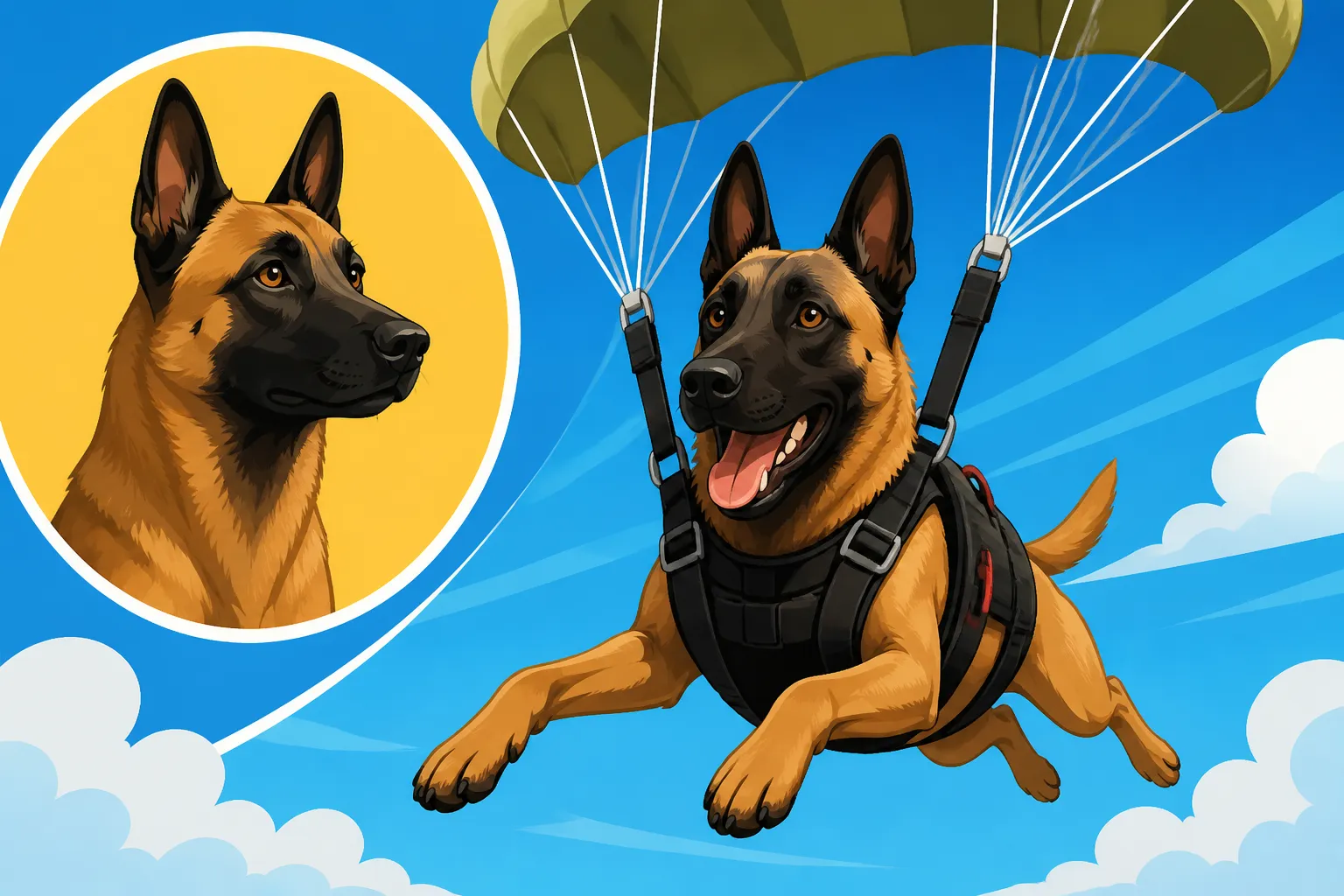
- Tandem Jumps: This is the most common method for K9s. The dog is securely attached to its handler via a specialized harness, with the handler bearing the primary responsibility for the jump. The dog essentially rides along, strapped to the handler's chest or side. This method allows the handler to provide continuous comfort and control, offering immediate reassurance to the dog. The Malinois learns to be completely passive and rely on its handler's cues. The initial jumps are often done with the dog already nestled against the handler, exiting the aircraft together. This reinforces the idea that "my handler is with me, so I am safe."
- Static Line Jumps: In some rare cases, particularly with highly experienced K9s and specific mission profiles, a static line jump might be utilized. Here, the dog is outfitted with its own parachute system, and a static line attached to the aircraft automatically deploys the parachute as the dog exits. This method requires an even higher degree of independence and unwavering confidence from the dog, as it is briefly alone in the air before the canopy opens. The training for this would be even more intense, typically involving weighted dummies and gradual transitions to live jumps once the dog has proven absolute stability and calm.
| Parachuting Method | Description | K9 Involvement | Handler Control | Commonality for K9s |
|---|---|---|---|---|
| Tandem Jump | Dog is securely harnessed to the handler, jumping as a single unit. | Dog is passive, attached to handler. | High, continuous | Very common |
| Static Line | Dog has its own parachute, deployed automatically by a line connected to aircraft. | Dog exits aircraft semi-independently, parachute deploys automatically. | Lower, once dog exits | Rare, highly specialized |
Regardless of the method, the first few jumps are usually from lower altitudes and slower aircraft, gradually increasing in complexity as the K9 gains experience and confidence. The training simulates real-world conditions as much as possible, preparing the dog for any eventuality.
Landing and Mission Readiness
The jump isn't the end; it's just the beginning of the mission. Malinois are trained extensively for their landing and immediate post-jump actions. Upon touchdown, the handler quickly unclips the dog, which is expected to immediately transition into its working role, whether that's tracking, searching, or providing security. There’s no time for decompression or fear; the dog must be ready to work the moment its paws hit the ground.
This readiness stems from rigorous ground training that mirrors the post-jump environment. Dogs practice exiting mock aircraft, navigating difficult terrain, and performing their specialized tasks under simulated stress. The focus is always on the mission, and the Malinois’s incredible drive to complete its task, often driven by its powerful Whether a Belgian Malinois Was Bred to Bite instinct for protection work, ensures it's always ready to deploy its skills. Their handlers often spend countless hours fine-tuning these skills, understanding that How Many Hours a Belgian Malinois Should Work Daily is a significant commitment.
The Mental and Physical Demands on a Parachuting Malinois
While the image of a Malinois parachuting is undeniably impressive, it's crucial to understand the immense mental and physical toll such operations take on these incredible animals. This isn't a casual activity; it's high-stakes work that demands peak condition and unwavering psychological resilience.
Stress and Arousal Management
Even for the most well-trained Malinois, parachuting is an inherently stressful event. The sudden change in altitude, the rush of wind, the noise, and the disorienting descent can be overwhelming. A key part of the training is not eliminating stress entirely – which is impossible – but teaching the dog to manage its arousal levels and remain functional. Handlers become adept at reading their dog's subtle cues, knowing when to offer reassurance, when to praise, and when to simply let the dog focus on the task at hand. This is an extension of the broader training philosophy around Building an Off Switch Into a Belgian Malinois, teaching them to toggle between high drive and calm focus, even in extreme situations.
The goal is for the dog to see the jump as a means to an end – getting to its job. The rewards upon landing, whether it's a beloved tug toy or the commencement of an exciting search, reinforce this positive association. It’s a delicate balance, ensuring the dog maintains its high drive without tipping over into anxiety or panic. The Anesthesia Protocols for a Lean Belgian Malinois are carefully considered for working dogs, highlighting the importance of understanding their unique physiological responses under stress.
Equipment and Safety Considerations
The safety of the K9 is paramount in any aerial operation. This means specialized equipment, meticulous checks, and highly skilled personnel. The K9 harness is custom-fitted and designed to distribute weight evenly, prevent chafing, and secure the dog safely to the handler or its own parachute system. This isn't your average harness you pick up at a pet store; these are rigorously tested, military-grade pieces of equipment.
Beyond the harness, ear protection might be used to shield the dog from the deafening noise of the aircraft and wind. Eye protection, similar to goggles, can also be employed to protect against wind, debris, and UV exposure during the descent. Every piece of gear undergoes thorough inspection before each jump, mirroring the stringent safety protocols for human jumpers. Handlers also receive extensive training on how to properly check and deploy the K9's equipment, understanding that their partner's life depends on their attention to detail.
Despite all precautions, risks remain. Equipment can fail, weather conditions can change unexpectedly, and landing zones can be treacherous. This is why the dogs selected for these roles are not just well-trained but possess an inherent calmness and adaptability that allows them to cope with the unexpected.
Post-Jump Care and Recovery
After a successful jump and mission, the care of a parachuting Malinois doesn't stop. These dogs, like any elite athlete, require careful post-operational care to ensure their long-term health and readiness for future missions. This includes:
- Veterinary Checks: A thorough vet check is crucial after any high-impact operation. This includes examining joints, muscles, and overall physical condition for any signs of strain or injury. These specialized K9s often have a dedicated veterinary support team who understand the unique demands of their work. Knowing What to Tell a Vet Before a Malinois Is Sedated is also critical, as their lean body composition and high metabolism can affect medication dosages.
- Hydration and Nutrition: Replenishing fluids and providing high-quality nutrition are vital for recovery. High-performance diets, perhaps sourced from a reliable supplier like Chewy, ensure they get the calories and nutrients needed to repair tissues and restore energy levels.
- Mental Decompression: While they are working dogs, even Malinois need time to decompress. This might involve quiet time with their handler, a favorite toy, or a relaxing walk in a calm environment. The bond they share with their handler is a huge part of their mental well-being, helping them to process and recover from intense experiences.
- Rest: Adequate rest is non-negotiable. Their bodies need time to heal and rebuild, ensuring they are ready for the next training session or mission. As a Malinois ages, these recovery times might need to be extended, and their careers adjusted, such as described in The Year a Malinois Starts Working Shorter Sessions. These are truly exceptional dogs, and their well-being is always a top priority for the teams they serve.
Is Parachuting a Realistic Option for a Pet Belgian Malinois?
After exploring the incredible capabilities and rigorous training involved in military and law enforcement K9 parachuting, a natural question arises: could a pet Belgian Malinois ever do this? The unequivocal answer is no, it is not a realistic, safe, or appropriate activity for a pet dog.
The Clear Distinction: Working Dog vs. Pet
It's absolutely vital to understand that the Malinois involved in these aerial operations are not "pets" in the traditional sense. They are highly selected, intensely trained, and purpose-bred working animals. Their entire lives are structured around their job, from their genetics to their daily routines. They are part of elite units with unlimited resources for training, equipment, and veterinary care.
A pet Malinois, while still incredibly athletic and intelligent, simply does not possess the specific genetic predisposition, the specialized training, or the environmental conditioning required for parachuting. Attempting to replicate this without professional guidance, military-grade equipment, and a deep understanding of canine physiology under extreme stress would be incredibly dangerous, not just for the dog but potentially for any human involved. This is a far cry from typical dog sports like agility or obedience, and even those require significant dedication, as discussed in What Bite Sport Actually Asks of a Belgian Malinois.
The Dangers and Ethical Concerns
The dangers associated with non-specialized personnel attempting to parachute with a pet dog are immense:
- Injury Risk: Without proper harnesses, training, and veterinary oversight, a dog could suffer severe injuries, including broken bones, internal trauma, or spinal damage, during the jump or landing.
- Psychological Trauma: The experience could be profoundly terrifying and traumatizing for a dog not specifically conditioned for it, leading to lifelong fear, anxiety, or aggression.
- Lack of Control: A panicked dog in mid-air or during descent could seriously endanger its handler and the mission, if there even was one.
- Legal and Ethical Implications: No legitimate skydiving or aerial sports organization would allow a pet dog to participate in parachuting, nor would any ethical professional endorse such an activity.
The context is everything. These military and police dogs are performing a critical, life-saving function. Their jumps are not for sport or novelty. The Twenty Five Thousand Dollar Trained Belgian Malinois is not just expensive for their training but for the lifetime of support and specialized care they receive to perform such unique duties.
Fulfilling Your Malinois's Potential on the Ground
If you own a Belgian Malinois, or are considering one, and are drawn to their incredible athleticism and drive, there are countless safe and fulfilling ways to channel their energy and intelligence without resorting to extreme, dangerous activities. These dogs thrive on purpose and work, and you can provide that through:
- Dog Sports: Agility, obedience, tracking, dock diving, and scent work are excellent ways to engage your Malinois physically and mentally. These sports are designed with canine safety in mind and are widely accessible.
- Advanced Training: Continuing education in advanced obedience, protection work (with a qualified club), or even therapy work can provide a Malinois with the challenge and structure it craves.
- Hiking and Exploration: Long, structured hikes in varied terrain, where your dog can use its nose and body, are fantastic. Just ensure you are aware of your dog's physical limits and environmental hazards.
- "Jobs" Around the House: Even simple tasks like carrying a pack on a walk, helping retrieve items, or engaging in complex puzzle toys can provide a sense of purpose.
Your Malinois wants to work with you, building that incredible bond. You don't need to jump out of a plane to achieve that. Focus on providing them with a structured, enriching life that honors their incredible capabilities safely and responsibly. Proper care, sound nutrition (easily sourced from places like Chewy for regular supplies), and consistent training are how you truly unlock your Malinois's potential.
Disclaimer
This article is for general informational purposes only and does not constitute professional advice. Laws, prices and regulations vary by location and change over time. Consult a qualified professional for guidance on your specific situation.