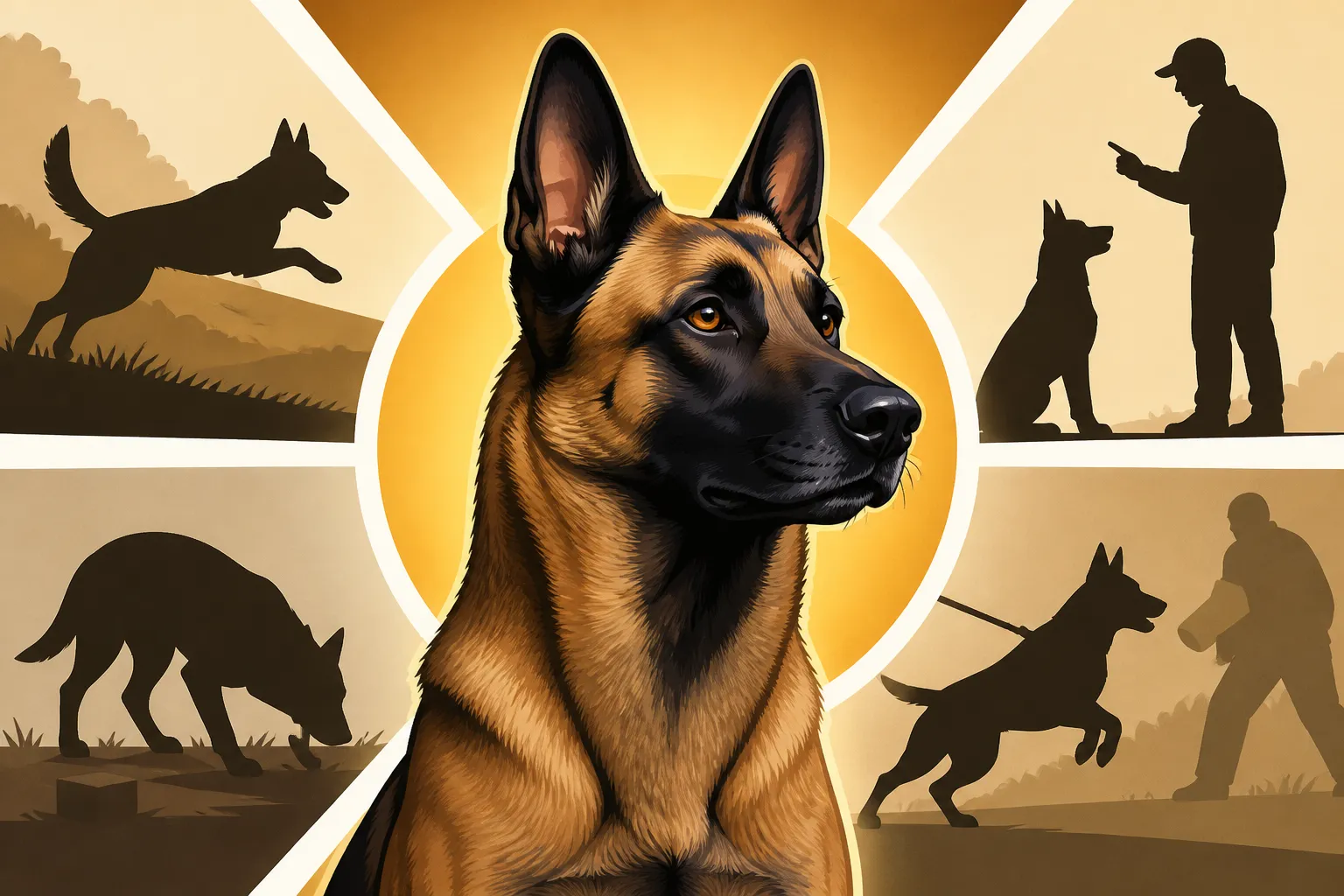
What Belgian Breeders Originally Selected the Malinois For
Belgian breeders did not originally shape the Malinois to be a police dog or a specialist in bite work. They valued a practical farm dog: alert, trainable, hardy, and capable of helping with sheep and guarding property. This guide explains what those early breeders were selecting for, how the Malinois type emerged, and why its working instincts still matter today.
The working farm needs behind early Malinois breeding
Belgian breeders wanted a useful all-around dog
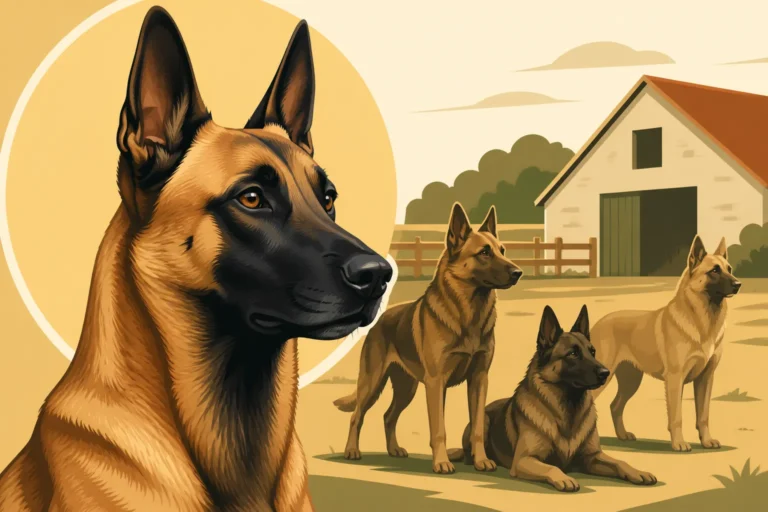
The Malinois developed from Belgian farm dogs rather than from a single, tightly defined modern working program. In and around Mechelen, also known by its French name, Malines, dogs were expected to be useful in everyday rural life. Their jobs could include helping move sheep, watching a farm or home, and responding quickly to the person handling them.
That practical setting shaped what breeders valued. A dog that could learn, stay attentive, and cope with ordinary changes in the day was more useful than one selected for a single dramatic skill. A farmer needed a partner that could work close by, notice what was happening around the property, and settle when there was no task to do.
These dogs were not all identical, and they were not originally bred to a uniform appearance in the way a modern show standard describes a breed. Local dogs varied in coat and type. The story of how those regional farm dogs became recognized as Belgian varieties is part of The Belgian Farm Dogs the Malinois Came From.
Herding and watchfulness were central parts of the job
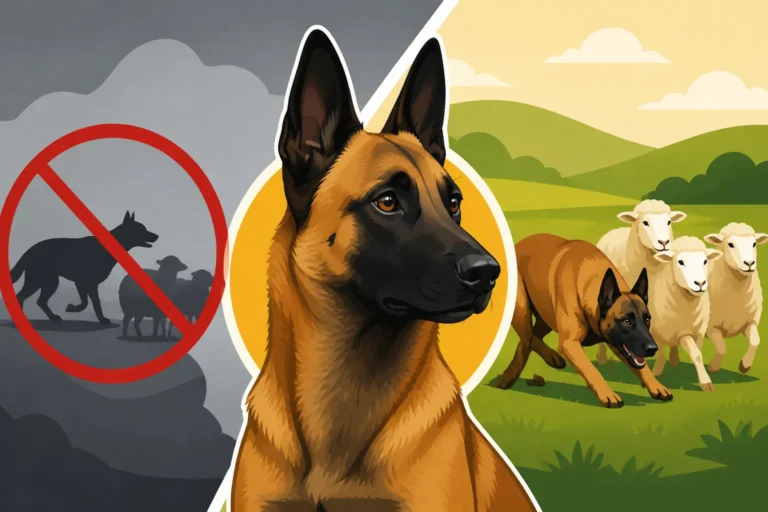
Sheep work called for attention and responsiveness. A herding dog had to notice the flock, react to the handler, and adjust its movement without simply charging around at random. Those qualities are different from raw speed or strength alone. A dog needed enough energy to work, but also enough control to make that energy useful.
Farm life also rewarded alertness. A dog might need to notice unfamiliar people or activity near the property and signal that something was happening. That does not mean early breeders were creating an attack dog. Alerting, guarding, and working under a person’s direction are not the same thing as being bred to bite on command.
The breed’s herding roots are easy to overlook because the Malinois is now strongly associated with law enforcement and military work. But the original relationship between dog and handler was rooted in practical work, including managing livestock. For more on that foundation, see The Herding Job the Belgian Malinois Was Built For.
What early breeders valued in a Malinois
Trainability mattered as much as energy
A high-energy dog is not automatically a good working dog. Early breeders and owners needed a dog that could pay attention, learn familiar routines, and respond to the person directing the work. Trainability made the dog more useful around livestock and property because it allowed the handler to guide its behavior rather than merely react to it.
For example, a dog moving sheep through a gate needed to respond to its handler while staying aware of the animals. A dog that was energetic but ignored direction could make the job harder. In the same way, a farm dog that barked at every sound without being manageable could become a nuisance rather than a help.
That combination of alertness and cooperation remains important in the breed today. It is also one reason a Malinois can be challenging in an ordinary household: traits that make a dog quick to notice, quick to learn, and ready to act can be demanding when there is no clear work or routine. The broader history of organizing dogs with shared traits is explored in How Malinois Breeders Organized in the 1890s.
Hardiness and practicality were part of the picture
A working farm dog had to cope with daily life outdoors and with changing conditions. Breeders and owners had practical reasons to favor dogs that could keep going, use their bodies effectively, and handle ordinary work without needing constant special care. This was not a modern sports-conditioning plan. It was selection shaped by the reality that a farm dog had to be useful across routine tasks.
Appearance mattered, but it was not the only point. A dog’s coat, build, and general soundness were part of how it fit its environment and work. Early Belgian breeders were trying to describe and preserve recognizable local types, not simply produce a striking-looking animal with no practical role.
This helps explain why the Malinois should not be reduced to its modern reputation. Its athleticism and drive were developed in a working context, alongside responsiveness and usefulness. Breed classification and coat distinctions developed over time, as discussed in Why Belgium Sorted the Malinois Out by Coat.
The Malinois name came from a regional type
The name Malinois is connected to Malines, the French name for Mechelen. In the late nineteenth century, Belgian dog enthusiasts began documenting and organizing the country’s native shepherd dogs. They were trying to make sense of regional variation and define types that shared recognizable features.
The work involved more than assigning names. Breeders and organizers compared dogs, discussed traits, and developed standards that could guide future breeding. The Malinois became associated with a short-coated Belgian shepherd type, while other Belgian varieties were distinguished in part by coat characteristics. This is why the breed’s history is closely tied to the broader development of Belgian shepherd varieties.
A name can make a breed sound as if it began in one place with one clearly planned purpose. In reality, the Malinois emerged from a wider population of local working dogs, followed by deliberate efforts to define and preserve a type. The role of early breed organizers is covered in The Professor Who Named the Malinois Type.
From farm dog to defined Belgian breed
Standardization shaped the type breeders aimed to preserve
As Belgian breeders began setting down descriptions of their native shepherd dogs, selection became more systematic. Instead of relying only on local preferences, breeders had a shared idea of the traits and appearance they hoped to reproduce. The process helped turn regional working dogs into recognized varieties with written descriptions.
Standardization did not mean every dog suddenly became identical, nor did it erase the breed’s working background. Rather, it gave breeders a common reference point. They could consider coat, structure, temperament, and usefulness together, while making choices about which dogs should contribute to later generations.
The Malinois was one part of this broader Belgian shepherd story. Its short coat became a defining feature of the variety, but its identity was not just a coat color or outline. The process of defining the breed is explored in The Years the Belgian Malinois Was Standardized.
Original purpose and modern roles are not the same thing
The Malinois’s modern presence in police, military, and detection work can make it seem as though those roles were the reason it was first bred. They were not. Those later occupations drew on qualities already valued in working dogs, including alertness, trainability, stamina, and close partnership with a handler.
There is an important distinction between a trait being useful in later work and that later work being the breed’s original purpose. A Malinois’s responsiveness and willingness to engage with tasks can support many kinds of training. What a dog does with those traits depends on its breeding, training, environment, and individual temperament.
The shift from farm and herding work toward newer occupations happened over time, as the needs of society and working dog programs changed. The transition is discussed in How the Malinois Went From Herding to Police Work. For the breeding priorities of a later working-dog program, see What the KNPV Program Selects For in a Malinois.
| Early selection priority | Why it mattered on a farm | How the trait may appear today |
|---|---|---|
| Responsiveness to a handler | Helped a person guide the dog around livestock and property | Quick learning and close attention, which need consistent direction |
| Alertness | Helped the dog notice activity around the farm | Strong awareness of movement and sounds |
| Stamina | Supported regular practical work | A need for suitable activity and recovery |
| Herding ability | Helped manage and move sheep | Herding tendencies may still show in how a dog responds to movement |
| Practical hardiness | Made the dog more useful in daily working conditions | Athletic ability, though health and conditioning still matter |
| A recognizable coat type | Helped breeders distinguish Belgian shepherd varieties | A visible feature of the Malinois variety, not a measure of working ability by itself |
Why the original selection still matters to owners
A working heritage does not tell you exactly what one dog will be like
Breed history describes patterns, not guarantees. Two Malinois from different lines can differ in energy, sensitivity, sociability, and interest in particular activities. Even littermates can develop distinct preferences and temperaments. A dog’s ancestry can offer useful context, but it cannot replace learning about the individual animal.
It is also easy to confuse “bred to work” with “born knowing how to behave.” A farm dog still needed handling and experience. A modern Malinois still needs thoughtful teaching, structured routines, and appropriate outlets. Without that, the same alertness and energy that made the dog useful can become difficult to live with.
For owners, the practical question is not simply whether the breed has a working past. It is whether the household can provide the guidance, time, and safe activities that suit the particular dog. The history helps explain the tendencies; it does not excuse unsafe or uncontrolled behavior.
Herding behavior can persist without a flock
A Malinois in a suburban neighborhood may never see sheep, but it can still react strongly to movement. Some dogs may chase, circle, stare at, or attempt to control moving people, bicycles, or other animals. These behaviors can resemble herding, though the exact motivation varies from dog to dog.
That does not mean every Malinois will herd children or chase bikes. It does mean that owners should notice what captures their dog’s attention and teach calm alternatives early. A puppy that repeatedly practices chasing movement can become harder to manage as it grows stronger and faster.
Activities that build focus and cooperation can help give a dog’s attention somewhere constructive to go. For a closer look at inherited herding tendencies in daily life, read Whether a Belgian Malinois Still Herds. Early socialization and careful supervision are especially important in busy places where a dog may encounter unpredictable movement.
Choosing a Malinois means looking beyond the origin story
Knowing what Belgian breeders originally selected the Malinois for can help prospective owners make a more grounded decision. It explains why the breed is often alert, active, and responsive, but it does not mean every household needs to recreate a nineteenth-century farm. Nor does it mean that intensive protection or bite work is necessary for a dog to have a fulfilling life.
A realistic plan starts with the individual dog and the owner’s experience. Consider whether you can provide daily training, suitable physical activity, rest, secure management, and consistent boundaries. If you are looking at a puppy, ask a responsible breeder about the parents’ temperaments and the kind of homes their dogs tend to thrive in. A pedigree or working label alone cannot tell you whether a particular dog will fit your life.
The original breeders were seeking useful, capable dogs suited to the work around them. That context is a helpful lens for understanding the Malinois today: an intelligent working breed with a history of partnership, not a ready-made specialist whose needs can be met by exercise alone.
Disclaimer
This article is for general informational purposes only and does not constitute professional advice. Laws, prices and regulations vary by location and change over time. Consult a qualified professional for guidance on your specific situation.