Whether a Tervuren and a Malinois Can Be Littermates
It’s a truly fascinating point of confusion for so many people deeply interested in Belgian Shepherds: can a Tervuren and a Malinois actually come from the same litter? You've seen the pictures, maybe even met dogs that look so similar yet are called different names. It's enough to make your head spin, especially when trying to understand the nuances of this incredible breed. This guide will cut through the fog and explain exactly how different kennel clubs view these dogs, and whether those strikingly different coats can indeed emerge from one set of parents.
Understanding the Belgian Shepherd Varieties
When we talk about Belgian Malinois and Belgian Tervuren, we're really talking about members of the same ancient canine family, dogs that share deep roots and a common heritage. It's easy to get caught up in the visual distinctions, but understanding their shared lineage is key to unraveling the littermate mystery.
A Family of Four
Imagine a time in Belgium, over a century ago, when farmers and shepherds needed versatile working dogs. These dogs were selected for their intelligence, athleticism, and dedication to their tasks, not necessarily for their fancy coats. What emerged was a group of dogs that were essentially the same breed, but with variations in their fur. Over time, these variations became distinct "varieties" of the Belgian Shepherd Dog, sometimes even splitting into separate breeds depending on which kennel club you're talking to. There are four main varieties: the Groenendael (long black coat), the Tervuren (long fawn/mahogany coat with black overlay), the Malinois (short fawn/mahogany coat with black mask), and the Laekenois (rough/wire coat). Each was named after a region in Belgium where they were particularly prevalent or refined.
Originally, these dogs were all considered one breed in their native Belgium, differing only in their physical appearance, primarily coat type and color. The functional aspects, their drive, their intelligence, and their inherent working ability, were what united them. Breeders selected for temperament and working prowess, with coat coming as a secondary, though noticeable, characteristic. This historical context is vital because it explains why their genetics are so intertwined, especially concerning coat length. You can learn more about The Four Belgian Varieties the Malinois Belongs To in another one of our articles.
The notion that these were all simply different presentations of the same fundamental dog persisted for quite some time. It wasn't until around the mid-20th century, specifically with The 1959 Split That Made the Malinois Its Own Breed, that various kennel clubs around the world began to formalize these distinctions, leading to different approaches regarding their breeding and registration. This split had profound implications for how litters are recorded and how puppies with differing coat types from the same parents are classified.
The Malinois vs. the Tervuren
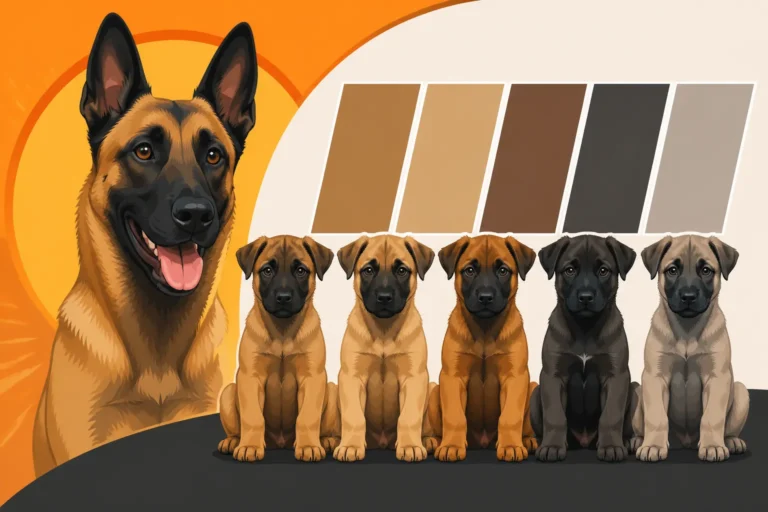
Let's zoom in on the two varieties at the heart of our discussion: the Malinois and the Tervuren. At first glance, the most striking difference is, of course, their coat. The Belgian Malinois boasts a short, dense coat, typically a rich fawn or mahogany color, always accompanied by that distinctive black mask and often black ear tips. Their sleek, athletic build and intense, focused expression are hallmarks of the breed. This short coat is practical for many working environments, making them less prone to burrs and easier to clean after a tough day on the job, whether it's herding, protection, or detection work.
The Belgian Tervuren, on the other hand, is known for its elegant, long, and abundant coat. While sharing the same base colors of fawn or mahogany and the characteristic black mask, the Tervuren's long guard hairs and dense undercoat give it a more dramatic appearance, often with a significant black overlay that can make them appear darker. They often have a "mane" around their neck and feathering on their legs and tail. This lush coat certainly requires more grooming attention, but it also provides additional insulation in colder climates, reflecting their original purpose in varied European weather.
Beyond the coat, however, the similarities between these two are far more profound than their differences. Both varieties share the same intense drive, boundless energy, keen intelligence, and unwavering loyalty that define the Belgian Shepherd group. The Malinois Against the Tervuren in terms of temperament and working ability is often a distinction without a difference. Both excel in obedience, agility, protection sports, and various working roles. The choice between a Malinois and a Tervuren often comes down to personal preference for coat type and the willingness to manage its specific grooming needs, rather than any significant divergence in core personality or working aptitude.
The Rules of Registration and Breeding Standards
The question of whether a Tervuren and a Malinois can be littermates isn't just about genetics; it's heavily influenced by the organizational rules set forth by different international and national kennel clubs. These rules dictate how puppies are registered and what is considered a "standard" for each breed or variety.
FCI vs. AKC: Different Philosophies
The two major players in the world of dog registration, the Fédération Cynologique Internationale (FCI) and the American Kennel Club (AKC), have historically taken different philosophical approaches to the Belgian Shepherd varieties. This divergence is precisely why the answer to our question isn't a simple yes or no. The FCI, which represents a vast majority of countries outside the United States and some other nations, views the four Belgian Shepherds as varieties of a single breed. This means that, under certain circumstances, inter-variety breeding has been permitted, especially between those varieties with similar coat genetics.
Under the FCI system, if you breed two Belgian Malinois, and both parents happen to carry the recessive gene for a long coat, you could indeed end up with both short-coated (Malinois-type) and long-coated (Tervuren-type) puppies in the same litter. Each puppy would then be registered according to its phenotype – that is, its visible characteristics. So, the short-coated puppies would be registered as Malinois, and the long-coated ones as Tervuren, despite sharing the same parents and birth date. This is the scenario where Tervuren and Malinois could absolutely be littermates, recognized by their respective coat types within the overarching Belgian Shepherd breed. Reading a European Belgian Malinois Pedigree can sometimes reveal these mixed coat lines.
The AKC, on the other hand, made a decisive split much earlier. They recognized the Belgian Malinois, Belgian Tervuren, and Belgian Sheepdog (Groenendael) as completely separate breeds. The Laekenois was added as its own breed much later. What this means in practice is that for AKC registration, you cannot breed a Malinois and register its offspring as Tervuren, even if a long-coated puppy appears in the litter. A litter born to two AKC-registered Belgian Malinois parents must all be registered as Belgian Malinois. If a long-coated puppy were to be born, it would technically be a "long-coated Malinois," which is considered a disqualifying fault in the Malinois breed standard. It would not be eligible for conformation shows as a Malinois and certainly couldn't be registered as a Tervuren. The concept of Whether a Long Coated Malinois Is Purebred is handled very differently across these registries.
The Impact of Coat Genes
Understanding how coat genes work is crucial here. The difference between a short coat (Malinois) and a long coat (Tervuren) is governed by specific genes, and coat length is generally a recessive trait. This means that for a dog to have a long coat, it must inherit two copies of the "long coat" gene, one from each parent. A dog with a short coat can either have two "short coat" genes or one "short coat" gene and one "long coat" gene (making it a carrier).
So, in the context of the Malinois and Tervuren, if you breed two Belgian Malinois that both carry the recessive long-coat gene, there's a statistical probability that some puppies in their litter will inherit two copies of the long-coat gene and thus express a long coat, appearing as a Tervuren. The other puppies might inherit two short-coat genes or one short and one long, resulting in a short Malinois coat. This genetic possibility is what allowed the FCI system to recognize different varieties within the same litter.
Conversely, if you were to breed two Tervuren (both long-coated), all of their puppies would inherently be long-coated because both parents only have long-coat genes to pass on. You would not find a short-coated Malinois in a Tervuren litter. This genetic principle underlies the ability for short-coated parents to produce long-coated offspring, but not the other way around. It's a fascinating look into the simple yet powerful rules of inheritance and explains why these coat variations persisted within the Belgian Shepherd gene pool for so long before formal breed standards began to separate them.
Can They Legally Be Littermates (for Registration)?
This is where the rubber meets the road, and the difference in kennel club philosophies becomes most apparent for breeders and puppy buyers alike. The answer to whether a Tervuren and a Malinois can legally be littermates hinges entirely on which governing body's rules you are operating under.
The "Yes, But" for FCI Countries
In countries that adhere to the Fédération Cynologique Internationale (FCI) standards, the answer is a qualified "yes." As we discussed, the FCI typically regards the Belgian Shepherds as a single breed with different varieties. Therefore, it is entirely possible for a litter to be born where some puppies are short-coated (Malinois type) and others are long-coated (Tervuren type). This usually occurs when two registered Malinois parents, both of whom carry the recessive gene for a long coat, are bred together.
When such a litter arrives, the breeder would register each puppy according to its visible coat phenotype. The puppies with short coats would be registered as Belgian Malinois, and their long-coated siblings would be registered as Belgian Tervuren. They would all share the same litter registration, same parents, and same birth date, making them unequivocally littermates. This system allows for the natural expression of coat genetics within the broader Belgian Shepherd framework. It’s a common practice in many European countries where the functional qualities of the dogs are often prioritized, and coat variations are seen as aesthetic distinctions rather than fundamental breed differences. If you're looking at a puppy from overseas, understanding Whether an Imported Belgian Malinois Is Worth the Freight involves delving into these registration specifics.
However, even within the FCI system, there can be nuances. Some national clubs may have specific guidelines or restrictions on which varieties can be bred together or how often. The primary goal is usually to maintain the health and working ability of the dogs. So, while genetically possible and often accepted, breeders need to be knowledgeable about their specific national kennel club's precise rules regarding inter-variety breeding and registration to ensure everything is done correctly.
The "No" for AKC Countries
For those in the United States and other regions following similar kennel club structures like the American Kennel Club (AKC), the answer is a definitive "no." Within the AKC, the Belgian Malinois and the Belgian Tervuren are recognized as entirely separate breeds. This means that a Malinois is considered a Malinois, and a Tervuren is a Tervuren, and they cannot be registered as littermates from the same parents if those parents are also registered as one distinct breed.
If two AKC-registered Belgian Malinois parents produce a litter that includes a long-coated puppy (i.e., a puppy that visually resembles a Tervuren), that puppy cannot be registered as a Belgian Tervuren. It would, by AKC rules, still be considered a Belgian Malinois, albeit one with a disqualifying fault (the long coat) according to the Malinois breed standard. Such a puppy would not be eligible to compete in conformation events as a Malinois and could not be used in a breeding program aiming for standard Malinois. This strict separation means that if you want a Tervuren, you must breed two AKC-registered Tervuren parents, and if you want a Malinois, you must breed two AKC-registered Malinois parents.
This distinction highlights a fundamental difference in how breed purity and variation are perceived. The AKC system emphasizes distinct, visually uniform breeds, even if their genetic heritage is incredibly close. This can sometimes lead to healthy, otherwise excellent dogs being deemed "non-standard" due to coat length, which can be frustrating for those who prioritize temperament and working ability over strict adherence to a specific coat type. It's a system that has shaped breeding practices in the US, encouraging breeders to focus on producing puppies that consistently meet their chosen breed's specific criteria.
Practical Implications for Owners and Breeders
Beyond the technicalities of kennel club rules, understanding the genetic potential for different coat types in a litter has real-world implications for anyone involved with Belgian Malinois and Tervuren, whether you're a seasoned breeder or a prospective owner.
Genetic Testing for Coat Length
One of the most significant advancements in modern dog breeding is the availability of genetic testing. Breeders today can utilize DNA tests to determine the coat length genes their dogs carry. This means that a breeder of Belgian Malinois can test their breeding stock to see if either parent is a carrier for the long-coat gene. If both parents are identified as carriers, the breeder knows there's a 25% chance of producing long-coated puppies in any given litter. This information is invaluable for responsible breeding.
For breeders operating under an FCI-like system where Tervuren and Malinois littermates are accepted, this testing helps them anticipate the coat types in their litters and plan accordingly for registration. They can confidently inform prospective puppy buyers about the likelihood of receiving a short-coated or long-coated puppy. For breeders in AKC-governed regions, identifying long-coat carriers in their Malinois lines allows them to make informed decisions to avoid producing non-standard, long-coated Malinois puppies, if their goal is to adhere strictly to the AKC Malinois standard. This transparency helps maintain the integrity of their lines and ensures that puppies meet the expectations of buyers looking for specific breed types. Chewy, for instance, offers a range of genetic testing kits that can help uncover these genetic traits, assisting breeders in making informed decisions about their breeding programs. [Contextual Brand 1]
Knowing the genetic makeup of parents isn't just about coat length; it extends to health clearances and other inheritable traits, ensuring that breeders are producing the healthiest and most type-appropriate puppies possible. It's about taking proactive steps to understand and manage the genetic legacy of these magnificent dogs.
Beyond the Coat: Drive and Temperament
While coat type is what distinguishes a Malinois from a Tervuren in appearance, it's absolutely crucial to remember that the core characteristics – the famous Belgian Malinois drive, intelligence, and working ethics – are shared across both varieties. Whether a puppy is short-coated or long-coated, if it comes from solid working lines, it will possess that intense desire to work and train. This means that a "Tervuren" born from Malinois parents will still demand the same level of mental and physical engagement as any other Belgian Shepherd. It's not a calmer dog just because it has a fluffier coat. Two Hours and a Job a Belgian Malinois Demands Daily is not an exaggeration.
Prospective owners, especially, need to look beyond the aesthetics of the coat. A beautiful Tervuren coat might catch your eye, but you must be prepared for the formidable personality and high energy that come with it. These are not dogs content with casual walks and backyard romps. They require a job, structured training, and consistent engagement to thrive. They excel in protection sports, obedience, agility, and detection work, regardless of whether they have a short or long coat. Finding a breeder who prioritizes temperament and working ability over just coat type is paramount.
When you bring home a Belgian Shepherd, whether it's registered as a Malinois or a Tervuren, you're bringing home a highly intelligent, athletic, and demanding canine partner. They thrive on having a purpose and a strong bond with their handler. Providing them with appropriate enrichment, training tools, and high-quality nutrition is key. Products found on sites like Chewy, from durable chew toys to advanced training aids, can be indispensable for managing these active dogs. [Contextual Brand 2] For more information on their needs, check out Feeding a Malinois That Is Never Not in Drive. Ultimately, the coat is merely a wrapper; the powerful, intelligent, and driven dog inside is what truly defines the Belgian Malinois and Tervuren, making them outstanding companions for experienced handlers.
Disclaimer
This article is for general informational purposes only and does not constitute professional advice. Laws, prices and regulations vary by location and change over time. Consult a qualified professional for guidance on your specific situation.