Adding a Malinois to a Home That Has a Dog
Bringing a Belgian Malinois into a home with a resident dog can feel exciting right up until the dogs meet and the puppy launches into a wrestling match your older dog never asked for. This guide explains how to assess the match, prepare your home, introduce the dogs gradually, and manage their relationship safely as the Malinois grows.
Decide whether the dogs are a realistic match
Look beyond breed labels and focus on individual behavior
A Malinois can live successfully with another dog, but the breed name alone cannot tell you whether a particular pairing will work. Look closely at both dogs’ behavior around other dogs, their ability to disengage, their tolerance for close contact, and how they respond when excited or frustrated. A playful dog who can take breaks is very different from one who relentlessly pursues a dog trying to get away.
Think about the resident dog’s preferences, too. A senior dog with sore joints may find a bouncy puppy exhausting, even if the puppy is friendly. A dog who guards food, resting places, or people may struggle with a new arrival moving into the household. If your resident dog has had tense interactions with other dogs, don’t assume a Malinois puppy will somehow change that history.
Make a realistic picture of the household, not just the best-case scenario. Can you keep the dogs separated when needed? Can each have a quiet place to rest? Will you have enough time to walk, train, and supervise them separately? For a broader look at household suitability, see Whether a Belgian Malinois Suits a Multi Dog Home.
Consider age, sex, size, and energy without treating them as guarantees
Age and energy often matter more than matching the dogs’ size. A young Malinois may be fast, physical, and persistent, while an older companion might prefer a brief sniff and a nap. Even a friendly resident dog can become overwhelmed if the newcomer repeatedly jumps on them, grabs their ears, or barrels into their bed.
Sex can be one factor to discuss with a knowledgeable breeder, rescue, or qualified behavior professional, particularly if you already have a dog with a history of conflict. It is not a reliable shortcut for predicting compatibility. Dogs of any sex may get along well or have difficulty sharing space. For more context, read Same Sex Aggression in Belgian Malinois.
Pay attention to the individual Malinois you’re considering. Ask how the dog behaves around other dogs and what the observations actually involved. “Good with dogs” is not very specific: Was the dog calmly walking near a familiar dog, sharing a play area, or simply seen at a distance? Ask about the dog’s recovery after excitement, response to interruption, and comfort around resting dogs.
Be candid about warning signs and limits
A successful introduction is not the same as a guaranteed lifelong friendship. Some dogs learn to share a home peacefully without playing or choosing to lie together. That can be a perfectly workable outcome, provided both dogs have space, their needs are met, and there is no persistent fear or conflict.
Be especially cautious if either dog has caused injuries, repeatedly attacks other dogs, guards resources intensely, or cannot settle when another dog is nearby. These situations call for individualized guidance before bringing a new dog home. A trainer or veterinary behavior professional can help assess the risks and create a management plan; a quick meet-and-greet is not enough to resolve a serious behavior history.
If the match seems uncertain, slowing down or deciding not to proceed is responsible—not a failure. A dog who needs a single-dog home should not be expected to adapt just because the new arrival is appealing.
Prepare the home before the Malinois arrives
Set up separate spaces and clear routines
Plan for separation as part of ordinary life, not only as an emergency measure. Use secure gates, closed doors, crates when appropriate, or separate rooms so each dog can eat, sleep, and decompress without being crowded. A crate should be a comfortable resting place, not a place where one dog is left to endure another dog pawing at the door.
Give each dog separate food and water arrangements at first, along with individual beds and toys. Pick up high-value chews and anything either dog might guard before they share a room. Even dogs who have never guarded a toy may react differently when a new dog is present.
Keep household routines predictable. Feed the resident dog in their usual quiet area, give each dog individual attention, and avoid letting the newcomer take over favorite resting spots. Establishing a place cue can help the Malinois learn to settle away from the other dog; Building a Malinois's Place Command offers more on that skill.
Prepare equipment and enrichment for individual use
Use secure, well-fitted walking equipment and separate leashes for initial outings. Don’t attach both dogs to one person’s hands and hope to manage a sudden lunge or tangle. You’ll also want barriers, cleaning supplies, and ways to provide each dog with appropriate activities in separate spaces.
Food toys and simple enrichment can make separate downtime easier. For example, one dog can work on a suitable food puzzle behind a gate while the other has a quiet rest in another room. If you need to source everyday items such as a gate, leash, or enrichment toy, Chewy is one place owners may check; choose products that suit your dogs’ size, chewing habits, and supervision needs. The important part is not the brand but having a safe setup ready before the dogs meet.
Plan for separate training as well as shared time. A Malinois may need structured practice, sniffing, and rest, while the resident dog may prefer a familiar walk or time away from the puppy. Trying to tire both dogs out together can create more excitement rather than calm.
Protect the resident dog’s sense of safety
It is easy to focus on the new dog because the transition feels like a big event. Keep checking in with the resident dog. Maintain their normal walks and routines where possible, and make sure they can choose to leave an interaction without being followed.
Do not expect the resident dog to “teach the puppy manners.” A calm adult dog may give appropriate signals, but it is your job to prevent the puppy from repeatedly pestering them. If the older dog turns away, moves to another room, stiffens, or tries to hide, give them space and redirect the Malinois rather than allowing the interaction to continue.
Children and visitors should follow the same management rules. They should not encourage the dogs to crowd together, take toys from them, or create excitement around the first meetings. If you need household guidance about children and dogs, A Belgian Malinois in a House With Kids and Dogs is a useful related topic.
Introduce the dogs gradually and safely
Start with distance and parallel movement
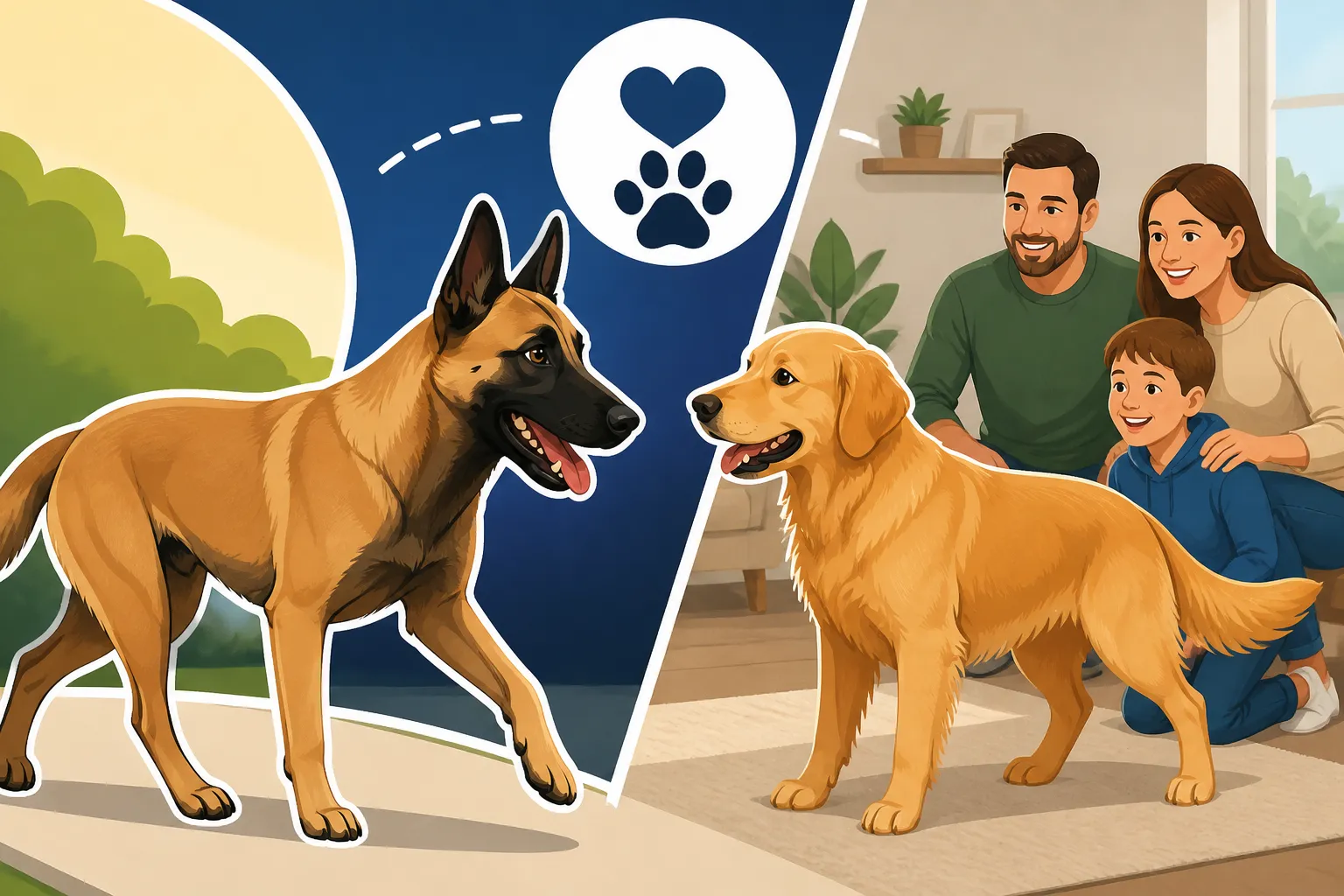
Choose a neutral, low-distraction place for the first meeting, such as a quiet stretch of sidewalk or open area where both dogs can move comfortably. Avoid narrow doorways, crowded dog parks, or the resident dog’s favorite resting place. Have one capable adult handle each dog, with enough distance to prevent tangling.
Begin by walking in the same direction with space between the dogs. Let them notice one another without requiring a face-to-face greeting. If both remain loose and can respond to their handlers, gradually reduce distance. If either dog freezes, stares intensely, pulls hard, barks, or cannot turn away, increase distance and give them time to settle.
A parallel walk is not a test the dogs must pass in one session. Keep it brief and end while things are still manageable. If you see a concern, do not force a nose-to-nose greeting to “get it over with.” Introducing a New Malinois to the Dog You Have covers more of the gradual-introduction process.
Keep early greetings brief and interruptible
If the dogs are relaxed enough for a closer greeting, allow a short sniff and then calmly call them apart or walk them away. The ability to disengage is valuable. Repeatedly pressing the dogs together can turn a promising interaction into an overwhelming one.
Watch the whole body, not just wagging tails. Loose movement, curved approaches, brief sniffing, and voluntary pauses are more reassuring than a stiff posture, hard stare, closed mouth, or repeated attempts to pin or chase. Play can include noisy or physical behavior, but both dogs should be able to pause and re-engage by choice. If one dog keeps trying to escape, the interaction needs to stop.
Keep leashes loose enough to avoid adding tension, while maintaining safe control. Do not allow a leash to wrap around legs, and avoid letting the dogs drag each other around. If the dogs are too aroused to respond to simple cues, add distance rather than trying to hold them in place.
Use short sessions and build in decompression
Once home, continue using barriers and supervised, brief interactions. Alternate time together with time apart. A few calm minutes in the same room can be more useful than an extended play session that ends with one dog exhausted or irritated.
Notice what happens after each interaction. Can both dogs settle? Does the resident dog return to normal eating and resting? Does the Malinois keep fixating on the other dog through the gate? These details help you judge whether the pace is appropriate. If either dog struggles to recover, shorten sessions and increase separation.
Keep a simple log of what worked: location, distance, duration, triggers, and how quickly each dog relaxed afterward. This can reveal patterns that are easy to miss in the moment. If the Malinois becomes overwhelmed or intensely focused, learn to recognize Spotting the Moment a Malinois Goes Over Threshold and end the interaction before the dog loses the ability to respond.
| What you notice | What it may mean | A sensible next step |
|---|---|---|
| Loose movement and brief sniffing, followed by disengagement | The dogs may be comfortable at this distance | Continue briefly and keep space available |
| One dog turns away or moves behind a person | That dog may want a break | Increase distance and prevent the other dog from following |
| Hard staring, stiffness, or repeated lunging | The interaction may be too intense | Separate calmly and seek qualified guidance if it persists |
| Play is noisy but both dogs pause and re-engage willingly | The dogs may be managing play together | Keep supervising and interrupt for calm breaks |
| One dog hides, freezes, or cannot settle afterward | The experience may be too much | Stop shared access and reassess the plan |
Manage the relationship as the Malinois matures
Supervise, separate, and prevent rehearsed conflict
For the first weeks and beyond, supervise shared time actively. Being in the same room while distracted by your phone is not the same as watching the dogs. If you cannot monitor them, separate them. This is particularly important around meals, chews, doorways, visitors, and exciting play.
Avoid leaving toys scattered around if either dog is likely to guard them. Let the dogs enjoy high-value items separately, behind a secure barrier. A product from a retailer such as Chewy may help with practical management—for example, a gate or separate food toy—but no item replaces supervision or careful introductions.
Be cautious about allowing the Malinois to chase or body-slam the resident dog, even when the older dog appears tolerant. Repeatedly practicing intense behavior can make it harder to interrupt later. Redirect the Malinois into a short training task, sniffing activity, or quiet break before excitement climbs too high.
Teach calm behavior and give each dog individual time
Train the Malinois to settle, respond to their name, and move away from the resident dog when asked. Practice these skills first in low-distraction settings, then gradually around the other dog at a safe distance. Reward calm choices: looking at the resident dog and then looking back to you, lying down, or choosing to sniff instead of pursuing.
Do not make every reward or activity a competition. Give each dog turns and individual attention without crowding them together. If the resident dog gets a walk, the Malinois can have a separate training session later. If the Malinois is learning a new cue, work with them alone before expecting them to respond while the resident dog is moving nearby.
Adolescence can change the picture. A puppy who seemed easygoing may become more intense, physical, or easily distracted as they mature. Keep reviewing boundaries and routines rather than assuming early friendship means the dogs will always manage themselves. For more on this stage, see The Adolescent Malinois That Tests Everything and Teaching a Belgian Malinois to Lie Down and Do Nothing.
Know when to get help or change the plan
Get professional guidance if you see repeated threatening behavior, fights, injuries, persistent guarding, or one dog living in fear. A qualified reward-based trainer or veterinary behavior professional can observe the dogs, review the setup, and tailor a plan to your household. If an injury occurs, seek veterinary care. Don’t try to break up a serious fight with your hands; use distance and barriers where possible, and prioritize human safety.
A successful household may still require long-term management. Some dogs do best with separate feeding, individual walks, and gated resting areas. That does not mean you have failed. The goal is a safe, low-stress home in which each dog can eat, sleep, move around, and receive attention without being pressured.
If your dogs cannot coexist safely despite careful management and professional support, reconsidering the arrangement may be the kindest decision. A Malinois is not automatically a good match for every dog, and a resident dog’s wellbeing matters just as much as the new dog’s potential.
Disclaimer
This article is for general informational purposes only and does not constitute professional advice. Laws, prices and regulations vary by location and change over time. Consult a qualified professional for guidance on your specific situation.