Reading a European Belgian Malinois Pedigree
Navigating the dense, often acronym-filled world of European Belgian Malinois pedigrees can feel like trying to solve a cryptic puzzle, leaving many prospective owners scratching their heads. It’s a common frustration to receive a beautiful document and have no idea what it truly tells you about your potential puppy or its lineage. This guide aims to demystify these important records, helping you understand the history, health, and working potential woven into the very fabric of your Malinois's heritage.
Understanding the Pedigree Document Itself
When you first receive a European pedigree, it often looks quite different from an American Kennel Club (AKC) pedigree you might be familiar with. European pedigrees, especially from countries with strong working dog traditions like Belgium, the Netherlands, or Germany, tend to be more detailed, particularly concerning working titles and health clearances. They are a snapshot, sometimes spanning four or five generations, designed to give you a comprehensive overview of the dog's ancestors. The key is knowing what information to zero in on and how to interpret it.
The Layout and Core Information
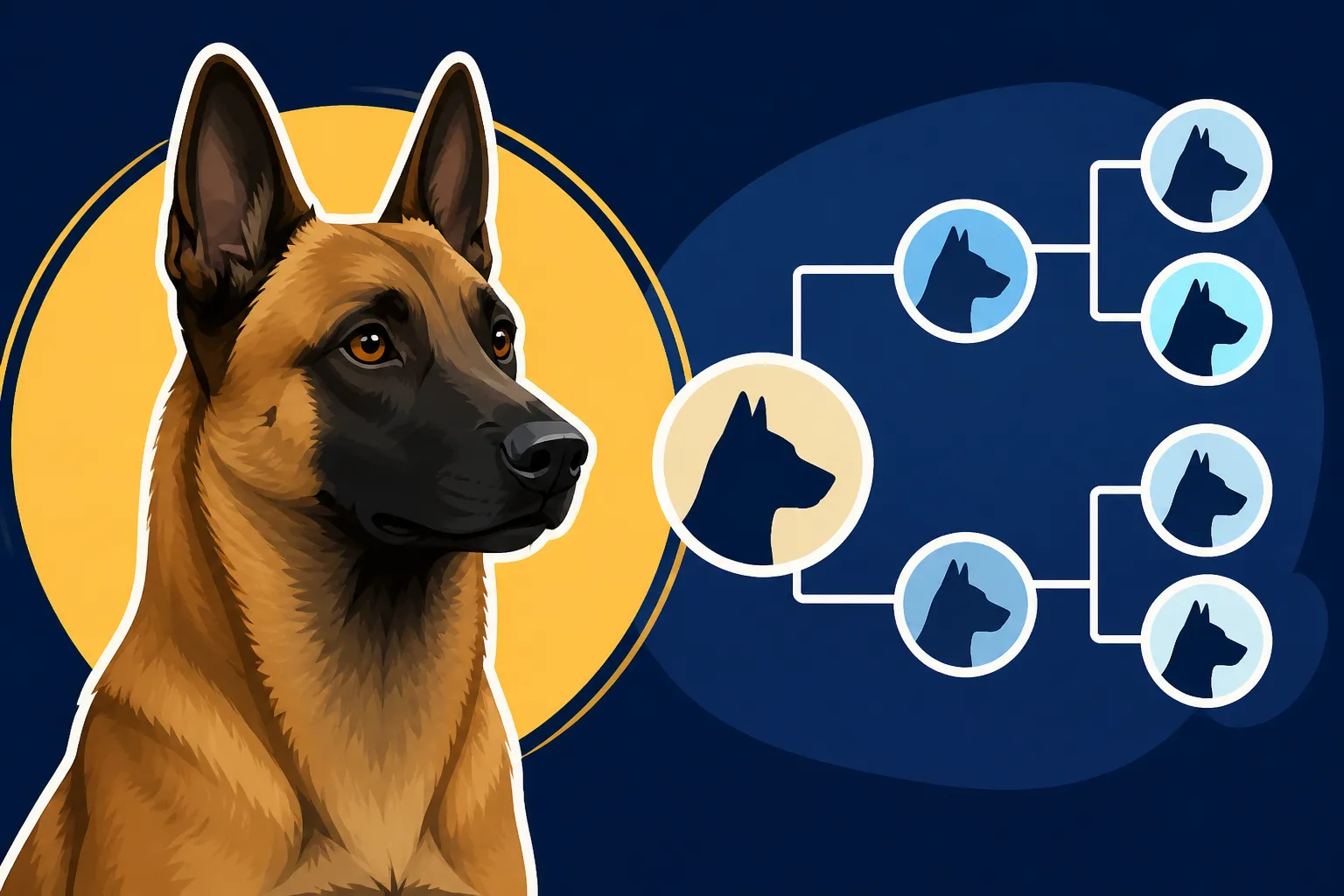
Typically, a European pedigree will list the individual dog at the top, followed by its parents, grandparents, great-grandparents, and sometimes even further back. Each dog will have a designated spot, often organized in a tree-like structure, with the sire's (father's) line on one side and the dam's (mother's) line on the other. You'll see the dog's registered name, which can be quite long and include kennel names and prefixes or suffixes that denote specific breeding programs or titles. Below the name, you'll usually find registration numbers, birth dates, and sometimes even microchip numbers.
What might surprise you is the inclusion of color and sometimes even height or weight details for ancestors. While less common in North American pedigrees, some European registries, particularly those focused on specific breed standards, might include these details as part of their historical record. It's a testament to the meticulous record-keeping these organizations prioritize. Pay close attention to the kennel names repeated in the pedigree; this can indicate a strong line breeding or a particular breeder's influence on a given line. These details can be fascinating, painting a picture of where certain traits or working abilities originate from.
Official Stamps and Registries
A true European pedigree will bear official stamps, seals, and signatures from the registering body in its country of origin. This might be a national kennel club like the St. Hubertus Royal Society in Belgium (Société Royale Saint-Hubert) or the Fédération Cynologique Internationale (FCI), which is an international canine organization that oversees many national kennel clubs. Without these official markings, the document is merely a printout of names and should be viewed with skepticism. These seals are essentially the authenticity guarantee, proving that the lineage has been verified and recorded by a recognized authority.
It’s not uncommon to see a pedigree from a Dutch-bred Malinois stamped by the Raad van Beheer (Dutch Kennel Club), even if the dog is now in another country. Each country has its own nuances, but the presence of an official body's mark is universal. This is crucial because it ensures that the dog's lineage is genuinely recognized and that the health and working titles claimed on the pedigree were earned and recorded through legitimate channels. Always inquire about the specific registry if it's not immediately clear, and don't hesitate to ask for verification.
Decoding the Names and Titles
This is often where the real challenge begins, but also where the most valuable information lies for a Belgian Malinois. European working dog pedigrees are absolutely littered with abbreviations and acronyms, each signifying a specific working title, health clearance, or breeding qualification. These are not just decorative additions; they represent rigorous training, testing, and often years of dedication from the dog and its handler. Understanding them is key to truly Reading a Belgian Malinois Pedigree Before Paying.
Working Titles: More Than Just Letters
The string of letters before or after a dog's name usually denotes its working titles. For Belgian Malinois, these are incredibly important as the breed was developed for working ability, not just looks. You’ll see titles from various protection sports, obedience, tracking, and even specialized police or military certifications.
Here's a breakdown of some common European working titles you might encounter:
| Abbreviation | Full Name (Common) | Country of Origin/Associated Organization | Description |
|---|---|---|---|
| IGP (formerly IPO/SchH) | Internationale Gebrauchshunde Prüfungsordnung | Germany (FCI) | International Utility Dog Trial; combines tracking, obedience, and protection. |
| KNPV | Koninklijke Nederlandse Politiehond Vereniging | Netherlands | Royal Dutch Police Dog Association; very demanding police dog trials. |
| Ring | Belgian Ring / French Ring / Mondioring | Belgium/France/International | Sport comprised of obedience, jumping, and protection exercises. |
| BH | Begleithund | Germany (FCI) | Companion Dog; a basic obedience and temperament test, prerequisite for higher titles. |
| AD | Ausdauerprüfung | Germany (FCI) | Endurance Test; tests a dog's physical stamina over a distance. |
| HWT | Herding Working Test | FCI | Herding Working Test; demonstrates natural herding ability. |
You might see a dog with titles like "IGP3" or "KNPV PH1." An "IGP3" means the dog has achieved the highest level in International Utility Dog trials, demonstrating advanced skills in tracking, obedience, and protection. A "KNPV PH1" signifies completion of the highest level police dog trials in the Netherlands, indicating exceptional courage, obedience, and bite work. These titles are hard-won and speak volumes about the dog's genetic predisposition for trainability, courage, and stability. When you see multiple ancestors with high-level titles, it suggests a strong, consistent working line. This helps you understand What Bite Sport Actually Asks of a Belgian Malinois and how well these ancestors performed.
Health Clearances and Breeding Qualifications
Beyond working titles, European pedigrees are diligent about recording health clearances. This is critical for assessing the genetic health of a line. You’ll frequently see abbreviations for hip and elbow evaluations, which are paramount in many active breeds like the Malinois. For instance, "HD A" or "ED 0" are common notations for excellent hip and elbow scores, respectively, indicating no signs of dysplasia. Conversely, "HD C" or "ED 1" might indicate mild dysplasia. These systems, like those from FCI or specific national organizations, provide objective measures of joint health.
Beyond hips and elbows, look for other health tests, especially for genetic conditions prevalent in Malinois. The Two Ataxia Genes Belgian Malinois Are Tested For are becoming more common to see documented. You might see "SDCA1 Clear" or "SDCA2 Carrier" indicating the results of genetic testing for Spongy Degeneration with Cerebellar Ataxia. Similarly, eye certifications, thyroid clearances, or even cardiac evaluations may be listed, often with abbreviations like "OCD Clear" (for Osteochondritis Dissecans) or "EYE Clear" (for hereditary eye diseases). Breeders in Europe are often very transparent with these results, understanding that health is just as important as working ability for longevity and quality of life. Understanding these helps you know The Hip and Elbow Numbers Behind a Malinois Clearance.
Tracing Health and Temperament Lines
A pedigree is more than just a list of names and achievements; it's a map to understanding the genetic strengths and potential weaknesses within a lineage. For a breed as intense and driven as the Belgian Malinois, tracing not just physical health but also temperament indicators is crucial.
Beyond the "Clear": Understanding Risk Factors
Even with impeccable health clearances on paper, it's wise to look deeper. A pedigree can show you patterns. For example, if you see many dogs in a lineage with "HD A" hips, but then one ancestor had "HD C," it might be an anomaly or indicate a potential recessive gene at play that could surface down the line. Similarly, while genetic testing for The Seizure Disorder Running in Malinois Lines is becoming more common, if there's a history of epilepsy in an ancestor (even if the immediate parents are clear), it's a conversation to have with the breeder.
A good breeder will not just present a pedigree but be able to discuss the health history of each dog, including any issues that might not be immediately obvious from a series of letters. They should be transparent about known carriers of certain genetic conditions, even if those dogs are otherwise healthy. This proactive approach helps ensure you're getting a puppy from a line that not only looks good on paper but has a thoroughly vetted health background. Remember, a pedigree is a starting point, not the end of your investigation.
Temperament and Working Style Indicators
This is perhaps the most subtle but critical aspect of reading a Malinois pedigree. Working titles are direct indicators of working ability, but the type of titles, and the number of generations displaying them, can give clues about temperament. For example, lines heavy in KNPV or certain Ring sport titles tend to be incredibly high-drive, resilient, and often more challenging for a novice handler. These dogs are selected for extreme environmental stability, hardness, and formidable protection instincts. On the other hand, lines with more IGP or obedience-focused titles might still be high-drive but potentially more handler-focused or amenable to a broader range of working disciplines.
You won't find "temperament score" on a pedigree, but you can infer a lot by asking the breeder about the working style and character of the dogs listed. Were they "hard" dogs or "softer" ones? Did they have high prey drive or more defensive drive? Did they excel in specific areas like tracking or detection? A consistent line of high-level working dogs suggests a strong genetic predisposition for these traits. If a pedigree has many dogs with basic BH titles but no higher sport accomplishments, it might indicate a line that, while still a Malinois, may have a slightly lower working drive than those from intensely competitive sport lines. This context is invaluable, especially if you're trying to figure out if a Whether a Working Line Malinois Lives as Long as a pet line or if you need a dog that can do The Herding Job the Belgian Malinois Was Built For.
Practical Steps for Prospective Owners
Reading a European Belgian Malinois pedigree effectively is about empowerment. It gives you the tools to ask informed questions and make a confident decision about bringing one of these incredible dogs into your life. Don't be afraid to delve deep.
Beyond the Breeder's Handout
While the breeder will provide the pedigree, you can and should do your own research. Many European kennel clubs and sport organizations have online databases where you can verify titles and health clearances. For example, many FCI-member countries have searchable databases. If a breeder is claiming specific KNPV titles, there are typically public records available for verification. This kind of due diligence is not about mistrusting the breeder, but about being a responsible, informed buyer. It also gives you a deeper appreciation for the genetic legacy your potential puppy carries. You can verify Looking Up a Malinois Sire's OFA Record even if it's a European equivalent.
It's also a good idea to research the kennel names that appear frequently in the pedigree. Are these well-known, respected kennels within the Malinois community? Do they have a consistent reputation for producing healthy, stable, and working-titled dogs? Online communities and breed forums can be a valuable, though sometimes subjective, resource for this type of background research. Just be mindful of taking everything you read online at face value. Seek out multiple sources and look for patterns.
Connecting the Pedigree to Your Lifestyle
Ultimately, the goal of understanding a pedigree is to find a dog that's a good fit for your life. If you're looking for an active family companion, a pedigree full of PH1 KNPV dogs might mean a dog that will require more intensity than you bargained for. Conversely, if you want to compete in IGP, a pedigree with multiple IGP3 champions is a good sign that the genetic potential is there. Don't get caught up in the "impressiveness" of titles if they don't align with your goals.
For instance, if you're buying a puppy, you'll want to ask the breeder specifically about the temperament of the sire and dam, as well as their siblings and previous offspring. A detailed pedigree might show you that many dogs in the line have very high drive, which might mean you need to prepare for providing sufficient mental and physical stimulation. Investing in durable toys and engaging food puzzles, perhaps through online retailers like Chewy, can be a smart move for managing that drive from day one. You'll want to be ready for the Two Hours and a Job a Belgian Malinois Demands Daily.
What to Ask the Breeder
Once you've done your homework, prepare a list of specific questions for the breeder based on what you found in the pedigree.
Here are a few examples:
- "I noticed several dogs in the line have a specific IGP title. Can you tell me more about their working style and temperament?"
- "This dog has an HD B hip rating, which is good. Have there been any instances of hip dysplasia in its offspring or siblings?"
- "I see a particular kennel name appearing frequently. What can you tell me about their breeding philosophy and the traits they prioritize?"
- "What are the genetic test results for the parents for conditions like SDCA1 and SDCA2? Are those results documented on the pedigree, or can you provide separate certificates?" Asking a Breeder for Malinois Ataxia Results is a perfectly reasonable question.
- "Given the working intensity of this line, what kind of structured physical and mental exercise do you recommend for a puppy from this litter as it grows?" Perhaps they have recommendations for high-energy kibble, which you could source from Chewy.
A reputable breeder will welcome these questions and be eager to discuss their dogs and their breeding program in detail. They should be able to explain the significance of each entry on the pedigree and connect it back to the puppy's potential. They should also be able to explain What a Malinois With Titled Parents Costs and why. Remember, you're not just buying a dog; you're buying into a lineage, and understanding that lineage is the best way to set yourself and your future Malinois up for success.
Disclaimer
This article is for general informational purposes only and does not constitute professional advice. Laws, prices and regulations vary by location and change over time. Consult a qualified professional for guidance on your specific situation.