Whether the Malinois Shares a Standard With the Others
It's completely understandable to feel a bit lost in the wonderful, yet sometimes confusing, world of Belgian Shepherds. You see these incredible dogs – the Malinois, the Groenendael, the Tervuren, and the Laekenois – and they all look so similar, yet so different, all at once. The big question often becomes: do they actually share a single, overarching breed standard, or is each one marching to the beat of its own drum? It’s a common point of discussion, and honestly, the answer isn't a simple yes or no, depending on who you ask and which kennel club you're referring to. This guide aims to clear up that confusion, diving deep into the history and differing classifications that define these magnificent dogs.
The Foundation of the Belgian Shepherds: One Dog, Many Coats
To truly grasp whether the Malinois shares a standard with its cousins, we need to take a little trip back in time to late 19th century Belgium. Imagine a time before formalized breeds, where working dogs were simply bred for their ability to perform a job. In the sheep-herding regions of Belgium, there were many such dogs – agile, intelligent, and fiercely dedicated to their flocks. These dogs were the ancestors of what we now know as the Belgian Shepherds.
Around the 1890s, a group of dedicated enthusiasts and veterinarians, notably Professor Adolphe Reul, recognized the need to standardize these native herding dogs. They gathered dogs from various Belgian provinces, all sharing a similar underlying structure, temperament, and working prowess, but exhibiting different coat types and colors. It was decided then that these dogs, despite their superficial differences in appearance, were fundamentally one breed: the Belgian Shepherd Dog. The initial concept was a "one breed, four varieties" approach, with coat type and color being the primary distinctions. This historical context is vital because it laid the groundwork for how many international kennel clubs still view these dogs today. The focus was on preserving the working ability and sound structure common to all, while acknowledging the cosmetic variations. The Belgian Town the Malinois Is Named After is a nod to where one of these varieties got its specific identifier.
The Original Varieties and Their Defining Characteristics
When the standard for the Belgian Shepherd Dog was first drawn up, it recognized four distinct varieties based on their coat. These weren't separate breeds in the eyes of the Belgian founders; they were simply different expressions of the same genetic blueprint for a highly capable herding dog.
- Groenendael: This variety is instantly recognizable by its long, black coat. Think of a majestic, flowing mane of dark fur. They were named after the Château de Groenendael, where one of the prominent early breeders, Nicolas Rose, lived and worked.
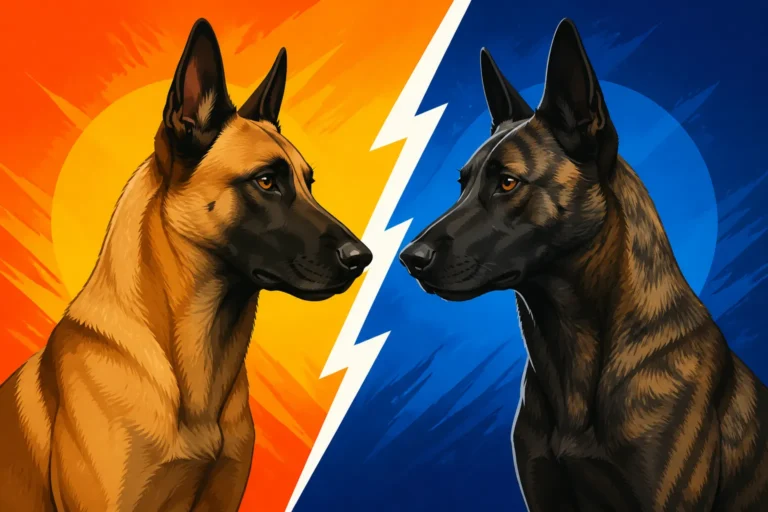
- Tervuren: The Tervuren shares the long coat of the Groenendael but comes in fawn to mahogany with a distinct black overlay and mask. The rich color and elegant long hair make them visually stunning. Its name comes from the village of Tervuren. If you've ever wondered about the subtle differences, The Malinois Against the Tervuren offers a great comparison.
- Malinois: This is our star, known for its short, fawn to mahogany coat with a black mask. The Malinois is sleek, powerful, and built for speed and endurance. Their short coat is often preferred by those in demanding working roles due to its lower maintenance compared to the long-haired varieties.
- Laekenois: Perhaps the rarest of the four, the Laekenois stands out with its rough, wiry coat, typically fawn with traces of black overlay. This unique coat texture, reminiscent of a terrier, requires specialized grooming to maintain its harshness. The Laekenois Beside the Malinois and Why It Is Rare delves into why this variety isn't as commonly seen.
While their coats might seem like a superficial detail, these were the clear visual markers that helped distinguish and name the different lines. However, underneath these varied exteriors, the fundamental structure, temperament, and drive were intended to be consistent across all four, reflecting their shared heritage as tireless herding and protection dogs.
The Great Divide: FCI's Unity vs. AKC's Separation
This is where the answer to our question truly diverges, leading to much of the confusion. Depending on which major international kennel club you follow, the Belgian Malinois either shares a single breed standard with its brethren or it stands as a completely separate breed.
The FCI's "One Breed, Four Varieties" Approach
The Fédération Cynologique Internationale (FCI) is the largest international canine organization, recognizing dog breeds from 99 member countries. For the FCI, the original vision of Professor Reul still holds true. They classify the Belgian Malinois, Groenendael, Tervuren, and Laekenois as one single breed: the Belgian Shepherd Dog (Chien de Berger Belge). Within this one breed, they recognize the four distinct varieties based primarily on coat type and color.
What does this mean in practice? It means that, under FCI rules, there is essentially one comprehensive breed standard that outlines the ideal temperament, structure, gait, and general characteristics of the "Belgian Shepherd Dog." Each variety then has specific paragraphs within that standard detailing its acceptable coat type and color. For example, the sections on head shape, ear set, body proportions, and general character apply equally to a Malinois as they do to a Groenendael. The key differentiator for judging and breeding purposes primarily revolves around those coat characteristics. This approach allows for a shared understanding of the core Belgian Shepherd traits, while acknowledging the aesthetic variations. In some FCI-affiliated countries, this can even mean that inter-variety breeding might be permitted under specific circumstances to broaden genetic pools, though it's often discouraged to prevent "mis-marked" puppies. How the FCI Classifies the Malinois goes into more detail on this system.
The AKC's Separate Breed Recognition
Now, let's look across the pond to the American Kennel Club (AKC). The AKC, along with some other national kennel clubs, chose a different path. In the United States, the Belgian Shepherd Dog was initially recognized as one breed, but then a split occurred. In 1959, the AKC made the decision to classify the varieties as three distinct breeds:
- The Belgian Malinois
- The Belgian Sheepdog (which is the Groenendael)
- The Belgian Tervuren
The Laekenois had a much longer journey and was only fully recognized as the fourth distinct breed, the Belgian Laekenois, much more recently. This means that, according to the AKC, a Belgian Malinois does not share a breed standard with the Belgian Sheepdog or the Belgian Tervuren. Each of these is considered a separate, distinct breed with its own individual breed standard, registration, and competition track.
This distinction has significant implications. For instance, you cannot breed an AKC-registered Belgian Malinois to an AKC-registered Belgian Tervuren and expect to register the puppies as purebreds of either breed. They are seen as completely separate entities. While the individual breed standards for Malinois, Tervuren, and Belgian Sheepdogs in the AKC system naturally reflect their shared ancestry (meaning they will have many similarities in terms of structure and temperament requirements), they are officially separate documents for separate breeds. This separation, while potentially simplifying registration for new owners, can sometimes obscure the deep historical connection and shared core traits that bind them together.
Beyond the Fur: What All Belgian Malinois Varieties Share
Even with the AKC's decision to separate them into distinct breeds, the reality is that all four varieties of Belgian Shepherd share an incredibly strong common heritage. Their differences in coat are truly just skin deep when you consider the profound similarities in their working drive, intelligence, and physical capabilities. Whether you're looking at a sleek Malinois or a rough-coated Laekenois, you're essentially looking at the same highly athletic, mentally demanding dog underneath.
Shared Temperament and Working Drive
This is perhaps the most crucial point to understand. Regardless of coat length or color, all Belgian Shepherds were bred for the same purpose: to be active, vigilant herding and protection dogs. This means they all typically possess:
- Intense Drive: They have an almost insatiable desire to work, to have a job, and to be engaged. This is not a breed that thrives on being a couch potato. If you find yourself needing to keep your Malinois mentally stimulated with puzzles or new learning, you might be browsing Chewy for Puzzle Work for a Belgian Malinois Indoors.
- High Intelligence: They are quick learners, often picking up new commands and complex tasks with surprising speed. This also means they can learn undesirable behaviors just as quickly if not properly directed.
- High Energy: We're talking about dogs that require a significant amount of structured exercise, not just a casual stroll around the block. Two Hours and a Job a Belgian Malinois Demands Daily isn't an exaggeration; it's a baseline.
- Loyalty and Protectiveness: They tend to bond very strongly with their families and can be naturally protective. This is a desirable trait in a working dog, but it requires careful socialization and training in a pet home.
- Sensitivity and Alertness: They are highly aware of their surroundings and can be sensitive to changes in their environment. This contributes to their excellent guarding instincts but can also mean they are prone to being reactive if not handled correctly.
These are not traits that vary significantly between the varieties. A Tervuren with an untrained mind will be just as destructive as an unemployed Malinois. The core engine is the same; only the bodywork differs.
Shared Physical Characteristics and Health Concerns
Beyond temperament, the underlying physical structure of all Belgian Shepherds is remarkably similar. They are medium-to-large sized dogs, known for their elegant yet powerful build, strong backs, and agile movement. A good breeder, regardless of variety, strives for soundness in conformation – ensuring the dog is built to withstand rigorous activity and remain healthy throughout The Fourteen to Sixteen Years a Belgian Malinois Lives.
This shared physical blueprint also means they share many of the same potential health concerns. For example, hip and elbow dysplasia are issues that can affect all Belgian Shepherd varieties, and responsible breeders for any of the four will pursue health clearances. Similarly, certain eye conditions or thyroid issues can appear across the spectrum. Whether you own a Malinois or a Groenendael, you'll likely be thinking about similar preventive care, from quality food (which you can often find options for all varieties on Chewy) to joint supplements. Understanding The Hip and Elbow Numbers Behind a Malinois Clearance is crucial for any potential owner of any Belgian Shepherd variety.
Practical Realities for Owners and Breeders
So, what does this all mean for someone looking to bring a Belgian Malinois, or any Belgian Shepherd, into their home, or for those involved in breeding?
For Prospective Owners
The most important takeaway for a prospective owner is this: do not let coat type be your sole decision-making factor. While a Malinois's short coat might seem easier to manage than a Tervuren's long coat, the dog underneath is essentially the same high-drive, intelligent, and demanding animal. The mental and physical exercise requirements, the need for consistent training, and the potential for intensity are universally true for all four varieties.
If you're in an FCI-affiliated country, you'll likely encounter breeders who discuss "Belgian Shepherd Dogs" and then specify the variety. In the US, you'll be looking for a "Belgian Malinois" breeder, a "Belgian Tervuren" breeder, or a "Belgian Sheepdog" breeder, acknowledging them as distinct breeds. Researching What a Belgian Malinois Puppy Costs by Bloodline is as important as understanding the commitment to training and care. Always prioritize finding a reputable breeder who health tests their dogs and focuses on sound temperament and working ability, regardless of how their national club classifies the varieties. Asking about the lines and what they are primarily bred for (sport, police, or companion) is crucial. Don't be fooled into thinking a long-haired Tervuren or a rough-coated Laekenois will be inherently "calmer" than a Malinois; they are all intense.
For Breeders and the Future of the Breeds/Varieties
For breeders, the distinction is even more profound. FCI breeders of Belgian Shepherds operate under a unified standard, aiming to preserve the core qualities of the breed while maintaining the distinct coat types. This can sometimes lead to discussions about genetic diversity and whether limited inter-variety breeding could be beneficial, though it's typically tightly regulated.
In AKC countries, breeders of Belgian Malinois focus solely on the Malinois standard, separate from the Tervuren or Belgian Sheepdog. This means genetic pools are kept distinct, and breeding choices are made strictly within that defined "breed." While this approach has its own benefits, such as clear lineage tracking for each specific breed, it also means that shared genetic issues might be perpetuated within smaller gene pools.
Ultimately, whether they share a single standard or have separate ones, the spirit of the Belgian Shepherd lives on in all four varieties. It's a testament to their enduring qualities that they remain such sought-after partners for working enthusiasts around the globe. When considering one of these incredible dogs, remember that their shared ancestry means a shared commitment to providing them with a fulfilling, active life, full of purpose and partnership.
| Feature | FCI Classification | AKC Classification | Primary Differentiator | Shared Traits Across Varieties (Both FCI & AKC) |
|---|---|---|---|---|
| Breed Status | One Breed, Four Varieties | Four Distinct Breeds | Coat Type and Color | Temperament, Drive, Intelligence, Structure |
| Standard | Single, unified "Belgian Shepherd Dog" standard with variety-specific coat notes | Separate standards for Belgian Malinois, Belgian Sheepdog, Belgian Tervuren, Belgian Laekenois | Coat Type and Color | High energy, strong work ethic, loyalty |
| Inter-Variety Breeding | Generally discouraged, but sometimes permitted under strict rules in some countries | Not permitted for purebred registration | Genetic lineage | Predisposition to certain health issues (e.g., dysplasia) |
| Example | Groenendael is a "variety" of Belgian Shepherd Dog | Belgian Sheepdog is a "breed" | Visual appearance | Need for extensive training and socialization |
Disclaimer
This article is for general informational purposes only and does not constitute professional advice. Laws, prices and regulations vary by location and change over time. Consult a qualified professional for guidance on your specific situation.