Why Military Units Buy Malinois Over Shepherds
It's a question many people ponder when they see military or police K9 units: why do they often choose the Belgian Malinois over the classic German Shepherd? For those of us who live with these incredible working dogs, we know it's not a casual decision. It comes down to very specific traits and demands of the job, and this guide is here to shed light on the compelling reasons behind this critical operational choice.
The Physical Edge: Agility, Speed, and Endurance
When you think of a working dog, you often picture strength and resilience. While German Shepherds certainly possess these qualities, the Belgian Malinois brings a different, often more advantageous, physical profile to the demanding environment of military operations. Their build is lean, compact, and designed for explosive speed and incredible agility, which can be absolutely crucial in dynamic situations.
A Lighter, More Agile Frame
A key difference lies in the overall physique. Malinois are typically smaller and lighter than their German Shepherd counterparts. This isn't a sign of weakness; quite the opposite. This lighter frame translates directly into superior agility and quicker acceleration. Imagine a dog needing to navigate tight spaces, climb obstacles, or pursue a target through varied, complex terrain. A Malinois, with its more athletic and less bulky build, can often do this with greater ease and less strain on its joints. This physical advantage means they can perform acrobatic feats, clear high walls, and change direction with astonishing precision, capabilities that are highly prized in scenarios requiring rapid deployment and precise movements. They are judged against specific physical standards, including The Height Limits a Belgian Malinois Is Judged Against, which highlights their athletic frame.
Their bone structure and muscle distribution are optimized for burst speed and sustained effort, allowing them to cover ground rapidly and maintain high energy output for extended periods. This streamlined build also means they generate less heat during intense activity, which can be a significant factor in warmer climates or during prolonged engagements. While a German Shepherd is undoubtedly powerful, a Malinois often offers that extra fraction of speed and responsiveness that can make all the difference in a critical moment, especially when every second counts.
Unmatched Speed and Jumping Ability
When military work demands explosive power and the ability to clear substantial obstacles, the Malinois truly shines. They possess an incredible spring in their step, making them exceptional jumpers, capable of scaling walls or fences that would challenge many other breeds. This vertical prowess isn't just for show; it's a vital skill for clearing barriers during chases, entering compounds, or even embarking and disembarking from vehicles and aircraft swiftly.
Their acceleration from a standstill is remarkable, allowing them to close distances rapidly. This combination of speed and agility is paramount for tasks like apprehension, where quickly reaching and subduing a target is essential, or for detection work where covering large areas efficiently is key. In the intense world of military operations, where the landscape can change in an instant, a dog that can quickly adapt its movement and overcome physical barriers without hesitation is an invaluable asset. This also contributes to why they might live longer working lives, as discussed in Why a Belgian Malinois Outlives Most Dogs Its Size.
The Mental Fortitude: Drive, Intensity, and Focus
Beyond their physical attributes, the mental and psychological makeup of the Belgian Malinois is perhaps the most significant factor in their widespread adoption by military units. These dogs possess an unparalleled drive and intensity, coupled with an almost obsessive focus that makes them exceptionally effective at their jobs. This isn't just a high energy level; it's a deep-seated desire to work and to please their handler, often pushing past comfort or exhaustion.
Relentless Drive to Work
A Malinois isn't just energetic; they are driven. They have an inherent, almost insatiable desire to engage in tasks, whether it's detection, protection, or obedience. This drive translates into an incredible work ethic, where the dog views its job as the most rewarding activity imaginable. This isn't to say other breeds lack drive, but the intensity and sheer volume of it in a Malinois are often on another level. They thrive on having a purpose, and without it, they can become destructive or anxious. This is why understanding How Many Hours a Belgian Malinois Should Work Daily is so vital for any owner, let alone a military handler.
This relentless drive means they can often sustain high-level performance through long shifts, under extreme conditions, and across varied environments. They rarely "check out" or lose interest once engaged in a task. This tenacity is invaluable in military applications where missions can be prolonged, unpredictable, and require unwavering focus from the K9 team. This drive is so potent that many handlers recognize it as the foundation of their success, feeding appropriate, high-calorie performance kibble, often found at places like Chewy, to fuel their endless energy.
Intense Prey and Hunt Drive
The Belgian Malinois possesses exceptionally high prey and hunt drives. These natural instincts, carefully honed through specialized training, are critical for military roles. Prey drive refers to the dog's instinct to chase, capture, and possess a moving object (like a bite sleeve or a ball), while hunt drive is the instinct to search for, locate, and track. In military K9s, these drives are channeled into productive behaviors. For detection work, the hunt drive fuels their tireless searching for explosives or narcotics. For patrol and apprehension, the prey drive is what makes them pursue and engage a suspect with unwavering commitment.
This strong genetic predisposition allows trainers to develop highly effective working behaviors without fighting against the dog's natural inclinations. They're wired for the job. This deep-seated drive also means they are less likely to be deterred by environmental distractions or adverse conditions, as their focus on the "prey" (the target, the scent, the decoy) overrides almost everything else. This inherent mental wiring is a cornerstone of their success in high-stakes environments, making them incredibly potent tools for their handlers. Understanding What a KNPV Program Puts a Belgian Malinois Through gives insight into how these drives are cultivated for elite performance.
Trainability and Adaptability Under Pressure
While raw drive is essential, it must be paired with exceptional trainability and the ability to adapt to novel and stressful situations. The Malinois excels here, possessing both the intelligence and the biddability to learn complex tasks quickly and perform reliably under immense pressure.
Rapid Learning and Retention
Malinois are notoriously quick learners. They pick up new commands, complex sequences, and environmental cues with astounding speed. This rapid learning curve is a huge advantage in military settings, where K9s need to be proficient in a wide range of tasks – from advanced obedience and tracking to bite work and specialized detection. Their intelligence isn't just about memorizing; it's about understanding concepts and applying them in new contexts.
Furthermore, they exhibit excellent retention. Once a skill is learned, it tends to stick. This means less time spent retraining and more time available for advanced scenario-based training that prepares them for real-world deployments. This efficiency in training allows military programs to produce highly skilled K9s in shorter timeframes, making them a cost-effective and valuable asset. It's truly impressive to witness how fast they can grasp and then flawlessly execute intricate commands, sometimes even in the chaos of a simulated combat zone.
Environmental Stability and Adaptability
A military working dog can't afford to be fazed by loud noises, strange textures, crowded environments, or sudden changes in scenery. They need what handlers call "environmental stability" – the ability to remain focused and perform their duties regardless of external stressors. This is where the Malinois truly shines. While all working dogs require extensive socialization and exposure, the typical Malinois possesses a robust nervous system that allows them to process and cope with high-stress situations without becoming overwhelmed or shutting down.
They are less prone to being startled by gunfire, explosions, or the cacophony of a chaotic situation. This adaptability means they can operate effectively in diverse environments, from urban combat zones to dense forests or open deserts. Their unwavering confidence and ability to recover quickly from perceived threats are essential for missions where the unexpected is the norm. This mental resilience, combined with their physical capabilities, makes them incredibly versatile and dependable partners for military personnel. Many handlers choose durable, interactive toys and enrichment from retailers like Chewy to build confidence and adaptability in novel situations during early training.
The Demands of Service: Resilience and Temperament
The life of a military working dog is incredibly demanding, both physically and psychologically. The breeds chosen for these roles must not only perform under pressure but also possess the resilience to withstand the rigors of service and the temperament to form an unbreakable bond with their handlers.
Resilient Temperament Under Extreme Conditions
Military operations involve harsh environments and extreme stress. A K9 must be able to withstand these conditions mentally and physically without breaking down. The Malinois’s temperament is characterized by toughness and resilience. They are not typically "soft" dogs that crumble under pressure or correction; instead, they often respond to firm, clear guidance and thrive on pushing their limits. This doesn't mean they are impervious to stress, but their recovery time and ability to return to task are often superior.
Their ability to maintain composure during high-intensity scenarios, whether it’s a sudden ambush or a prolonged search operation, is critical. They are bred to be courageous and unwavering, and this natural bravery is a huge asset when facing dangerous situations. This resilient nature extends to their ability to handle the strict discipline and rigorous training protocols that are standard in military K9 programs. They are built for purpose, and that purpose is to perform when it matters most, even when the stakes are life and death. You can learn more about how they are evaluated in The Reputation a Belgian Malinois Carries in Public and Whether an E-Collar Damages a Soft Malinois.
Handler Focus and Bonding
Despite their intense drives and independent working capabilities, Malinois are deeply handler-focused dogs. They form incredibly strong bonds with their primary handler, and this bond is the bedrock of their effectiveness as a military K9. This strong connection means they are highly attentive to their handler's commands, subtle cues, and emotional state, allowing for seamless communication and teamwork even in complex, noisy environments. This relationship is far more than simple obedience; it's a partnership built on trust, mutual respect, and a shared mission.
This focus isn't easily broken, even by significant distractions. They want to work with their person, and their greatest reward is often the praise and approval of their handler. This biddability and desire to please make them highly trainable and reliable partners, even when faced with novel challenges. The depth of this bond is what allows K9 teams to operate as a single, cohesive unit, where the dog anticipates the handler's needs and vice-versa, leading to truly remarkable feats of synchronized effort. The development of this bond starts early, and is crucial for Explosives Detection Training for a Belgian Malinois or any other high-level work.
Health Considerations for a Working Lifespan
When selecting a breed for military service, health and longevity are paramount. The financial and training investment in a K9 is substantial, so units need dogs that can serve effectively for a reasonable working lifespan with minimal debilitating health issues.
Fewer Orthopedic Concerns
German Shepherds, while incredible dogs, are unfortunately prone to certain orthopedic issues, particularly hip and elbow dysplasia, which can prematurely end a working dog's career or necessitate expensive and invasive surgeries. While Malinois are not immune to these conditions, they generally have a lower incidence and less severe presentation of these issues. Their lighter, more athletic build puts less strain on their joints, contributing to better long-term soundness, which is crucial for a dog expected to run, jump, and climb extensively.
This relative soundness means that a Malinois is often capable of maintaining peak physical performance for a longer duration of their working life. Less time sidelined by injury or recovery means more time on the job, maximizing the return on investment for military units. Of course, regular vet check-ups, appropriate nutrition (often from trusted sources like Chewy), and careful conditioning are still vital for maintaining their health, but the genetic predisposition tends to be more favorable. For anyone considering one, it's wise to understand The Hip and Elbow Numbers Behind a Malinois Clearance.
Resilience to Heat and Recovery Time
Military operations often take place in challenging climates, including extreme heat. While both breeds can suffer from heat-related illnesses, the Malinois, with its shorter, single coat (though some have a double coat that sheds intensely during certain seasons) and leaner body mass, often handles heat better than a heavily coated German Shepherd. This isn't to say they are immune to heat stroke, but their physiology can sometimes offer a slight advantage in hot environments, reducing the risk of overheating during intense activity. We discuss this further in Heat, Cold and a Belgian Malinois on the Job.
Furthermore, their incredible stamina is often matched by a relatively quick recovery time from intense exertion. A Malinois can go from full-tilt work to a more settled state (if given appropriate decompression) more readily, and their bodies are often efficient at bouncing back after physically demanding tasks. This allows for more sustained operational readiness and faster turnaround between missions or training sessions, which is a key advantage in a fast-paced military environment. This is also why handlers keep a close eye on The Lean Condition a Belgian Malinois Should Carry.
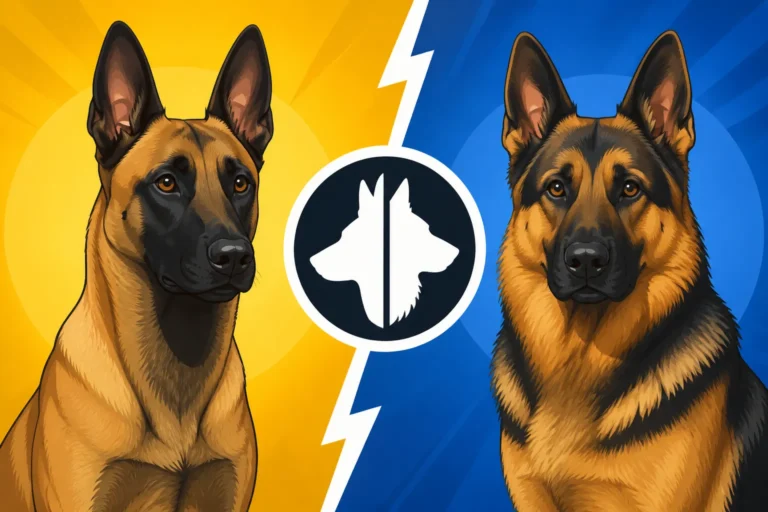
Comparing the Breeds: Malinois vs. German Shepherd
To summarize some of the key distinctions that influence military unit choices, here's a quick comparison:
| Feature | Belgian Malinois | German Shepherd |
|---|---|---|
| Physical Build | Lean, compact, athletic | Larger, more substantial, powerful |
| Weight (Approx.) | 40-80 lbs | 50-90 lbs |
| Speed/Agility | Extremely fast, highly agile, exceptional jumper | Fast, good agility, strong but less explosive |
| Drive Level | Intense, relentless prey and hunt drive | High drive, strong protection instincts |
| Trainability | Very high, quick learners, excellent retention | High, intelligent, eager to please |
| Environmental Stability | Robust, generally stable under pressure | Good, but some lines can be more environmentally sensitive |
| Orthopedic Health | Generally lower incidence of hip/elbow dysplasia | Higher incidence of hip/elbow dysplasia |
| Heat Tolerance | Generally better due to leaner build, shorter coat | Can struggle more in heat due to denser coat |
| Working Lifespan | Often able to maintain peak physical work longer | Can be limited by orthopedic issues |
This table highlights why, for specific roles requiring extreme agility, sustained intensity, and a slightly lower risk of certain physical ailments, the Malinois often edges out the German Shepherd in military procurement. Of course, individual dogs within any breed can defy generalizations, but these are the trends observed on a larger scale.
The Evolution of Military K9 Selection
The shift towards the Belgian Malinois hasn't been instantaneous but rather a gradual evolution based on performance data and the changing nature of military operations. As roles become more specialized and environments more diverse, the traits inherent in the Malinois have proven exceptionally well-suited.
Adapting to Modern Warfare Needs
Modern military and police work often involves dynamic, unpredictable environments. K9s are deployed in scenarios ranging from urban patrols and building clearings to tracking through rugged terrain and detecting minute traces of explosives in complex settings. These tasks require a dog that is not only powerful but also incredibly agile, mentally sharp, and able to work for extended periods without fatigue. The Malinois, with its explosive speed, compact frame, and unwavering drive, is perfectly adapted to these contemporary challenges. Malinois or German Shepherd for Real Work discusses these nuances further.
Their ability to quickly transition between tasks – from a high-speed chase to a meticulous search, then to holding a suspect – without significant downtime, makes them incredibly efficient. They are not just tools; they are highly integrated members of a tactical team, and their capacity to adapt on the fly is a huge asset. This adaptability is nurtured through rigorous training protocols, often involving scenarios that mimic real-world threats, pushing the dog's mental and physical boundaries.
Cost-Effectiveness and Lifespan in Service
While the initial cost of acquiring and training any military K9 is significant, the long-term investment considers the dog's effective working lifespan and potential vet bills. Given the Malinois's generally lower incidence of debilitating orthopedic issues compared to some German Shepherd lines, they can often serve effectively for more years. This translates into a better return on investment for the military, as they get more operational years out of each highly trained K9.
Less time spent on medical leave or undergoing expensive procedures means more time deployed and ready for duty. For military units, every operational asset counts, and a K9 that can reliably perform its duties for a longer period is an undeniable advantage. The careful selection of breeding stock and early health screenings also contribute to maximizing the health and longevity of these elite working dogs. This is a crucial factor, given The Vet Bills a Bite Sport Belgian Malinois Runs Up.
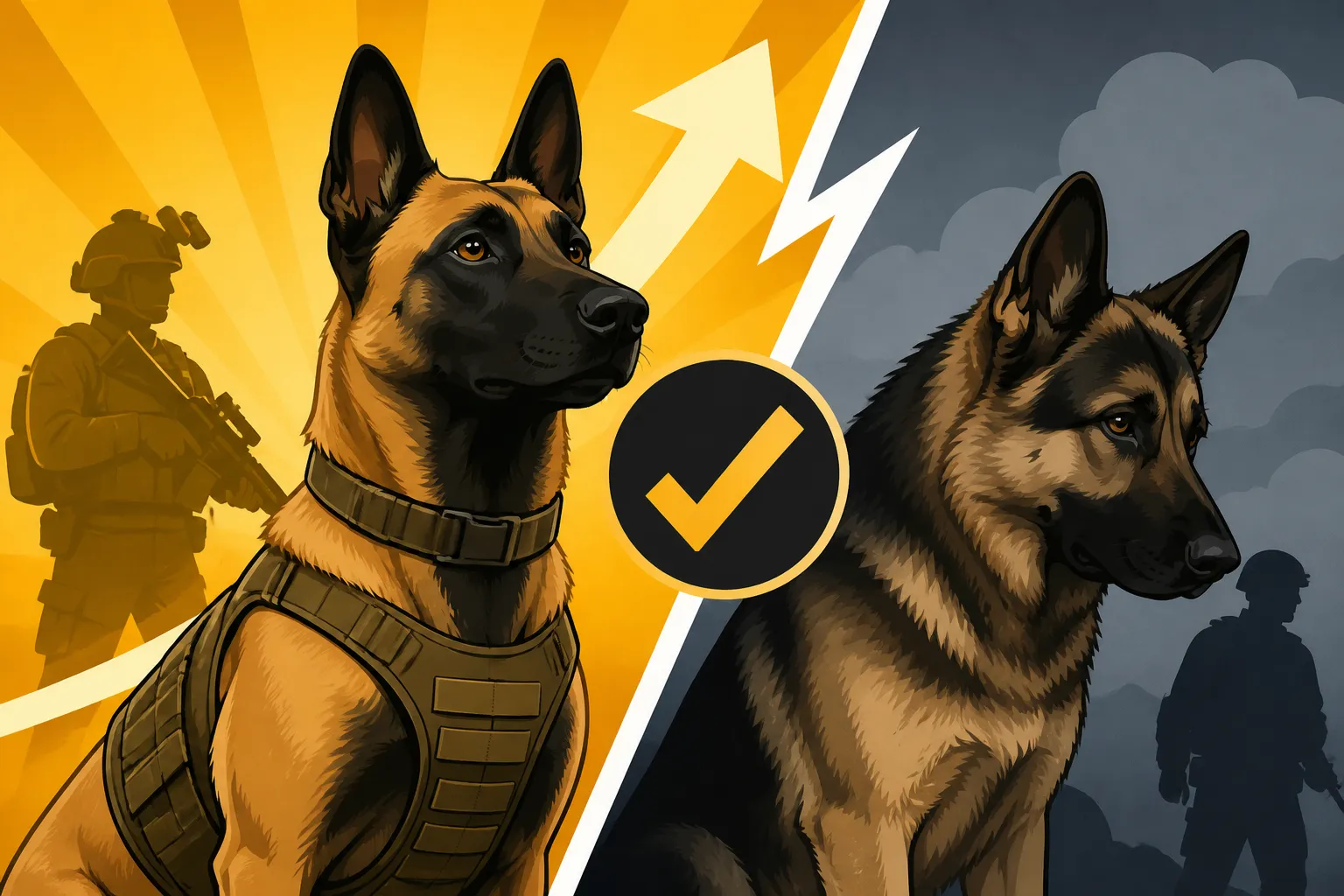
Choosing a military working dog is a meticulous process, weighing genetics, temperament, health, and trainability against the specific demands of the job. While the German Shepherd remains a phenomenal working dog with an incredible history of service, the Belgian Malinois has, for many military units, become the preferred choice due to its distinct physical advantages, unparalleled drive, rapid learning capacity, and robust resilience under the most challenging conditions. They are a breed purpose-built for intense, dynamic work, and their rise in military ranks is a testament to their exceptional capabilities.
Disclaimer
This article is for general informational purposes only and does not constitute professional advice. Laws, prices and regulations vary by location and change over time. Consult a qualified professional for guidance on your specific situation.