The Height Limits a Belgian Malinois Is Judged Against
One of the most common frustrations for any Belgian Malinois owner, especially if you're venturing into the world of conformation shows or simply trying to understand your dog's unique physical makeup, is trying to decipher the breed standard. It can feel like a secret language, full of precise measurements and subtle nuances. This guide aims to pull back the curtain on one of the most fundamental aspects: the height limits against which a Belgian Malinois is judged, helping you understand not just the numbers, but why they matter so much for this incredible breed.
Understanding the Breed Standard: More Than Just a Number
It’s easy to look at a breed standard as just a list of arbitrary rules, a collection of aesthetic preferences set by some committee long ago. But for a high-drive, performance-oriented breed like the Belgian Malinois, the standard is so much more. It's a blueprint, a historical document, and a guide for preserving the very essence of what makes a Malinois a Malinois.
Why Breed Standards Exist for the Malinois
Think about it: before formal breed clubs and registries, dogs were bred for specific jobs. The Malinois, as we know, started as a versatile herding dog in Belgium. Their original function demanded a particular physique—nimble yet powerful, agile yet durable, with incredible stamina. The breed standard, therefore, wasn't just pulled out of thin air. It evolved from observing the dogs that excelled at those demanding tasks. It describes the ideal physical traits that allowed them to effectively gather and protect livestock, patrol vast fields, and remain sound through years of hard work.
The standard preserves this working heritage by defining a consistent type. This consistency helps ensure that future generations of Malinois retain the physical attributes necessary for health, temperament, and performance. Without a standard, breeders might make choices that inadvertently dilute the breed's strengths or introduce undesirable traits. It's about maintaining predictable traits, not just some arbitrary beauty contest. Understanding The Years the Belgian Malinois Was Standardized can really put this into perspective, showing how deliberate the process was.
The Role of Height in the Belgian Malinois Standard
When we talk about a dog's height, especially in a working breed, it’s not just a standalone number. Height profoundly influences a dog's overall balance, proportions, and, most critically, its athletic ability and endurance. Imagine a Malinois that’s significantly taller than the standard; its legs might be too long relative to its body, leading to an awkward gait, potentially stressing joints, and making quick turns or tight movements less efficient. Conversely, a dog that’s too short might lack the stride length needed for covering ground swiftly during herding or pursuit work, struggling to keep up with livestock or a suspect.
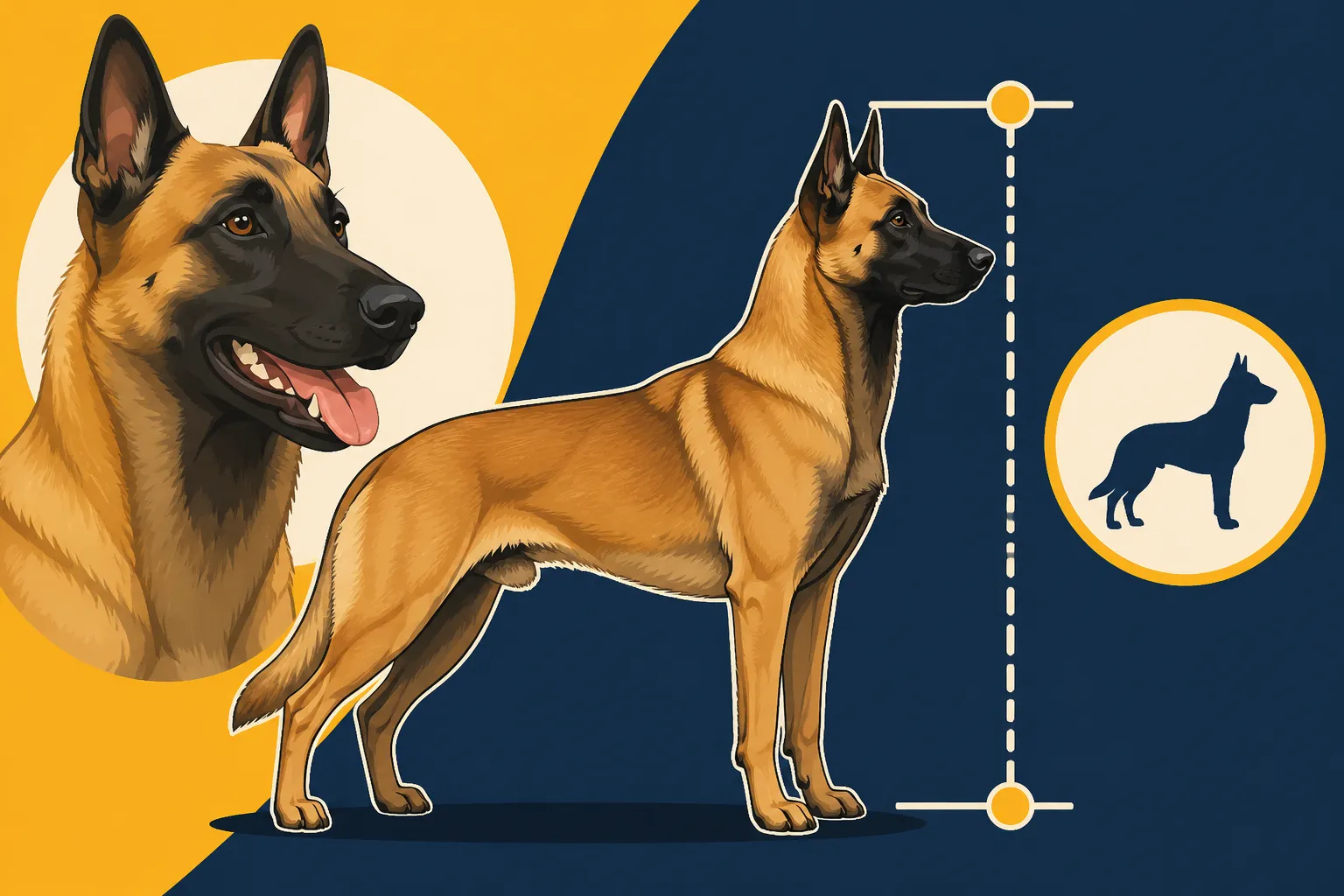
The ideal height for a Malinois contributes to its distinctive "square" silhouette – a body that is roughly as long as it is tall. This specific proportion is believed to optimize their agility, speed, and endurance, which are crucial for their demanding roles. Any significant deviation from the prescribed height ranges can throw off this delicate balance, impacting their movement, their ability to jump with precision, and their overall soundness over a lifetime of activity. It’s a foundational element for a reason.
Deciphering the Official Height Specifications
Getting down to brass tacks, the breed standard provides very specific ranges for both male and female Belgian Malinois. These aren't suggestions; they are the parameters against which a dog's physical conformity to the ideal is assessed, particularly in the show ring or for breeding purposes.
The Male Malinois: What the Standard States
For male Belgian Malinois, the official height range, measured at the highest point of the withers, is typically 24 to 26 inches (61-66 cm). When a judge, or even you at home, takes this measurement, it's done with the dog standing squarely, all four paws on a level surface, and their head in a natural position. The measuring tool, often called a wicket or height gauge, is placed perpendicular to the ground, with the crossbar resting gently on the top of the withers. The withers, for those unfamiliar, is the ridge between the shoulder blades, where the neck joins the back.
Within this 24-26 inch range, there's often an "ideal" height that many breeders strive for, often right in the middle, around 25 inches. Dogs within this range are considered to possess the balanced structure that allows for powerful, efficient movement without being overly leggy or too compact. It's a sweet spot that facilitates both explosive power and sustained endurance, which is exactly what you want in a working dog. If you're serious about competing, knowing The Height a Male Belgian Malinois Must Measure precisely is non-negotiable.
The Female Malinois: Standard Height Requirements
Just like their male counterparts, female Belgian Malinois also have a precise height specification, which is naturally a bit smaller. For females, the standard typically calls for a height of 22 to 24 inches (56-61 cm) at the withers. The method for measurement remains identical: on a flat surface, dog standing four-square, head up, and the wicket placed accurately at the highest point of the shoulder blades.
This slight difference in height between the sexes is common across many breeds and accounts for natural sexual dimorphism, where males are generally larger and more robust. For the female Malinois, this slightly smaller, yet still incredibly athletic, frame allows them to retain the same speed and agility while potentially having an easier time with tasks like whelping if they are part of a breeding program. The standard ensures they remain functional and maintain the breed's characteristic athleticism. Getting a clear picture of The Twenty Two to Twenty Four Inch Female Malinois is key if you have a female Malinois or are considering one for sport or breeding.
The Impact of Deviations: Over and Under the Limit
It's one thing to know the numbers, but it's another to understand the real-world implications when a Malinois falls outside these prescribed height limits. These deviations aren't just cosmetic; they can have profound effects on a dog's health, movement, and ability to perform the tasks the breed was designed for.
When a Malinois is Too Tall
A Belgian Malinois that exceeds the upper limit of the standard can face a range of challenges. Imagine a dog that's too tall—perhaps an inch or two over the 26-inch mark for males. This added height often means longer legs relative to their body depth, which can throw off their natural balance. Their gait might become gangly or less coordinated, particularly at speed or when navigating uneven terrain. This isn't just an aesthetic flaw; it translates to decreased efficiency in movement.
Furthermore, excessive height can put undue stress on a dog's joints. Longer bones can sometimes mean weaker angulation or less stable joints, potentially leading to orthopedic issues like hip or elbow dysplasia over time, or increasing the risk of injuries during intense activity. While the Malinois is known for its incredible athleticism, pushing the boundaries of natural skeletal structure can have consequences. In the conformation ring, being too tall is a serious fault, often leading to disqualification, as it fundamentally departs from the breed's functional type. The Disqualifying Heights in the Malinois Standard are there for good reason, directly impacting what makes a Malinois truly functional. If your Malinois is nearing Whether a Twenty Eight Inch Malinois Is Disqualified, you're definitely looking at a serious deviation from the standard.
When a Malinois is Too Short
On the flip side, a Malinois that is significantly shorter than the standard also presents functional and structural concerns. A dog that is too compact, perhaps an inch or two under the 22-inch mark for females, might have a reduced stride length. This means they have to take more steps to cover the same amount of ground, expending more energy and potentially lacking the sustained speed and endurance critical for herding or protection work. Their ability to clear obstacles or achieve maximum jumping height could also be compromised.
Beyond function, being too short can also distort the breed's signature "square" outline. The Malinois is meant to be well-balanced, with length proportionate to height. A shorter dog might appear long-backed or have disproportionately short legs, altering the powerful, agile image the standard defines. Like being too tall, being too short can result in disqualification in the show ring, as it indicates a departure from the ideal breed type that ensures optimal health and working ability. Both extremes highlight why the height limits are so carefully defined—they are about promoting the best possible form and function for the Belgian Malinois.
Measuring Your Malinois: Tips for Accuracy
Once you understand the importance of height, your next natural step might be to measure your own Malinois. This isn't just for show dogs; understanding your dog's size can give you insights into their growth, potential for certain sports, and even help you buy appropriately sized gear, whether it's a new crate or a harness from Chewy. Getting an accurate measurement can be a little tricky, especially with a wiggly Malinois, but with the right tools and technique, it's definitely doable.
Essential Tools and Setup for Home Measurement
To get a reliable height measurement at home, you don't need fancy professional equipment, but a few key items will make a world of difference. First and foremost, you'll need a dog measuring stick, often called a wicket or a height gauge. These are specifically designed for measuring dogs, usually with an adjustable horizontal bar and a stable vertical stand. You can often find these at specialty dog supply stores, or sometimes even through larger online retailers like Chewy. Avoid using a simple tape measure against a wall, as it's far too easy to be inaccurate.
Next, you need a flat, level surface. This is crucial. A sloped driveway, an uneven lawn, or even thick carpeting can throw off your measurement. A concrete patio, a garage floor, or a solid, non-slip mat indoors are ideal. Lastly, you need a calm environment. Your Malinois needs to be relaxed and willing to stand still for a few moments. If your dog is overly excited, stressed, or distracted, getting an accurate reading will be next to impossible. Practice getting your dog to "stack" or stand squarely, with good posture, using treats and praise before you even bring out the measuring stick.
Step-by-Step Guide to Proper Measurement
Alright, let's get into the actual measuring process. It's more straightforward than you might think, but precision is key.
- Position Your Dog: Have your Malinois stand squarely on your chosen level surface. This means all four legs should be under their body, not splayed out, and their weight should be evenly distributed. Their head should be held in a natural, alert position, not tucked down or stretched excessively high. You might need a helper to hold a treat at eye level to keep their attention forward.
- Locate the Withers: Gently feel for the highest point of your dog's shoulder blades. This is the withers. For some Malinois, especially those with thicker coats, you might need to feel for the bone structure beneath the fur.
- Place the Wicket: Position the measuring stick alongside your dog. The vertical part of the wicket should be straight up and down, perpendicular to the ground. Carefully lower the horizontal bar until it rests gently on the very top of your dog's withers. Make sure the bar is truly resting on the bone, not just floating on top of the fur, and that it's level.
- Read the Measurement: Read the height indicated on the vertical shaft of the wicket. It's often helpful to take a few measurements, allowing your dog to move in between, and then average them out to ensure consistency.
Common mistakes include letting your dog slouch, measuring from the top of their head instead of their withers, or trying to measure on an uneven surface. Remember, consistency and patience are your best friends here.
Height, Growth, and Development in Malinois Puppies
Watching a Malinois puppy grow is like watching a speeded-up film; they seem to sprout inches overnight! But understanding their growth trajectory, particularly how height develops, is crucial for ensuring they mature into sound, healthy adults. It's not just about reaching a certain height, but about how they get there.
Understanding Growth Patterns and Plateaus
Belgian Malinois puppies experience incredibly rapid growth during their first few months of life. Most of their height gain happens within the first 6 to 8 months. During this period, you'll notice them getting taller and longer at an astonishing rate. They can often look quite gangly and disproportionate, with giant paws and long legs, as their bones are growing quickly. By around six months, many Malinois puppies will have reached a significant percentage of their adult height, though they'll still have a good amount of filling out to do. The Weight a Malinois Hits by Six Months is a good indicator of where they are in this rapid growth phase.
After this initial growth spurt, the pace slows considerably. From about 8 months to 12-18 months, they might gain another inch or two in height, but the primary focus of their development shifts to "filling out." This means their chest will deepen, their musculature will develop, and they'll start to achieve that more mature, athletic Malinois physique. Some individuals, particularly males, might continue to mature and add substance until they are two years old. While growth plate closure means their bones won't get much longer after 18 months, their body condition and muscle mass will continue to improve.
Avoiding Practices That Harm Healthy Growth
Given the rapid growth rate of Malinois puppies, it's absolutely vital to manage their nutrition and exercise correctly. One of the biggest pitfalls new owners face is thinking "bigger is better" and overfeeding their puppies, especially with high-calorie, growth-promoting foods not specifically designed for large breeds. This can be incredibly detrimental. Pushing for rapid growth, particularly in large, fast-growing breeds, can put excessive strain on developing bones and joints, increasing the risk of orthopedic problems like hip and elbow dysplasia, osteochondrosis (OCD), or other skeletal issues. Why Pushing Growth Hurts a Malinois Puppy is a concept every Malinois owner should deeply understand.
Instead, focus on a high-quality, balanced diet formulated for large-breed puppies, which provides appropriate calcium and phosphorus ratios and controlled calorie intake. Avoid supplements unless specifically recommended by your vet. Similarly, while exercise is essential for a Malinois, controlled exercise is key for puppies. Avoid high-impact activities like excessive jumping, forced running, or long, strenuous walks until their growth plates have closed and their skeletal system has matured. Free play in a safe yard is great, but don't push them past their natural limits. Consult with your veterinarian on appropriate exercise levels throughout their first year.
Beyond the Tape Measure: Height in Context
While specific height measurements are critical for breed standards, it's important to remember that a Malinois is a dynamic, living being. Height alone doesn't tell the whole story. The overall picture—how that height integrates with the rest of their conformation and how it impacts their movement—is what truly defines a well-structured Malinois.
How Height Relates to Overall Conformation
Imagine a Malinois that falls perfectly within the standard height range, say 25 inches for a male. If this dog also has a very long back, or a shallow chest, that "correct" height suddenly feels out of place. The breed standard calls for a balanced, "square" outline. This means the dog's length, from the point of the shoulder to the point of the buttock, should be roughly equal to its height at the withers. This proportion is what allows for the distinctive Malinois gait: powerful, ground-covering, and seemingly effortless. The Square Outline a Belgian Malinois Should Have isn't just an aesthetic ideal; it's a functional one.
A dog with correct height but incorrect proportions elsewhere might have an awkward stride, reduced agility, or be prone to fatigue. For example, too short a leg for its body length might hinder its ability to clear obstacles, while too long a back could compromise spinal health over time, especially with the high-impact activities many Malinois engage in. Therefore, judges and experienced Malinois enthusiasts don't just look at the number on the wicket; they step back and assess how that height contributes to the dog's overall balance, athleticism, and the distinct Malinois type.
Working Malinois Against Show Malinois: Height Considerations
There's often a lively debate in the Malinois community about the differences between "working lines" and "show lines," and height frequently comes up in these discussions. It's commonly perceived that working line Malinois might be slightly smaller, perhaps at the lower end of the standard's height range, or even occasionally a touch under. This isn't because working lines ignore the standard, but rather because selection in these lines is often purely for performance—speed, agility, and endurance under pressure. A slightly more compact, lighter dog might have a perceived advantage in certain high-speed, high-impact disciplines.
Conversely, show lines are, by their nature, bred to strictly adhere to the written standard, which includes hitting the height target. However, it's crucial to understand that a well-bred Malinois, whether from working or show lines, should fall within the acceptable height parameters. The standard itself was derived from functional dogs. So, while there might be subtle differences in build or "type" between lines, both are aiming for an athletic, balanced dog. A true Malinois, regardless of whether it's primarily a show dog or a police K9, benefits from the optimal structure that the standard's height ranges aim to preserve. The best dogs, in either realm, are those that blend both correct structure and outstanding temperament and drive. Exploring the nuances of Working Malinois Against Show Malinois reveals that while priorities might shift, the fundamental structural requirements remain important.
The Breeder's Role in Maintaining Standard Height
For anyone seriously considering a Belgian Malinois, especially if conformation, sport, or breeding are on your radar, understanding the role of a responsible breeder in maintaining standard height is paramount. This isn't just about showing off a perfectly sized dog; it's about ensuring health, longevity, and preserving the functional integrity of the breed.
Responsible Breeding Practices for Conformation
Responsible Belgian Malinois breeders don't just randomly pair two dogs together. They meticulously research pedigrees, assess the conformation of their breeding stock, and have a deep understanding of the breed standard, including height. They are looking for dogs that not only fall within the acceptable height range but also possess the correct proportions and balance that contribute to overall soundness and athleticism. This means looking at the height of the sire and dam, as well as the heights of their ancestors, to predict what their offspring might develop into.
A good breeder will also track the growth of their puppies, observing how they develop and mature. They are striving for consistency in type, aiming to produce litters where puppies mature into adults that closely match the breed standard. This commitment goes beyond just height; it includes temperament, drive, and health clearances. They understand that a dog that is structurally sound is more likely to be a healthy, long-lived, and capable working companion, minimizing potential physical limitations down the road.
What to Ask a Breeder About Height and Structure
When you're speaking with a prospective breeder, don't be shy about asking detailed questions about their breeding philosophy and the physical traits of their dogs. Here's what you should inquire about concerning height and structure:
- Parental Heights: Ask for the exact heights of both the sire and the dam. A responsible breeder will know these figures offhand or have them documented. This gives you a direct indication of the genetic potential for height in the puppies.
- Previous Litters: Inquire about the mature heights of dogs from previous litters by the same parents or similar pairings. This provides real-world data on how their breeding choices manifest in adult dogs.
- Conformation Achievements: If the parents have show titles, this is a strong indicator that their structure, including height, has been evaluated and approved by breed experts.
- Health Clearances: While not directly about height, asking for proof of hip and elbow clearances is critical, as correct height and overall structure directly impact joint health. Knowing Looking Up a Malinois Sire's OFA Record is a vital skill for any prospective owner.
- Breeder's Philosophy: Discuss their overall approach to breeding for conformation versus working ability. While these aren't mutually exclusive, it helps you understand their priorities. They should articulate how correct structure contributes to both.
A transparent and knowledgeable breeder will welcome these questions, seeing them as a sign of an informed and serious buyer. They are partners in your journey to find a well-bred Malinois, and their expertise on breed standards, including the nuances of height, is invaluable.
| Feature | Male Belgian Malinois | Female Belgian Malinois |
|---|---|---|
| Standard Height Range (at withers) | 24 – 26 inches (61 – 66 cm) | 22 – 24 inches (56 – 61 cm) |
| Measurement Method | Standing squarely, level surface, wicket at highest point of withers, perpendicular to ground | Standing squarely, level surface, wicket at highest point of withers, perpendicular to ground |
| Typical Ideal | Around 25 inches (63.5 cm) | Around 23 inches (58.5 cm) |
| Too Tall (Disqualification Risk) | > 26 inches | > 24 inches |
| Too Short (Disqualification Risk) | < 24 inches | < 22 inches |
| Functional Impact if Deviant | Balance issues, joint stress, reduced efficiency, awkward gait | Reduced stride, less endurance, altered "square" outline, fatigue |
Disclaimer
This article is for general informational purposes only and does not constitute professional advice. Laws, prices and regulations vary by location and change over time. Consult a qualified professional for guidance on your specific situation.