The Height a Male Belgian Malinois Must Measure
Trying to navigate the precise breed standards for a Belgian Malinois can feel like deciphering an ancient text, especially when you're deeply invested in understanding your dog's lineage or planning for the show ring. It's not just about a tape measure; it's about the very essence of what makes a Malinois, well, a Malinois. This guide will walk you through the specifics of the male Belgian Malinois height requirements, why they matter, and what they mean for both working dogs and cherished companions.
Understanding the Breed Standard's Purpose
When you first look into a breed standard, it can seem like a collection of arbitrary rules, a set of hurdles designed solely for show dogs. But that's far from the truth, especially for a breed like the Belgian Malinois, whose historical purpose is so deeply ingrained in its physical and mental makeup. The standard isn't just about aesthetics; it's a blueprint for functionality, health, and temperament, distilled over generations.
More Than Just a Number: Why Standards Exist
Think of a breed standard as the ideal specification sheet for a highly specialized piece of equipment. For the Malinois, that equipment was initially a nimble, intelligent herding dog, capable of working long hours on varied terrain. Every aspect of the standard, from ear set to tail carriage, and critically, height and proportion, plays a role in ensuring the dog can perform its historical job effectively and remain sound throughout its working life. A dog that is too tall might lack the agility for tight turns or jump too high for its natural gait, while one that is too short might struggle with endurance over varied landscapes. It's about maintaining the athletic, balanced build that allows a Malinois to excel in protection sports, detection work, or simply be a highly engaged family member who can still keep up with an active owner. This pursuit of the ideal form helps to preserve the breed's distinct characteristics and working aptitude.
The Malinois Standard: A Blueprint for Function
The Belgian Malinois breed standard, whether you're looking at the American Kennel Club (AKC) version or the Fédération Cynologique Internationale (FCI) standard, describes an animal that is alert, agile, and robust. It's a testament to the breed's working heritage. The emphasis on a square body, strong back, and well-angulated limbs isn't just for looking good in a stacking pose; it's fundamental to the powerful, efficient movement required for its traditional roles. A Malinois isn't built for bulk; it's built for speed, endurance, and explosive power. The specified height ranges are critical because they define the parameters within which this optimal functionality is most likely to be found. Deviation too far in either direction often compromises either the dog's endurance, its agility, or its ability to withstand the rigors of demanding work without breaking down. The standard aims for a dog that can move gracefully and powerfully, whether it's tracking a scent or engaging a decoy.
The Specifics of Male Belgian Malinois Height
When you're trying to figure out if your male Malinois measures up, literally, the breed standard gives you some very clear parameters. It's not just about standing the dog up and holding a tape measure; there's a specific way to do it, and understanding the ideal range is crucial for anyone involved with the breed, from pet owners to serious competitors.
The Ideal Range: What the Standard States
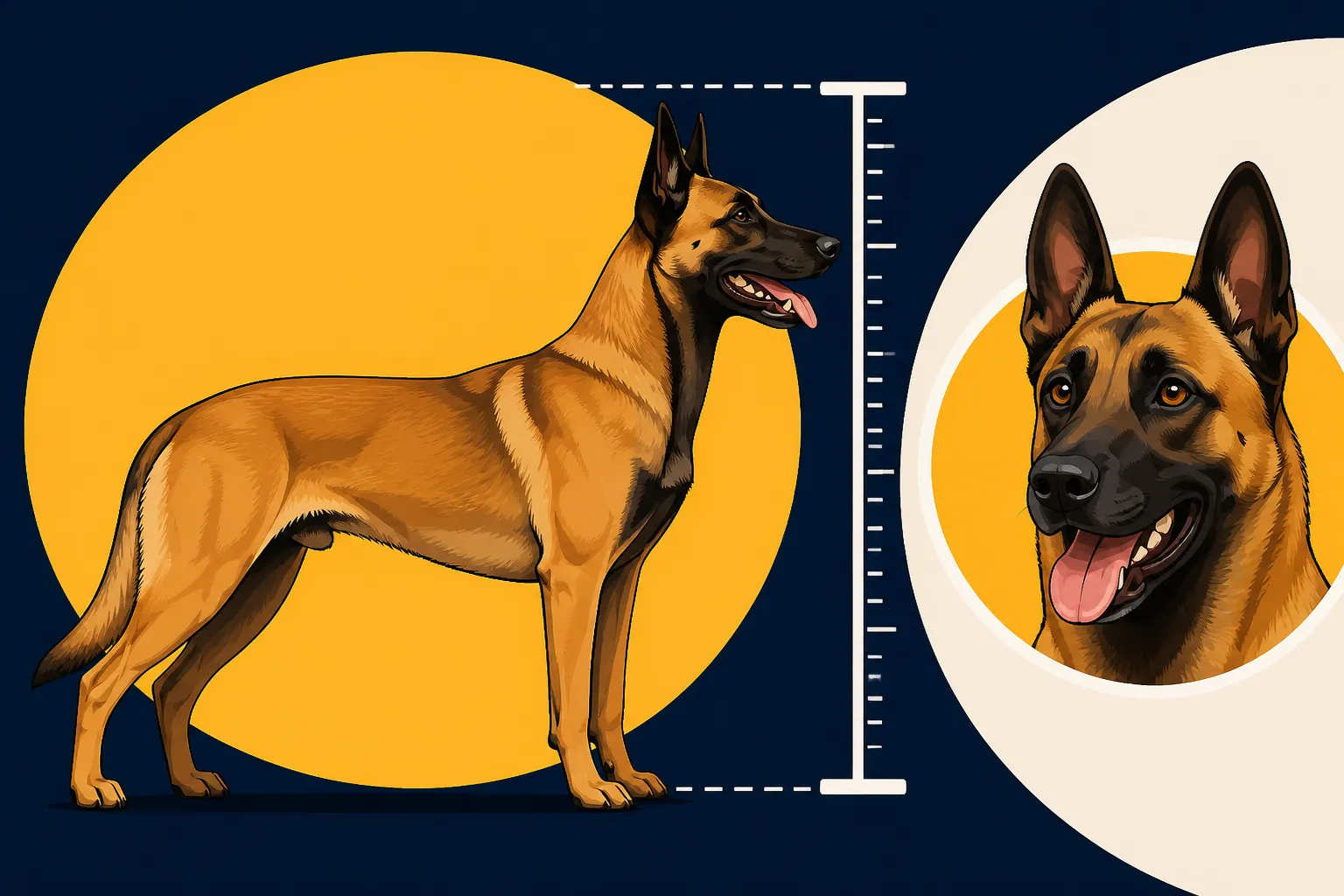
For a male Belgian Malinois, the accepted ideal height is typically between 24 and 26 inches (approximately 61 to 66 centimeters) measured at the highest point of the shoulder blade, known as the withers. This range isn't just pulled from thin air; it represents the sweet spot for a dog that needs to be powerful, yet agile, quick, but also have sufficient stride length to cover ground efficiently. A male Malinois within this range is generally considered to possess the correct proportions for both elegance and formidable athleticism. It’s important to remember that this is an ideal, and many wonderful Malinois may fall slightly outside of it without any functional detriment, especially if they are not intended for the conformation ring. However, when evaluating breeding stock or considering a dog for specific types of work, adherence to this range is often a key factor for breeders striving for consistency and type. Understanding The Height Limits a Belgian Malinois Is Judged Against can give you a deeper insight into how strict these measurements can be in different competitive venues.
How to Measure Your Malinois Accurately
Measuring a dog, especially a high-energy Malinois, can be a bit of an art form. You'll need a proper measuring stick or a ruler specifically designed for dogs, often called a wicket or a dog measuring tape with a horizontal arm. Here’s how you typically do it:
- Find a Flat Surface: The dog must be standing squarely on a completely level, hard surface – no carpeting that might sink or uneven ground.
- Square Stance: Encourage your Malinois to stand naturally, with its weight evenly distributed on all four feet. Its head should be up, but not strained upwards, and its back should be level, not roached or dipped. This can be tricky with a fidgety dog, but patience is key!
- Locate the Withers: The withers are the highest point of the shoulder blades, where the neck meets the back. This is often more easily felt than seen, especially on a muscular Malinois.
- Position the Wicket: Place the measuring stick directly behind the elbow, perpendicular to the ground. Lower the horizontal arm of the stick until it rests gently on the highest point of the withers.
- Read the Measurement: Take your reading. It's often helpful to have a second person to help steady the dog or hold the measuring device while you read. Practice makes perfect, and you might take a few measurements to ensure accuracy. If you're comparing your male Malinois to The Twenty Two to Twenty Four Inch Female Malinois, you'll notice the distinct difference in their ideal ranges.
This table provides a quick reference for male Malinois height:
| Characteristic | Male Belgian Malinois |
|---|---|
| Ideal Height | 24-26 inches (61-66 cm) at withers |
| Measurement Point | Highest point of shoulder blade (withers) |
| Method | Standing squarely on flat, hard surface with a wicket |
| Purpose | Ensures functional athleticism and breed type |
The Importance of a Balanced Build
While height is a specific measurement, it's really just one component of a larger picture: the overall balanced build of a Belgian Malinois. A dog might fall perfectly within the height standard but still be considered atypical if its proportions are off or if other structural elements are incorrect. The breed standard emphasizes balance because it directly impacts the dog's ability to perform, its longevity, and its characteristic movement.
Beyond Height: Proportion and Structure
A Malinois isn't just a tall dog; it's a square dog. The standard often states that the length of the body, measured from the point of the shoulder to the point of the buttock, should be approximately equal to the height at the withers. This "square outline" is critical for agility, quick turns, and explosive power, allowing for the powerful gait needed for herding or protection work. Consider The Square Outline a Belgian Malinois Should Have for a deeper dive into this important aspect. Beyond the square, every angle matters: the layback of the shoulder, the turn of stifle, the length of leg relative to body depth. These structural details combine to create a canine athlete. A male Malinois with excellent bone, solid muscling, and correct angulation will move with fluidity and strength, regardless of whether he's at the lower or upper end of the height standard. A dog that is too long in the back, for example, might be less agile or more prone to spinal issues, even if its height is within range. It's all about how the pieces fit together to create a powerful, efficient machine. This holistic view is what serious breeders consider and why you often see them pouring over pedigrees and structure. You can find many products to help with healthy growth and development on Chewy, supporting a strong structure from puppyhood.
Why Disqualifications Exist for Extreme Heights
Breed standards don't just state ideals; they also specify disqualifications, and extreme height deviations are often among them. For the male Belgian Malinois, being significantly over or under the specified range (e.g., typically over 26.5 or under 23.5 inches, though specific numbers can vary slightly between kennel clubs) usually means disqualification in the conformation ring. Why such strictness? Because extreme heights often come with functional compromises. An excessively tall Malinois might lose the characteristic agility and compactness. It could be more prone to joint issues due to disproportionate growth or simply struggle with the kind of tight, fast movements required in protection sports or herding. Conversely, a male Malinois that is too small might lack the powerful stride and presence expected of the breed, and could also have an incorrect build compromising its athletic potential. The Disqualifying Heights in the Malinois Standard explains these limits further. These disqualifications aren't meant to brand a dog as "bad," but rather to safeguard the integrity of the breed's functional type. A dog outside the standard might still make a wonderful pet, but it's not the ideal representative for continuing the breed's specific characteristics through selective breeding.
Height Variation and Its Practical Implications
It's common to see some variation in height within the Belgian Malinois breed, even among purebred dogs. These differences aren't just random; they often stem from different breeding priorities—whether a dog is bred primarily for the show ring, for intense working sports, or as a general companion. Understanding these nuances helps us appreciate the breed's versatility while also recognizing potential health implications.
Working Lines vs. Show Lines: Subtle Differences
Historically, Belgian Malinois were working dogs first and foremost, bred for utility rather than conformation ribbons. Today, while many dogs excel in both, there can be subtle differences between lines primarily bred for specific working disciplines (like KNPV, IGP, or military/police work) and those bred for the conformation show ring. Often, working line Malinois are selected first and foremost for their drive, temperament, nerve, and athletic ability. While height is still a consideration for soundness, a dog that performs exceptionally well might be accepted even if it's slightly outside the "ideal" show height range, as long as it's balanced and sound. For example, a working dog might be at the upper end of the standard, or even a half-inch over, if that extra leg contributes to a longer, more efficient stride needed for tracking or covering ground quickly. Conversely, show lines might place a slightly stronger emphasis on exact adherence to the written standard, including precise height, as part of the overall aesthetic presentation. However, it's crucial to understand that reputable breeders in both camps prioritize health and temperament. The differences are often less about drastic variations in height and more about the emphasis placed on different aspects of the standard. You can explore Working Malinois Against Show Malinois to learn more about these distinctions.
Health Considerations Related to Size
While the Belgian Malinois is generally a robust breed, any deviation from a balanced, moderate size can potentially introduce health considerations. Dogs that are excessively tall or have abnormally rapid growth can sometimes be more prone to certain orthopedic issues. For instance, too rapid growth in a puppy, often exacerbated by overfeeding, can contribute to problems like panosteitis (growing pains) or other developmental joint diseases, even if their mature height ends up within the standard. Similarly, disproportionately long bones relative to joint strength could, in theory, put additional stress on ligaments and tendons over a dog's active lifetime. While Malinois are generally sound, issues like elbow dysplasia or hip dysplasia can occur, and extreme size or proportions could theoretically exacerbate these conditions or make recovery more challenging. Therefore, responsible breeders not only aim for correct height but also focus on overall structural integrity and soundness, conducting health clearances for hips and elbows. Providing a balanced diet, such as the high-quality performance foods available on Chewy, is vital for controlled growth in puppies and maintaining condition in adults, mitigating some of these size-related risks.
What to Discuss with Breeders and Judges
If you're looking to acquire a Belgian Malinois, especially one from titled parents or for participation in sports, understanding how height is evaluated and discussed is really important. It gives you the language to communicate effectively with breeders and insight into what judges are looking for in the show ring.
Interpreting Pedigrees and Parent Measurements
When you're talking to a breeder about a potential puppy, don't be shy about asking about the parents' sizes. A good breeder will be transparent about the heights of their breeding stock and often have documented measurements. They might even have a good sense of the typical adult size their puppies mature to based on previous litters. While pedigrees don't usually list exact heights, they offer a window into the lineage, which can inform expectations. If both parents are consistently at the upper end of the standard, it's reasonable to expect their offspring to be on the larger side. Conversely, if one parent is smaller, there might be a broader range of sizes in the litter. This is where Reading a Belgian Malinois Pedigree Before Paying becomes incredibly useful. You're not just looking for numbers; you're looking for consistency and health in the lines. Breeders aiming for conformation titles will often prioritize parents who are reliably within the ideal height range and have a balanced structure. For working lines, the emphasis might shift slightly to proven working ability, but soundness and functional size are still paramount. Always remember to consider the overall build – a parent that's 26 inches but perfectly balanced is often preferred over one that's 25 inches but poorly put together.
What a Judge Looks For in the Ring
In the conformation ring, judges are evaluating how closely a dog aligns with the written breed standard. For a male Belgian Malinois, this includes a precise assessment of height. The dog is typically measured by an official steward before entering the ring or as part of the judging process. But it's not just about the number on the wicket; it's about how that height contributes to the dog's overall appearance and movement. A judge wants to see a male Malinois that is in proportion, athletic, and moves with purpose and efficiency. A dog that is too tall might appear leggy and less square, potentially compromising its agility. One that is too short might lack reach and drive in its gait.
A seasoned judge will observe the dog standing, assessing its overall balance, angulation, and bone structure relative to its height. Then, they watch the dog move around the ring, looking for a powerful, elastic, and free-moving gait. The height must complement the rest of the dog's structure to create the desired outline and functionality. Any disqualifying height (too tall or too short) will result in the dog being excused from the ring, as outlined in Whether a Twenty Eight Inch Malinois Is Disqualified. It's a comprehensive evaluation where height is a foundational, but not the sole, component of what makes a champion.
Living with a Malinois Outside the Standard (Pet Homes)
It's a common scenario: you bring home a Belgian Malinois puppy, and as they grow, you realize they might be a little bit taller or shorter than the breed standard dictates. For most pet owners, this isn't a problem at all. The breed standard primarily serves breeders and those involved in conformation showing. For a beloved family dog, what truly matters is health, temperament, and whether they fit into your life, not whether they can win a ribbon based on a specific measurement.
When Height Doesn't Define the Dog
The reality is that many wonderful Belgian Malinois, who are fantastic companions and capable of excelling in various activities, might fall slightly outside the precise height standard. Perhaps your male Malinois stands at 23.5 inches, just shy of the lower limit, or a robust 26.5 inches, nudging past the upper one. For a pet home, these minor deviations are usually irrelevant. The dog's capacity for affection, its intelligence, its drive for work or play, and its overall health are far more significant. A slightly smaller Malinois might even be a better fit for a home with limited space, or a slightly larger one might feel more substantial to an owner who enjoys a bigger dog.
What truly defines a Malinois is its intense personality, its relentless drive, and its deep bond with its owner. Whether it's doing scent work, agility, or just being an active family member, a dog's spirit and soundness generally outweigh a half-inch difference on a measuring stick. The vital thing is that the dog is well-structured and healthy, allowing it to enjoy a full, active life. Products like joint supplements or orthopedic beds, often found on Chewy, are beneficial for all active dogs, regardless of their exact height, ensuring their comfort and long-term well-being.
Practicalities for Owners with Larger or Smaller Malinois
While minor height differences don't typically impact a Malinois's overall quality of life, there can be some practical considerations for owners.
For a Larger-Than-Average Male Malinois:
- Space Requirements: A larger dog takes up more space, whether it's in your home, your car, or their crate. Ensure you have adequately sized crates, dog beds, and vehicle restraints.
- Food Consumption: Generally, a larger dog will eat more. Be prepared for slightly higher food costs.
- Joint Stress: While still a lean breed, a heavier, taller dog might put a bit more stress on its joints over time. Maintaining a lean body condition and discussing joint supplements with your vet can be wise preventative measures.
- Strength: A bigger Malinois might also be physically stronger, which means good leash manners and consistent training are even more crucial to prevent them from pulling you around.
For a Smaller-Than-Average Male Malinois:
- Perceived "Intimidation Factor": A smaller stature might mean they are perceived as less intimidating, which could be a factor if you are looking for a protection dog, though their drive and skill will ultimately matter more.
- Reach: In some working disciplines, like wall climbs or certain agility obstacles, a smaller dog might have to work harder or require different techniques.
- Temperature Regulation: A smaller surface area to volume ratio could, theoretically, mean a slightly different response to extreme temperatures, though coat type is usually a bigger factor.
Ultimately, regardless of whether your Malinois is perfectly within the height standard or a little outside of it, focusing on excellent nutrition, consistent training, appropriate exercise, and regular veterinary care will ensure you have a healthy, happy, and well-adjusted companion. The specific measurement at the withers is just one tiny piece of the magnificent puzzle that is the Belgian Malinois.
Disclaimer
This article is for general informational purposes only and does not constitute professional advice. Laws, prices and regulations vary by location and change over time. Consult a qualified professional for guidance on your specific situation.