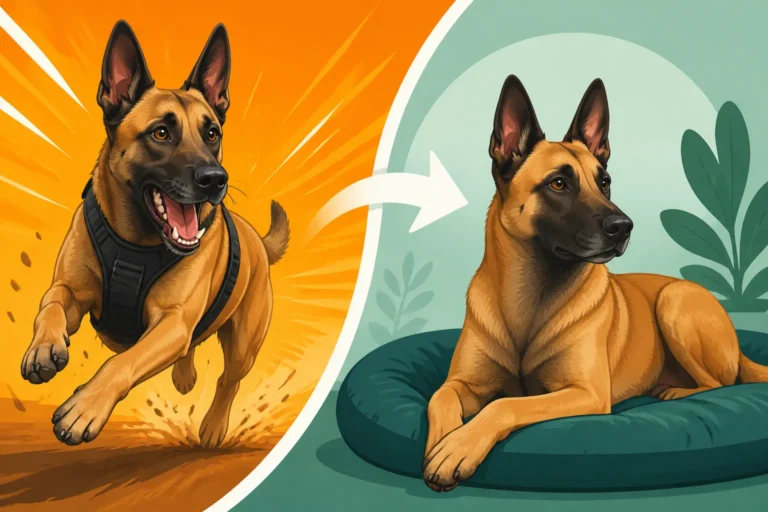
Where to See Malinois Working Before You Buy
Seeing a Belgian Malinois work in person can reveal what photos and breed descriptions miss: intensity, speed, vocalization, and the handler’s constant attention. But a single impressive demonstration is not enough to judge whether the breed fits your life. This guide explains where to watch Malinois working, what to look for, and how to ask useful questions before choosing a dog.
Where to watch Belgian Malinois working
Start with dog sports clubs and training fields
A local dog-sport club can offer a more useful view of everyday Malinois work than a polished demonstration. Depending on the club, you may see obedience, tracking, agility, scent work, or protection-sport training. These settings show how a dog responds to its handler between exciting moments, not just how fast it can chase a toy or perform a trained behavior.
Search for Belgian Malinois clubs and events in your area, along with terms such as IGP, French Ring, Mondioring, PSA, and scent detection. The rules and exercises vary, so watching more than one kind of activity can help you understand the range of work Malinois do. If a club lists a public training day, trial, or spectator event, contact the organizers before attending. Some sessions are private or unsuitable for visitors.
A club visit may be more revealing than a big event because you can observe several dogs at different ages and training levels. Notice whether the handlers can pause, reset, and settle their dogs between exercises. That everyday control matters just as much as a fast, dramatic performance. For background on what participating in a club can involve, see Finding a Club That Will Take a Belgian Malinois.
Look for public trials and breed events
A trial lets you see multiple teams work under the same general rules, which makes comparison easier. You can observe how different dogs handle distractions, how handlers communicate, and how a dog behaves after a mistake. It is also a chance to see that working ability is not one single look or style: Malinois can vary in build, temperament, training history, and drive.
Check the event’s spectator guidance before you go. Some venues welcome visitors, while others have limited space or require dogs to remain outside the competition area. Ask where spectators should stand, whether children are welcome, and whether recording is allowed. Even a friendly, well-trained dog may become highly focused around equipment, other dogs, and excited handlers, so give working teams room.
If possible, watch a full session rather than arriving only for the most exciting exercise. The quieter stretches can tell you a lot: Does the dog wait calmly? Can the handler redirect attention? Is the dog manageable when the activity ends? That broader picture helps you understand the breed’s daily demands. For a sense of how sport and working backgrounds can differ, read Working Malinois Against Show Malinois.
Consider demonstrations with realistic expectations
Police K9 demonstrations, public safety events, and community presentations can be accessible ways to see a Malinois at work. They may show searching, obedience, controlled apprehension, or detection tasks. These events can be impressive, but they are demonstrations—not a complete sample of the dog’s home life or the training required to produce that performance.
A demonstration dog is usually selected and prepared for a particular role. Its ability to perform in front of a crowd does not mean an average pet Malinois will behave the same way, nor does it tell you how much daily structure that dog needs. Ask whether the handler can explain the dog’s routine, training history, and off-duty behavior. A short conversation may give you a more grounded impression than the show itself.
Public demonstrations are also a poor setting for approaching or petting a working dog without permission. Watch from the designated area, keep your own dog at home unless explicitly invited, and avoid calling to the dog or waving toys. Respecting the team’s space is part of being a thoughtful spectator.
What to watch for during a working session
Look beyond speed and intensity
A Malinois racing after a ball or performing a protection exercise can grab your attention. Try to notice what happens before and after that moment. Does the dog look to its handler for direction? Can it disengage when asked? Does it recover after being startled or making an error? These observations are more useful than deciding that the fastest or loudest dog is automatically the best example of the breed.
Watch the handler, too. Skilled work usually involves clear communication, thoughtful timing, and planned breaks. If a dog is repeatedly pushed while tired or overexcited, that tells you something about the training approach, not necessarily about the breed as a whole. One session cannot settle every question, but it can help you form better ones.
A working dog may be alert and energetic while still showing control. Conversely, high activity alone is not proof of good working temperament. Ask the handler how the dog behaves in ordinary situations, such as traveling in a vehicle, waiting at home, meeting familiar people, or settling after training. For more on the experience and consistency this breed asks of its person, see The Handler Experience a Belgian Malinois Needs.
Notice the dog’s behavior between exercises
The moments between turns are often the most practical part of your visit. Watch whether the dog can rest in a crate, wait near its handler, or move calmly around the venue. Some vocalizing or anticipation may occur in a stimulating setting, but consider how the handler manages it and whether the dog can eventually settle.
Pay attention to recovery. After a high-energy exercise, does the dog return to a manageable state with support from its handler? Does it remain fixated on the field or equipment? Recovery can look different depending on the dog, the activity, and its training, so avoid judging a single behavior in isolation. Instead, ask what the dog is like on a normal day and how much time it takes to come down after work.
The goal is not to find a dog that never gets excited. Malinois are often energetic and responsive, and working environments can intensify those traits. The useful question is whether the handler has a realistic system for managing that energy and whether you would be prepared to provide comparable structure in your own home.
Compare several dogs and several settings
A single dog cannot represent an entire breed. Try to see Malinois at different ages and in different activities, and if possible, visit more than one club or event. A young dog still learning the basics may look very different from an experienced adult. A detection dog’s work may also reveal different qualities from a protection-sport routine.
Keep simple notes after each visit. Record what you saw, what surprised you, and what questions remain. For example, you might note that one dog worked eagerly but struggled to settle near other dogs, while another stayed focused during exercises and relaxed during breaks. These notes can help you distinguish your own preferences from the excitement of the event.
| What you observe | Helpful follow-up question | Why it matters |
|---|---|---|
| The dog waits between turns | How does it settle at home after training? | A field setting is not the same as daily life |
| The dog makes a mistake | How does the handler help it reset? | Recovery and handling offer useful context |
| The dog is highly focused | What does its daily routine look like? | Drive needs appropriate outlets and structure |
| The dog is calm around spectators | Is this typical, or specific to this dog’s training? | One dog’s behavior does not predict every Malinois |
| The handler praises the dog often | What methods and goals guide the training? | Training style should fit your values and experience |
How to plan a useful visit
Contact the organizer before you go
A short message can prevent an awkward or unsafe visit. Explain that you are considering the breed and would like to observe, then ask whether spectators are welcome and which session would be suitable. Be honest about your experience with dogs. A club may suggest a quieter event or ask you to attend without children or pets.
Ask whether there are visitor rules, such as staying behind a barrier, avoiding certain areas, or not speaking to handlers while they are working. Follow those instructions even if other spectators appear more relaxed. A handler may be concentrating on a dog that is highly engaged, and a small distraction can disrupt a training repetition.
If the event is outdoors, prepare for weather and uneven ground. Bring water for yourself, dress for standing around, and leave enough time to watch more than a single exercise. You do not need specialized equipment to be a good observer. If you already shop at Chewy for household pet supplies, remember that buying gear is not a substitute for meeting working dogs or learning about their needs.
Use your questions to learn about daily life
It is easy to ask, “Is this dog good?” A more useful question is, “What does this dog need on an ordinary weekday?” Ask how often it trains, what it does when it is not working, how it handles visitors, and whether it lives with other animals. Answers will vary because individual dogs and training routines vary, but the details can help you picture the commitment.
You can also ask what the handler wishes they had understood before getting a Malinois. That question often brings out practical realities that a performance does not show: managing excitement in public, providing structured activity, preventing boredom, and teaching the dog to rest. If the conversation turns to adoption rather than buying, The Questions a Malinois Rescue Asks Applicants can help you prepare for the kind of suitability questions a rescue may raise.
Avoid treating any one handler’s opinion as a guarantee. Someone who has successfully managed a high-drive working dog may have years of experience, a training network, and a lifestyle that differ sharply from yours. Collect perspectives from several people, including handlers whose dogs have different jobs and home arrangements.
Decide what you need to observe before you arrive
Before attending, write down the situations that matter most to you. If you have children, think about how the dog is managed around family activity. If you live in an apartment, ask about the handler’s routine for exercise, training, and quiet time—not simply whether a Malinois can live indoors. If you work long hours, ask how the dog’s needs are met during the day.
A visit cannot prove that a breed is suitable for your specific household. It can, however, help you spot mismatches early. If you are drawn mainly to the dog’s athletic image, but feel uneasy watching its intensity or management needs, take that response seriously. You are not required to like every working trait simply because it is impressive.
For a broader look at what a home needs to provide, read Whether a Belgian Malinois Belongs in a Pet Home. If you are comparing breeds or considering a dog with a specific pedigree, Reading a European Belgian Malinois Pedigree can help you think about lineage alongside the individual dog you have actually observed.
What to do after you have watched Malinois work
Give yourself time before choosing a puppy or dog
The excitement of seeing a capable dog work can create pressure to decide quickly. Resist that feeling. Visit more than once, meet dogs that are not performing at their best, and speak with people who have lived with the breed outside a training field. Ask breeders or rescues about temperament, health information, and the support they provide after placement.
When considering a puppy, ask how the breeder evaluates homes and matches puppies to them. A confident puppy in a short visit is not a reliable prediction of adult behavior. Likewise, one impressive parent does not guarantee that every puppy will have the same temperament, drive, or suitability for your plans.
A responsible decision includes the less glamorous pieces: time, supervision, training access, safe containment, and a plan for ordinary days. Retailers such as Chewy may be useful when you eventually make a practical supply list, but supplies cannot replace a realistic routine or appropriate training support. Think first about the life you can offer; shop later.
Compare the dog you want with the life you can provide
After your visits, write down your realistic weekly schedule. Include work hours, commuting, family responsibilities, training opportunities, rest, and backup care. Then compare that schedule with what handlers describe as necessary for their dogs. A yard or long walk may be useful, but neither automatically provides the guidance, engagement, and recovery time a high-energy dog may need.
If the breed still feels right, continue learning before making a commitment. Visit a club again, ask about beginner-friendly activities, and meet adults living in different kinds of homes. If it feels like too much, that is a sound conclusion—not a failure. Seeing working Malinois before choosing one is valuable precisely because it gives you a chance to make an informed decision without rushing.
Chewy can be one place to explore ordinary pet-care supplies once you know what you need, but avoid buying a pile of equipment as a way to reassure yourself that you are ready. The important preparation is understanding the dog, finding knowledgeable support, and having a sustainable plan for its everyday life.
Disclaimer
This article is for general informational purposes only and does not constitute professional advice. Laws, prices and regulations vary by location and change over time. Consult a qualified professional for guidance on your specific situation.