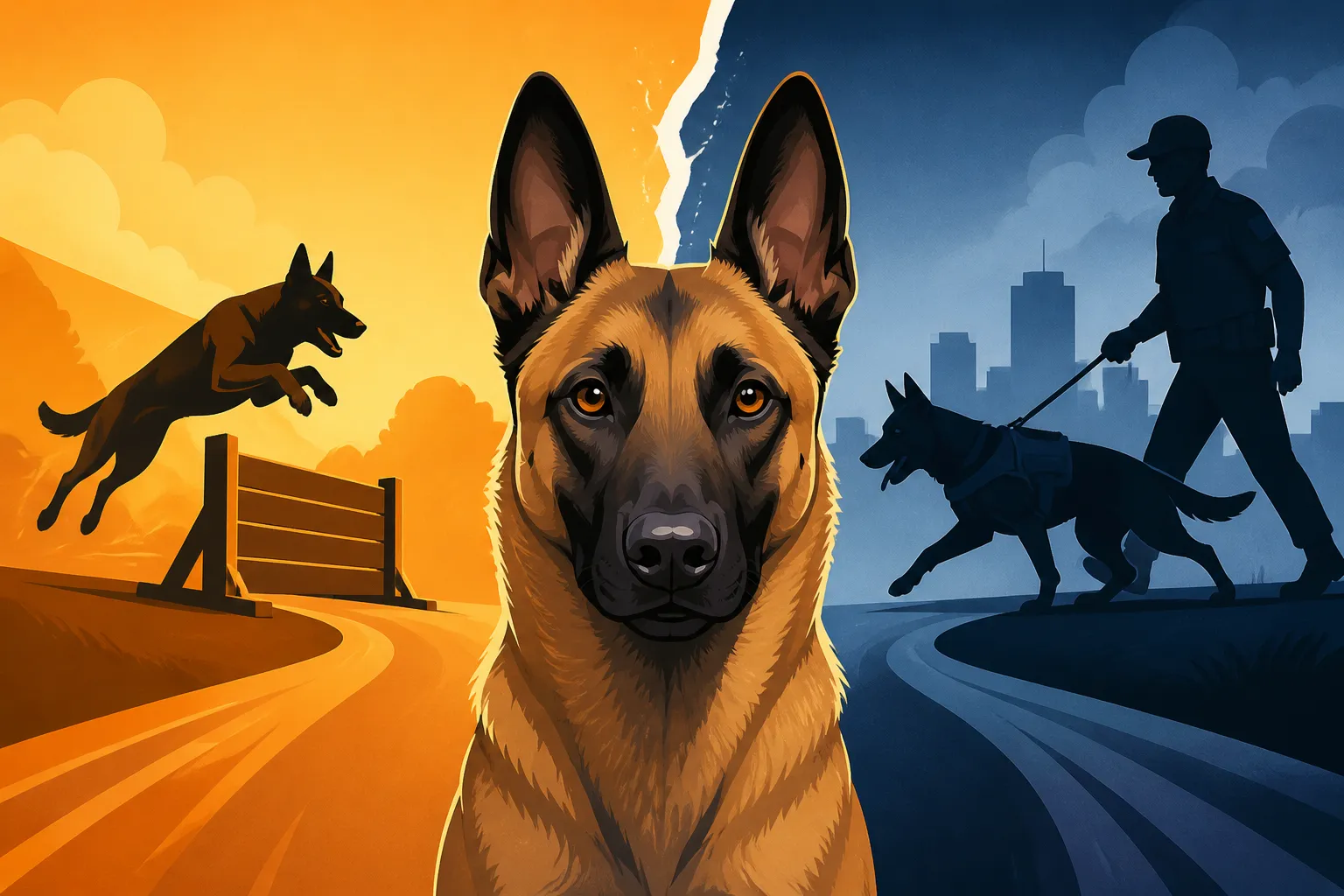
Whether Malinois Sport and Police Lines Are Diverging
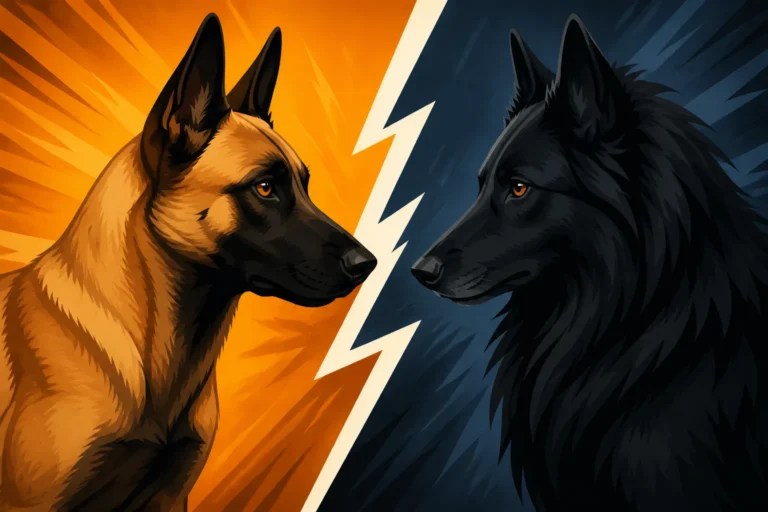
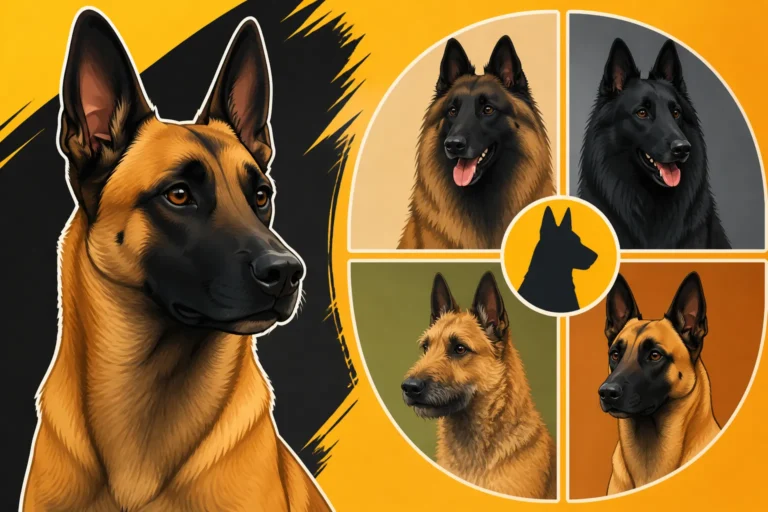
A sport-bred Belgian Malinois and a police-bred one can look remarkably similar, yet differ in the traits their breeders and trainers prioritize. That makes “sport line” and “police line” useful clues, not guarantees about an individual dog. This guide explains where selection has pushed the lines apart, where they still overlap, and what to assess before choosing a Malinois.
What sport and police lines are selected to do
Breeding lines develop through repeated choices about which dogs produce the next generation. When breeders favor different jobs over many generations, tendencies can become more common in one population than another. That does not create two formally separate breeds: sport and police Malinois are still Belgian Malinois, and variation within each group can be substantial.
Sport lines prioritize performance in a defined ruleset
Sport breeders generally select for traits that help a dog perform in organized working sports such as IGP, Belgian Ring, or Mondioring. Depending on the program, that can include strong engagement with a handler, confidence in new environments, athletic movement, persistence, and the ability to perform trained behaviors amid pressure and distraction.
The exact target depends on the sport and the breeder. A dog bred for one competition program may not be an ideal match for another, and even dogs from the same litter can differ in intensity, nerve, focus, and recovery. “Sport line” therefore describes a breeding direction more than a single, predictable personality.
Sport work also has structure: dogs learn specific exercises and perform them under a defined set of conditions. That is different from assuming a sport-bred dog is automatically easy to handle at home. A talented competition dog may still be demanding, particularly if its daily life lacks clear routines, training, rest, and appropriate outlets.
Police lines prioritize operational usefulness
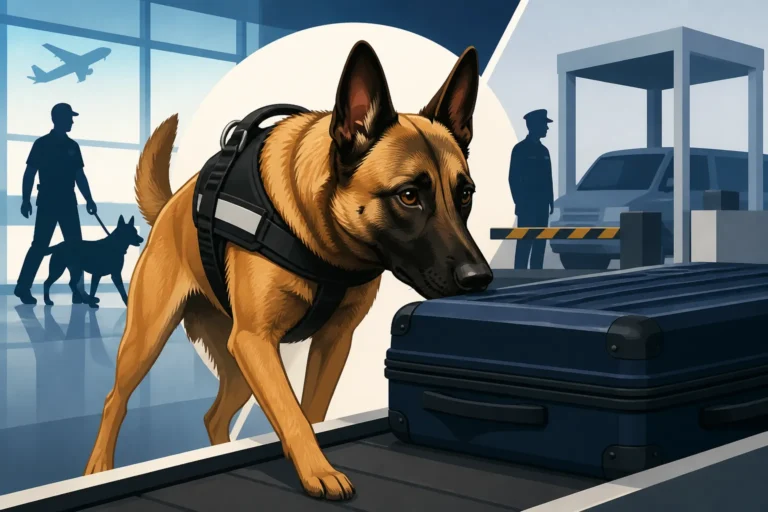
Police breeding and selection are shaped by the practical requirements of a working agency. A dog may need to learn patrol tasks, search, tracking, or detection, depending on the role and training program. Confidence, resilience, physical soundness, and the ability to work with a handler are often important considerations, but agencies and breeders do not all seek exactly the same package.
It is also worth separating a dog’s breeding background from its job title. A Malinois described as “police bred” may come from relatives used in police work without having been evaluated or trained for law enforcement itself. A dog with police-service relatives is not automatically a suitable candidate for deployment, and a dog from sport lines may still have qualities that make it useful in other working roles.
Police selection can be shaped by real-world constraints: a dog must be manageable by its assigned handler, able to function in the environments it encounters, and suited to the agency’s training and operational needs. Those demands can differ from the goals of a competition field. For background on the breed’s development in this area, see How the Belgian Malinois Took Over Police Work and Why Military Units Buy Malinois Over Shepherds.
The labels describe tendencies, not separate types
“Sport line” and “police line” are informal descriptions. They do not tell you everything about a dog’s temperament, health, training, or suitability for a home. Breeders may use dogs from varied backgrounds, and a litter may combine pedigrees associated with different work. The label is best treated as a starting point for questions, not a conclusion.
There is also overlap between the traits useful in sport and those useful in police work. Both settings may value a dog that can learn, stay engaged, recover after stress, and work with a handler. What differs is how those traits are tested, which tasks matter most, and what the breeder or organization considers a successful outcome.
How far the lines have diverged
The two populations have not become completely separate, but selection for different jobs can produce meaningful differences in common tendencies. The clearest way to understand that divergence is to look at the work each dog is expected to do, then remember that individual dogs do not always match the average.
Different jobs reward different combinations of traits
A sport program may place considerable emphasis on the dog’s performance in particular exercises, including precision, motivation, and consistency under competition conditions. A police program may place more weight on practical deployment requirements, such as learning job-specific tasks and functioning in operational environments. These priorities can overlap, but they are not interchangeable.
That difference matters for prospective owners. Someone drawn to sport may want a dog with the enthusiasm and physical ability to train regularly, while also being prepared to teach calm behavior outside training. Someone attracted to police-line pedigrees may be drawn to the idea of a versatile working dog, but should still ask what the dog itself has been bred and prepared to do. A pedigree label cannot replace an honest assessment of the owner’s experience, schedule, and goals.
It is easy to hear that one line is “harder,” “more stable,” or “more suitable for families.” Those sweeping descriptions can hide more than they explain. Working ability, social behavior, arousal, environmental confidence, and settling at home are related but distinct qualities. A dog may excel at a work task and still need careful management in ordinary situations.
Pedigrees reveal context, not a guaranteed outcome
A pedigree can show a pattern of working titles, service roles, or repeated ancestors, but it does not predict every important detail about a puppy. A title tells you that a dog met a particular standard in a defined activity; it does not provide a complete picture of the dog’s behavior in a home, health, or response to unfamiliar people and environments.
Ask the breeder to explain what the parents and close relatives are like in daily life, not only what they have accomplished. Useful questions include how the dogs recover after excitement, how they settle between work sessions, what kinds of environments they have experienced, and whether there are known concerns in the family. If a breeder cannot give a clear account of the dogs behind a litter, a dramatic label in a sales description should not fill that gap.
Comparing lines also means looking beyond the most impressive dog in a pedigree. Ask about siblings and offspring, where that information is available. A single exceptional ancestor can attract attention, but the consistency of the broader family may tell you more about what a breeder tends to produce. Reading a European Belgian Malinois Pedigree offers a useful companion topic for understanding the background behind a dog’s ancestry.
Individual variation remains large
Even when two lines show different average tendencies, there can be plenty of variation within either one. A sport-bred Malinois may be calmer or more environmentally steady than a dog from a police-associated pedigree. A police-line dog may be highly driven, sensitive, or challenging to settle. Neither outcome should be treated as a contradiction.
The puppy’s early environment, social learning, training, health, and relationship with its handler all matter as the dog develops. Those factors do not erase inherited tendencies, but they help shape how those tendencies appear in everyday life. A puppy chosen solely because it carries a certain label may turn out to have a very different mix of traits from what the buyer expected.
| Question | Sport-line background | Police-line background | What to verify |
|---|---|---|---|
| What work shaped selection? | A particular sport or competition program | Agency or operational work, which can vary | The actual activities of close relatives |
| What does the label promise? | No specific temperament or competition result | No service qualification or deployment readiness | The individual dog’s observed behavior |
| What should a buyer ask about? | Training goals, recovery, engagement, and settling | Role, selection history, training, and everyday behavior | Health, temperament, and breeder transparency |
| What can’t the label establish? | That the dog will be easy at home | That the dog is suitable for police work | Suitability for the buyer’s real lifestyle |
Choosing a Malinois for the life you can offer
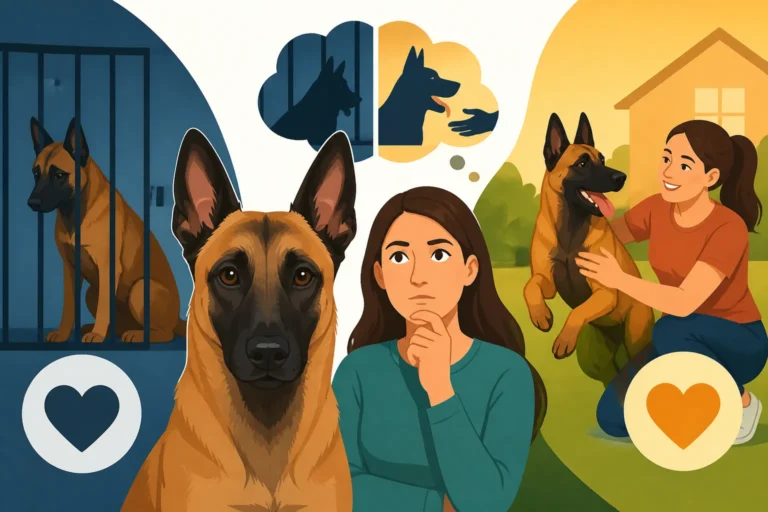
The most useful question is not which line is better in general. It is which individual dog, from which breeder, is a sensible match for your experience and daily routine. That takes more than looking at a pedigree or watching a high-energy training video.
Start with the job you actually want the dog to do
Be specific about your goals. “I want an active dog” is too broad to guide a responsible choice. Are you prepared to train for a sport with a club and instructor? Are you interested in scent work, tracking, or another structured activity? Do you mainly want a companion who can join you on hikes and settle at home afterward? Each answer calls for a different conversation with a breeder.
If you are interested in sport, visit a reputable club and observe more than the dramatic parts of training. Watch how handlers manage dogs before and after an exercise, how dogs wait their turn, and how training is adjusted when a dog is struggling. If you are curious about law-enforcement work, remember that professional selection and training are not the same as buying a puppy with a certain pedigree. Learn about the demands of the role without assuming a private owner can or should recreate them.
A Malinois does not need police or protection work to have a meaningful life, but it does need thoughtful handling and a routine that fits the dog. For alternatives and owner expectations, see The Job a Pet Belgian Malinois Can Be Given and What Happens to an Unemployed Belgian Malinois. These are especially relevant if your interest comes from the breed’s reputation rather than from experience in a working program.
Evaluate the dog and breeder, not just the marketing
Ask to meet the mother, if possible, and learn about the father and close relatives. Pay attention to how the adult dogs respond to ordinary events and how they recover when something surprising happens. A brief visit cannot establish a full temperament profile, but it can give you a starting point for discussion. Ask the breeder to describe both strengths and challenges honestly.
Request health information and ask what screening has been completed for the parents and relevant relatives. Look for clear records and explanations rather than relying on a general claim that the dogs are “healthy.” Ask how puppies are raised, what experiences they receive, how the breeder evaluates them, and how puppy placements are matched to homes. A good breeder should be willing to discuss whether a particular puppy is not a fit for a particular buyer.
Be cautious if a seller treats “police line,” “sport line,” or “high drive” as proof that a puppy will be superior or automatically suitable for your goals. Those phrases may describe a real breeding context, but they do not substitute for evidence about the individual dogs. Related guides include Working Malinois Against Show Malinois and Whether Show Malinois Have Lost Working Ability, which help place selection goals in a broader breed context.
Plan for life beyond the training field
A working pedigree does not remove the ordinary responsibilities of dog ownership. You will still need to consider exercise, training, preventive care, safe transport, and time to help the dog settle. A high-energy routine that consists only of running or repeated ball chasing can leave important skills unaddressed, including calm behavior, handler focus, and the ability to rest.
Food and equipment should be chosen for the particular dog and its activity, ideally with advice from a veterinarian when health or nutrition questions arise. If you are comparing routine supplies, a retailer such as Chewy may be one option for finding everyday items, but products do not replace individualized veterinary guidance. A dog that trains hard may need a different feeding and recovery plan from a lightly active companion; neither “sport line” nor “police line” gives you a complete care plan. Feeding a Malinois That Works Every Day explores those day-to-day considerations.
Also make room for the unglamorous parts of ownership: teaching the dog to wait calmly, managing greetings, preventing rehearsal of unwanted behaviors, and planning for days when training is not possible. The right match is not simply the dog with the most drive or the most impressive relatives. It is the dog whose needs you understand and can meet consistently. If you are unsure, spend time around adult Malinois in several settings before committing.
What the line distinction means for prospective owners
The sport-versus-police distinction is useful when it leads to better questions. It becomes misleading when it is treated as a shortcut for predicting temperament, performance, or suitability. Think of the line as context: it may help explain what breeders have emphasized, but the individual dog and the quality of the match matter more.
Use labels to guide questions, not make the decision
When someone describes a puppy as sport-bred or police-bred, ask what that means in that specific breeding program. Which relatives participated in which activities? What qualities are the breeders trying to preserve? How do they assess puppies and match them with homes? What are the known limitations of the pedigree? Detailed answers are more informative than confident slogans.
Try to connect each answer to your own plans. If a breeder emphasizes intensity and strong engagement, ask how those traits show up outside training. If the family has a history of service work, ask whether the dogs have also lived in homes and what their everyday behavior is like. If a breeder highlights competition results, ask what training and handling those results involved.
This approach helps keep expectations realistic. A dog does not become an ideal sport partner or working prospect because a label says it should. It must have the individual abilities for the activity, and its handler must be prepared to develop them responsibly.
Look for a match that can succeed at home
A suitable Malinois is not necessarily the most intense puppy in a litter. Depending on your experience and goals, a dog with a more moderate profile may be a better fit than one with exceptional drive but needs you are not prepared to meet. The breeder should be able to talk through that trade-off without pressuring you toward the boldest or most dramatic dog.
Consider your full week, not just your best training day. Think about work hours, travel, other pets, visitors, exercise options, and the support available if you become ill or need help. A sport club, experienced trainer, and supportive veterinarian can all be part of a realistic plan. If the plan depends on everything going perfectly, it may need more thought before you bring a puppy home.
The breed’s work reputation can be compelling, but it should not turn a dog into a symbol of a job you do not actually intend to do. Sport and police breeding have both shaped modern Malinois in important ways, and neither category is a guarantee. The best decision comes from understanding the breeding context, meeting the dogs, asking specific questions, and choosing a dog whose needs fit the life you can genuinely provide.
Disclaimer
This article is for general informational purposes only and does not constitute professional advice. Laws, prices and regulations vary by location and change over time. Consult a qualified professional for guidance on your specific situation.