The Questions a Malinois Rescue Asks Applicants
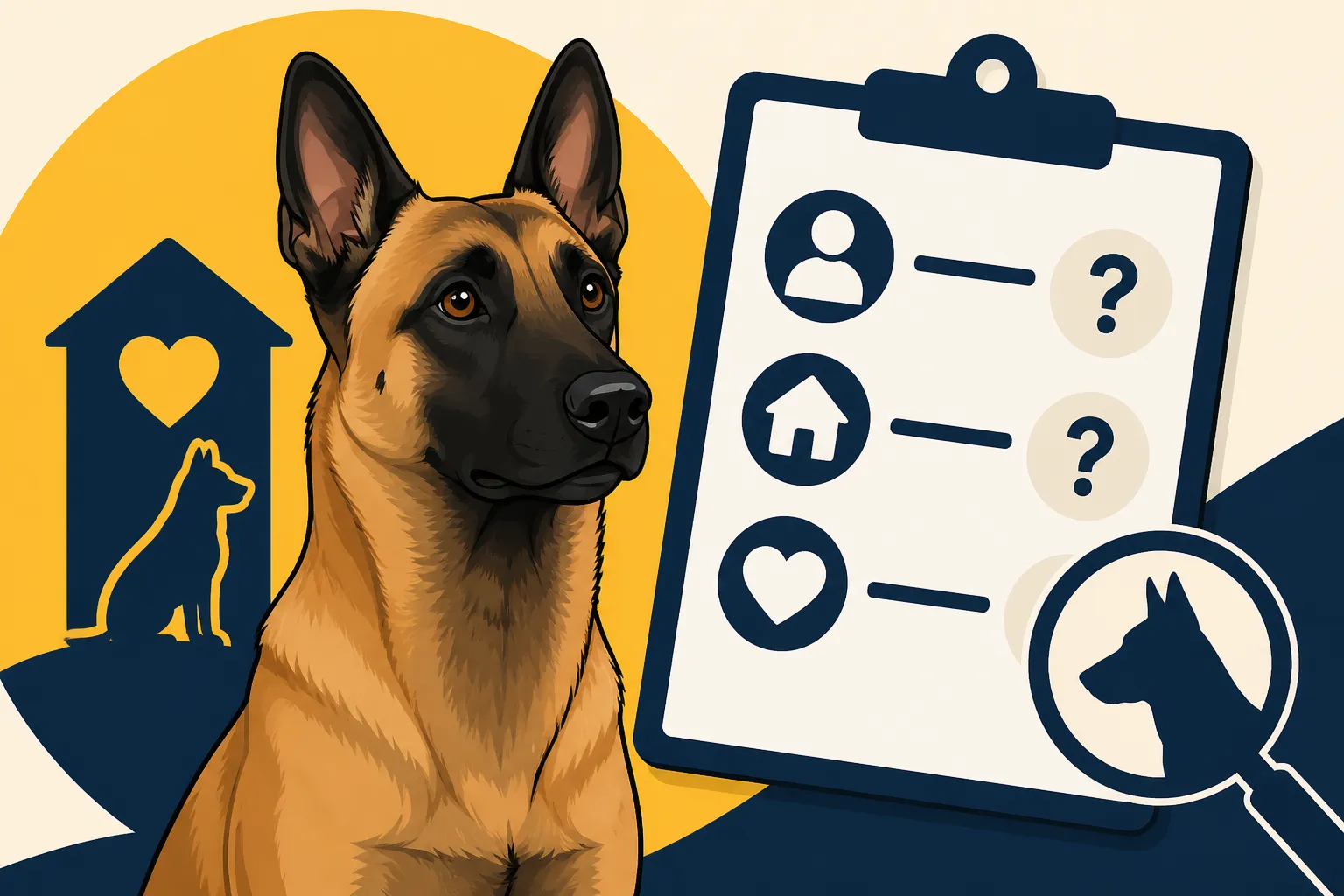
A Malinois rescue application can feel surprisingly personal: expect questions about your schedule, home, experience, other pets, and what you’ll do when a high-drive dog struggles to settle. Those questions are not a test you need to “pass” with perfect answers. They help the rescue understand whether a particular dog fits your real life—and what support could make the placement safer and more successful.
Why Malinois rescues ask detailed questions
The breed’s needs affect the match
Belgian Malinois are not interchangeable with one another. Age, temperament, training history, health, and previous experiences can all change what a dog needs in a home. A rescue may ask about exercise, enrichment, supervision, and daily routines because the right match is about more than whether you like the breed.
A person who enjoys long hikes might still be a poor fit for a dog that is uncomfortable around unfamiliar dogs. A quieter home with predictable routines could suit that same Malinois well. Likewise, a young dog with little training may need a handler who can commit time to structured learning, while an older dog may be a better fit for someone seeking a calmer companion.
Rescues also want to know whether your expectations are realistic. A fenced yard does not automatically provide enough activity or training, and a Malinois does not necessarily arrive ready to accompany you everywhere. If you are still learning what daily life with the breed involves, reading The Kind of Owner a Belgian Malinois Requires and Whether a Belgian Malinois Belongs in a Pet Home can help you describe your plans more clearly.
Questions help protect both the dog and your household
Some rescue dogs have a history that is incomplete or difficult to confirm. The organization may know how a dog behaved in a foster home but not how it will respond to every new situation. Asking about children, visitors, cats, other dogs, and handling helps the rescue consider foreseeable challenges rather than make promises it cannot guarantee.
This is not a reason to hide a complicated detail. If your resident dog guards toys, your home has frequent visitors, or you work long shifts, say so. The rescue can then decide whether a particular dog could thrive with management and support—or whether another dog would be a safer match. An honest conversation can prevent a stressful placement and a painful return.
The same principle applies to breed expectations. Many applicants are drawn to the Malinois’s intelligence and athleticism but underestimate the daily structure the dog may need. If you are weighing the realities, Why So Many Belgian Malinois Are Rehomed and Why Most Belgian Malinois Owners Underestimate the Breed offer useful context for thinking through your readiness.
The questions you may be asked about your home and routine
Your schedule, exercise plan, and time alone
Expect questions about when you leave home, how long the dog would be alone, who will care for it, and what a normal weekday looks like. The rescue is trying to picture the dog’s day, not simply count the hours you are away. They may want to know whether the dog will have a planned walk, training or enrichment, rest, and a reliable bathroom routine.
A useful answer is concrete. Instead of saying, “I’ll exercise the dog a lot,” describe a realistic weekday: “I work from home three days a week. On office days, my partner will handle a midday break. We’ll use short training sessions and planned walks, and I’m arranging a gradual transition rather than leaving the dog alone for a full workday immediately.” If your schedule changes, explain how you will adjust.
Be candid about limits. If you travel regularly, have unpredictable shifts, or expect the dog to stay alone for long periods, explain what care you can arrange and whether that arrangement is dependable. You can explore The Hours a Malinois Tolerates Being Alone and The Structure a Belgian Malinois Needs Every Day before applying, then describe a routine you can actually maintain.
Your property, fencing, and household members
A rescue may ask whether you rent or own, what kind of fencing you have, and how the dog will be supervised outdoors. They may ask about gates, shared yards, nearby traffic, or whether the dog would ever be left outside unattended. These details matter because an energetic, determined dog can find weak spots in a setup that seems adequate for a more relaxed pet.
If you rent, expect questions about landlord approval, breed restrictions, and how you will handle a move. If you live with family or roommates, the rescue may want to know whether everyone agrees to the adoption and understands the dog’s needs. A household member who is afraid of dogs, or a roommate who regularly leaves doors open, is relevant information—not an awkward detail to gloss over.
For homes with children, describe the children’s ages, their experience with dogs, and how adults will supervise interactions. For homes with other pets, explain the animals’ temperaments and how introductions would be managed. A rescue may decide that a particular dog needs a pet-free home or a home without young children. That is a matching decision, not necessarily a judgment about your family.
| Topic | What the rescue may ask | Helpful details to prepare |
|---|---|---|
| Daily schedule | How long will the dog be alone? | Work hours, breaks, backup care, transition plan |
| Exercise and enrichment | What will the dog do each day? | Walks, training, scent games, rest, weather alternatives |
| Home setup | Is the yard secure? | Fence condition, gates, supervision, rental approval |
| Household | Who lives in the home? | Ages, comfort with dogs, agreement on responsibilities |
| Other animals | Are there pets in the home? | Temperament, history, separation and introduction plan |
| Experience | Have you handled similar needs? | Training history, support network, willingness to learn |
| Budget and care | How will you manage routine and unexpected care? | Veterinary relationship, savings plan, insurance research |
Questions about experience, behavior, and support
Your dog experience and training plans
A rescue may ask whether you have owned a Malinois or another working breed, what training methods you have used, and what you would do if the dog barked, pulled, chased wildlife, or struggled around other dogs. The organization is not necessarily looking for a professional trainer. It wants to understand your judgment, patience, and willingness to ask for help before a manageable issue grows.
If you are a first-time Malinois owner, say so plainly. Explain what you have learned, what support you plan to use, and how you will keep the dog and others safe while you build skills. For example: “I haven’t owned a Malinois before. I’ve spoken with a trainer who works with high-drive dogs, and I plan to start with management, predictable routines, and basic skills rather than assuming the dog can handle crowded outings right away.”
Avoid claiming that you can fix any behavior. A rescue dog may need time to decompress, and behavior can look different after a move. A realistic answer might include using secure equipment, preventing uncontrolled interactions, and seeking qualified help if a concern appears. To think through the breed’s daily needs, see The Mental Work That Finally Tires a Malinois Out and Whether a Rescue Belgian Malinois Can Be Retrained.
Questions about behavior you can and cannot manage
You may be asked whether you are comfortable with barking, separation distress, resource guarding, reactivity, prey drive, or a bite history. These questions can feel intimidating, especially if you are worried that one honest answer will end your application. But a rescue needs to know what you can safely handle. Saying “I’m comfortable with everything” does not help if you have never managed a dog that reacts on leash.
Be specific about your boundaries. You might be willing to work with a dog that needs calm, controlled introductions, but not one with a known history of serious aggression toward children. You might have experience with separation training but lack the setup to manage a dog that cannot be left alone. Clear limits can help the rescue direct you toward a suitable dog or suggest a different path.
If you have resident pets, the rescue may ask how you will introduce them. A careful plan often means separation at first, gradual exposure, and professional guidance where needed—not putting the dogs together and hoping they sort it out. The relevant question is not simply “Do you have another dog?” but whether you can manage the household safely if the animals need ongoing separation.
Health care, costs, and practical support
Rescues may ask whether you can provide routine veterinary care and respond to unexpected health needs. They may also ask about previous veterinary providers, pet insurance research, or how you would manage treatment if the dog needed ongoing care. You do not need to share private financial records to answer thoughtfully, but you should have a realistic plan for food, preventive care, training, equipment, and emergencies.
It is reasonable to ask what medical information is available, what care the rescue has already arranged, and whether the dog has known conditions or medication needs. Ask who will provide records and what follow-up is recommended. If a dog has a history of injury or ongoing symptoms, discuss the care plan with a veterinarian rather than relying on assumptions based on the dog’s appearance or energy level.
Practical preparation matters too. If you need durable supplies, a safe crate, or food during the transition, retailers such as Chewy may be one place to look, but check product suitability and your veterinarian’s guidance before changing food or selecting equipment. You can also use What a Malinois Rescue Asks in Adoption Donations to consider the financial side of adoption and The Questions a Malinois Rescue Asks Applicants as a reminder to prepare for an open, two-way discussion.
How to prepare for the application and interview
Give honest answers with examples
Before you apply, write down your daily schedule, household members, pets, fencing details, training plans, and backup care. Think through the less convenient scenarios: the dog will not settle after an exciting day, reacts to a passing dog, or needs to stay home while you attend an appointment. You do not have to solve every possibility in advance, but you should show that you have considered them.
Concrete answers are more useful than confident slogans. “I can handle a high-energy dog” tells the rescue little. “I can commit to training and enrichment, but I cannot safely manage a dog with a known history of attacking small animals because I have two cats” gives the organization information it can act on. A thoughtful limit can be a sign of responsible ownership.
If something changes after you submit your application—your job schedule, housing, or household—tell the rescue. An application describes your circumstances at a particular time, and a responsible match depends on accurate information. It is better to pause or revise your plans than to push through an adoption that no longer fits.
Ask questions of the rescue, too
The screening process should be a conversation, not a one-way audition. Ask what the rescue knows about the dog’s behavior in a home, how the dog responds to handling, what situations are difficult, and what support is available after adoption. Ask what is unknown as well. A careful organization should be able to distinguish observed behavior from assumptions and gaps in the dog’s history.
You can also ask how introductions are handled, whether a foster-to-adopt arrangement is possible, what happens if the placement is not safe, and whether the rescue requires the dog to be returned to them if circumstances change. Policies vary, so read the agreement closely and ask for clarification before signing. A clear return plan can prevent an owner from feeling trapped if the match genuinely fails.
Pay attention to how the organization responds to your questions. You should be able to discuss concerns without being pressured to make a rushed decision. At the same time, a rescue may decline an application for a particular dog even if you are a capable owner; that can reflect the dog’s needs, not a verdict on your character. A good match may take patience.
Build a realistic first-weeks plan
Ask what to bring home with the dog, what routine the dog is accustomed to, and how to manage the first days. Keep the initial environment predictable. Avoid planning a parade of visitors or a busy outing immediately after pickup. Give the dog time to rest, observe, and learn where food, water, and quiet space are.
Agree on household rules before the dog arrives. Decide who handles walks, feeding, training, and veterinary appointments. Plan how doors and gates will be managed, where the dog can rest undisturbed, and how you will separate the dog from children or other pets when needed. Simple consistency is often more helpful than a packed schedule of activities.
A rescue adoption is a relationship built on information and follow-through. When you answer candidly, ask direct questions, and plan for the dog you are actually meeting—not an imagined version of the breed—you give both your household and the Malinois a better chance to settle into a lasting home.
Disclaimer
This article is for general informational purposes only and does not constitute professional advice. Laws, prices and regulations vary by location and change over time. Consult a qualified professional for guidance on your specific situation.