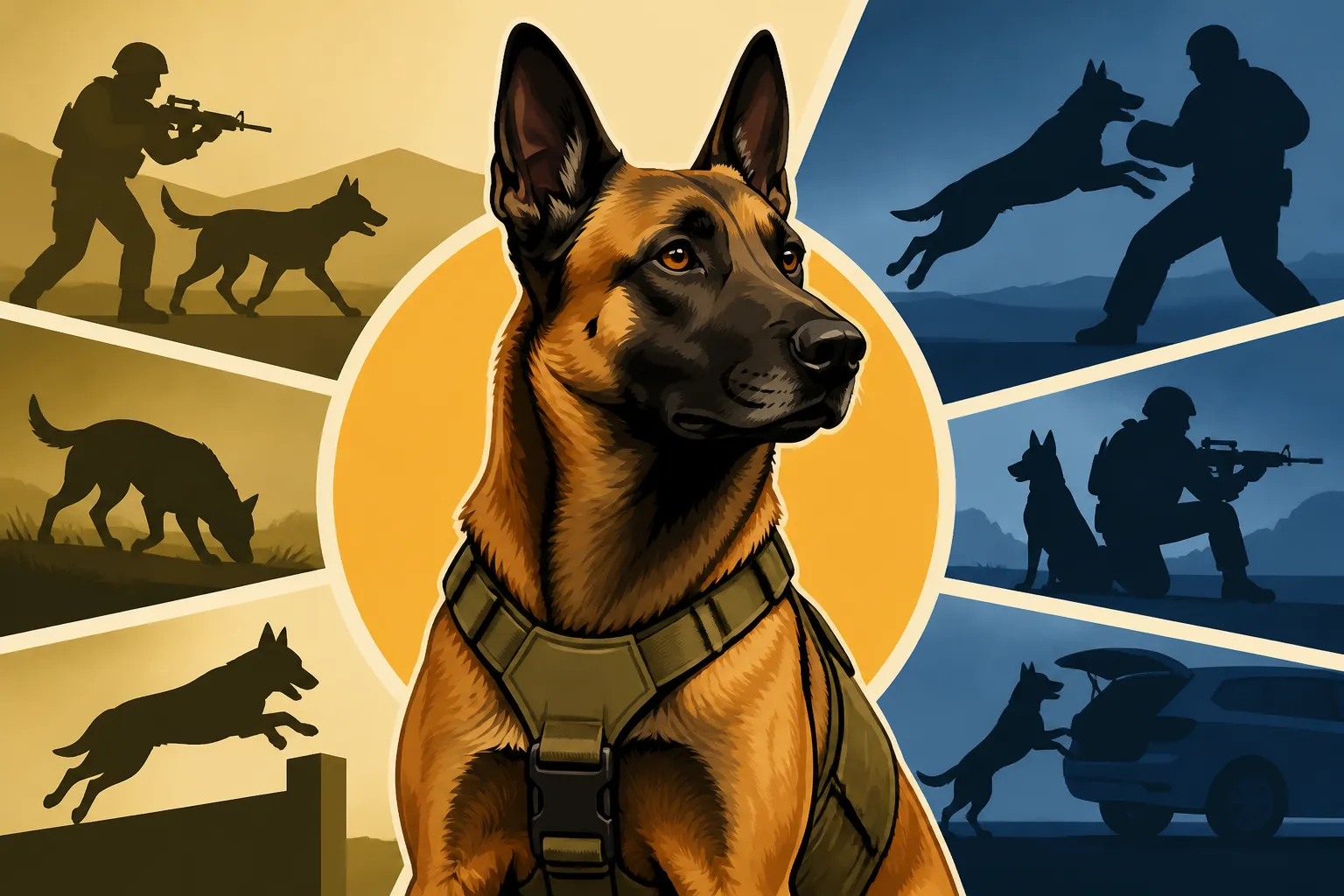
What a Malinois Combat Assault Dog Does
The image of a Belgian Malinois, lean and intensely focused, often conjures up thrilling scenes of military operations and daring rescues. While these dogs are indeed incredible athletes and partners, many people wonder what it truly means for a Malinois to be a "combat assault dog" – it's far more than just looking tough. This guide will delve deep into the specialized, high-stakes world of these elite canine operatives, exploring their training, roles, and the immense dedication required to perform under extreme pressure.
Understanding the Role of a Combat Assault Dog
When we hear the term "combat assault dog," it's easy to picture a dog charging into battle. In reality, their role is far more nuanced and critically integrated into special operations. These aren't just pets with a uniform; they are highly trained, specialized members of elite military and law enforcement units, designed to operate in the most dangerous and complex environments imaginable. Their purpose is to provide an unmatched tactical advantage, often saving human lives.
More Than Just a "Guard Dog"
Forget the typical image of a guard dog patrolling a fence line. A combat assault dog, frequently a Belgian Malinois due to their unparalleled drive and athleticism, is a precision instrument. They're not simply there to deter or bite; they are an extension of their handler, capable of sophisticated problem-solving and decision-making under stress. Their training emphasizes controlled aggression, but equally important are their sensory abilities and their capacity for complex obedience, even amidst chaos. They're expected to work silently, take intricate commands, and adapt instantly to changing situations, often in complete darkness or under heavy fire.
Integrated into Tactical Operations
These dogs are not deployed as standalone units; they are an integral part of a human team. This means they participate in mission planning, rehearse scenarios, and deploy alongside their human counterparts. Their duties can range from breaching buildings and clearing rooms to tracking high-value targets through dense terrain. They provide an early warning system, detecting hidden threats that human senses might miss, and act as a deterrent or direct force when necessary. The bond between the Malinois and its handler is absolutely critical, built on countless hours of training, trust, and mutual reliance. It's a partnership where each understands the other's cues, often without a spoken word.
Key Skills and Training of a Malinois Combat Assault Dog
The training regimen for a Belgian Malinois destined for combat assault work is incredibly demanding, starting from a young age and continuing throughout their active careers. It leverages their natural instincts and channels them into highly specialized, mission-specific skills. This isn't your average obedience class; it's an intense, rigorous program designed to forge an unbreakable working dog.
Advanced Obedience and Control
Before any specialized skills are taught, a combat assault Malinois must possess flawless obedience. This goes far beyond "sit" and "stay." We're talking about off-leash control at extreme distances, silent commands, and the ability to hold a "down" or "stay" for extended periods under immense distraction, including gunfire, explosions, and screaming. The dog must be able to be called off a bite instantly, even when adrenaline is coursing. This level of control is paramount, as a dog that cannot be perfectly managed in a combat zone becomes a liability, not an asset. Imagine needing to recall your dog from a suspect while a sniper covers you – there’s no room for hesitation. This critical foundation is what allows handlers to trust their dogs in life-or-death situations. Dropping a Malinois at Thirty Yards is a fundamental skill that must be absolute.
Detection Capabilities
One of the most valuable assets of a combat assault dog is their incredible sense of smell. These Malinois are trained to detect a wide array of substances, including explosives, narcotics, and even specific human scents (for tracking). They learn to pinpoint the exact location of these substances and alert their handler, often with a passive signal like sitting or lying down, to avoid triggering devices. This skill is vital for clearing buildings, searching vehicles, and identifying improvised explosive devices (IEDs) before they can harm personnel. The precision required for these tasks means countless hours spent in scenario-based training, ensuring accuracy and reliability in varied environments. For a deeper dive, consider Explosives Detection Training for a Belgian Malinois.
Protection and Apprehension Techniques
While often sensationalized, the protection work of a combat assault Malinois is highly refined and controlled. They are trained to apprehend hostile individuals, using their bite for defense and control, not simply aggression. Crucially, they learn to differentiate between threats and non-threats, a complex task that requires nuanced understanding and exceptional handler communication. Their bite is powerful and tenacious, but the training focuses on target acquisition (e.g., the arm or leg of a suspect, not the head or neck) and immediate release on command. This capability is used for securing perimeters, disarming hostile individuals, and providing cover for human operatives. It's a testament to their training that they can engage with such intensity and yet switch off immediately upon command. What Bite Sport Actually Asks of a Belgian Malinois provides a glimpse into this foundation.
Tracking and Reconnaissance
The natural prey drive and keen senses of a Malinois make them exceptional trackers. Combat assault dogs are trained to follow human scent trails over diverse terrains, often under adverse conditions, to locate missing persons, fleeing suspects, or hidden enemy combatants. Beyond simple tracking, they are also utilized for reconnaissance, silently moving ahead of their human team to scout for ambushes, hidden personnel, or booby traps. Their smaller size and agility compared to a human make them ideal for navigating tight spaces or areas too dangerous for a person to enter first. This ability to extend the team's sensory reach into unknown territory is invaluable.
The Malinois Advantage in Combat Operations
It's no accident that the Belgian Malinois has become the breed of choice for many elite military and law enforcement units around the globe. Their unique combination of physical attributes, mental fortitude, and intense drive makes them exceptionally well-suited for the rigorous demands of combat assault roles.
Unmatched Drive and Work Ethic
The sheer intensity and drive of a Belgian Malinois are legendary. These dogs aren't satisfied with a walk around the block; they crave a job, a purpose, and constant engagement. In a combat scenario, this translates into an unwavering focus and a relentless pursuit of their objective. They possess an almost limitless energy reserve, allowing them to work for extended periods without faltering. This "always on" mentality means they are always alert, always ready, and always pushing to perform. For a normal pet owner, this drive can be overwhelming, but for a combat handler, it's precisely what makes the breed so valuable. Consider the demanding schedule of Two Hours and a Job a Belgian Malinois Demands Daily for a typical Malinois, then amplify that for military service.
Physical Attributes for Demanding Environments
Malinois are built for speed, agility, and endurance. Their athletic, medium-sized frames allow them to navigate varied terrain, climb obstacles, and withstand the physical rigors of combat. They are lighter and more compact than some other working breeds, making them easier to transport, whether by vehicle, helicopter, or even during parachute insertions. Their double coat provides protection against diverse weather conditions, and their lean, muscular build gives them both power and stamina. These physical traits enable them to keep pace with highly conditioned human operators, ensuring they don't become a bottleneck during fast-moving operations.
Intelligence and Trainability
Beyond their physical prowess, Malinois are incredibly intelligent and highly trainable. They learn complex commands quickly and retain information efficiently. This intelligence, combined with their strong desire to please their handler and their intense focus, allows them to master the intricate and specialized tasks required of a combat assault dog. They can interpret situations, adapt their responses, and problem-solve in real-time, often anticipating their handler's next move. This cognitive ability is what allows them to perform nuanced tasks, rather than just simple, repetitive actions.
Mental Toughness and Resilience
Combat environments are inherently stressful, unpredictable, and dangerous. A combat assault dog must possess extreme mental toughness to withstand the noise, chaos, and danger without faltering. Malinois are renowned for their resilience and ability to remain composed under pressure. They are not easily rattled by loud noises, sudden movements, or unfamiliar environments. This mental fortitude is a critical component of their success, ensuring they can execute their duties when human emotions might be at their breaking point.
The Realities and Challenges of Their Service
While the image of a Malinois combat assault dog is often heroic, the reality of their service is incredibly demanding, fraught with challenges, and comes with significant personal sacrifice from both dog and handler. It's a tough job with serious implications.
High-Risk Operations
These dogs are deliberately placed in harm's way. They are often the first into a dangerous area, sniffing out explosives, apprehending armed suspects, or drawing fire to protect their human teammates. This means they are at constant risk of injury or death from gunfire, shrapnel, IEDs, or other combat hazards. Every mission carries inherent dangers, and handlers must constantly weigh the risks to their canine partner against the tactical advantages they provide. The bond they share makes these decisions incredibly difficult.
The Bond with Their Handler
The relationship between a combat assault Malinois and its handler is unlike any other. It's built on absolute trust, constant communication, and shared experiences in extreme circumstances. The handler is responsible for the dog's well-being, training, and deployment, and in return, the dog offers unwavering loyalty and a willingness to put its life on the line. This deep bond is essential for effective teamwork and is often described as one of the most profound relationships a service member can experience. The SEAL Handler Who Wrote About His Malinois speaks volumes about this unique connection. When not actively deployed, these dogs are still incredibly demanding. High-quality food is essential, and brands like Chewy offer performance formulas that can help meet their intense caloric needs.
Physical and Mental Toll
The demanding nature of their work takes a significant toll. Physically, these dogs endure immense stress on their bodies, leading to a higher incidence of injuries compared to a typical dog. Torn Cruciates in a Jumping Belgian Malinois and Shoulder Injuries a Malinois Takes From Decoy Work are common ailments due to the explosive movements and impacts involved. Mentally, they are exposed to highly traumatic events, which can sometimes lead to stress-related behaviors. Their care, both physical and psychological, is paramount, involving specialized veterinary attention and ongoing conditioning. Routine check-ups and preventative care are crucial to keep these canine athletes at their peak.
Retirement and Life After Service
Even the most dedicated combat assault dogs eventually reach an age or sustain injuries that necessitate retirement. The transition from active service can be challenging. Many are adopted by their handlers, forming an even deeper bond in a civilian setting. However, finding a suitable retirement home requires careful consideration of their needs, which often still include significant mental and physical stimulation, albeit at a reduced intensity. Retiring a Working Belgian Malinois From the Job details this important phase of their lives. Access to good nutrition and appropriate gear even in retirement, perhaps from a trusted retailer like Chewy, remains important for their continued well-being.
Caring for the Combat Assault Malinois: Beyond the Mission
The life of a combat assault Malinois extends beyond their operational duties. Their well-being, both on and off the job, requires meticulous attention to nutrition, physical conditioning, and mental stimulation, ensuring they remain peak performers and enjoy a good quality of life.
Fueling the High-Performance Athlete
These dogs burn an incredible amount of calories daily. Their diet is specifically formulated to support high energy levels, muscle maintenance, and rapid recovery. High-quality, protein-rich performance kibble is essential, often supplemented with specific nutrients for joint health and overall vitality. Just like human athletes, their nutritional needs are monitored closely and adjusted based on their workload, environment, and individual metabolism. Brands available through retailers like Chewy often offer specialized formulas designed for working dogs. What Performance Kibble Costs for a Malinois is a significant ongoing expense for these incredible animals.
Maintaining Peak Physical Condition
Beyond training for specific tasks, combat assault Malinois undergo continuous physical conditioning. This includes structured exercise routines that build strength, endurance, and agility, minimizing the risk of injury. Activities might include running, swimming, obstacle courses, and targeted exercises to strengthen core muscles. Regular veterinary check-ups are critical, as are preventative measures against common working dog ailments. Any injury, even minor, can compromise a dog's ability to perform, making rapid, effective treatment crucial. Sometimes, a Malinois might face health issues like The Spinal Disease That Ends a Malinois's Mobility, which requires ongoing care and support.
Ensuring Safety and Comfort
Even the toughest dogs need secure and comfortable living conditions. When not deployed, they are typically housed in robust kennels or crates designed for safety and transport. Crash Tested Transport Crates for a Malinois are non-negotiable for handlers to ensure their partner's safety during transit. In the field, handlers prioritize their dog's safety as much as their own, utilizing protective gear when appropriate and ensuring access to water and shade in harsh climates. The well-being of these dogs is paramount, not just for their performance but out of deep respect for their service. For those dogs dealing with sensitive eyes, products like specialized eye wipes or solutions might be part of their routine care, available from pet suppliers.
The Unseen Mental Support
The mental health of a combat assault dog is just as important as their physical health. Handlers are trained to recognize signs of stress, fatigue, or anxiety in their dogs and implement strategies to mitigate these issues. This might involve decompression routines after high-stress missions, enriching downtime, and continuous reinforcement of positive behaviors. The strong partnership itself is a major component of their mental well-being, providing consistency and security in an often chaotic world. A Malinois thrives on structure and purpose, and even in downtime, a certain level of Keeping an Old Belgian Malinois Mentally Busy is still necessary.
| Role Aspect | Key Responsibilities | Critical Skills | Malinois Advantage |
|---|---|---|---|
| Detection | Locating explosives, narcotics, human scent | Olfactory acuity, passive alert, scent discrimination | Extreme focus, high drive, trainability |
| Protection/Apprehension | Disarming threats, securing suspects, defending handler | Controlled bite work, immediate release, threat assessment | Strength, speed, tenacity, unwavering loyalty |
| Tracking/Reconnaissance | Following scent trails, scouting dangerous areas | Endurance, agility, silent movement, environmental adaptation | Athleticism, intelligence, keen senses, natural prey drive |
| Tactical Entry | Breaching, clearing rooms, searching structures | Close-quarters obedience, obstacle negotiation, silence | Compact size, agility, mental toughness, handler bond |
| Early Warning | Alerting to hidden threats, unusual sounds/scents | Hyper-awareness, specialized alert behaviors | Heightened senses, constant vigilance, strong protective instinct |
Disclaimer
This article is for general informational purposes only and does not constitute professional advice. Laws, prices and regulations vary by location and change over time. Consult a qualified professional for guidance on your specific situation.