Shoulder Injuries a Malinois Takes From Decoy Work
It's heartbreaking to watch your incredible Belgian Malinois, a dog built for intense work, suddenly pull up lame or show a subtle hesitancy that wasn't there before. For those of us involved in decoy work, or even just high-intensity training, the worry about injuries is constant. These aren't just pets; they're partners, athletes, and sometimes, our lifelines. This guide is all about understanding the shoulder injuries that can plague a working Malinois, especially those involved in decoy work, how to spot them, and what you can do to help.
Understanding the Mechanics of Decoy Work and Shoulder Stress
Decoy work isn't just a game of tug-of-war; it's a dynamic, high-impact sport that puts immense strain on a dog's entire body, and especially their shoulders. When your Malinois is launching into a bite, holding a sleeve, or countering a decoy's movement, their front assembly is taking the brunt of the force. It’s a finely tuned athletic endeavor that, unfortunately, carries a significant risk of injury.
The Force Exerted During a Bite
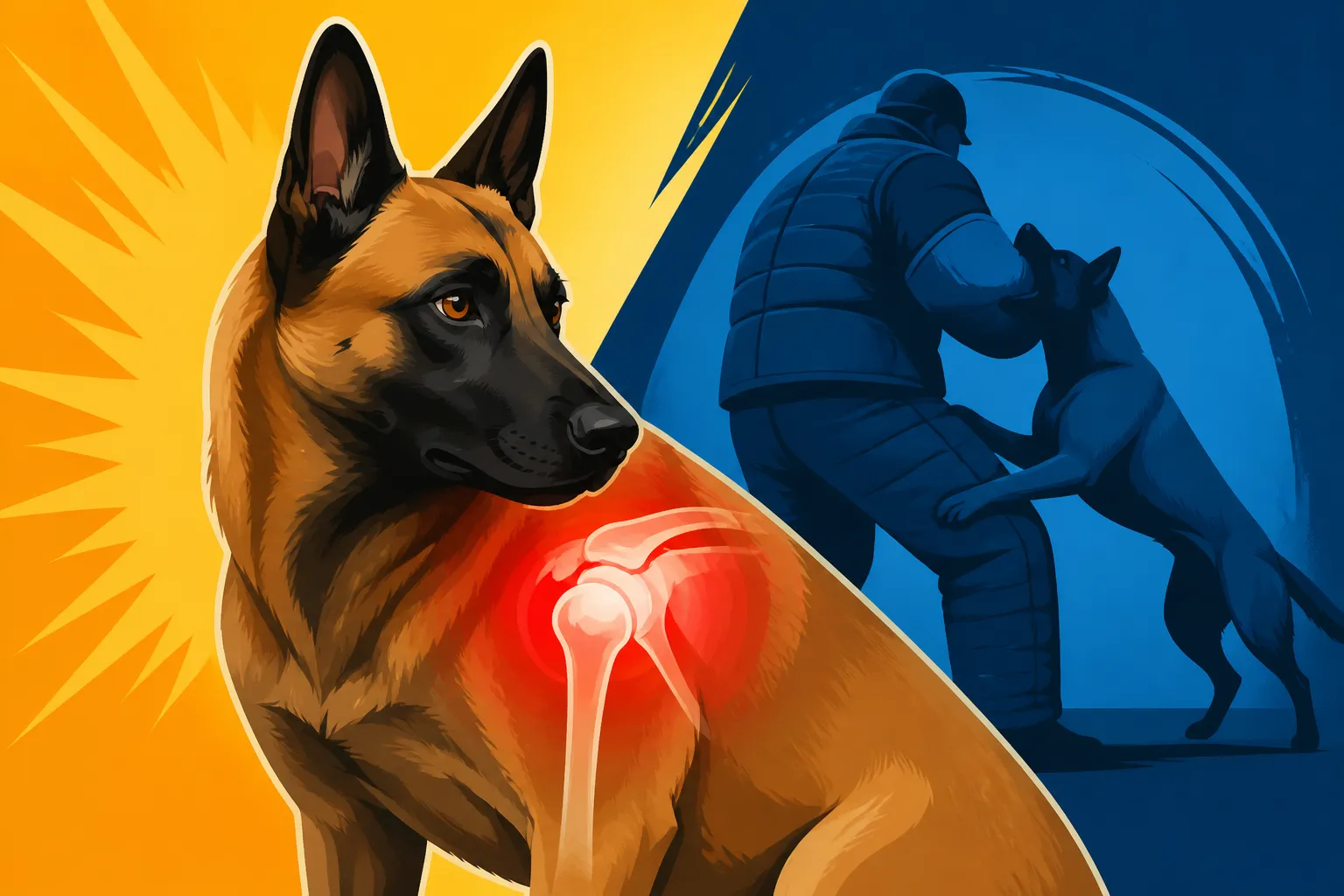
Imagine the sheer force involved when a 60 to 80-pound Malinois, moving at top speed, connects with a heavily padded sleeve or suit. The dog’s momentum, combined with the target’s resistance, creates a powerful collision. This impact isn't just absorbed by the jaw and neck; it travels straight through the shoulder joint. The muscles, tendons, and ligaments surrounding the shoulder must brace for and absorb this incredible energy, often at awkward angles. It's not uncommon for a dog to hit a sleeve, get a solid grip, and then have its forward motion abruptly halted or redirected. This sudden deceleration, coupled with the twisting and pulling, can overstretch or tear delicate tissues within the shoulder capsule.
Furthermore, the decoy themselves isn't always static. They're often moving, pulling, and counteracting the dog's drive, adding another layer of complexity to the forces at play. A good decoy knows how to work with the dog to maximize its effort and improve its grip, but even perfect technique can't eliminate the inherent risks. Over time, these repeated high-impact events can lead to micro-traumas that accumulate, eventually culminating in a more significant injury.
Repetitive Impact and Torque
Decoy work is inherently repetitive. A Malinois might have multiple "takes" in a single training session, and these sessions occur frequently. Each bite, each redirection, each time the dog uses its front end to anchor itself or turn, the shoulder joint undergoes stress. This isn't just about impact; it's also about torque. When a Malinois bites and then uses its body to drive into the decoy or to hang on while being swung, its paws are often digging into the ground for purchase, creating twisting forces through the leg and into the shoulder. Think about the way a dog will pivot on its front feet to change direction quickly while holding a sleeve—this puts incredible rotational stress on the shoulder joint.
Over the months and years, this constant rotation, impact, and stress can wear down cartilage, inflame tendons, and fatigue supporting musculature. It’s not always one catastrophic event that causes an injury, but rather the cumulative effect of hundreds or thousands of high-intensity movements. Just like a human athlete in a contact sport, the Malinois's body is under a perpetual state of demanding physical engagement, and the shoulders are right in the thick of it. This is why understanding Injuries a Bite Sport Belgian Malinois Collects is so crucial for proactive care.
Anatomical Considerations in Malinois Shoulders
The canine shoulder joint is primarily supported by muscles and ligaments, rather than a deep bony socket like the hip. This gives it incredible flexibility and range of motion, which is essential for the explosive movements of a Malinois. However, this also means it relies heavily on the strength and integrity of the surrounding soft tissues for stability. The biceps tendon, for instance, runs over the head of the humerus and is critical for shoulder stability and flexion. It's particularly vulnerable to injury from repetitive strain and impact in working dogs.
The design of the Malinois, built for agility, speed, and powerful engagement, means their front assembly is their engine and their brake. Their lean, athletic build, while advantageous for speed and maneuverability, means there’s less padding than a heavier-boned breed. While they are incredibly resilient, it doesn't make them impervious to the laws of physics. The various muscles of the rotator cuff, the supraspinatus, infraspinatus, subscapularis, and teres minor, all play vital roles in stabilizing and moving the shoulder. Any trauma or overuse to these muscles or their tendons can compromise the entire shoulder complex, leading to pain and reduced performance.
Common Types of Shoulder Injuries in Decoy Malinois
When your Belgian Malinois is engaged in the rigors of decoy work, their shoulders are constantly at risk. It’s not just a single type of injury we worry about; it’s a spectrum of issues ranging from acute traumas to chronic degenerative conditions. Being able to identify these common problems is the first step in getting your partner the help they need.
Muscle Strains and Ligament Sprains
These are perhaps the most common and often initially subtle injuries in working Malinois. A muscle strain occurs when muscle fibers are overstretched or torn, while a ligament sprain involves the overstretching or tearing of the tough fibrous bands that connect bones to other bones, stabilizing the joint. In decoy work, these can happen during an awkward landing, a sudden twist while biting, or even from bracing too hard against a decoy's pressure. Think of a dog making a hard corner turn while driving into a bite, planting its front leg and feeling a sudden pull—that's a classic setup for a muscle strain in the shoulder or a sprain in one of the many ligaments stabilizing the scapula and humerus.
These injuries can range from mild (a slight pull) to severe (a complete tear). Initially, your Malinois might just seem "off," maybe a little stiff after a session, or they might favor a limb for a few minutes. Without proper rest and management, what starts as a minor strain can become a chronic issue, weakening the joint and making it more susceptible to further, more serious damage. This is a lot like Muscle Strains in a Belgian Malinois in other contexts, but the intensity of bite work truly magnifies the risk.
Tendinitis and Bicipital Tenosynovitis
Tendinitis refers to inflammation of a tendon, which are the fibrous cords connecting muscle to bone. Bicipital tenosynovitis is a specific type of tendinitis affecting the biceps brachii tendon and its sheath, located at the front of the shoulder joint. This particular issue is incredibly prevalent in working dogs due to the biceps tendon's role in shoulder flexion and stability during weight-bearing and propulsion. Every time your Malinois drives forward, bites, or absorbs impact, that biceps tendon is working hard.
Repetitive microtrauma from these activities can cause the tendon and its surrounding sheath to become inflamed, leading to pain, stiffness, and lameness. Dogs with bicipital tenosynovitis often exhibit lameness that worsens after exercise or improves slightly after rest, but never fully resolves without intervention. They might also show pain when the shoulder is extended or when direct pressure is applied to the tendon. This condition often develops gradually, making it tricky to pinpoint the exact onset, and can severely impact a dog's ability to perform.
Cartilage Damage and Osteoarthritis
While less immediately dramatic than an acute tear, cartilage damage and subsequent osteoarthritis are serious long-term concerns for the shoulders of working Malinois. Cartilage acts as a cushion between bones in a joint, allowing for smooth, pain-free movement. Repetitive impact, twisting, and general wear and tear from decoy work can slowly erode this protective cartilage. Once the cartilage starts to degrade, the bones can begin to rub against each other, leading to inflammation, pain, and the formation of bone spurs—the hallmarks of osteoarthritis.
Unlike the deep bony socket of the hip, the shoulder's relative shallowness means it can be more prone to subtle instability that contributes to cartilage wear. While you're likely concerned about Elbow Problems in a Jumping Belgian Malinois or even Torn Cruciates in a Jumping Belgian Malinois from hard landings, the shoulders take a silent beating too. Once osteoarthritis sets in, it's a progressive and irreversible condition. Management focuses on pain relief, reducing inflammation, and maintaining joint mobility. Early detection and proactive joint care, often supported by pet insurance providers like Healthy Paws, are critical to slow its progression and ensure your Malinois can continue to work as comfortably as possible for as long as possible.
Recognizing the Signs of a Shoulder Injury
Spotting a shoulder injury in a high-drive Belgian Malinois can feel like trying to catch smoke. These dogs are stoic, often pushing through pain, and their immense desire to work can mask significant issues. It takes a keen eye, deep understanding of your dog's normal behavior, and careful observation, especially after intense training sessions, to catch these problems early.
Subtle Changes in Gait and Performance
One of the earliest indicators of a shoulder issue isn't always a dramatic limp, but rather a subtle alteration in your Malinois's gait or a slight dip in their usual explosive performance. You might notice they're not quite as fast on their turns, or perhaps their drive into the bite seems a fraction less powerful. Look for an unevenness in their stride, a slight head bob, or a tendency to shorten their stride with one front leg. They might land slightly differently after a jump, or seem to "gather" themselves a little longer before launching.
Sometimes, it's not the speed but the fluency. They might appear stiffer, less fluid in their movements, particularly during complex exercises that require full range of motion in the shoulder. A Malinois might hesitate to engage a decoy with the same gusto, or their grip might be excellent but they're not driving into the pressure quite as hard. These small changes, often dismissed as an "off day," can be the first whispers of a developing shoulder problem. Keep a training log; sometimes, comparing performance over weeks can reveal a pattern that a single session won't.
Pain Response and Behavioral Indicators
Beyond gait changes, your Malinois might communicate pain through more direct, yet still subtle, behavioral cues. Pay close attention to how they react to touch, especially around the shoulder and neck area. Do they flinch, guard, or perhaps even give a low growl when you try to pet or examine their shoulder? Do they resist certain stretches or manipulations that they previously tolerated? They might also avoid jumping into the car or onto furniture, or be reluctant to use stairs.
Another tell-tale sign can be changes in their resting posture. A dog with shoulder pain might lie down awkwardly, shifting their weight, or constantly repositioning themselves to find comfort. They might groom excessively at the painful area, or conversely, avoid touching it at all. Some dogs become more irritable or withdrawn when in pain, while others might become more clingy. Knowing your individual dog's personality is paramount here. Even a slight decrease in enthusiasm for play or work, which for a Malinois is a monumental shift, should prompt a thorough investigation. Don't dismiss these as mere mood changes; they often signify discomfort.
Post-Work Lameness and Stiffness
This is often where shoulder injuries become undeniable. While a Malinois might power through pain during a training session due to their incredible drive, the aftermath can reveal the truth. Watch them closely immediately after a decoy session, and more importantly, in the hours following and the next morning. Do they wake up stiff, struggle to get up, or limp noticeably during their first movements of the day? This post-exercise lameness or stiffness is a classic sign of inflammation and pain within a joint.
The lameness might initially improve as they warm up, which can be misleading, making owners think the issue isn't serious. However, if the lameness consistently reappears after rest or intense activity, it's a clear signal that something is wrong. Note which leg is affected, the severity of the limp, and how long it lasts. This detailed observation will be incredibly valuable information for your veterinarian. Remember, ignoring these signs can turn a manageable injury into a chronic, debilitating condition. Consistent vigilance and a structured The Checkup Schedule a Sport Malinois Should Keep can help catch these issues before they escalate.
Diagnosis and Veterinary Intervention
When you suspect your high-drive Malinois has a shoulder injury, especially one stemming from demanding decoy work, getting an accurate diagnosis is paramount. This isn't just about identifying the pain; it's about understanding the specific structures involved so that targeted and effective treatment can begin. Waiting it out rarely makes things better with these kinds of injuries, and can often worsen the prognosis.
The Importance of a Thorough Examination
Your veterinarian will start with a comprehensive physical examination. This is often more involved than a typical check-up, especially for a working dog. They'll observe your Malinois's gait, both walking and trotting, to identify any lameness or abnormal movement patterns. They'll then meticulously palpate the entire shoulder and front leg, feeling for swelling, heat, muscle atrophy, or areas of tenderness. They'll manipulate the shoulder joint through its full range of motion, assessing for pain, crepitus (grinding sounds), and limitations in movement. Sometimes, applying pressure to specific points, like the biceps tendon, can elicit a pain response, helping to pinpoint the source of discomfort.
Given the stoicism of many Malinois, sometimes a vet will recommend a sedation to allow for a more thorough and less painful examination, especially if the dog is guarding the area. This initial hands-on assessment is crucial, as it helps the vet narrow down the potential issues and decide on the most appropriate next diagnostic steps. Don't underestimate the skill of an experienced vet in identifying subtle clues that you, as an owner, might miss. They've seen countless similar cases and know what to look for.
Imaging Techniques for Shoulder Assessment
While a physical exam is invaluable, often, visual confirmation of the injury requires advanced imaging. X-rays are usually the first step, providing a look at the bony structures. They can reveal fractures, dislocations, or signs of osteoarthritis such as bone spurs or joint space narrowing. However, x-rays don't show soft tissues like muscles, tendons, or ligaments very well. For these, your vet might recommend more advanced imaging.
Ultrasound is an excellent non-invasive tool for visualizing soft tissue injuries. It can show inflammation or tears in tendons (like the biceps tendon) and muscles, fluid accumulation, or changes within the joint capsule. For the most detailed view of soft tissue structures, an MRI (Magnetic Resonance Imaging) is often considered the gold standard. An MRI can provide incredibly detailed images of cartilage, tendons, ligaments, and even subtle bone lesions that might be missed on x-rays. While more expensive and requiring general anesthesia, an MRI can offer a definitive diagnosis for complex or elusive shoulder injuries, particularly those involving the rotator cuff or specific tendons. For serious conditions, the support from pet insurance like Healthy Paws can be a huge relief in covering the costs of these advanced diagnostics.
Treatment Approaches From Conservative to Surgical
Once a diagnosis is made, treatment can range from conservative management to surgical intervention, depending on the severity and type of injury. Conservative approaches typically involve a combination of strict rest, anti-inflammatory medications (NSAIDs), and pain relief. Your vet might also prescribe joint supplements, such as glucosamine and chondroitin, to support cartilage health. For acute inflammation, cold therapy (ice packs) can be beneficial, followed by warm compresses for stiffness.
Physical therapy is often a cornerstone of conservative treatment, focusing on gentle range-of-motion exercises, strengthening surrounding muscles, and improving flexibility. This can be critical for proper healing and preventing re-injury. You can often find detailed guides and specialists who can help with Physical Therapy Prices for a Belgian Malinois. For more persistent inflammation or certain soft tissue injuries, injections of corticosteroids or platelet-rich plasma (PRP) directly into the joint or around the tendon might be considered.
Surgical intervention is reserved for severe cases, such as complete tendon tears, significant cartilage damage requiring arthroscopy (minimally invasive joint surgery), or chronic conditions that haven't responded to conservative management. For instance, severe bicipital tenosynovitis might warrant a tenodesis, where the biceps tendon is cut and reattached in a new location to relieve tension. Post-surgical recovery always involves a dedicated rehabilitation protocol, often for several months, to restore strength and function. The goal, always, is to get your Malinois back to a good quality of life, even if that means a modified working career or Retiring a Working Belgian Malinois From the Job for good.
Prevention Strategies for Shoulder Health
It's far easier, and less heartbreaking, to prevent a shoulder injury than to treat one. For a Belgian Malinois engaged in the high-octane world of decoy work, proactive measures are absolutely essential. You’re asking a lot of these incredible athletes, so it’s our responsibility as their handlers and owners to set them up for long-term soundness.
Proper Conditioning and Warm-Up Routines
You wouldn't expect a human athlete to jump straight into a high-intensity workout without preparing their body, and the same principle applies to your Malinois. A comprehensive conditioning program is vital, built gradually over time, focusing on strength, endurance, and flexibility. This isn't just about running them; it's about targeted exercises that build muscle tone around the shoulder, core strength for overall stability, and good body awareness. Think about varied terrains, controlled sprints, hills, and even swimming, which is excellent for low-impact muscle building.
Equally important are proper warm-up and cool-down routines before and after every decoy session. A warm-up should gradually increase blood flow to the muscles and prepare the joints. This could include a brisk walk, followed by some light trotting, and gentle stretches. Think about active warm-ups like short retrieves or controlled jumps on flat ground to get their muscles firing. After the session, a cool-down walk and gentle stretching help to reduce muscle soreness and promote flexibility, preventing stiffness and enhancing recovery. Skipping these steps is like inviting trouble, especially for a dog with so much drive who might not signal discomfort until it's too late.
Decoy Technique and Equipment Considerations
The way decoy work is performed plays a huge role in minimizing shoulder stress. This isn't to say decoys are intentionally hurting dogs, but technique matters. A good decoy will work with the dog, allowing it to drive into the bite rather than yanking the sleeve away abruptly, which can create significant torque. They should understand how to absorb impact, allow for proper grip development, and teach the dog to use its whole body effectively, not just its front end. Avoiding excessive swinging of the dog by the sleeve, especially young dogs, is critical. Communication between handler, dog, and decoy is paramount to ensuring safe, effective training.
Equipment also plays a part. Ensure sleeves and suits are properly fitted and maintained. Worn-out or ill-fitting equipment can lead to awkward bites or unstable platforms, increasing the risk of injury. The environment where training takes place is also key. Training on slippery or uneven surfaces can lead to falls, twists, and subsequent shoulder injuries. Opt for consistent, grippy surfaces whenever possible. Remember, it's not just about the intensity, but the intelligent application of that intensity.
Nutritional Support and Joint Supplements
A well-balanced diet forms the foundation of overall health, including joint health. For working Malinois, a high-quality kibble or fresh food diet rich in appropriate protein and fat levels is essential to fuel their activity and support muscle and tissue repair. Beyond basic nutrition, targeted supplementation can provide an extra layer of protection for hard-working joints. Joint Supplements for a Working Belgian Malinois are frequently discussed among handlers, and for good reason.
Common joint supplements include glucosamine, chondroitin, MSM, and Omega-3 fatty acids. These ingredients are thought to support cartilage health, reduce inflammation, and improve joint lubrication. While supplements aren't a magic bullet and won't fix an existing severe injury, they can play a vital role in maintaining joint integrity and potentially slowing the progression of degenerative changes over time. Always discuss supplementation with your veterinarian to ensure it's appropriate for your individual dog and doesn't interfere with any medications. Think of it as investing in your Malinois's long-term athletic career, ensuring their body stays as sound as possible to match their incredible drive.
Rehabilitation and Long-Term Management
Discovering your Malinois has a shoulder injury, especially one that impacts their ability to work, can be incredibly disheartening. But it's not the end of the road. With dedicated rehabilitation and careful long-term management, many dogs can recover significant function, and some can even return to work, albeit sometimes with modifications. This journey requires patience, consistency, and a strong partnership with your veterinary team.
Physical Therapy and Controlled Exercise
Physical therapy (PT) is often the most critical component of recovery from a shoulder injury. This isn't just about resting; it's about active healing and strengthening. A certified canine rehabilitation therapist will design a tailored program that progresses through different stages of recovery. Initially, this might involve passive range-of-motion exercises to maintain flexibility without putting stress on the healing tissues. As your Malinois progresses, therapeutic exercises will be introduced to rebuild strength in the shoulder and surrounding muscles.
These exercises can include specific stretches, balance work on unstable surfaces, core strengthening, and controlled activities like walking on an underwater treadmill, which allows for low-impact exercise. Therapeutic laser and ultrasound may also be used to reduce pain and inflammation and promote tissue healing. The goal of PT is not just to heal the injury but to prevent compensatory issues (where other parts of the body get injured from overwork due to the primary injury) and to restore the optimal biomechanics of the shoulder. Consistency at home with the prescribed exercises is just as important as the sessions with the therapist. Pet insurance plans like Healthy Paws often include coverage for physical therapy, making this vital aspect of recovery more accessible.
Return to Work Protocols
Returning a Malinois to decoy work after a shoulder injury requires a very careful, gradual, and systematic approach. Rushing the process is a recipe for re-injury. Your vet and rehabilitation therapist will guide this process, typically starting with very short, low-intensity sessions and slowly increasing duration and intensity over weeks or even months. The focus will be on rebuilding strength, endurance, and confidence.
The return to work often involves modifying the type of decoy engagements. This might mean avoiding certain types of bites, reducing the amount of swinging or twisting, or shortening the duration of grip work. The decoy's technique becomes even more critical during this phase, ensuring smooth transitions and minimal undue stress on the recovering shoulder. It's not about pushing the dog to their previous limits immediately, but about carefully testing the waters and observing for any signs of discomfort or lameness. Regular check-ups with your vet will be crucial during this period to monitor progress and adjust the protocol as needed. The emphasis must always be on the dog's well-being and long-term soundness over immediate performance goals.
Managing Chronic Conditions
Unfortunately, some shoulder injuries, particularly those involving significant cartilage damage or chronic tendinitis, can lead to long-term or chronic conditions like osteoarthritis. While these conditions can't be "cured," they can certainly be managed to maintain a good quality of life and potentially a modified working career for your Malinois. Long-term management often involves a multi-modal approach.
This typically includes ongoing use of joint supplements, intermittent anti-inflammatory medications (used judiciously to protect kidney and liver function), and possibly periodic injections (e.g., corticosteroids or joint lubricants like hyaluronic acid). Continued low-impact exercise and modified physical therapy routines are also important to maintain muscle mass and joint flexibility. For some dogs, alternative therapies like acupuncture or chiropractic adjustments may provide additional relief. Regular monitoring by your veterinarian is crucial to adjust medications and therapies as needed. Understanding The Age a Working Malinois Starts to Slow can help you differentiate age-related changes from underlying chronic pain, and make informed decisions about their continued activity. The goal is to keep your partner comfortable, mobile, and engaged for as long as possible, adapting their job to what their body can handle.
Common Shoulder Injuries and Management at a Glance
| Injury Type | Common Symptoms | Initial Owner Steps | Typical Vet Diagnosis Tools | Management / Treatment |
|---|---|---|---|---|
| Muscle Strain / Ligament Sprain | Sudden lameness, pain on touch, swelling, stiffness after rest, reduced mobility. | Rest immediately, gentle cold pack, observe. | Physical exam, palpation, often responds to anti-inflammatories. | Rest, NSAIDs, controlled exercise, physical therapy. |
| Bicipital Tenosynovitis | Gradual onset lameness, worse after exercise, pain on shoulder extension/palpation. | Rest, avoid aggravating activities, veterinary consult. | Physical exam, ultrasound, possibly MRI. | Rest, NSAIDs, corticosteroid injections, physical therapy, sometimes surgery. |
| Cartilage Damage / Osteoarthritis | Chronic stiffness, decreased range of motion, grinding sounds, lameness, pain in cold weather. | Joint supplements, warmth, veterinary consult for pain. | X-rays (bone spurs, joint space narrowing), MRI (cartilage). | Joint supplements, NSAIDs, pain relief, physical therapy, weight management, sometimes arthroscopy. |
Disclaimer
The information provided in this article is for general informational purposes only and is not a substitute for professional veterinary advice. Always consult with a qualified veterinarian for any health concerns or before making any decisions related to your Belgian Malinois's health and treatment.