Why the Belgian Malinois Went Into the Miscellaneous Class
If you've ever delved into the history of the Belgian Malinois, you might have stumbled upon the curious fact that this now-celebrated working dog once found itself in the "Miscellaneous Class" of the American Kennel Club (AKC). It's a detail that often leaves new owners scratching their heads, wondering why such an accomplished and distinct breed wasn't immediately recognized. This guide will walk you through the fascinating journey of the Belgian Malinois, explaining the historical context, the intricacies of breed recognition, and why this powerful dog spent time in what some might consider a canine waiting room.
The Early Days of Belgian Shepherds in America
Before the Belgian Malinois became the distinct and globally recognized breed we know today, it was part of a larger, more unified group: the Belgian Shepherd Dog. Understanding this foundational history is crucial to grasping why its path to full AKC recognition was a winding one.
A Family of Four, Not Always United
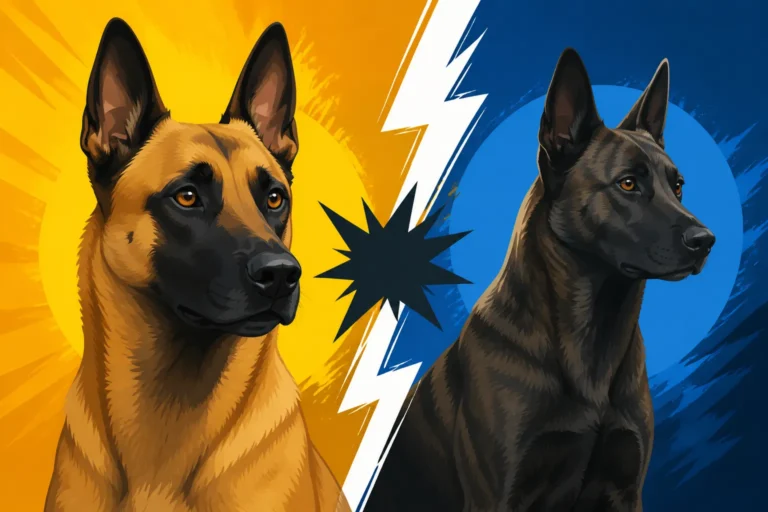
Imagine a small country like Belgium, where local farmers and shepherds developed versatile working dogs to guard their flocks and homes. These dogs were selected primarily for their working ability, not for a uniform appearance. Over time, four distinct coat varieties emerged, all sharing similar underlying temperament and build, but differing in their outward presentation: the Groenendael (long black coat), the Tervuren (long fawn/mahogany coat with a black overlay), the Laekenois (rough-haired fawn coat), and our very own Malinois (short-coated fawn/mahogany with a black mask). In their homeland, these were often considered variations of a single breed.
When these impressive Belgian dogs first made their way to America in the early 20th century, the concept of these four varieties being separate breeds, or even distinctly recognized entities, wasn't fully established. Early imports might have been registered simply as "Belgian Sheepdogs," a blanket term that encompassed all varieties. This initial ambiguity laid the groundwork for future classification challenges, as the American dog fancy, particularly the AKC, often preferred clear, distinct breed lines.
Initial Registrations and the Road to Recognition
The earliest Belgian Shepherd Dogs were brought to the United States around 1907. Enthusiasts were immediately captivated by their intelligence, work ethic, and striking appearance. However, the AKC's system required a breed to have a certain number of registered dogs and a consistent breed standard before it could be fully recognized and assigned to a specific group, such as the Herding Group. For a time, all four varieties were typically registered together under the single breed name of "Belgian Sheepdog" or "Belgian Shepherd Dog."
This unified registration presented a dilemma. While breeders appreciated the shared heritage, the distinct physical differences, especially in coat type, became a point of contention and discussion. How could one breed standard accurately describe four different coat types without compromising the integrity of each? This internal debate among fanciers about how to best present these dogs to the AKC ultimately contributed to the Malinois's temporary placement in the Miscellaneous Class as the American dog world grappled with the best way to categorize this versatile "family" of dogs.
The AKC's Approach to New Breeds and the Miscellaneous Class
The American Kennel Club has a structured, albeit sometimes lengthy, process for recognizing new dog breeds. It's not as simple as presenting a dog and saying, "Here it is!" This system is designed to ensure consistency, health, and a stable gene pool, but it often means breeds spend time in a kind of probationary period.
What the Miscellaneous Class Even Means
Think of the AKC's Miscellaneous Class not as a dismissal, but as a stepping stone, a temporary waiting room for breeds that are on their way to full recognition. For a breed to enter the Miscellaneous Class, it typically needs to have an established parent club, a certain number of dogs registered, and a detailed written breed standard, even if provisional. This class allows the breed to gain exposure, compete in certain non-championship events like obedience, agility, and sometimes even conformation, but it’s not yet eligible for championship points or to compete in regular group competitions.
The purpose of the Miscellaneous Class is essentially to allow a breed to build its foundation within the AKC system. It’s a chance for the parent club to solidify its membership, gather more data on the breed's population and health, and ensure the breed standard is consistently applied. It's also an opportunity for the public to become more familiar with the breed before it takes its place alongside well-established breeds. For a dog like the Malinois, which was still finding its distinct identity apart from its Belgian Shepherd cousins, this period was crucial for establishing its unique presence within the American dog community.
The Hurdles New Breeds Face for Full Recognition
Moving from the Miscellaneous Class to full AKC recognition is no small feat. It requires meeting several stringent criteria. First and foremost, the breed must have a substantial and geographically dispersed population across the United States. This ensures a healthy and diverse gene pool, preventing issues related to inbreeding. Secondly, the breed's parent club must demonstrate that it is well-organized, actively promoting the breed's welfare, and committed to upholding the breed standard. This includes hosting regular events, educating the public, and managing breed registration.
Perhaps most importantly, a breed must demonstrate consistency in its physical characteristics and temperament according to its proposed standard. Judges need to be able to reliably evaluate dogs, and breeders need to be producing dogs that consistently embody the breed's ideals. For the Malinois, this meant clearly defining what set it apart from the Groenendael, Tervuren, and Laekenois. The process is thorough and designed to protect the integrity of the AKC registry, which explains why many breeds spend years, sometimes even decades, in the Miscellaneous Class before earning their spot in one of the recognized groups.
The Malinois's Journey Through Classification
The path to separate recognition for the Belgian Malinois was intertwined with the broader history of the Belgian Shepherd varieties in the United States. It wasn't a sudden decision but a gradual evolution driven by dedicated fanciers and the AKC's structured approach.
The Belgian Shepherd Dog Club of America and the Variety Debate
In the early decades of the 20th century, the various types of Belgian Shepherds were often lumped together. The Belgian Sheepdog Club of America, the original AKC parent club, initially worked to promote all four varieties under a single umbrella. However, as interest in the distinct appearances grew, a significant debate began to brew within the club. Should the different coat types – the long-haired Groenendael and Tervuren, the rough-haired Laekenois, and the short-haired Malinois – continue to be judged as one breed? Or did their clear phenotypic differences warrant separate recognition?
This was a passionate discussion, as breeders on both sides felt strongly about preserving their preferred variety. Some argued that their shared heritage and working traits meant they should remain unified, while others believed that allowing them to compete as separate breeds would better showcase their individual characteristics and allow for more focused breeding programs. The desire to give the Malinois its own distinct identity, separate from the longer-coated varieties, eventually gained momentum.
The Critical Split of 1959
The turning point came in 1959. After considerable deliberation and a vote among the Belgian Shepherd Dog Club of America members, the AKC made the pivotal decision to separate the varieties into distinct breeds for show purposes. At this time, the Groenendael retained the original "Belgian Sheepdog" name. The Tervuren and Malinois were split off and each given their own provisional breed status. This meant that the Belgian Malinois officially became a distinct breed in the eyes of the AKC, but it wasn't immediately eligible for full championship status.
It was at this juncture that the Belgian Malinois, along with the Tervuren, entered the AKC's Miscellaneous Class. This move was not a demotion, but rather a necessary step in the AKC's system to allow these newly recognized distinct breeds to gather enough interest, establish a strong enough gene pool, and prove their consistency before being admitted into one of the main groups. This period in the Miscellaneous Class lasted for several years, during which dedicated breeders worked tirelessly to promote the Malinois and expand its presence across the country. It was a time of growth and solidification for the breed, ensuring that by the time it moved into a full group, it had a robust and well-defined identity.
Life After Miscellaneous: Entering the Herding Group
The Malinois's time in the Miscellaneous Class wasn't forever. It was a crucial developmental period that eventually led to its full and well-deserved recognition, solidifying its place among the working breeds.
Building a Breed Standard and Registry
Once the Malinois was recognized as its own distinct breed, even within the Miscellaneous Class, the work truly began for its supporters. The Belgian Malinois Club of America (BMCA) was formed as the official AKC parent club. Their primary tasks included refining and solidifying the breed standard specifically for the Malinois – detailing everything from acceptable coat color and texture to desired temperament, size, and structure. This standard became the blueprint for judging Malinois in conformation and guiding ethical breeding practices.
They also focused on building a robust registry of purebred Malinois. This involved tracking pedigrees, ensuring health clearances, and promoting responsible breeding to increase the population of healthy, well-tempered dogs that consistently met the standard. This rigorous attention to detail during its "Miscellaneous" phase was vital. It ensured that when the breed finally moved into a recognized group, it did so with a strong, unified identity and a solid base of dedicated fanciers. This meticulous effort meant that today, when you look for Malinois supplies on sites like Chewy, you're looking for items tailored to a breed with a carefully cultivated history.
Proving Their Worth in the Show Ring and Beyond
The true test for any breed aspiring to full AKC recognition is its ability to consistently perform and present itself according to its standard. During their time in the Miscellaneous Class, Malinois were able to compete in various performance events – obedience, agility, and herding trials. This allowed them to showcase their incredible intelligence, athleticism, and trainability, which are hallmarks of the breed. While they couldn't earn championship points in conformation, they could still be judged against their emerging standard, helping judges and handlers understand the breed's nuances.
This period was also crucial for public awareness. As more Malinois competed and excelled, their reputation as highly capable working dogs grew. This visibility, combined with the dedicated efforts of the BMCA to promote the breed's unique qualities, ultimately paved the way for its next big step. In 1965, a mere six years after being separated into its own breed and entering the Miscellaneous Class, the Belgian Malinois was finally granted full recognition and moved into the AKC Herding Group. This was a testament to the breed's inherent qualities and the tireless work of its advocates to establish it as a distinct and valuable contributor to the canine world.
Why This History Matters to Today's Malinois Owner
Understanding the historical journey of the Belgian Malinois isn't just a fun fact for trivia night; it offers valuable insights into the breed's character, its place in the dog world, and what it means to live with one of these extraordinary dogs today.
Understanding the Breed's Unique Development
The Malinois's history, particularly its separation from the other Belgian Shepherd varieties and its time in the Miscellaneous Class, highlights a key aspect of its development: a strong emphasis on working ability. While coat type was the superficial reason for the split, the underlying driver for many fanciers was the desire to preserve and promote the specific traits that made the Malinois such an effective and versatile working dog. This focus meant that selection was always heavily geared towards intelligence, drive, trainability, and physical prowess.
This concentrated development has resulted in the Malinois we see today – a dog bursting with energy, requiring significant mental and physical engagement. It explains why simply giving a Malinois a big yard and a bowl of high-quality food from say, Chewy, isn't enough; they need a job, a purpose, and consistent training. The intense selection pressures during its formative years cemented its identity as a driven, high-performance animal, rather than primarily a conformation or pet companion. Understanding this past helps new owners appreciate the depth of commitment required to truly fulfill a Malinois. The Two Hours and a Job a Belgian Malinois Demands Daily isn't a suggestion, it's a historical imperative.
The Ongoing Legacy of a Working Breed
Even after achieving full AKC recognition and taking its place in the Herding Group, the legacy of the Malinois as a working breed has only grown stronger. Its journey from a unified farm dog to a distinct breed, and through the Miscellaneous Class, underscores a continuous dedication to its inherent utility. This dedication is evident in how widely Malinois are used in police, military, search and rescue, and advanced sport work around the globe. Their intelligence, courage, and intense drive, qualities that were refined during their struggle for recognition, are precisely what make them excel in these demanding roles.
For current and prospective owners, this means that the Malinois is not a breed that has "gone soft" with popularity. While there are certainly variations, the breed as a whole retains a fierce work ethic and a profound need for purpose. When people ask What Bite Sport Actually Asks of a Belgian Malinois or if a Malinois can do Detection Work Instead of Bite Work for a Malinois, the answer is almost always yes, because their entire history has built them for such challenges. This commitment to working ability continues to shape breeding decisions and the expectations of responsible Malinois ownership.
| Year | Event/Classification | Significance for Belgian Malinois |
|---|---|---|
| ~1907 | First Belgian Shepherds arrive in US | Introduction of the broader breed family |
| Early 1900s | Registered as "Belgian Sheepdog" | All varieties grouped under one name |
| Pre-1959 | Internal debate within parent club | Discussion over separate variety recognition |
| 1959 | AKC splits Belgian Shepherd varieties | Malinois recognized as distinct, enters Miscellaneous Class |
| 1965 | Full AKC recognition | Malinois moves into the Herding Group |
| Present | Continued growth & popularity | Breed's working abilities widely celebrated |
Choosing a Malinois in Light of Its History
Knowing the Malinois's history isn't just about understanding classification; it's about making an informed decision about whether this is the right dog for your life. The qualities that led it through the AKC system are precisely what define it today.
The Intensity Born from Purpose
The very traits that made the Belgian Malinois stand out enough to warrant its own separate recognition were its intense drive, keen intelligence, and unwavering focus on a task. These weren't traits developed for the show ring, but for demanding work on farms, and later, for protection and police duties. This deep-seated purpose means that the Malinois you bring home, whether from a breeder or a rescue that might use brands like Chewy for their supplies, will carry this intensity in its DNA. It's a dog that truly thrives when its mind and body are challenged.
Ignoring this historical context often leads to unhappy outcomes for both dog and owner. Many people are drawn to the Malinois's striking appearance or reputation for loyalty, but underestimate the sheer volume of engagement it requires. This intensity is Why a Belgian Malinois Is the Wrong First Dog for most people. They need an experienced hand, someone who understands that a walk around the block or a casual play session won't cut it. Their historical journey taught them to be constantly "on," and that expectation still holds true today.
The Importance of Research and Responsible Sourcing
The Malinois's path through the AKC's Miscellaneous Class serves as a powerful reminder of the importance of responsible breeding and rigorous selection. During the period when the breed was establishing its identity, dedicated fanciers meticulously worked to define and preserve its core characteristics. This careful stewardship ensured that the breed that emerged into full recognition was sound, stable, and true to its working heritage.
For anyone considering a Malinois today, this historical precedent underscores the vital need to choose a reputable breeder who prioritizes health, temperament, and working ability. Look for breeders who actively participate in recognized dog sports, conduct thorough health testing (which you can often find information about through breed clubs that might also partner with suppliers like Chewy), and are transparent about their dogs' pedigrees and temperaments. Understanding the journey of the Malinois into the AKC helps us appreciate the careful work that went into making it the incredible breed it is, and it guides us toward making responsible choices to support its future.
Disclaimer
This article is for general informational purposes only and does not constitute professional advice. Laws, prices and regulations vary by location and change over time. Consult a qualified professional for guidance on your specific situation.