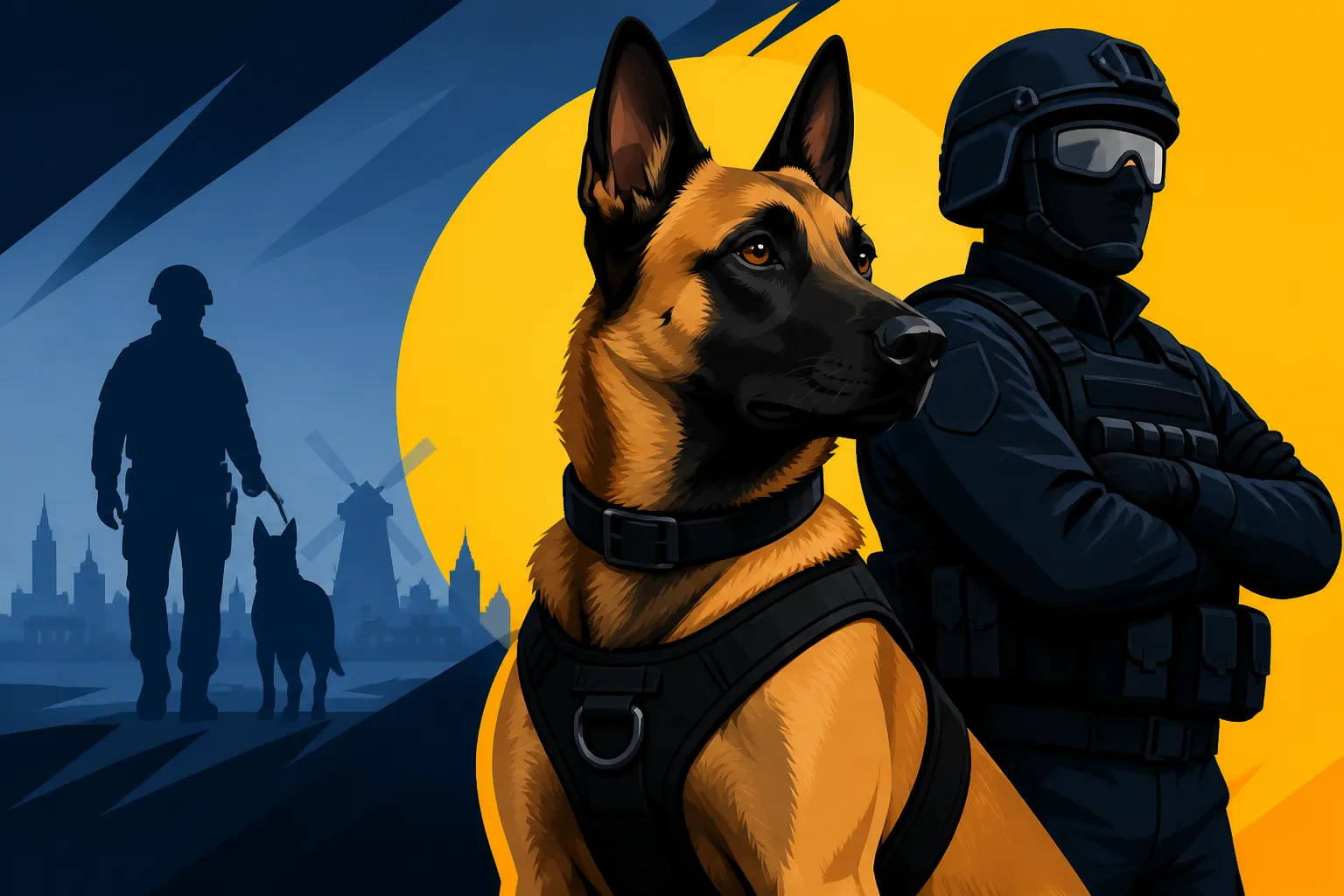
Why Dutch Police Turned to the Malinois
For many years, when you pictured a police dog, you likely conjured an image of a stoic, powerful German Shepherd. They were, for decades, the undisputed kings of K9 units across the globe, including in the Netherlands. However, the complex and ever-evolving demands of modern police work eventually highlighted the need for a different kind of canine partner, one with a specific set of physical and mental attributes that could meet heightened operational challenges. This guide will delve into the precise reasons why Dutch police forces gradually shifted their focus, embracing the Belgian Malinois as their preferred K9, fundamentally changing the landscape of working dogs.
The Traditional Reign of the German Shepherd in Police Work
Before the Belgian Malinois became the staple for many elite K9 units, the German Shepherd Dog held an almost universal position as the go-to breed for law enforcement. Their impressive stature, imposing presence, and inherent guarding instincts made them a natural fit for police and military roles for well over a century.
Early Choices and the German Shepherd's Dominance
Think back to the early days of police K9 programs. The German Shepherd's reputation as a fearless protector, combined with their loyalty and formidable appearance, made them an obvious choice. They were capable of diverse tasks, from tracking suspects through varied terrains to providing crowd control and executing bite work when necessary. Their robust build meant they could withstand the physical rigors of the job, and their general temperament, when well-trained, allowed them to adapt to different handlers and environments. For a long time, the criteria for a police dog largely aligned with the German Shepherd's strengths: courage, size, and a strong sense of territory. They were reliable, intelligent, and their bark alone could often de-escalate a tense situation. This established them as the benchmark against which all other potential police breeds were measured.
The Shift Towards Specialized Needs
As policing became more sophisticated, the demands on K9 units evolved. It wasn't just about a strong bite or an imposing presence anymore. Modern police work required dogs that could excel in speed, agility, endurance over long periods, and an almost insatiable drive for specific tasks, often in high-stress, unpredictable urban environments. Officers needed partners capable of intricate scent detection work, rapid deployment in tight spaces, and sustained focus without tiring. The emphasis began to shift from general utility to more specialized performance. While German Shepherds certainly possessed many of these qualities, their heavier build and sometimes more deliberate nature started to be seen as less optimal for the lightning-fast reactions and relentless pursuit now often required. This opened the door for breeds that could offer a different, perhaps more intense, kind of athleticism and drive, challenging the long-held tradition.
Unpacking the Malinois Advantage: Drive and Intensity
The defining characteristic that sets the Belgian Malinois apart, and ultimately endeared them to Dutch police forces, is their unparalleled drive and intensity. This isn't just about being energetic; it's a deep-seated, almost obsessive desire to work, to engage, and to fulfill a task with every fiber of their being.
Unmatched Prey Drive and Focus
When you witness a Malinois in action, especially during training, their prey drive is undeniably the engine behind their performance. This isn't just about chasing a ball; it's an innate, all-consuming focus on a designated "prey" – whether that's a sleeve, a hidden narcotic scent, or a fleeing suspect. For police work, this translates into an incredible advantage. A Malinois on a track will ignore distractions that might deter another breed, their nose glued to the ground, their mind singularly fixed on the target. This relentless focus means they are less likely to be sidetracked by environmental stimuli, loud noises, or the presence of bystanders. Their drive ensures that even under immense pressure, they remain engaged with the task at hand, often displaying an intensity that can appear almost manic to the untrained eye. This level of focus is not easily found and is something Recalling a Belgian Malinois Off a Moving Target often becomes a crucial skill to master during training, precisely because their prey drive is so profound.
Relentless Work Ethic and Stamina
Beyond their immediate drive, Malinois possess a legendary work ethic and stamina that are second to none. These are dogs bred for endurance, for working long hours in various conditions without showing signs of fatigue. In a police context, this means a Malinois can be deployed for extended searches, patrol duties, or multiple apprehension scenarios within a single shift, maintaining a high level of performance throughout. They don't just complete a task; they attack it with consistent vigor. This relentless energy requires significant outlets; if you've ever owned one, you know Two Hours and a Job a Belgian Malinois Demands Daily isn't just a suggestion, it's a necessity. This capacity for sustained effort is invaluable for police departments, as it means their K9 partners are always ready and capable, minimizing downtime and maximizing operational effectiveness. Their high-octane motor ensures that they can keep up with, and often outpace, human officers even during physically demanding situations.
Physical and Mental Attributes for Demanding Police Work
The Malinois isn't just a powerhouse of drive; their physical conformation and keen intelligence are perfectly matched to the rigorous demands of modern police and military applications. They are, quite literally, built for the job.
Agility, Speed, and Endurance
Take a look at a Belgian Malinois, and you immediately notice their athletic build. They are often described as lean, compact, and powerful, a far cry from the bulkier appearance of some other working breeds. This physical structure gives them exceptional agility, allowing them to navigate complex environments—climbing fences, jumping obstacles, and moving swiftly through confined spaces—with remarkable ease. Their speed is impressive, enabling them to close distances quickly, which is critical for apprehending suspects or responding rapidly to threats. Moreover, their endurance, as mentioned before, means they can maintain this high level of physical output for extended periods without faltering. This combination of agility, speed, and endurance makes them incredibly versatile for various police scenarios, from urban pursuits to wilderness searches. Maintaining The Lean Condition a Belgian Malinois Should Carry is often a priority for working dog handlers to ensure peak performance.
Trainability and Adaptability
One of the less visible, but equally crucial, traits of the Belgian Malinois is their exceptional trainability. They are highly intelligent dogs with a strong desire to please their handler, making them incredibly receptive to learning complex commands and intricate tasks. They thrive on structure and routine, quickly grasping new concepts and retaining them. This trainability is crucial in K9 programs where dogs must master a wide array of skills, from advanced obedience and tracking to scent detection and controlled aggression. Their adaptability means they can perform effectively in diverse environments, from noisy city streets to quiet rural landscapes, and transition seamlessly between different tasks. They are problem-solvers, capable of independent thought when necessary, but always with an eye toward their handler for guidance. This mental acuity, combined with their physical prowess, makes them truly exceptional partners in demanding police work. You'll often find a range of specialized training tools and high-quality food, available from retailers like Chewy, being utilized to support their development and ensure they remain at the top of their game.
The KNPV Influence: Shaping the Ideal Police Dog
The Netherlands has a rich history of developing and refining working dog standards, with the Royal Dutch Police Dog Association (KNPV) being a globally recognized authority. The rigorous demands of the KNPV program played a significant role in solidifying the Malinois's reputation and subsequent adoption by Dutch police.
KNPV's Rigorous Selection and Training Philosophy
The KNPV program isn't just a training course; it's a highly competitive and demanding testing ground designed to identify and produce the absolute best working dogs. What the KNPV Program Selects For in a Malinois is a blend of extreme courage, unwavering nerve, intense drive, and a high degree of trainability. Dogs and handlers go through a series of increasingly difficult exercises that simulate real-life police scenarios, pushing both to their limits. This includes advanced obedience, complex tracking, apprehension work with multiple decoys, object guarding, and even exercises involving swimming and climbing. The program emphasizes a dog's natural instincts, channeling their prey and defense drives into controlled, effective actions. Dogs that don't possess the inherent mental toughness and physical fortitude simply don't make it through. The Malinois, with its naturally high drives and resilient temperament, proved time and again to be perfectly suited to this rigorous selection process, consistently meeting and exceeding the benchmarks. This rigorous framework meant that any Malinois certified through KNPV was a proven, top-tier working dog.
Proven Performance in Real-World Scenarios
The ultimate test of any police dog lies in its performance in actual operational deployments, not just on the training field. KNPV-trained Malinois consistently demonstrated their superior capabilities in real-world scenarios across the Netherlands. Their speed and agility allowed them to pursue and apprehend suspects in urban environments, navigating obstacles and covering ground swiftly. Their intense focus in scent work led to successful detections of narcotics, explosives, and even missing persons, often in challenging conditions. The controlled aggression honed through KNPV training meant they could protect their handlers effectively while also being able to "out" (release the bite) on command, a critical safety feature. Whether it was a high-stakes pursuit, a dangerous building search, or a critical detection operation, the Malinois proved to be reliable, effective, and resilient. Their consistent success built an undeniable reputation, making them the breed of choice for police forces seeking the most effective K9 partners available. Many police forces, including in other nations, began to study the KNPV's success, noting Why Military Units Buy Malinois Over Shepherds as a direct result of these demonstrated capabilities.
Comparing the Malinois to Traditional Choices
To truly understand why Dutch police embraced the Malinois, it's important to draw a clear comparison with the breed that had dominated K9 units for so long: the German Shepherd. This isn't to say one is "better" in all aspects, but rather that the Malinois offered a distinct set of advantages for evolving police needs.
Malinois vs. German Shepherd: A Direct Comparison
When you compare a Belgian Malinois to a German Shepherd, several key differences emerge. Physically, the Malinois is generally lighter-boned, more compact, and possesses a leaner, more athletic build. This translates directly to greater speed, higher jumping ability, and superior agility, especially in dynamic, high-impact scenarios. German Shepherds tend to be heavier and often more powerful, excelling in sheer force and sustained patrol presence. Temperamentally, Malinois are often described as having a "higher motor" – a constant, almost frenetic energy and an intense, unwavering focus on their task. German Shepherds, while highly driven, can sometimes exhibit a more laid-back or thoughtful approach, which can be advantageous in certain situations but less so in others requiring immediate, explosive action.
Training methods might also differ. A Malinois often requires a nuanced approach to channel its immense drive, ensuring it remains controlled and directed. They thrive on fast-paced, reward-based training, often using bite suits and specialized equipment available from pet suppliers like Chewy. German Shepherds, while also highly trainable, might respond well to a slightly different pace or type of motivation. Telling a Belgian Malinois From a German Shepherd involves observing not just their appearance but also their distinct energy levels and working styles. The Dutch police found that for the accelerating demands of modern policing, the Malinois's specific attributes offered a crucial edge.
Practical Advantages in Operational Deployment
These differences translate into tangible practical advantages during operational deployment. In scenarios requiring rapid pursuit, a Malinois can often outpace and outmaneuver a German Shepherd, particularly in urban environments with obstacles. For detection work, the Malinois's obsessive focus and tireless drive mean they can conduct longer searches with sustained intensity, potentially covering more ground or finding smaller hides. Their lighter build also means less impact on their joints over time, potentially contributing to a longer working career, though this depends on many factors like genetics and veterinary care.
Furthermore, the Malinois's sometimes smaller stature compared to some German Shepherd lines means they can more easily access confined spaces, such as searching through wreckage or entering small rooms, which is a significant advantage in certain police operations. While both breeds are incredibly courageous, the Malinois's "all-in" mentality and ability to recover quickly from environmental stress make them particularly resilient for the unpredictable nature of police work. The Dutch police recognized that for the evolving challenges they faced, the Malinois consistently delivered a slightly sharper, faster, and more relentless edge.
The Long-Term Impact and Global Influence
The decision by Dutch police to increasingly favor the Belgian Malinois had far-reaching consequences, not only within the Netherlands but across the international K9 community. It marked a significant shift in thinking about what constitutes the ideal police dog.
Longevity and Health Considerations
While specific studies on working dog longevity can vary, the generally robust health and lean build of the Belgian Malinois have been observed to contribute to a potentially longer and more active working life compared to some other larger, heavier breeds. Their athleticism often translates to good structural integrity, provided they are bred from healthy lines and properly conditioned. Issues like hip and elbow dysplasia, while present in the breed, often have lower incidences or severity in well-bred working lines compared to some other shepherd breeds. This means that police departments, which invest significant resources into training each K9, might get more years of service out of a Malinois. This translates to cost-effectiveness and sustained operational capability. Ensuring proper nutrition, often with high-performance formulas readily available from places like Chewy, also contributes to their overall health and endurance. Investing in proper veterinary care from an early age can help ensure Why a Belgian Malinois Outlives Most Dogs Its Size in a working capacity.
Global Recognition and Adoption
The success of the Belgian Malinois within Dutch police forces did not go unnoticed. Other European nations, and eventually countries worldwide, began to observe the outstanding performance of these dogs in the KNPV program and in real-world police operations. This led to a significant increase in demand for Malinois, particularly those from proven Dutch working lines. Police, military, and private security forces globally started to adopt the breed, recognizing its superior speed, agility, drive, and trainability for demanding roles.
Today, the Belgian Malinois is one of the most widely used and respected working dog breeds in the world, often seen in the most elite and critical K9 operations. The pioneering shift by Dutch police played a pivotal role in this global recognition, demonstrating that while the German Shepherd will always be a magnificent working dog, the Malinois offered a specialized intensity and athleticism perfectly suited to the ever-evolving landscape of modern law enforcement. Their influence is so profound that many new handlers often wonder Whether a Belgian Malinois Is More Intense Than It Looks when they first encounter the breed.
Disclaimer
This article is for general informational purposes only and does not constitute professional advice. Laws, prices and regulations vary by location and change over time. Consult a qualified professional for guidance on your specific situation.