Whether White Markings Are Allowed on a Malinois
It's completely normal to wonder about the specifics of your Belgian Malinois's appearance, especially when you start delving into breed standards. Many new owners, and even some experienced ones, might notice a small patch of white on their Malinois and immediately start to fret, wondering if it's "allowed" or if it means their beloved companion isn't a purebred. Let's clear up that confusion and explore exactly what the breed standard says about white markings on a Malinois.
Decoding the Breed Standard: What's Allowed and What's Not?
When we talk about whether white markings are "allowed," we're usually referring to the official breed standards set by organizations like the American Kennel Club (AKC) or the Fédération Cynologique Internationale (FCI). These standards are essentially the blueprint for what an ideal specimen of the breed should look like, encompassing everything from ear set and tail carriage to, yes, coat color and markings. For the Belgian Malinois, the standard is quite specific about where white can and cannot appear.
The Accepted Splash of White: Chest and Toes
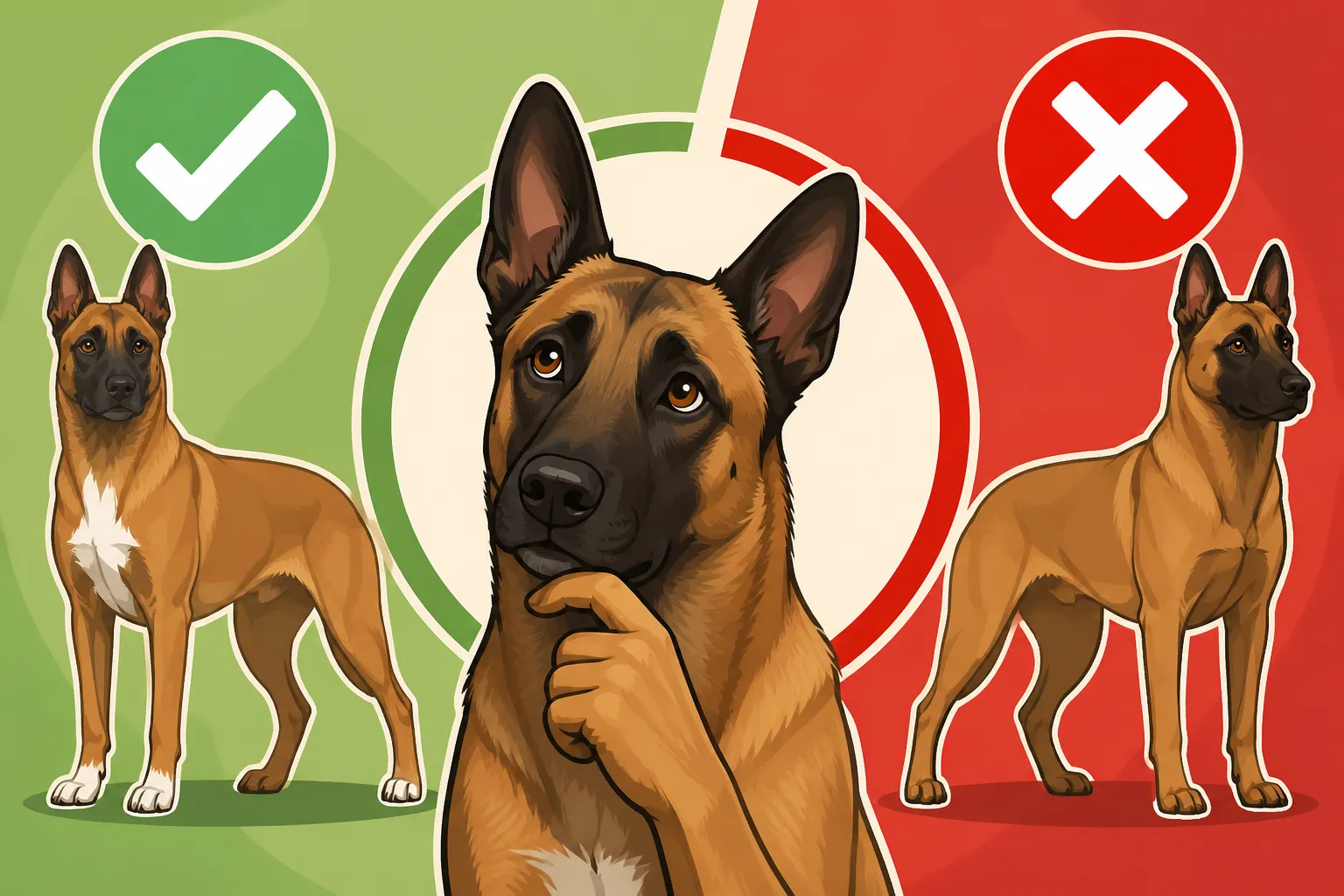
The good news for many Malinois owners is that a small amount of white isn't just common, it's actually permitted in certain areas. According to most breed standards, a small patch of white on the chest is generally acceptable. Think of it like a little "star" or "medallion" on their breast. It shouldn't be a huge bib, but a modest marking is fine. Many breeders will tell you they see this regularly in otherwise perfectly conformed litters.
Similarly, white tips on the toes are also often permitted. This isn't about entire white socks, but rather small flecks or tips on one or more digits. It’s quite charming, really, like they've dipped their paws in a bit of powder. These minor white markings are usually considered within the acceptable range and don't typically incur severe penalties in the show ring, as long as they adhere to the size and location restrictions outlined in the standard. It’s a subtle nod to the breed's varied genetic history, showing up even in the most tightly bred lines. The Belgian Town the Malinois Is Named After often sees these variations.
Where White Becomes a Fault or Disqualification
Now, while a little white is okay, too much white, or white in the wrong places, can indeed be considered a fault or even a disqualification in the show ring. The standard is looking for a dog that is fawn to mahogany with a black overlay and a distinct black mask. Any significant deviation from this is typically frowned upon.
For example, large white patches anywhere on the body, beyond that small chest marking, are usually considered a serious fault. This includes white extending far up the legs, white on the belly, flanks, or particularly, any white on the head outside of the muzzle and jaw that disrupts the black mask. The black mask is such a defining feature of the Malinois, giving them that intense, intelligent expression. Any white that breaks up this mask, or extends excessively beyond it, undermines one of the breed's characteristic traits. A Malinois isn't meant to have the extensive white markings you might see on some other breeds, and these deviations are carefully noted by judges.
Even more critically, white that extends beyond the toes to form "socks" or "stockings" up the legs, or significant white on the neck, tail, or any part of the body not specifically mentioned as acceptable, can be a disqualifying fault. This means the dog cannot be awarded points in conformation events. It doesn't make the dog any less of a wonderful companion or working dog, but it certainly impacts their show career. When breeders are looking for "type," these disqualifying marks are often a deal-breaker for dogs destined for the conformation ring.
Here’s a quick overview of acceptable versus unacceptable white markings:
| Location of White Markings | Acceptability According to Standard | Severity of Impact on Show |
|---|---|---|
| Small patch on chest | Acceptable | Minimal / None |
| Tips of toes | Acceptable | Minimal / None |
| Large patch on chest | Fault | Moderate |
| White extending up legs | Fault / Disqualification | High |
| White on belly, flanks | Fault / Disqualification | High |
| White on head (outside mask) | Fault / Disqualification | Very High |
| White on neck, tail | Disqualification | Very High |
The Genetics Behind the White Markings in Your Malinois
Understanding why these white markings appear goes back to the fascinating world of genetics. Dogs inherit two copies of every gene, one from each parent, and these genes dictate everything from their physical structure to their coat color and pattern. White markings aren't random; they're the result of specific genetic interactions.
Understanding Pigment Genes and Their Expression
The presence of white markings in a Malinois, or any dog, is primarily due to genes that affect how pigment (color) is distributed across the body during development. There are several gene loci (locations on a chromosome) involved in coat color, and some of these control the presence and extent of white spotting. For the Belgian Malinois, the "S" locus (for spotting) is particularly relevant.
The allele (version of a gene) at the "S" locus determines the amount of white spotting. While Malinois are typically homozygous for the solid color allele (meaning they don't carry genes for extensive white), minor white markings on the chest and toes can still occur due to modifier genes or incomplete expression of the solid color gene. These are often referred to as "residual white" or "Irish spotting" patterns in a very minimal form, even if the dog doesn't carry the full "Irish spotting" gene. It's a complex interplay, and sometimes a tiny genetic variation can result in that small white spot on the chest.
Responsible Breeding and Inherited Traits
Responsible breeders pay very close attention to these genetic traits. While a small white chest patch might not be a major concern, a breeder aiming for show ring success will certainly consider the extent of white markings when planning breedings. They'll look at the pedigrees of prospective parents to understand what kind of markings have appeared in previous generations. Looking Up a Malinois Sire's OFA Record is just one aspect of thorough research a breeder undertakes.
The goal isn't just to produce dogs that fit the physical standard, but also those with the sound temperament and working drive that define the breed. Most breeders understand that a small white mark doesn't affect a dog's health or working ability, but for conformation, adherence to the standard is key. If a particular pairing consistently produces offspring with excessive white, a responsible breeder might reconsider that pairing, especially if their focus is on producing show-quality dogs. However, if the dogs are exceptional in all other aspects, especially in their working ability, these minor cosmetic differences might be overlooked for dogs destined for working homes rather than the show ring. Whether a Malinois Puppy Arrives With Ataxia Results is another vital piece of information breeders scrutinize.
The Real-World Impact of White Markings on a Belgian Malinois
So, you've got a Malinois with a little white. What does that actually mean for their life and potential roles? The answer really depends on what you plan to do with your dog.
Navigating the Show Ring with White Markings
For those dreaming of strutting their Malinois in the conformation ring, white markings are definitely a factor to consider. As we discussed, a small chest patch and toe tips are usually acceptable and unlikely to be heavily penalized. However, anything beyond that, especially larger patches or white in unapproved areas, will be noted by judges. A judge's job is to evaluate how closely a dog conforms to the breed standard, and deviations from the ideal coat color and markings are part of that assessment.
A "fault" means a deduction of points, while a "disqualification" means the dog cannot place. Even if your Malinois has an otherwise perfect structure, gait, and temperament, significant white markings could prevent them from achieving championships. This is why breeders are so meticulous; they're trying to produce dogs that align as closely as possible with the written standard. If you're considering a show career for your Malinois and notice significant white, it’s wise to consult with experienced handlers or breeders to get an honest assessment of its potential impact.
Function Over Form: White Markings in Working Malinois
When it comes to working Belgian Malinois – whether in police K9 units, military roles, search and rescue, or various dog sports like IGP or ring sport – white markings are almost entirely irrelevant. These dogs are selected and evaluated based on their drive, courage, intelligence, trainability, physical soundness, and overall working aptitude. A small white chest patch doesn't make a police dog less capable of tracking a suspect, nor does it hinder a sport dog's ability to bite a sleeve or execute a perfect obedience routine. What Bite Sport Actually Asks of a Belgian Malinois highlights the functional requirements far beyond superficial appearance.
In fact, many of the most highly regarded working lines of Malinois carry these minor white markings. Their focus is purely on performance. The practical demands of the job mean that genetics dictating white hair distribution take a backseat to genetics influencing nerves, drive, and physical resilience. For a working dog, their uniform is less important than their ability to perform their duties. This is why you'll see plenty of phenomenal working Malinois, some even with more white than a conformation judge would prefer, absolutely excelling in their fields. You might even find performance-oriented products from places like Chewy that cater specifically to the nutritional and energetic demands of these hardworking dogs, regardless of their markings.
The Beloved Pet Malinois: White Marks and Unconditional Love
For the vast majority of Belgian Malinois owners, who simply want a loving, active, and loyal companion, white markings hold absolutely no negative significance. Your Malinois is a cherished family member, and a small patch of white on their chest only adds to their unique charm and individuality. It doesn't affect their health, their personality, their desire to play fetch for hours, or their unwavering devotion to you. Whether a Belgian Malinois Suits a Family Home emphasizes that companionship is about so much more than cosmetic details.
In a pet home, a Malinois with more white than the standard allows is just as wonderful as one with a perfectly solid coat. Focus on providing them with the right training, ample exercise, mental stimulation, and a healthy diet – perhaps some high-quality kibble from Chewy – and they will thrive. A tiny bit of white doesn't change the fact that you have a magnificent, intelligent, and fiercely loyal dog by your side. Celebrate their uniqueness!
Caring for a Malinois with White Markings: Practical Considerations
While white markings typically don't affect a Malinois's health, there are a few minor considerations to keep in mind regarding their skin and coat care, especially if the white areas are more extensive than just a small chest spot.
Sun Protection and Skin Health
Dogs with lighter-colored fur or skin, especially in areas with white markings, can sometimes be a little more sensitive to the sun. Just like people with fair skin, these areas might be more prone to sunburn. While a Malinois's short coat usually offers good protection, prolonged exposure, especially in areas with very sparse hair and white skin underneath, could theoretically lead to irritation.
If your Malinois enjoys sunbathing or spends extended periods outdoors in very bright conditions, particularly in regions with intense UV, it's a good practice to ensure they have access to shade. This is generally good advice for all dogs, but it's particularly pertinent for those with any areas of reduced pigmentation. Pannus and the Sunlight That Drives It in Malinois highlights the general importance of sun protection for Malinois, even if the white markings themselves don't typically increase the risk of pannus.
Grooming for a Pristine Coat, White Marks and All
Grooming a Belgian Malinois is relatively straightforward due to their short, dense coat, but consistent care is always beneficial. Regardless of any white markings, regular brushing helps to remove loose hair and distribute natural oils, keeping their coat healthy and shiny. During shedding season, you'll find yourself reaching for the brush even more often! You can find a wide range of effective grooming tools, from brushes to deshedding combs, at retailers like Chewy.
For white markings specifically, they generally don't require any special treatment. If the white area gets dirty, simply cleaning it with a damp cloth or a gentle dog-specific shampoo during bath time is usually sufficient. There's no need for whitening shampoos or other specialized products unless recommended by your vet for a specific skin condition, which is rare. The goal is always to maintain overall coat health, allowing your Malinois to look and feel their best, white spots and all. How Much a Malinois's Short Coat Actually Sheds gives more insight into their grooming needs.
Disclaimer
This article is for general informational purposes only and does not constitute professional advice. Laws, prices and regulations vary by location and change over time. Consult a qualified professional for guidance on your specific situation.