The Disqualifying Heights in the Malinois Standard
You've bought a Belgian Malinois puppy, dreaming of showing them in the conformation ring, or perhaps you're a seasoned breeder trying to maintain the integrity of your lines. Suddenly, as your pup grows, you start to worry: are they getting too tall? Or maybe not quite tall enough? The breed standard can feel like a rigid gatekeeper, and understanding the exact measurements that can disqualify your beloved Malinois is crucial, whether your aspirations lie in the show ring or simply in appreciating the breed's ideal physical form. This guide is here to demystify those often-confusing height regulations, helping you understand what they mean for your dog and the breed as a whole.
Deciphering the Belgian Malinois Breed Standard for Height
The Belgian Malinois, like all purebred dogs, has a written breed standard that describes the ideal characteristics of the dog. This standard covers everything from temperament and coat color to bite and, critically, height. For those deeply invested in the breed, whether through showing, breeding, or just pure admiration, these details aren't just arbitrary rules; they define the very essence and functional integrity of the Malinois.
The Official Numbers: What the Standard Actually Says
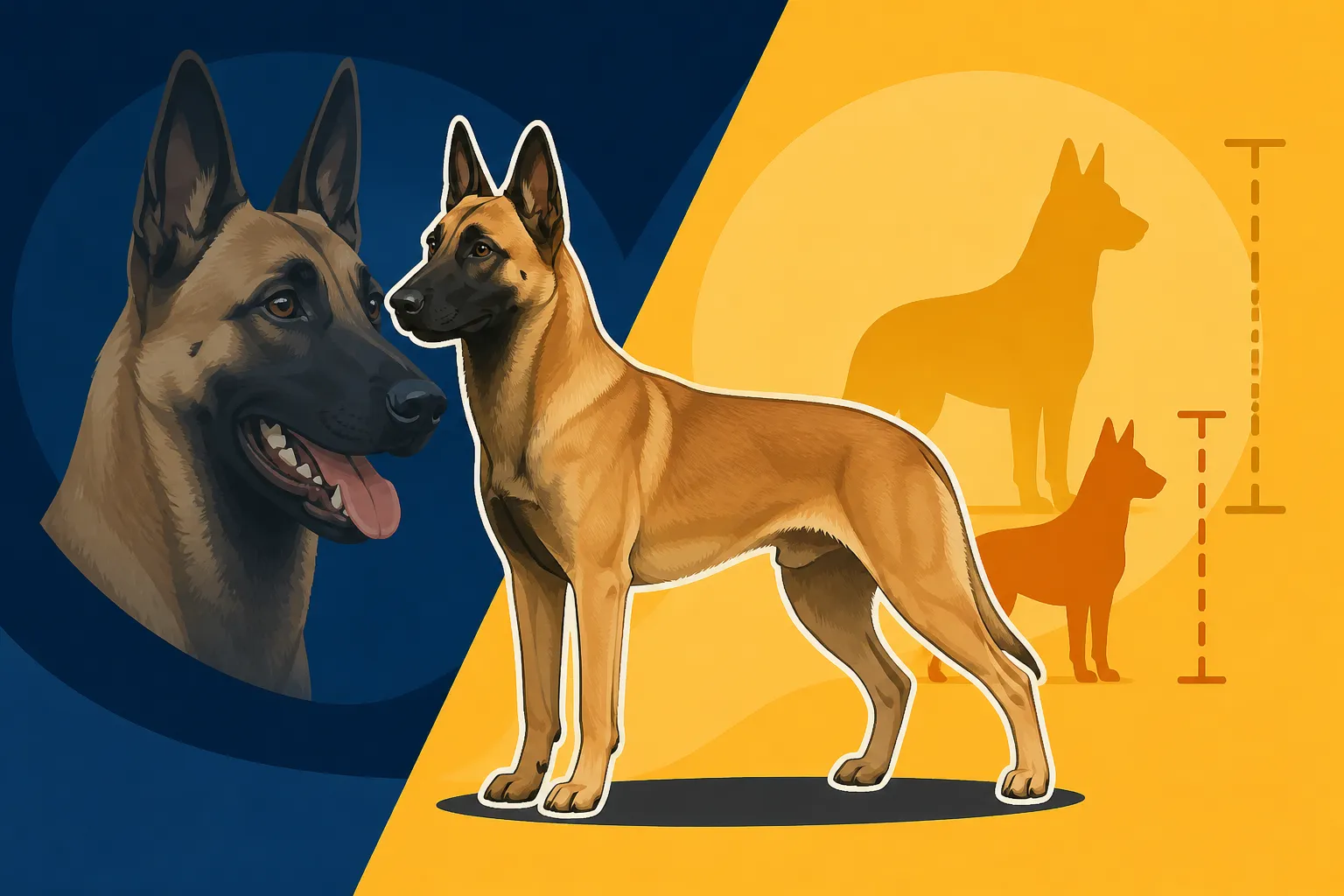
When we talk about height in the Belgian Malinois, we're referring to the measurement from the highest point of the dog's shoulder blades (the Withers) to the ground. This measurement is taken with the dog standing squarely on all four feet. The breed standard, as set by organizations like the American Kennel Club (AKC) or the Fédération Cynologique Internationale (FCI), specifies a distinct range for both males and females.
For male Belgian Malinois, the ideal height typically falls between 24 and 26 inches (61 to 66 cm). Females are slightly smaller, with an ideal height range of 22 to 24 inches (56 to 61 cm). These are the sweet spots, the measurements that describe the perfectly balanced, functionally sound Malinois. A Malinois that falls exactly within this range is considered to be of ideal height. Any deviation outside these boundaries, either too tall or too short, risks disqualification in the conformation ring. It's not just about being 'close enough'; it's about adhering to the precise measurements that define the breed's physical blueprint. Understanding The Twenty Two to Twenty Four Inch Female Malinois and The Height a Male Belgian Malinois Must Measure is fundamental for anyone involved with the breed.
Why Specific Measurements Exist: Form Follows Function
You might wonder why such strict height parameters are in place. Are a couple of inches really that big a deal? The answer, for a breed like the Belgian Malinois, is a resounding yes. These specific measurements aren't arbitrary; they are deeply rooted in the breed's original purpose and functional requirements. The Malinois was developed as a medium-sized herding dog, agile and enduring, capable of working long hours on diverse terrain. Their physical structure, including their height, directly contributed to their efficiency and soundness in this role.
A dog that is too tall might lack the agility needed for quick turns and pivots essential in herding. It could also put more strain on their joints, potentially leading to orthopedic issues over a working lifetime. Conversely, a dog that is too short might lack the stride length and overall stamina required to cover large areas of ground effectively alongside livestock. The standard, therefore, aims to preserve a balanced, moderate build that optimizes both speed and endurance without sacrificing structural integrity. It's all about ensuring the Malinois can perform its historical duties without undue stress on its body, ensuring longevity and efficiency in its demanding work.
What "Disqualifying" Truly Means in the Show Ring
Stepping into the conformation ring with a Belgian Malinois is an experience filled with anticipation and pride. You’ve groomed your dog, perfected their gait, and practiced their stack. But lurking in the back of many handlers' minds, especially with a young or still-growing dog, is the specter of "disqualification." This isn't just about losing a ribbon; it carries a more significant weight, impacting a dog's future in the show ring and potentially their breeding prospects.
The Impact of Being Too Tall or Too Short
When a judge measures a Belgian Malinois in the conformation ring, they are looking for adherence to the established breed standard. If a dog falls outside the acceptable height range—either being too tall or too short—it is considered a "disqualification." This means the dog cannot be awarded any points or placements in that show, regardless of how exemplary it might be in all other aspects. It's an immediate exclusion from competition.
For an exhibitor, this can be incredibly frustrating. Imagine investing countless hours and resources into training, conditioning, and traveling to a show, only for your dog to be disqualified on the measuring stand. Beyond the individual show, a disqualification for height can mean the end of a dog's conformation career. If a dog is disqualified multiple times for height, it generally signals that it is consistently outside the standard, making it unsuitable for further showing. This doesn't necessarily mean the dog is unhealthy or incapable of being a wonderful companion, but it does mean it doesn't fit the ideal physical mold defined by the breed. It underscores the importance of breeders understanding The Disqualifying Heights in the Malinois Standard thoroughly.
Beyond the Tape Measure: Judge's Discretion and Interpretation
While height is a seemingly objective measurement, the process isn't always as straightforward as it sounds. Judges use a measuring wicket, a specialized tool designed for this purpose, but slight variations in how a dog stands, or even the surface they're on, can subtly affect the reading. A dog that is nervous or unsettled might not stand perfectly square, leading to an inaccurate measurement.
Judges are experienced professionals, and they often assess a dog's overall balance and proportion even before the wicket comes out. They understand that while the numbers are critical, the spirit of the standard also includes the dog's overall build and how it moves. However, when it comes to disqualifying faults like height, there's little room for subjective interpretation. If the wicket clearly shows the dog is outside the accepted range, the disqualification is typically unavoidable. This highlights why responsible breeders strive to produce dogs well within the standard, providing a buffer against such close calls. It's a fine line, and while some discretion might exist for minor faults, height is usually quite definitive.
The Practical Implications of Disqualifying Heights
For those involved in the world of Belgian Malinois, understanding the height standard goes beyond the show ring. It touches on breeding decisions, the perception of working ability, and the expectations of those looking to bring a Malinois into their lives. A disqualifying height isn't just a label; it has tangible consequences.
For Breeders and Prospective Owners
For breeders, consistently producing dogs outside the height standard can be a serious concern. It indicates a departure from the established breed type and can negatively impact their kennel's reputation. Responsible breeders strive to select breeding pairs that will produce offspring within the acceptable height ranges, alongside other important traits like health, temperament, and working drive. A breeder who continually produces oversized or undersized Malinois might find it harder to place puppies with serious buyers, especially those looking for show or sport prospects. It can also lead to difficult conversations with puppy buyers whose promising show dog suddenly measures out.
Prospective owners, especially those new to the breed, need to be aware of these standards too. If your goal is to show your Malinois, purchasing from a reputable breeder who prioritizes adherence to the standard is paramount. Ask to see the parents' measurements and inquire about previous litters. While a pet-only home might not care about show qualifications, a dog significantly outside the standard could potentially experience structural issues or simply not embody the characteristic athleticism of the breed. It's about informed decision-making, ensuring you get a dog that aligns with your expectations and the breed's ideal. Asking a Breeder for Malinois Ataxia Results is a good parallel question to also ask about height.
Does Disqualification Affect a Working Malinois?
This is where the discussion often gets nuanced. Many Belgian Malinois excel in demanding working roles—police K9s, military dogs, search and rescue, and various dog sports like IGP or French Ring. In these fields, performance is king. A police department isn't going to disqualify a dog for being an inch over standard if that dog is exceptional at detection, tracking, or apprehension. The rigorous demands of real-world work or competitive sport often prioritize functional ability over strict adherence to cosmetic standards.
However, even in working lines, there’s an underlying belief that the standard exists for a reason: it describes a dog optimized for work. A dog that is significantly outside the standard—say, excessively tall and rangy, or notably short and stocky—might face physical challenges that affect its long-term working ability. An overly tall dog might be more prone to joint stress during jumps or rapid changes of direction. An undersized dog might struggle with endurance or covering ground as efficiently. So while a working dog won't be "disqualified" from its job for height, severe deviations from the standard could subtly impact its efficiency and longevity. The standard is a guideline for overall soundness, which ultimately benefits a working dog.
Health and Structure: More Than Just Show Rules
While the breed standard primarily dictates what's acceptable in the conformation ring, the measurements for height are intrinsically linked to the overall health and structural soundness of the Belgian Malinois. It’s not just about aesthetics; it’s about maintaining a functional, durable canine athlete.
The Connection Between Height and Joint Health
Extreme variations in height can place undue stress on a dog’s skeletal system and joints. A Belgian Malinois that grows significantly taller than the standard might be more prone to certain orthopedic issues, such as hip or elbow dysplasia, or even conditions like osteochondritis dissecans (OCD). The rapid growth associated with becoming oversized, or simply the increased leverage on longer limbs, can exacerbate these problems. Similarly, an undersized Malinois, while perhaps less common a concern for joint stress due to height, might indicate other underlying structural imbalances or genetic predispositions that could affect their overall soundness.
Breeders carefully select for appropriate size and balanced growth, understanding that healthy joints are critical for a dog that is bred to be athletic and active. Over-nutrition or forcing rapid growth in puppies, regardless of their genetic predisposition, can also lead to orthopedic problems. Therefore, the height standard acts as a guideline for what is considered a structurally sound and healthy build for the breed, reducing the likelihood of debilitating joint issues over the dog’s lifetime. For more on this, consider The Hip and Elbow Numbers Behind a Malinois Clearance.
Maintaining Breed Type Through Selective Breeding
The breed standard is essentially the blueprint for the Belgian Malinois. Adhering to it through selective breeding helps maintain the breed's distinct characteristics and prevents it from drifting into extremes that could compromise its identity or functionality. If breeders consistently bred for extreme height, for example, the Malinois could eventually lose its characteristic agile, medium-sized build and resemble an entirely different breed.
By sticking to the specified height ranges, breeders ensure that future generations of Malinois retain the balanced proportions and athleticism for which they are known. This commitment to type is vital for the long-term health and recognition of the breed. It helps ensure that a Belgian Malinois always looks and performs like a Belgian Malinois, preserving the legacy of the herding dogs from the Malines region of Belgium. Maintaining this consistency requires diligence and careful consideration of pedigrees and physical traits in breeding stock. The Square Outline a Belgian Malinois Should Have is another key aspect of this breed type.
Navigating the Purchase of a Malinois with Height Concerns
Buying a Belgian Malinois puppy is a significant commitment, and you want to ensure you're bringing home a healthy, well-adjusted dog that fits your lifestyle and expectations. If show potential is on your radar, or even if you just want to ensure your dog embodies the breed's ideal, understanding and addressing potential height concerns is part of the due diligence.
Asking the Right Questions to Your Breeder
Before you put down a deposit or bring a puppy home, a good breeder will be open and transparent about their dogs. Don't hesitate to ask specific questions about the parents' heights and how past puppies from their lines have matured. Here are a few things to consider:
- Parental Heights: Ask for the exact heights of both the sire and dam. Are they comfortably within the standard? If one parent is on the taller or shorter end of the spectrum, inquire about how this has impacted previous litters.
- Previous Litter Information: A reputable breeder will often track the growth of their puppies. Ask if they've had any puppies from previous litters that grew to be over or under the standard height. Understanding their track record can provide valuable insight.
- Growth Projections: While it's impossible to predict a puppy's exact adult height, some breeders can offer general projections based on genetics and observations of the puppy's build. This isn't a guarantee, but it can be a helpful guide.
- Breeder's Philosophy on Height: Discuss their overall philosophy on the breed standard, particularly regarding height. Do they actively select against extremes? A breeder deeply committed to the standard will prioritize these details.
Remember, a responsible breeder prioritizes the health and soundness of their dogs above all else. They will be happy to answer your questions and provide documentation, helping you feel confident in your choice. You might even find useful accessories for your growing Malinois, like appropriate chew toys or durable food bowls, available from retailers like Chewy, perfect for supporting their development.
What to Do If Your Malinois Grows Out of Standard
So, you've done your homework, brought home your Malinois, and they've blossomed into a wonderful companion. But as they mature, you realize they're measuring slightly outside the breed standard for height. What now?
First, it's important to remember that a Malinois that is too tall or too short by a small margin is still a fantastic dog. Unless you were planning a serious conformation career, this deviation in height is unlikely to affect their ability to be a loving family member, a capable sport dog, or even a working dog in roles where performance trumps exact appearance. Many excellent working Malinois might be an inch or two outside the formal height standard but are otherwise structurally sound and high-performing.
If you had show aspirations, a disqualification might mean a shift in focus. Perhaps your Malinois can excel in performance events like agility, obedience, or protection sports, where height is less of a factor than drive, trainability, and athletic ability. Many Malinois owners discover that redirecting their efforts from the show ring to performance titles brings immense satisfaction. The most important thing is your dog's health and happiness. Continue to provide excellent care, a balanced diet (perhaps from a selection found at Chewy), and plenty of mental and physical stimulation, regardless of whether they fit the measuring wicket's ideal.
The Long-Term Vision for the Belgian Malinois
The breed standard, including its stipulations on height, serves a critical role in guiding the future of the Belgian Malinois. It's a living document, reflecting not just the past but also influencing the health and integrity of the breed for generations to come.
Preserving the Malinois's Athletic Build
The Belgian Malinois is renowned for its incredible athleticism, agility, and stamina. These traits are inextricably linked to its moderate size and balanced proportions. An overly leggy dog might be fast, but could lack robustness; a stocky dog might be powerful, but less agile. The ideal height specified in the standard aims to preserve that perfect balance, creating a dog that is both powerful and lithe, capable of explosive speed and sustained endurance.
Breeders who adhere to these guidelines are effectively acting as stewards of the breed, ensuring that the Malinois remains true to its heritage as a highly capable working dog. This means selecting for dogs that not only meet the height requirements but also possess the correct bone structure, angulation, and muscle mass that complement that size. Without this diligence, the characteristic athletic build could slowly erode, leading to a breed that is less efficient and more prone to injury in its demanding roles. Consider The Year a Malinois Starts Working Shorter Sessions for insight into how long-term soundness impacts a working dog's career.
Balancing Show Ring Ideals with Working Dog Reality
There can sometimes be a perceived tension between the ideals of the conformation show ring and the realities of a working dog's life. While the breed standard is based on the functional requirements of the Malinois, some argue that an overemphasis on aesthetics in the show ring could, in extreme cases, lead to a divergence from true working ability. However, for most responsible breeders, the goal is to produce a dog that embodies both form and function.
The height standard is one of the many points where these two worlds meet. A dog that is too far out of standard, regardless of whether it's for show or work, may experience compromised function. Conversely, a Malinois with ideal height and proportions is inherently more likely to be structurally sound and capable of excelling in a variety of disciplines, from the show ring to the patrol car. Ultimately, the long-term vision for the Belgian Malinois is one where its striking appearance and formidable working capabilities remain intertwined, a testament to the dedication of breeders and owners who respect the holistic nature of the breed standard. This continuous effort helps ensure that the traits described in The Belgian Town the Malinois Is Named After remain steadfastly present.
Disclaimer
This article is for general informational purposes only and does not constitute professional advice. Laws, prices and regulations vary by location and change over time. Consult a qualified professional for guidance on your specific situation.