Why a Malinois Keeps Its Full Tail
If you've ever watched a Belgian Malinois move, you know their incredible athleticism and precision. But you might have also noticed something distinct: they invariably sport a long, natural tail. Many new Malinois owners, especially those coming from breeds where tail docking is common, often wonder why this particular feature remains untouched. The frustration comes from sometimes seeing other working dogs with docked tails, leading to confusion about what's "right" or "traditional" for a Malinois, or even if it's safer. This guide is here to unravel the mystery, diving deep into the functional, historical, and ethical reasons why a Belgian Malinois keeps its full, glorious tail.
The Historical Purpose of a Malinois's Tail
When we talk about the Belgian Malinois, we're discussing a breed forged for work, where every physical attribute serves a purpose. Their tail is no exception. It's not just for wagging; it's an essential tool in their high-octane life, deeply ingrained in their original purpose as herding and then protection dogs.
A Working Tool, Not Just an Appendage
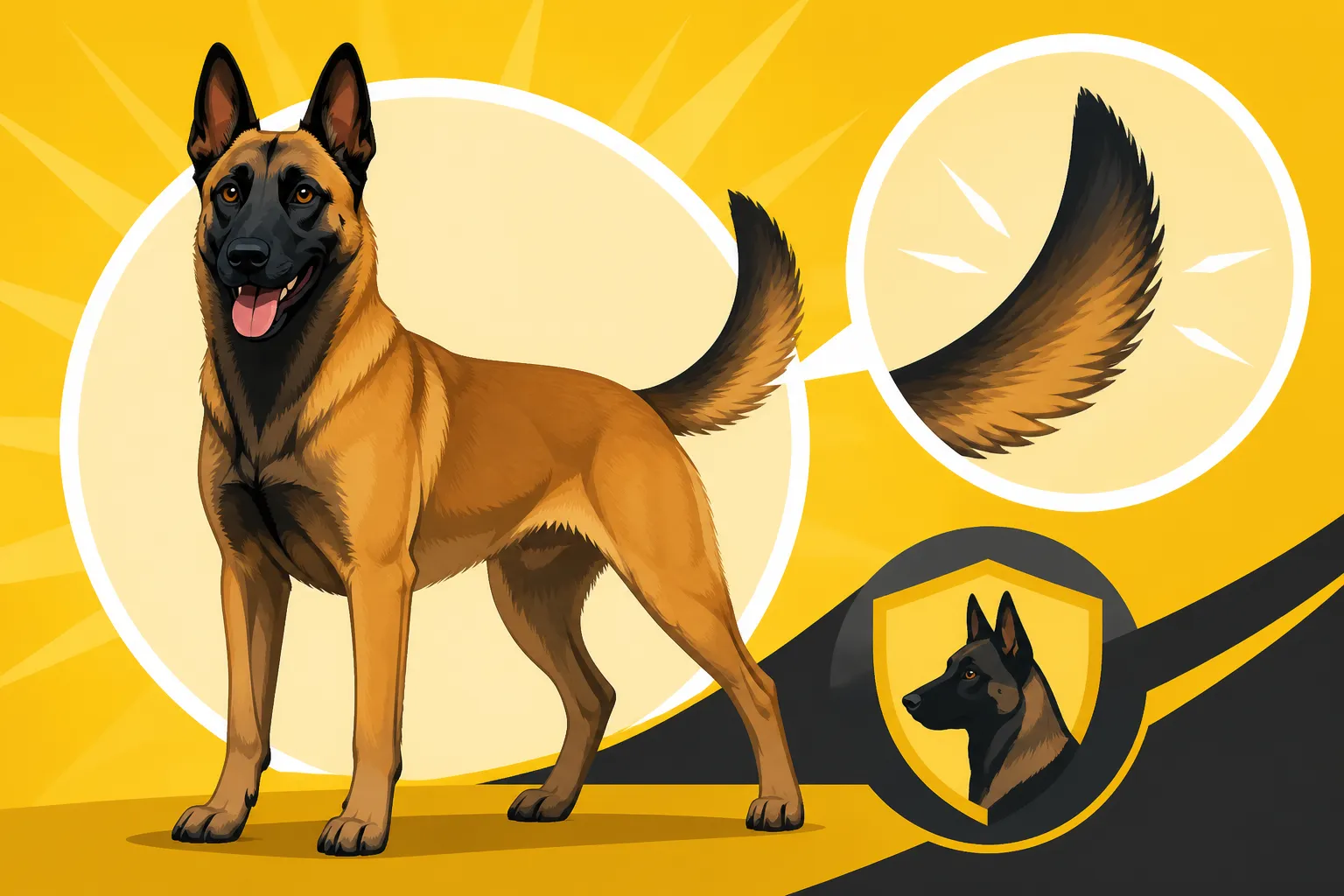
Imagine a Malinois darting through a field, rounding up livestock or pursuing a suspect with astonishing speed. That tail, often held high with a slight curve, is a crucial part of their dynamic balance system. Think of it like the rudder on a boat or the counterweight on a tightrope walker’s pole. As they accelerate, decelerate, or make those characteristic razor-sharp turns, the tail acts as a counterbalance, shifting their center of gravity to prevent tumbles and maintain momentum. Without it, their agility would be noticeably compromised, affecting their ability to perform quick changes of direction that are paramount in their work.
Beyond balance, the tail is also a vital communication device. A Malinois uses its tail to convey a vast array of emotions and intentions to other dogs and even to their human handlers. A high, stiff tail might signal alertness or dominance, while a low, tucked tail speaks of submission or fear. A relaxed, gentle wag can indicate friendliness. For a breed that often works in close quarters with humans and other animals, clear, non-verbal communication is essential to avoid misunderstandings, whether it's on the training field or in a real-world scenario. Losing this natural semaphore would rob them of a fundamental aspect of their social interaction and expressiveness. The Herding Job the Belgian Malinois Was Built For speaks volumes about their origins, and how their bodies were perfectly adapted for those tasks.
The Importance of Balance in Active Breeds
The Belgian Malinois is an athletic powerhouse, renowned for its incredible speed, jumping ability, and explosive power. Their movements are often sudden and extreme. Consider a Malinois scaling a wall, launching over an obstacle, or hitting a bite sleeve with full force. In each of these scenarios, the tail plays a subtle yet critical role in distributing their weight and controlling their body in motion. It allows them to stick landings, pivot with precision, and absorb impact more effectively. For a dog that needs to be constantly aware of its body in space, performing complex tasks under pressure, the tail contributes significantly to their proprioception.
This balance isn't just about avoiding falls; it's about efficiency and injury prevention. A dog that is constantly off-balance or struggling to adjust its body mid-action is more prone to strains, sprains, and more serious injuries. The tail helps them make those micro-adjustments that prevent a bad landing from becoming a debilitating injury. Owners dedicated to their dog's longevity and performance understand that preserving every part of this finely tuned athlete is key to Keeping a Belgian Malinois Sound Past Twelve. The full tail is an integral part of the biological design that allows a Malinois to excel in high-demand environments.
Breed Standard and the Intact Tail
The world of purebred dogs is governed by breed standards, meticulously written documents that describe the ideal characteristics of each breed. For the Belgian Malinois, the intact tail is not merely an optional feature; it's a non-negotiable part of their standard, reflecting their heritage and original function.
Preserving Form and Function
Unlike many other working breeds where tail docking became customary for practical or aesthetic reasons, the Belgian Malinois standard has always called for a natural, undocked tail. The standard describes it as strong at the base, carried low at rest, and raised with a curve when the dog is excited or moving. This specific description isn't arbitrary; it reflects the functionality discussed earlier. To dock a Malinois's tail would be to deliberately alter a feature essential to its athletic prowess and communication. It would be akin to removing the wings from a bird that was bred to fly.
Breed clubs and responsible breeders adhere strictly to these standards to preserve the integrity of the breed. They understand that every physical trait, including the tail, has been honed over generations to create a highly efficient working dog. Altering such a fundamental characteristic goes against the very principle of preserving the breed's form and function. When you look at The Square Outline a Belgian Malinois Should Have, the tail completes that picture of athletic readiness. It's part of the whole package.
Comparing to Other Breeds with Docked Tails
It's true that many working breeds, such as Rottweilers, Doberman Pinschers, and some terriers, have traditionally had their tails docked. The historical justifications for this often involved preventing injuries in hunting dogs navigating dense brush, or to give an imposing appearance to guard dogs, or even to prevent "tail wagging" injuries in high-energy breeds that could repeatedly hit their tails against hard surfaces. However, these reasons do not universally apply to the Belgian Malinois.
The Malinois's tail is generally quite sturdy and well-muscled, not thin and delicate like some other breeds. While a working Malinois can certainly sustain Tail Injuries on a Belgian Malinois, these are usually trauma-related and not a consequence of normal tail function. The nature of their work—often in open fields, urban environments, or specific sport settings—doesn't typically expose them to the kind of dense undergrowth that historically led to tail injuries in certain hunting breeds. Therefore, the rationale for docking simply doesn't hold up for the Malinois from a practical, historical perspective. This is a breed whose natural form is its ideal form.
Health and Welfare Considerations of an Intact Tail
While the concern for a dog's health and safety is often cited when discussing tail docking, for the Belgian Malinois, keeping the tail intact aligns best with their overall welfare. There are always risks with any body part, but the benefits of a tail far outweigh the perceived risks for this breed.
Tail Injuries: Reality Versus Perception
It's a common fear among dog owners that an active dog like a Malinois will constantly injure its tail. And yes, scrapes, minor cuts, or even "happy tail" syndrome (where a vigorous tail wag repeatedly impacts a hard surface, leading to cuts) can occur. However, serious, debilitating tail injuries that would warrant docking are relatively rare in Malinois. Their tails are generally quite robust, with strong musculature and thick skin. When injuries do happen, they are usually treatable with veterinary care, often involving cleaning, bandaging, and sometimes antibiotics. Supplies for such events, like specialized wraps or even Elizabethan collars, are readily available at places like Chewy.
Consider the alternative: surgical docking. This is a painful procedure, often performed without anesthesia in puppies, that removes a part of the dog's spine. It carries risks of infection, nerve damage, and phantom limb pain. Furthermore, a docked tail can lead to balance issues, as the dog has lost a natural counterbalance. While a Malinois can have Torn Nails on a Malinois Working Hard Surfaces or other limb injuries, these are not typically prevented by removing the tail, which serves a distinct purpose. The idea that docking is a proactive measure for injury prevention in Malinois is largely a misconception when weighed against the benefits and potential harms.
The Role of the Tail in Canine Communication
We touched on this earlier, but it truly cannot be overstated: the tail is paramount for a dog's social interactions. Imagine walking into a dog park with a Malinois. Other dogs will instantly read its mood and intentions through its tail carriage and movement. A natural tail allows for a full spectrum of communication – from the broad, sweeping arcs of joyful greeting to the subtle tremors of uncertainty.
Dogs with docked tails often struggle with clear communication. Their signals can be misinterpreted by other dogs, leading to awkward interactions or even conflicts, simply because their intentions aren't easily readable. For a breed that is often intense and needs precise social cues, such as when interacting with A Belgian Malinois in a House With Kids and Dogs, an intact tail helps them navigate complex social landscapes more smoothly. It’s part of their natural language, and taking it away can create unnecessary social handicaps, impacting their quality of life and potentially increasing behavioral issues stemming from miscommunication.
Debunking Misconceptions About Tail Docking in Malinois
The practice of tail docking, particularly for cosmetic reasons, has faced increasing scrutiny and opposition globally. For Belgian Malinois, any claims of practical benefits from docking simply don't align with the breed's characteristics or modern veterinary understanding.
Performance and Safety: Is Docking Truly Advantageous?
Some might argue that docking a Malinois's tail could improve its performance in certain sports or make it "safer." However, there is no scientific evidence to support these claims. In fact, removing the tail could hinder performance by impairing balance and agility, as discussed. A Malinois relies heavily on its tail for rapid directional changes and stability, critical components of activities like IGP, agility, or detection work. Whether a Malinois Has the Body for Agility strongly implies every part of their athletic physique is important.
From a safety perspective, the argument for docking to prevent injuries is often overblown for this breed. While any dog can get a tail injury, severe, career-ending tail injuries that could have been prevented by docking are rare in Malinois. Furthermore, the trauma of the docking procedure itself, especially if done incorrectly or without proper pain management, is a significant welfare concern. A working Malinois requires a robust physical and mental foundation; intentionally removing a functional body part, with no clear benefit, runs counter to this. The emphasis should be on proper conditioning and environmental management, not on altering their natural anatomy.
The Ethical Stance on Cosmetic Procedures
The trend towards maintaining natural forms in dogs reflects a broader ethical shift in how we view companion and working animals. Many veterinary associations worldwide, including those in Europe where the Malinois originates, condemn non-therapeutic tail docking as an unnecessary mutilation. These procedures are often banned or heavily restricted in many countries. The focus is shifting to prioritizing animal welfare and allowing dogs to retain their natural anatomy, which is intrinsically linked to their physical and psychological well-being.
For a Belgian Malinois, choosing to keep their natural tail is not just about adhering to a breed standard; it's about respecting the dog's inherent design and promoting its full range of capabilities and expressions. Responsible breeders and owners understand that a healthy, natural Malinois with its full tail is the ideal. They prioritize the dog's overall health, training, and enrichment, ensuring they have appropriate outlets for their energy and drive, rather than seeking shortcuts through cosmetic alterations. The Checkup Schedule a Sport Malinois Should Keep will focus on maintaining their natural health, not on unnecessary procedures. Many owners find great quality food and health supplements, perhaps even through convenient online retailers like Chewy, to support their Malinois's natural athleticism rather than modifying it.
In conclusion, the reason a Belgian Malinois keeps its full tail boils down to a blend of history, functionality, and ethical considerations. It's a testament to their heritage as a working breed where every physical attribute contributes to their incredible capabilities. The tail is a vital tool for balance, agility, and communication, and its preservation is a hallmark of a healthy, authentic Malinois.
| Tail Feature | Function in Belgian Malinois | Why Intact is Preferred |
|---|---|---|
| Balance & Agility | Acts as a counterbalance for quick turns, jumps, and sprints. | Essential for peak athletic performance and injury prevention in high-drive activities. |
| Communication | Conveys emotions, intentions, and social cues to other dogs and humans. | Crucial for clear social interaction, preventing misunderstandings and behavioral issues. |
| Breed Standard | Explicitly calls for a natural, undocked tail as part of the ideal conformation. | Preserves the historical integrity and working characteristics of the breed. |
| Proprioception | Contributes to body awareness and spatial orientation. | Enhances overall coordination and efficiency of movement. |
| Natural Form | The body part as it naturally evolved for the breed's original purpose. | Aligns with modern animal welfare ethics; no proven benefit from docking. |
Disclaimer
This article is for general informational purposes only and does not constitute professional advice. Laws, prices and regulations vary by location and change over time. Consult a qualified professional for guidance on your specific situation.