Whether Titanium Crowns Are Worth It on a Malinois
You’ve got yourself a Belgian Malinois, and let's be honest, these dogs are canine dynamos. Their drive, their intensity, their absolute commitment to whatever task is at hand – it's both their greatest asset and sometimes, their biggest challenge. And when that high-octane lifestyle inevitably leads to a serious dental injury, like a fractured canine from an overzealous bite on a sleeve or an unfortunate encounter with something too hard, you're faced with a tough decision: is putting titanium crowns on their teeth truly a worthwhile investment? This guide is here to help you navigate that complex question, weighing the pros, cons, and real-world implications for your incredible Malinois.
The Inevitable Wear and Tear on a Malinois's Teeth
It’s no secret that Belgian Malinois live life in the fast lane. They're built for action, for work, for pushing limits, and sometimes, their teeth bear the brunt of that enthusiasm. This isn't just about a dog being a "chewer"; it's about the inherent nature of the breed and the demands often placed upon them.
Why Malinois Teeth Are at Risk
Your Malinois isn't just a pet; for many, they're a working partner, a sport dog, or an incredibly active companion. This means their mouths are often used for far more than just eating kibble. Whether they're engaging in rigorous bite work, like IGP or Ring Sport, where they're gripping sleeves and tugs with immense force, or simply living their best life as a highly driven pet, constantly playing with tough toys or trying to deconstruct anything they can get their jaws around, their teeth are under constant assault. The sheer power of a Malinois's bite, coupled with their relentless drive, means they apply incredible pressure to whatever they're biting. This isn't just about tearing things up; it's about the repetitive impact and torsion on their teeth, especially those critical canine teeth. Whether Hard Bite Work Wears Malinois Teeth Down delves deeper into this issue, but suffice it to say, their teeth are not immune to their lifestyle.
Beyond structured bite sports, consider the daily life of a Malinois. Many are enthusiastic chewers, finding immense satisfaction in gnawing on bones, antlers, or even inappropriate objects if given the chance. A moment of inattention with a rock in the yard, a too-hard Nylabone, or an errant piece of equipment during training can spell disaster for a tooth. Their prey drive can lead to impulsive grabs at hard surfaces or objects, often without thinking of the consequences. This isn't negligence on your part; it's simply the reality of owning a dog with such a powerful drive and an incredible oral fixation. It’s a constant battle to manage their environment and provide safe outlets for their chewing instincts.
Common Dental Injuries in Active Malinois
The most common dental injuries we see in Malinois, particularly working or sport dogs, often involve the canine teeth – those long, sharp fangs that are so crucial for gripping and holding. These are the teeth that take the brunt of impact during bite work. You might notice a small chip on the tip, a more significant fracture that exposes the sensitive pulp canal, or even severe wear and abrasion from years of gripping hard objects. Often, the damage isn't immediately obvious. It might start as a hairline fracture that slowly deepens, or the tooth might look fine on the outside, but internally, the pulp is damaged, leading to pain and infection.
Other teeth can suffer too, of course. Premolars and molars can fracture from chewing on extremely hard items, but the canines are often the first line of defense in many Malinois activities. A chipped canine might seem minor, but if it exposes the pulp, it's an open invitation for bacteria to enter, leading to infection and excruciating pain. Even if the pulp isn't exposed, a significant chip can weaken the tooth, making it more susceptible to further damage down the line. We often hear stories of dogs breaking teeth on things you'd never expect, like the metal buckle on a training harness or an accidental bump during a search. It just highlights how vulnerable these essential tools are in a Malinois's mouth. For more specific insights into these types of injuries, you might find Chipped Canines on a Malinois From Sleeve Work particularly relevant.
The Pain and Consequences of Dental Damage
Imagine having a constant toothache, or the searing pain of exposed nerve. That's what your Malinois could be experiencing with a fractured tooth. Dogs are masters at hiding pain, especially high-drive breeds like Malinois, who are hardwired to push through discomfort. You might not see obvious limping or whining. Instead, subtle behavioral changes often signal dental pain. Maybe they're less enthusiastic about their favorite tug toy, hesitant to bite as hard, or they might even show a slight shift in their bite grip during work. You might notice them chewing only on one side of their mouth, dropping food more often, or being reluctant to let you inspect their mouth. In some cases, chronic pain can lead to irritability, decreased drive, or even aggression as they try to protect their sensitive mouth.
If the pulp is exposed, bacterial infection can track up into the jawbone, leading to abscesses, bone destruction, and even systemic illness if left untreated. This isn't just about discomfort; it can severely impact your Malinois's quality of life and their ability to perform their job, whether that's sport, police work, or simply being an engaged family member. A chronic infection can drain their energy, affect their appetite, and compromise their immune system. The decision isn't just about saving a tooth; it's about alleviating pain, preventing serious infection, and preserving their overall health and well-being. This is why addressing dental issues promptly is so crucial for these active dogs.
Understanding Titanium Crowns for Canine Teeth
So, you've identified a damaged tooth, likely a canine, and your vet has mentioned a titanium crown as a possible solution. This might sound intimidating, almost like something you'd get done yourself, but it's a very real and effective procedure in veterinary dentistry.
What Exactly Is a Titanium Crown?
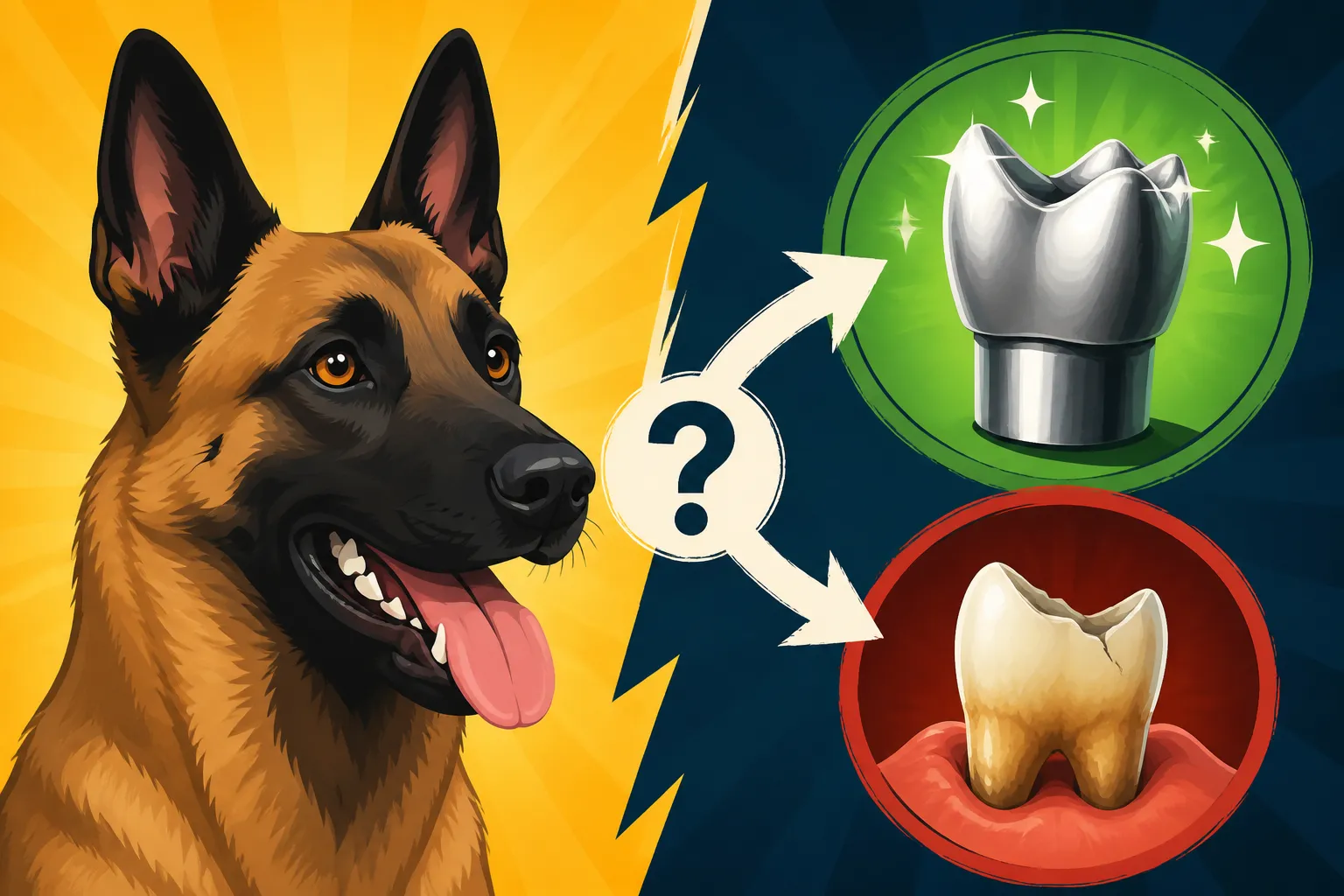
Simply put, a titanium crown is a custom-fitted metal cap that covers and protects a damaged tooth. For a Malinois, these are most commonly applied to the canine teeth. The crown is designed to encapsulate the entire remaining structure of the natural tooth above the gum line, restoring its original shape, size, and strength. Why titanium? Because it's an incredibly durable, biocompatible metal. It's strong enough to withstand the immense biting forces of a Malinois, resistant to corrosion, and generally well-tolerated by the body. This isn't just about aesthetics; it's about functional restoration. The goal is to provide a protective barrier that prevents further damage to the compromised tooth, allowing your dog to use their mouth naturally again, often without pain.
The process involves careful measurement and impression-taking of your dog's tooth, usually under general anesthesia, to create a perfect custom fit. The existing tooth might need some shaping and reduction to ensure the crown fits snugly and doesn't interfere with their bite. Once the crown is fabricated, it's permanently cemented onto the tooth. Think of it like putting an armored shield over a vulnerable tooth, designed specifically to withstand the rigors of a Malinois's life. It allows them to continue participating in activities that would otherwise be risky or painful for a damaged tooth.
The Benefits and Drawbacks of Dental Crowns
Let's weigh the good against the less good. The primary benefit of a titanium crown is its exceptional durability and protection. For a Malinois, especially one involved in bite work or intense chewing, this means preventing further fracture or wear on an already compromised tooth. It restores the structural integrity of the tooth, allowing them to bite and grip with confidence again. A successfully crowned tooth alleviates pain, reduces the risk of future infection, and maintains the dog's ability to use their mouth effectively for eating, playing, and working. It's often the best option for preserving the tooth itself, rather than resorting to extraction.
However, titanium crowns represent a significant investment, both financially and in terms of the procedure itself. Your Malinois will require general anesthesia for the initial assessment, the impression taking, and then again for the final placement of the crown. While anesthesia protocols for lean, high-drive dogs like Malinois are usually well-managed, it's still a consideration. Anesthesia Protocols for a Lean Belgian Malinois highlights the importance of discussing this with your vet. Another drawback is that crowns are not indestructible. While titanium is tough, extreme force or impact can still damage or dislodge a crown, potentially requiring repair or replacement. There's also the commitment to diligent oral hygiene and regular veterinary check-ups to monitor the crowned tooth and surrounding tissues.
The Procedure: What to Expect
The journey to getting a titanium crown for your Malinois typically involves several steps, usually spread across two veterinary visits, both requiring general anesthesia.
Visit 1: Assessment, Root Canal (if needed), and Impressions
- Initial Examination & Diagnostics: Your vet, or more likely a veterinary dental specialist, will thoroughly examine your Malinois's mouth. X-rays are crucial to assess the extent of the damage, check for signs of infection in the bone, and determine the health of the tooth's root. This is where they decide if a root canal is necessary before crowning.
- Anesthesia: Your Malinois will be placed under general anesthesia. This is non-negotiable for dental procedures of this nature, as precision is paramount, and movement is unacceptable. Pre-anesthetic bloodwork will be done beforehand to ensure your dog is a good candidate.
- Root Canal Therapy (if indicated): If the pulp is exposed or infected, a root canal will be performed first. This involves removing the infected pulp tissue, thoroughly cleaning and shaping the root canal, and then filling it with a biocompatible material to seal it off. This step is vital to eliminate pain and infection before the crown is placed. Whether a Belgian Malinois Needs a Root Canal offers more detail on this procedure.
- Tooth Preparation: The affected tooth will be carefully prepared. This involves reshaping the tooth to create a proper "abutment" for the crown. A small amount of enamel is removed from all sides and the top surface to create space for the crown and ensure a tight, secure fit.
- Impressions: Accurate dental impressions are then taken of the prepared tooth and the surrounding teeth. These impressions, along with detailed measurements, are sent to a specialized veterinary dental lab where the custom titanium crown will be fabricated.
- Temporary Crown (Optional): In some cases, a temporary crown might be placed to protect the prepared tooth while the permanent crown is being made.
Interim Period: You'll typically go home with your Malinois, who will be recovering from the first anesthetic. You'll need to monitor them carefully and ensure they don't chew on anything hard during this time. The lab usually takes a few weeks to craft the custom titanium crown.
Visit 2: Permanent Crown Placement
- Anesthesia: Your Malinois will once again be placed under general anesthesia.
- Crown Placement: The temporary crown (if used) is removed, and the prepared tooth is thoroughly cleaned. The custom-made titanium crown is then meticulously fitted onto the tooth. The veterinary dentist will check the fit, bite alignment, and margins to ensure everything is perfect.
- Cementation: Once the fit is confirmed, a strong, permanent dental cement is used to bond the titanium crown securely to the tooth.
- Polishing & Final Check: Excess cement is removed, and the area is polished. A final inspection ensures the crown is perfectly seated and the bite is comfortable for your dog.
After the second procedure, your Malinois will recover from anesthesia, and you'll receive post-operative instructions, which usually include a period of soft food and avoiding hard chews for a few weeks to allow the cement to fully cure and for your dog to adjust. Regular follow-up appointments will be scheduled to monitor the crown and the health of the surrounding tissues. This isn't a quick fix, but a detailed surgical process performed by skilled professionals.
Are Titanium Crowns Worth the Investment for Your Malinois?
This is the million-dollar question, isn't it? The decision to invest in titanium crowns for your Malinois isn't one to take lightly. It involves a serious commitment of time, resources, and emotional energy. But for many owners, especially those with working or sport Malinois, the answer is a resounding "yes."
Factors to Consider
When weighing the value of a titanium crown, several factors come into play, and they often revolve around your dog's lifestyle and your expectations for their future.
- Working Dog vs. Pet: This is perhaps the most significant differentiator. For a working Belgian Malinois – a police K9, a military dog, an IGP competitor, or a detection dog – their teeth are absolutely vital tools of their trade. A fractured canine can mean the end of their career or significantly hinder their ability to perform. In these cases, a titanium crown can often extend their working life, protect their ability to bite effectively, and ensure they remain pain-free while on the job. The investment here isn't just about a pet's comfort; it's about preserving a working asset. For a pet Malinois, the decision might lean more heavily on quality of life, comfort, and preventing future complications, especially if they are a strong chewer.
- Age and Prognosis: How old is your Malinois? A younger dog with many years of active life ahead of them might be a prime candidate, making the long-term benefit of a crown more impactful. For an older Malinois, you'd consider their overall health, any other medical conditions, and their expected lifespan. The veterinary dental specialist will assess the tooth's prognosis after a root canal and before crowning. If the tooth itself has significant underlying issues beyond the fracture, the crown might not be as beneficial long-term.
- Severity of Damage: A minor chip might not warrant a crown, but a deep fracture exposing the pulp absolutely does. The crown's purpose is to protect an already compromised tooth that has undergone, or needs to undergo, a root canal. If the damage is superficial and doesn't threaten the pulp, other, less invasive options might be explored.
- Financial Commitment: Let's be frank: titanium crowns are not cheap. They involve specialist veterinary dental care, multiple anesthetic procedures, custom fabrication, and meticulous placement. The cost can be substantial. This is where pet insurance, like a policy from Healthy Paws, can be incredibly beneficial. While specific prices aren't discussed here, understand that it's a significant investment that requires careful financial planning. Many owners find that the long-term benefits and quality of life improvement justify the expense, especially for a beloved working partner. The Cost of Repairing a Malinois's Broken Canine gives more context on potential expenses.
Comparing Crowns to Other Dental Solutions
When a Malinois fractures a tooth, especially a canine, you generally have a few main options:
| Dental Solution | Description | Pros | Cons | Best For |
|---|---|---|---|---|
| Titanium Crown | Custom-fitted metal cap covering a damaged tooth (often after a root canal) to restore strength and protect from further damage. | Restores full function, highly durable, prevents further damage, preserves tooth. | High cost, multiple anesthetic procedures, not indestructible, requires specialized vet dentist. | Working dogs, highly active pets, cases where tooth preservation and full function are critical. |
| Root Canal Therapy | Removal of infected pulp, cleaning, and sealing the root canal. Preserves the tooth but leaves it potentially weaker. | Preserves the tooth, eliminates pain/infection, less invasive than extraction. | Tooth can still fracture or chip if not crowned, may not fully restore biting strength, still requires anesthesia. | When pulp is exposed/infected but tooth structure is mostly intact, and owner cannot afford a crown or has a lower-drive dog. |
| Extraction | Surgical removal of the entire tooth. | Eliminates pain/infection permanently, one-time procedure. | Loss of tooth function, can alter bite, may require bone grafting, can be challenging for large canine teeth. | Severely damaged teeth, teeth that cannot be saved, when cost is a primary concern, or for older, less active dogs. |
As you can see, extraction, while seemingly simpler and often less expensive upfront, means losing a crucial tooth forever. For a Malinois, particularly one involved in bite work, losing a canine tooth can significantly impact their grip, balance, and overall effectiveness. A root canal without a crown will alleviate the pain and prevent infection, but the tooth remains compromised and vulnerable to re-fracture or further wear. This is why for a Malinois, especially one that continues to work or play hard, the titanium crown is often the gold standard – it provides the necessary protection after the root canal has saved the tooth.
Long-Term Care and Maintenance
Getting a titanium crown isn't a "set it and forget it" situation. It's a long-term commitment to care. Your Malinois will need regular follow-up appointments with the veterinary dentist – typically yearly dental X-rays to ensure the crowned tooth and surrounding bone remain healthy and free of infection. You'll need to be diligent about oral hygiene at home, just as you would with any dog, including regular brushing, if your Malinois tolerates it.
Perhaps most importantly, you'll need to manage their chewing habits carefully. While the titanium crown is incredibly strong, it's not invincible. You'll want to avoid giving them extremely hard objects like antlers, real bones, or rocks. Focus on chew toys that are flexible enough to bend but firm enough to be satisfying. Brands available on Chewy offer a wide range of durable, vet-approved chew toys that can help satisfy that Malinois urge without risking the crown. Even with a crown, a Malinois can still damage other teeth or dislodge the crown if they engage in reckless chewing.
This continued vigilance is part of the "worth" of the crown. It allows your dog to live a pain-free, active life, but it requires your ongoing partnership in protecting that investment.
Practical Advice and Prevention
Let's face it, preventing dental injuries in a Belgian Malinois can feel like a full-time job. Their drive and intensity often mean they push boundaries, and their mouths are their primary tool for interaction with the world. But there are certainly proactive steps you can take.
Preventing Dental Injuries in High-Drive Dogs
The best defense is a good offense, right? Preventing these injuries in the first place saves a lot of heartache (and vet bills).
- Smart Toy Selection: This cannot be stressed enough. For a Malinois, "indestructible" is often a challenge, not a description. Avoid toys that are harder than the tooth itself, like real bones, antlers, nylon bones that don't give at all, or anything that doesn't bend slightly when you try to flex it. Hard plastic or metal toys are also major culprits for fractured teeth. Opt for high-quality rubber toys, strong rope tugs, and safe, veterinary-approved chews. Regularly inspect all toys for wear and tear, and discard anything that's breaking into pieces or has sharp edges.
- Controlled Chewing Environment: Don't leave your Malinois unsupervised with toys that could potentially be dangerous or with objects they shouldn't be chewing on. When they're given a chew toy, ensure it's appropriate and monitor their chewing. If they're trying to chew on furniture, rocks, or other inappropriate items, immediately redirect them to an approved toy. This goes back to their training and environmental management.
- Training Methods and Equipment: For bite sport dogs, work closely with experienced decoys and trainers who prioritize safety and proper grip development. Ensure your dog is taught to grip correctly and release on command, reducing the chance of accidental impacts. Always use appropriate, well-maintained bite sleeves and equipment. Tugs and Bite Pillows a Malinois Destroys offers some insight into selecting durable equipment.
- Regular Oral Health Checks: Get into the habit of gently checking your Malinois's teeth yourself. Look for any chips, excessive wear, discoloration, or sensitivity. Schedule routine professional dental cleanings with your vet, especially if your dog's teeth are prone to tartar buildup. These cleanings allow the vet to spot minor issues before they become major problems. Whether a Malinois That Bites Needs Yearly Dentals is a good resource for understanding the importance of these regular check-ups.
- Nutrition for Dental Health: While not a direct preventative against fractures, good nutrition supports overall oral health. A balanced diet, perhaps incorporating fresh food options like those offered by Ollie (always consulting with your vet first), can contribute to stronger teeth and gums.
Finding a Qualified Veterinary Dentist
Dental procedures like titanium crowning are highly specialized. This isn't something your general practice veterinarian will typically perform. You need to seek out a board-certified veterinary dentist or a veterinarian with advanced training in dentistry. These specialists have the specific knowledge, equipment, and experience to perform complex procedures like root canals and crown placements.
Don't be afraid to ask for referrals from your primary vet or other Malinois owners in working dog communities. Look for a veterinary dental practice that is well-equipped with dental radiography (X-ray) capabilities, state-of-the-art anesthetic monitoring, and a team that is experienced with high-drive breeds. A qualified specialist will be able to discuss all your options thoroughly, provide a detailed treatment plan, and ensure your Malinois receives the best possible care for their specific dental needs. It's truly a specialized field, and your Malinois deserves the expertise that comes with it.
Disclaimer
This article is for general informational purposes only and does not constitute professional advice. Laws, prices and regulations vary by location and change over time. Consult a qualified professional for guidance on your specific situation.