Whether a Belgian Malinois Needs a Root Canal
It's a heart-stopping moment for any Belgian Malinois owner: that dreaded realization that your highly driven, hard-working dog has damaged a tooth. Whether it's from vigorous bite work, an overzealous chew toy, or an accidental impact, a broken tooth can lead to agonizing pain, infection, and significantly impact their ability to perform. This guide will meticulously walk you through the specifics of dental trauma in Malinois, focusing on when a root canal is not just an option, but often a crucial procedure to save your dog's tooth and comfort.
Understanding Dental Trauma in Belgian Malinois
Belgian Malinois are incredible dogs, known for their relentless drive, immense strength, and often, their commitment to working roles. This intensity, while one of their most admirable traits, also puts them at a higher risk for certain types of injuries, and dental trauma is certainly high on that list. Unlike many companion breeds, a Malinois often uses its mouth as a primary tool for work, whether it's gripping a sleeve in protection sport, retrieving objects at high speed, or interacting with various environmental elements. This constant, high-impact use means their teeth are under significant stress, making them susceptible to damage that requires more than just a quick fix.
Common Causes of Malinois Tooth Injuries
The sheer force a Malinois can exert with its jaws is impressive, but it’s a double-edged sword. When that force is misdirected or applied to something harder than a tooth, problems arise quickly. For those involved in bite sports like IGP, French Ring, or KNPV, a common culprit is improper grip, an accidental strike against a hard surface during a retrieve, or a poorly designed bite sleeve. We often see Chipped Canines on a Malinois From Sleeve Work as a direct result of these activities. These aren't just cosmetic issues; even a small chip can compromise the tooth's integrity.
Beyond sport, even in pet homes, the wrong kind of chew toy can be devastating. Bones, antlers, hooves, and even certain hard plastic toys are often much harder than a dog's tooth enamel. Imagine trying to chew through a rock; that's essentially what happens when a Malinois, with its incredible bite strength, gnaws on an inappropriate item. Their natural drive to chew, especially during puppyhood and adolescence, means they will tackle almost anything. Without careful selection of Chews That Will Not Fracture a Malinois's Canines, you’re setting them up for a potential dental emergency. Accidents, too, play a role. A slip on ice, a collision during play, or even a sudden impact with a kennel bar can result in a fractured tooth, especially if the impact catches a tooth at an awkward angle.
Recognizing the Signs of a Damaged Tooth
A Malinois is famously stoic, often working through pain that would sideline other breeds. This makes recognizing dental issues tricky, as they might not overtly show discomfort until the problem is severe. However, as their handler and closest observer, you're in the best position to spot subtle changes. Keep an eye out for changes in their eating habits: perhaps they start favoring one side of their mouth, drop food, or suddenly prefer softer kibble. You might notice them drooling more, or if you can get a glimpse inside their mouth, you might see blood on their toys or a noticeable swelling on their face near the jawline.
A Malinois that's typically eager to work might show a sudden reluctance to engage in tug, bite work, or retrieve, which are activities that directly involve their mouth. They might become head-shy, flinch when you reach for their face, or even show signs of irritability – a stark contrast to their usual intense focus. Sometimes, you can visually inspect their teeth after a training session as part of their Daily Tooth Brushing for a Malinois That Bites routine. Look for any discoloration, missing pieces of tooth enamel, or a dark spot (which could indicate pulp exposure). If you notice any of these signs, don't wait. Early intervention is key to a better prognosis and less discomfort for your dog.
Root Canal Treatment for a Malinois
When a tooth is fractured and the inner pulp chamber (which contains nerves, blood vessels, and connective tissue) is exposed, it's a direct pathway for bacteria into the tooth, leading to infection and pain. Without treatment, this infection can spread, causing abscesses, bone loss, and even systemic health issues. For a working Malinois, preserving those crucial canine and carnassial teeth isn't just about comfort; it's about maintaining their ability to perform their job. This is where a root canal, or endodontic treatment, becomes a vital consideration.
What a Root Canal Entails
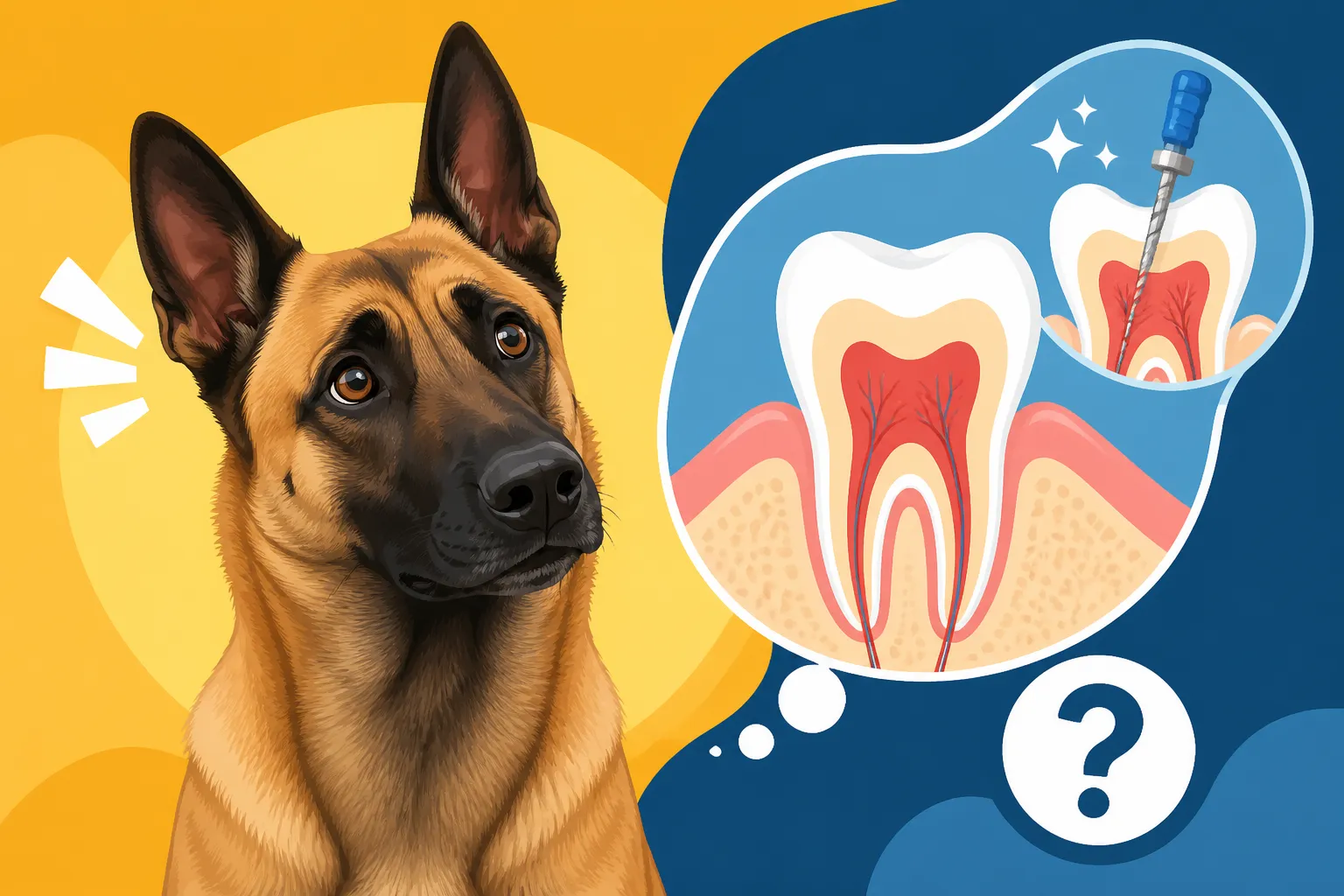
A root canal is a sophisticated veterinary dental procedure designed to save a damaged tooth. It involves removing the infected or damaged pulp from inside the tooth, thoroughly cleaning and sterilizing the pulp chamber and root canals, and then filling them with a biocompatible material to prevent future infection. Finally, the tooth is sealed, often with a restorative filling or, crucially for a working Malinois, a metal or composite crown. This crown provides structural integrity and protects the repaired tooth from further fractures. We'll delve into Titanium Crowns on a Working Malinois's Teeth as a common choice for these powerful dogs.
The entire procedure is performed under general anesthesia, requiring careful monitoring by a veterinary dental specialist. They'll take X-rays before, during, and after the procedure to ensure all infected material is removed and the filling is placed correctly. Recovery typically involves a short period of restricted chewing and possibly pain medication, but the goal is to get your Malinois back to full function, often without the long-term changes in bite or chewing ability that can accompany an extraction. Many owners find that their dog's demeanor brightens considerably once the chronic pain of an infected tooth is resolved, allowing them to truly embody their vibrant Malinois spirit once more.
When a Root Canal is the Preferred Option
For a Belgian Malinois, especially one actively engaged in bite work, detection, or any role where a strong, functional bite is paramount, a root canal is often the preferred and recommended treatment. The primary goal is always to save the tooth. An extraction, while sometimes necessary, alters the natural bite and can lead to shifting of adjacent teeth, which can be problematic for working dogs. Moreover, the canine teeth (the "fangs") are critical for grip and interaction with equipment. Losing one can severely impact a dog's performance and even their confidence in their work.
A root canal is indicated when:
- Pulp Exposure: The fracture has exposed the sensitive inner pulp, leading to immediate pain and risk of infection.
- Discolored Tooth: A tooth that has turned grey, purple, or black indicates internal trauma and death of the pulp, even without an obvious fracture. This "dead" tooth is a ticking time bomb for infection.
- Abscess Formation: An infection at the root tip (an abscess) often necessitates a root canal to resolve the infection and save the tooth.
- Saving Key Teeth: For working dogs, preserving canines, carnassials (the large chewing teeth in the back), and incisors is crucial for their function. An extraction, especially of a canine, can be a major setback.
Consider a scenario where your Malinois, "Riot," nips the corner of a metal crate during transport, fracturing his upper right canine. The tip is gone, and you can see a tiny dark spot. Without intervention, this tooth will inevitably become infected and painful. An extraction would mean Riot loses a critical gripping tooth, potentially impacting his bite work career. A root canal, followed by a crown, offers the best chance of preserving that tooth, alleviating pain, and allowing Riot to return to his job with his full complement of functional teeth. This is where investing in advanced care, sometimes covered by pet insurance like Healthy Paws, really pays off.
Alternatives to Root Canal for Malinois Tooth Injuries
While a root canal is often the gold standard for preserving a tooth, it's not always the right choice or even possible in every situation. There are times when other interventions are necessary, and understanding these alternatives is crucial for making informed decisions about your Malinois's dental health. The goal remains to eliminate pain, prevent infection, and ensure your dog's overall well-being.
Tooth Extraction: When It's Necessary
Sometimes, despite best efforts, a tooth is too severely damaged or infected to save, making extraction the only viable option. This is particularly true if the fracture extends below the gumline, making a successful root canal impossible, or if there's extensive bone loss around the tooth. While extractions are generally more straightforward procedures in terms of technique, they do have implications, especially for working Malinois. Removing a tooth permanently alters the dental arch, potentially causing adjacent teeth to shift. For a dog that relies on a precise, powerful bite, this can be a significant functional change.
For example, if a Malinois has a severe fracture of a premolar that has gone untreated for too long, leading to chronic infection and bone damage, a vet may recommend extraction. While a canine tooth extraction is a major surgery with a longer recovery time than a simple root canal, the cost of What Extracting a Malinois's Tooth Costs can sometimes be less than a root canal with a crown. The recovery involves strict soft-food diets, pain management, and careful monitoring of the surgical site to prevent complications. While a Malinois can certainly live a full life with a missing tooth, it's a decision that should be carefully weighed, especially for working dogs.
| Dental Condition | Recommended Treatment | Pros | Cons | Recovery Time |
|---|---|---|---|---|
| Fractured Tooth with Pulp Exposure (Acute) | Root Canal & Crown | Preserves tooth, maintains bite, immediate pain relief | Higher cost, requires specialist | 1-2 weeks soft food, gradual return to work |
| Discolored/Dead Tooth (Chronic) | Root Canal & Crown | Eliminates infection, preserves tooth, pain relief | Requires specialist, potentially complex | 1-2 weeks soft food, gradual return to work |
| Severe Fracture (Below gumline) | Extraction | Eliminates infection, often less costly (initially) | Tooth loss, alters bite, longer recovery | 2-4 weeks soft food, activity restriction |
| Fractured Tooth (Young dog, fresh) | Vital Pulpotomy & Crown | Preserves vitality, allows root development | Only for recent fractures, young dogs | 1-2 weeks soft food, careful monitoring |
| Minor Chip (No pulp exposure) | Smoothing/Bonding | Minimal intervention, cosmetic fix | Doesn't address deep issues, prone to re-chip | Minimal |
Vital Pulpotomy: For Young Dogs with Fresh Fractures
A vital pulpotomy is a specialized procedure that's a fantastic option for young Malinois puppies or adolescents (typically under 18 months old) with recent (within 24-48 hours) pulp exposure due to a fracture. Unlike a full root canal where all pulp is removed, a vital pulpotomy involves removing only the superficial, damaged pulp tissue from the top of the pulp chamber. The remaining healthy, deeper pulp is then capped with a protective material, and the tooth is sealed. The goal is to keep the deeper pulp alive, allowing the tooth's root to continue developing and strengthening.
This procedure is incredibly valuable because the roots of a young dog's teeth are still forming and thickening. If a full root canal is performed on an immature tooth, the root development stops prematurely, leaving the tooth weaker and more prone to future issues. A vital pulpotomy allows that natural development to continue while sealing off the exposed area from infection. This treatment is often followed by a crown for protection. However, it's a time-sensitive procedure. If too much time passes after the fracture, the pulp becomes irreversibly infected, and a full root canal or extraction becomes necessary. This highlights the importance of immediate veterinary attention if you suspect your Malinois puppy has a broken tooth, reinforcing the need for proactive health management, often supported by comprehensive pet insurance options like those offered by Healthy Paws.
Preventing Dental Issues and Long-Term Care
As the saying goes, an ounce of prevention is worth a pound of cure, and this couldn't be truer for the dental health of a Belgian Malinois. Given their predisposition to tooth injuries and their stoicism, proactively managing their oral health is paramount. It not only saves them from pain and potential work interruptions but can also save you significant veterinary expenses down the line. A healthy mouth contributes directly to a healthy, happy, and functional Malinois.
Proactive Dental Health Measures
The cornerstone of preventing serious dental problems begins with careful choices and consistent routines. Firstly, be incredibly selective about what your Malinois is allowed to chew. Avoid anything that won't flex or break before their tooth does. As mentioned, natural bones, antlers, nylon bones, and even ice cubes are common culprits for fractures. Opt for durable rubber toys, specific dental chews designed for strength, or puzzle toys that dispense softer treats. When it comes to Whether Hard Bite Work Wears Malinois Teeth Down, proper technique is crucial. Work with experienced decoys and trainers who prioritize clean, full grips to minimize tooth impact. Regularly inspect your dog's mouth as part of their routine. This isn't just about looking for chips; it's also about checking for redness, swelling, or unusual odors.
Regular professional veterinary check-ups that include a thorough oral exam are non-negotiable. Many veterinarians recommend yearly dental cleanings under anesthesia, especially for working dogs. During these cleanings, your vet can scale away tartar, probe for gum disease, and identify subtle issues like minor chips or early stages of pulpitis that you might miss. It’s also important to consider if A Malinois Whose Thyroid Has Given Out or other systemic health issues might impact their overall dental resilience. These regular vet visits are a critical component of The Checkup Schedule a Sport Malinois Should Keep and help catch problems before they become emergencies.
The Cost and Commitment of Advanced Dental Care
Let's be real: advanced veterinary dental procedures like root canals or titanium crowns are not inexpensive. The cost can vary significantly based on your location, the specific tooth involved, the specialist's fees, and whether a crown is applied. A root canal can range from several hundred to a couple of thousand dollars per tooth, with custom crowns adding another significant sum. For a working Malinois, preserving a canine tooth with a root canal and a custom-fitted What a Crown on a Malinois Canine Costs could easily approach the upper end of that spectrum.
This is where planning and financial preparedness become absolutely vital. Many dedicated Malinois owners consider pet insurance. Plans from providers like Healthy Paws can be a lifesaver, helping to cover a significant portion of these unexpected and often substantial dental bills. When choosing a policy, make sure to read the fine print regarding dental coverage, as some plans exclude pre-existing conditions or have limits on advanced procedures. Beyond the financial commitment, there's a time commitment too. These procedures require multiple visits, follow-up X-rays to ensure healing, and dedicated post-operative care, including dietary restrictions and activity modifications during recovery. It's a testament to the bond we share with our Malinois that we're willing to go these lengths to keep them healthy and happy in their demanding lives.
Disclaimer
The information provided in this guide is for general informational purposes only and does not constitute veterinary advice. Always consult with a qualified veterinary professional for any health concerns or before making any decisions about your Belgian Malinois's medical care.