Whether a Malinois Cross Inherits the Same Drive
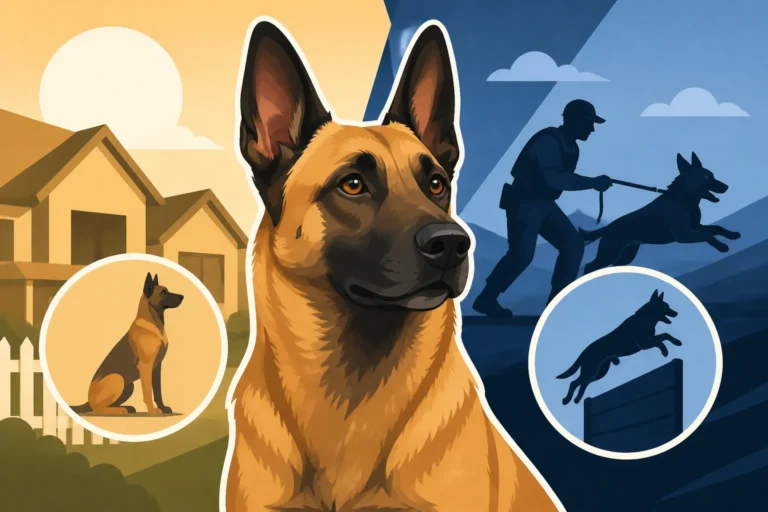
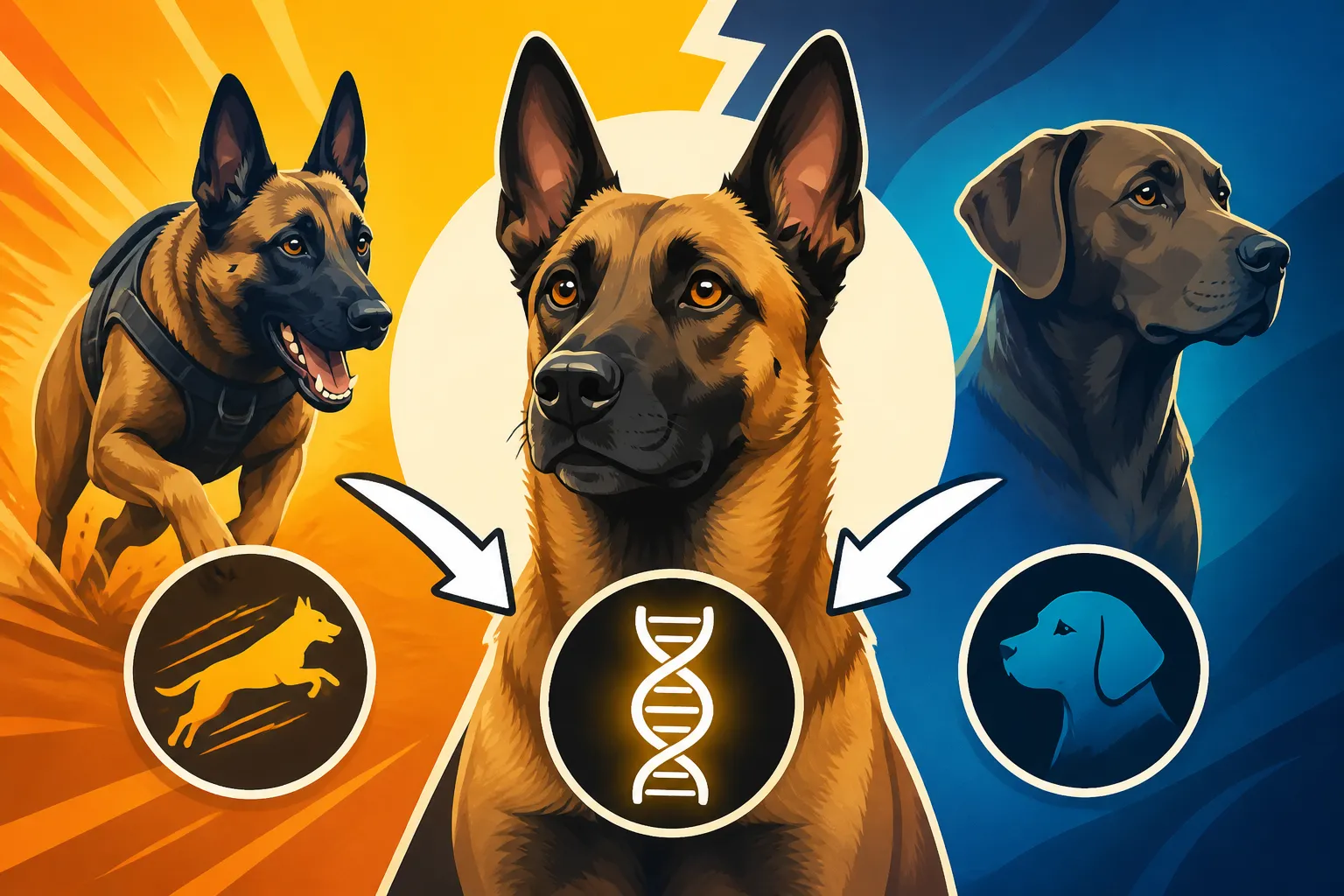
A Malinois cross may inherit the breed’s energy, persistence, chase interest, or eagerness to work—but there is no reliable way to predict the exact combination from appearance alone. That uncertainty can be frustrating when you are choosing a dog or trying to understand one you already have. This guide explains what “drive” means, how inheritance and experience shape it, and what to plan for.
What Drive Means in a Malinois Cross
Drive is a collection of behaviors, not one setting
People often use “drive” as if it were a single dial that makes a dog either calm or intense. In practice, it describes several different tendencies: how strongly a dog seeks rewards, pursues movement, investigates scents, plays, works with a person, or keeps trying when a task gets difficult. A Malinois cross might show strong interest in a ball but little interest in tug, or be persistent about scent work without being especially drawn to chasing.
These differences matter in everyday life. A dog that loves to chase a tennis ball may need careful management around joggers and bicycles, while a dog that searches persistently may be happiest working for food or finding a hidden toy. Neither behavior by itself tells you whether the dog is aggressive. Prey interest, playfulness, alertness, and reactivity are distinct traits, even though they can sometimes appear together.
“High drive” also does not automatically mean a dog is easy to train. A dog can be keen to work but easily distracted, intensely focused on the wrong thing, or unable to settle after excitement. It may need help learning how to pause as well as how to engage. Understanding Whether a Belgian Malinois Is More Intense Than It Looks can help put those visible bursts of energy into a wider context.
A cross may inherit some tendencies, several, or very few
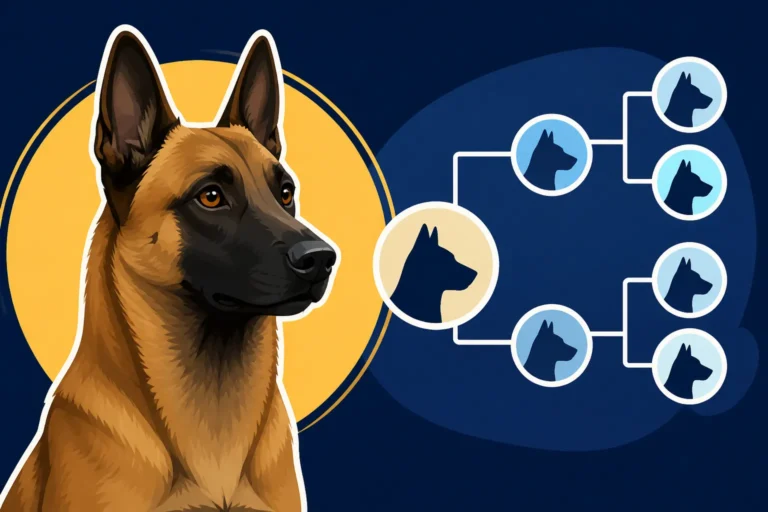
A Malinois cross can inherit behavioral tendencies from either parent, and the result is not a predictable halfway point between the two breeds. A cross with a German Shepherd, for instance, is not guaranteed to have moderate drive simply because one parent is not a Malinois. Both parents may be highly active, or the offspring may inherit a combination of traits that makes the dog more demanding in a different way.
Even puppies from the same litter can differ. One may be quick to chase and grab; another may be more interested in food, people, or sniffing. Those differences can become clearer as the dogs mature, and daily experience can affect how each tendency is expressed. A dog’s behavior is shaped by inherited predispositions, early development, learning, health, and the environment it lives in—not by a breed label alone.
Mixed ancestry may make prediction harder, not easier. A dog that looks like a Malinois may have a different background than its appearance suggests, and a dog with little visible resemblance may still show strong working or chase behaviors. If you are considering a particular type of mix, What a Malinois Crossed With a Shepherd Becomes offers a useful reminder that the cross’s identity does not guarantee a specific temperament.
How Genetics and Experience Shape Behavior
Parent temperament offers clues, not a guarantee
If you are choosing a puppy, learning about both parents is more useful than relying on coat color, body shape, or a breeder’s description of the litter as “high drive.” Ask what the parents are like at home, how they respond to unfamiliar people and dogs, whether they can settle after activity, and what kinds of work they enjoy. A parent who is highly engaged in sport may have traits that show up in offspring, but the puppy’s eventual behavior still cannot be promised.
For an adult dog, the behavior you can observe is more informative than guesses about its ancestry. Notice what captures its attention, how quickly it recovers after excitement, whether it can disengage from a distraction, and what rewards it values. Ask people who know the dog well to describe its habits across settings. A dog that is calm in a quiet living room may behave very differently near squirrels, children running, or dogs behind a fence.
It also helps to keep the word “drive” specific. Instead of asking whether the dog is high-drive, ask whether it chases moving objects, persists at scent searches, plays intensely, or struggles to settle. Those answers tell you more about practical needs and potential challenges than a broad label does.
Learning can strengthen or redirect natural interests
A predisposition is not a finished behavior. What happens after a dog notices a moving object, finds a toy, or offers a behavior can influence what it repeats. If chasing a bicycle becomes rewarding, the dog may practice that response more often. If its interest in searching is consistently directed into a simple scent game, that same curiosity may become a useful activity with clear boundaries.
That does not mean every instinct can be switched off with training. Management is part of responsible ownership, especially while a dog is learning. A secure leash setup, distance from triggers, a reliable barrier at home, and thoughtful supervision can prevent rehearsals of unwanted behavior. Training is more effective when it gives the dog a suitable alternative rather than expecting it to ignore a powerful distraction without preparation.
Early, positive exposure to ordinary sights and sounds can help a young dog learn to handle the world, but socialization is not the same as letting a puppy meet every dog or person. Calm observation at a comfortable distance can be more useful than forced interaction. For a practical starting point, see Socializing a Belgian Malinois Puppy Safely.
How to Assess a Malinois Cross in Real Life
Observe the dog across several situations
A single exciting moment can give a misleading impression. A dog that explodes into action during a game may still be able to settle well afterward; another may look quiet at home but become difficult to redirect outside. Look at the whole pattern: what triggers the behavior, how intense it gets, how long it lasts, and what helps the dog recover.
Try observing the dog in predictable, low-pressure situations first. Does it check in with you during a walk? Can it sniff and explore without constantly scanning for movement? After a short play session, can it take a break? When a toy disappears, does it move on or keep searching and vocalizing? These are not pass-or-fail tests. They help you understand what the dog finds rewarding and what skills may need patient practice.
If the dog has a bite history, severe chasing behavior, panic, or sudden changes in behavior, do not try to diagnose the issue based on breed mix. A veterinarian can check for health factors that affect behavior, and a qualified behavior professional can help assess risk and build a management plan. Prioritize safety while you seek support rather than deliberately provoking the behavior to see how intense it is.
Use a simple profile instead of a single label
Writing down what you see can make patterns easier to spot. For a week or two, note the situation, the dog’s response, what reward or trigger was present, and how long it took to settle. For example, you might record that the dog can walk calmly on a quiet street but fixates on scooters, or that it works enthusiastically for food indoors but ignores it around other dogs. That level of detail gives a trainer something concrete to work with.
| What you observe | What it may suggest | A practical next step |
|---|---|---|
| Strong interest in balls or moving toys | Play or chase rewards may be important | Use structured play and practice stopping and restarting calmly |
| Persistent sniffing and searching | Scent exploration may be highly rewarding | Try simple, safe scent games and reward disengaging |
| Difficulty settling after activity | Arousal or rest skills may need attention | Build quiet routines and short, low-key breaks |
| Fixation on dogs, bikes, or wildlife | The trigger may be highly reinforcing or stressful | Create distance, use secure management, and seek tailored guidance |
| Little interest in toys but strong food motivation | The dog may prefer different rewards | Use food-based training and sniffing activities |
A profile also prevents a common mismatch: assuming that a dog needs more and more physical exercise because it is energetic. More intense activity can sometimes increase stamina without teaching the dog how to rest. The goal is to find a balanced routine that includes movement, training, exploration, and recovery. The specific activities should fit the dog’s age, health, temperament, and current training.
Meeting the Needs of a Malinois Cross
Provide purposeful activity and teach recovery
A Malinois cross does not necessarily need protection work, competitive sport, or hours of exhausting exercise. Many dogs benefit from short training sessions, scent games, food puzzles, structured play, and walks that allow time to explore. The right mix depends on the individual dog. A senior dog, a puppy, and a fit young adult will need different approaches, and medical or behavioral concerns may change the plan.
Build in an off switch deliberately. After an activity, guide the dog toward a quiet routine such as resting on a mat, chewing an appropriate item, or settling in a comfortable space. Reward calm behavior rather than waiting until the dog is overtired and demanding attention. If you use puzzle feeders or enrichment toys, introduce them at an easy level so frustration does not turn the activity into another high-arousal event. Chewy can be one place to compare enrichment and chew options, but choose items that suit the dog’s size, chewing style, and supervision needs.
For ideas on activities that offer a dog a clear purpose, read The Job a Pet Belgian Malinois Can Be Given. A job can be as ordinary as searching for a toy, practicing a few useful cues, or carrying out a predictable routine—not necessarily a demanding sport. The best activity is one the dog can enjoy safely and then leave behind when it is over.
Match the dog to your household, not an imagined breed average
A high-energy dog can be a poor fit in a home that expects it to entertain itself all day, but a quieter-seeming cross is not automatically an easy pet. Consider how much time you can realistically spend on training, supervision, exercise, and rest routines. Also consider your housing setup, work schedule, other pets, visitors, and ability to prevent chasing or rough play from becoming a safety issue.
If you are adopting an adult dog, ask the rescue or previous caregiver about specific behavior rather than asking only whether the dog is “good with everything.” Find out how it behaves around children, cats, unfamiliar dogs, traffic, handling, confinement, and time alone. Arrange introductions carefully, and do not assume that a dog’s friendliness in one setting will carry over to every setting. Some Malinois mixes are well suited to a particular household; others need an experienced home with strong management and support.
A dog’s wellbeing matters as much as its activity level. Persistent restlessness, destructive behavior, or difficulty settling can have several causes, including unmet needs, anxiety, pain, or learned habits. Adding more exercise is not always the answer. If you are weighing whether the breed type fits your home, Whether a Belgian Malinois Suits a Family Home can help you think through the everyday demands. For a broader look at why some dogs struggle in homes that cannot meet their needs, see Why So Many Belgian Malinois Are Rehomed.
Common Questions About Malinois Cross Drive
Can a Malinois cross be calmer than a purebred Malinois?
Yes, an individual Malinois cross may be less intense than many people expect, but the word “cross” does not guarantee a calm dog. The other parent’s traits, the individual dog’s temperament, early experiences, learning history, and daily environment all play a part. Some crosses retain strong chase, play, or work interests; some are more moderate; others may be difficult in ways that have little to do with exercise.
Avoid choosing a dog based on the hope that another breed in the mix will “dilute” the Malinois traits. Meet the individual if possible, gather honest information about its behavior, and plan for the possibility that it will need structured training and management. For one specific comparison, Whether a Belgian Malinois Lab Cross Is Calmer explores why a familiar breed pairing still cannot promise a particular temperament.
Does high drive mean the dog will be aggressive?
No. High motivation to chase, play, search, or work is not the same as aggression. A dog may be intensely interested in a tug toy and socially comfortable, or it may be wary of unfamiliar dogs while showing little interest in toys. The behaviors need to be assessed separately.
Still, strong physical intensity can create real management challenges. A dog that lunges toward a moving target can knock someone over or slip its equipment, even without intending harm. Teach useful skills gradually, use secure equipment, and avoid putting the dog in situations it cannot yet handle. If you are unsure how to distinguish excitement, fear, frustration, and aggression, have a qualified professional assess the dog rather than relying on labels.
A Malinois cross can inherit substantial working drive, but no mix automatically inherits the same drive as a Malinois, and no appearance or ancestry label can tell you exactly how an individual dog will behave. Observe the dog carefully, build suitable outlets, teach recovery, and make decisions around the real animal in front of you. Chewy may help you compare practical enrichment supplies, but equipment cannot replace thoughtful supervision and training. If you need a clearer picture of the commitment involved, The Handler Experience a Belgian Malinois Needs is a useful related read.
Disclaimer
This article is for general informational purposes only and does not constitute professional advice. Laws, prices and regulations vary by location and change over time. Consult a qualified professional for guidance on your specific situation.