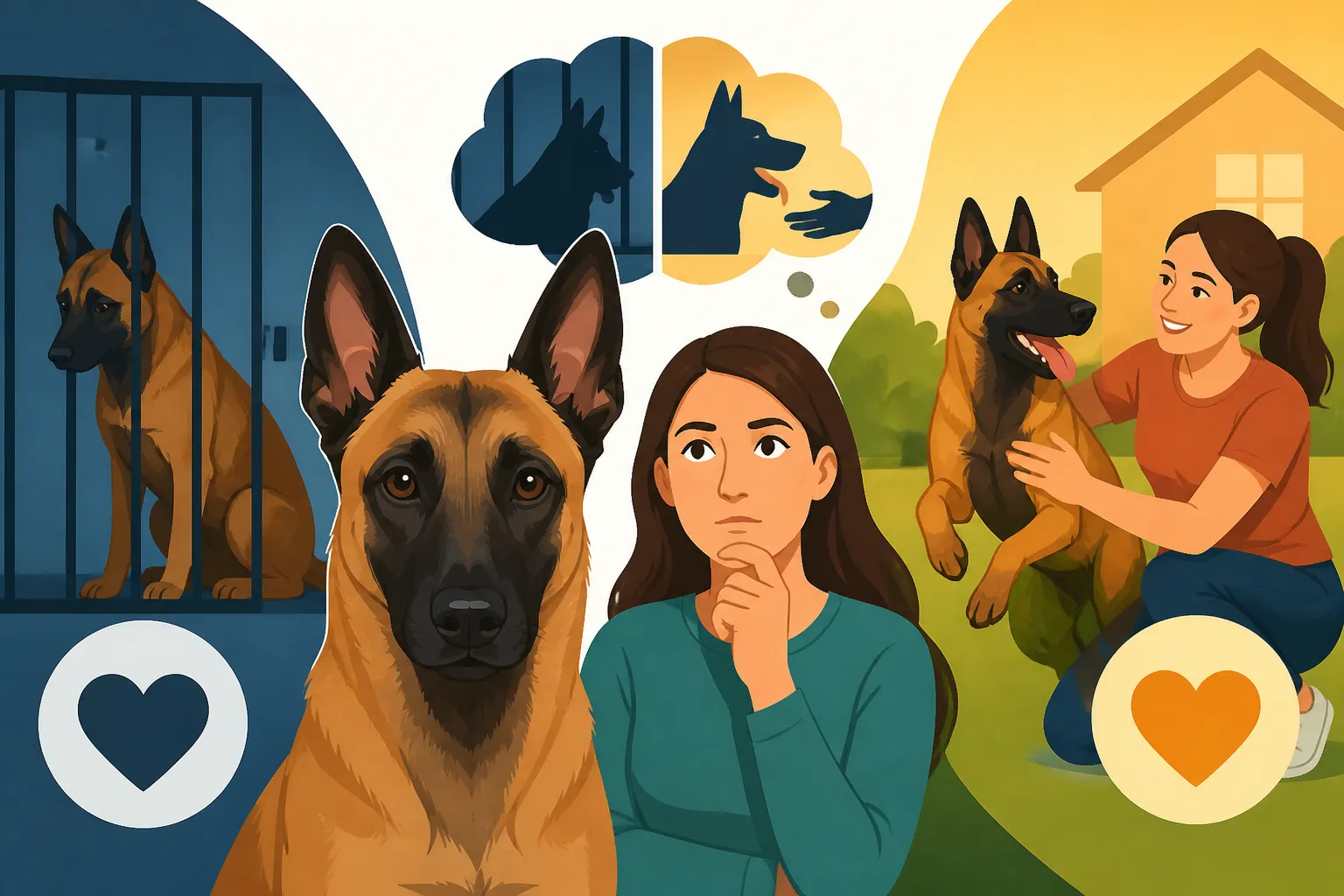
Whether a Rescue Belgian Malinois Is a Realistic Option
A rescue Belgian Malinois can be a wonderful match, but “rescue” does not automatically mean calm, easy, or grateful to settle into any home. The real question is whether a particular dog’s needs, history, and behavior fit your experience and daily life. This guide explains what to assess, what to ask, and when adopting a Malinois is—and is not—a realistic choice.
What makes a rescue Malinois a realistic match
Look at the individual dog, not just the breed label
Belgian Malinois in rescue can have very different backgrounds. One may be a young dog with little training; another may have lived in a home and lost it because of a move or family change. Some have experience in sport or working environments, while others arrive with limited information about their history. Even dogs from similar backgrounds can differ in energy, confidence, sociability, and ability to settle.
That is why “good with dogs,” “high drive,” or “needs an active home” should be treated as starting points for questions, not complete descriptions. Ask what the rescue has observed in everyday situations: Can the dog rest in a quiet room? How does it respond to visitors, handling, food, toys, and other dogs? Does it recover quickly after being startled, or stay agitated? A specific example is more useful than a broad label.
Be realistic about the life you can offer. A fenced yard does not replace training, supervision, and shared activities, and a long walk may not be enough to meet a dog’s needs. If you are still deciding whether this breed’s daily demands suit your household, The Handler Experience a Belgian Malinois Needs offers useful context. A rescue dog still needs routine and thoughtful engagement, even if it is past the puppy stage.
Consider the reason the dog needs a new home
A dog may enter rescue because its owner could not meet its needs, but rehoming is not proof that the dog is dangerous or unmanageable. People surrender dogs for many reasons, including housing changes, financial strain, illness, time constraints, or a mismatch between the dog and the household. In other cases, the dog may have behavior challenges that require experienced management.
Ask what is known and what remains uncertain. “No known bite history” is not the same as “the dog has never bitten,” particularly if records are incomplete. Ask whether the dog has lived with children, cats, or other dogs, and whether those situations were directly observed or simply reported. It is also fair to ask what the rescue has not been able to assess.
A careful rescue should be willing to discuss challenges as well as strengths. Understanding Why So Many Belgian Malinois Are Rehomed can help prospective adopters think beyond a simple “good dog, bad owner” story. The goal is not to judge the previous home; it is to make an informed decision about the dog in front of you.
How to assess a rescue Malinois before adopting
Ask for concrete behavior information
Before applying, prepare questions about the dog’s normal routine and known triggers. Ask how it behaves when left alone, whether it is crate-comfortable, how it travels in a vehicle, and what happens when it sees unfamiliar dogs or people. Find out whether it guards food, toys, resting places, or access to a person. If the rescue has seen the dog around children or small animals, ask what the setting was and how closely it was supervised.
Try to distinguish between what staff or foster carers have witnessed and what they have been told. A foster home may provide useful information about how a dog behaves in a domestic setting, but even a detailed foster report cannot guarantee how the dog will act after moving. Shelter environments can also make behavior difficult to interpret: a dog who is quiet in a kennel might be overwhelmed rather than relaxed, while a dog who barks or paces may behave differently in a calmer home.
Ask whether the rescue has a behavior plan or recommendations from a qualified professional, especially if there has been a bite, serious reactivity, or a history of confinement stress. If the dog has spent extended time kenneled, Rehabilitating a Belgian Malinois That Was Kenneled may help you understand why transitions can take patience and structure. A short meet-and-greet is helpful, but it is not a substitute for a thoughtful assessment.
Meet the dog in more than one context
If possible, meet the dog with the foster carer or rescue staff who know it best. Watch how it settles after the initial excitement, responds to gentle handling, and shifts attention between people and its surroundings. Ask to see ordinary behavior, not just the dog performing a cue or playing with a favorite toy. A dog can be highly trained in one context and still struggle with visitors, household noise, or being left alone.
If you already have a dog, introductions should be planned carefully and managed by people who can read canine body language. A parallel walk in a neutral area may be a more informative start than putting both dogs face-to-face in a small room. Keep early interactions brief, give both dogs space, and do not assume that one apparently friendly meeting predicts a safe household relationship. For a home with children, the adult must be prepared to supervise and separate the dog reliably; children should not be asked to manage introductions or correct the dog.
Ask whether a foster-to-adopt period or a supported transition is available, and get the terms in writing. It may offer a more realistic view of the match, but it is not a risk-free trial: your household still needs safe barriers, a transition plan, and clear communication with the rescue. If the dog has a history of intense kennel behavior, Whether Kennel Stress Ruins a Belgian Malinois can help you think through the difference between stress in confinement and behavior in a home.
| What to assess | Useful questions | Why it matters |
|---|---|---|
| Daily settling | Can the dog rest after activity? What helps it relax? | Constant stimulation can make an already busy household harder to manage. |
| People and visitors | How does it respond to unfamiliar people, handling, and door activity? | Home routines bring repeated, sometimes unpredictable interactions. |
| Other animals | What has been directly observed around dogs, cats, or livestock? | A vague “social” label does not establish compatibility with your pets. |
| Alone time | Has the dog been left alone, and what happened? | Separation distress or destructive behavior may require gradual training and support. |
| Known incidents | Are there documented bites, snaps, or serious conflicts? | Full information is essential for safe planning and an informed decision. |
| Health and care | What veterinary records, medications, and follow-up needs are known? | Ongoing care can affect routines, costs, and the transition plan. |
The home and support a rescue Malinois needs
Be honest about your time, skills, and household setup
A realistic adopter does not need a particular job title or a vast property. They do need enough time and skill to provide safe handling, consistent routines, training, and appropriate activity. A person who works full time may still be able to care for a Malinois, but should have a practical plan for exercise, rest, supervision, and the dog’s time alone. A yard can be useful, but it does not make the dog self-sufficient.
Think through the less glamorous parts of daily life. Can you manage a dog who pulls, barks at a trigger, or needs separation from another pet? Do you have secure doors and barriers? Can you arrange suitable care if you travel? Is everyone in the household willing to follow the same rules? The answer should account for the dog you are considering, not an idealized version that never has a difficult day.
Also consider whether the household itself is a sensible fit. A home with small children, frail adults, multiple pets, frequent visitors, or limited ability to separate animals may require extra caution. That does not mean every such home is automatically unsuitable; it means the rescue should help you evaluate the actual dog and the real routines involved. The Household a Belgian Malinois Wrecks is a useful reminder to assess practical compatibility, not simply enthusiasm for the breed.
Plan for training and professional help before problems grow
Training should begin with clear, manageable routines: secure transitions through doors, a quiet resting area, reward-based skills, and calm exposure to ordinary household activity. Avoid flooding the dog with visitors, crowded outings, or close contact with unfamiliar animals in the name of “socializing.” Give it time to learn the new environment, and ask the rescue what training approach has worked so far so that the change of home does not also mean a sudden change in every expectation.
If the dog shows fear, reactivity, guarding, or difficulty settling, seek help from a qualified, humane behavior professional with experience working with the specific issue. The right support can help you identify triggers, build safe management, and set realistic goals. It cannot promise a quick fix, and a dog with a serious bite history or dangerous behavior may require a level of expertise and separation that a typical household cannot provide. In those circumstances, declining to adopt may be the responsible choice.
You may also want to prepare supplies before the dog arrives: a secure harness or collar setup recommended by the rescue, a suitable crate or resting area if the dog is comfortable using one, food, bowls, cleaning supplies, and enrichment items. Keep food changes gradual and follow veterinary guidance rather than assuming a new diet is needed. When organizing essentials, a retailer such as Chewy may be one place people look for routine pet supplies; the important thing is to choose items that suit the individual dog and follow the rescue’s transition advice. Chewy is not a substitute for professional guidance about behavior, nutrition, or medical care.
Making the adoption decision with clear eyes
What to ask the rescue before you commit
A responsible rescue should welcome practical questions and should be able to explain its adoption process. Ask what medical records are available, what veterinary care the dog has received, and whether any health concerns need follow-up. Clarify what the adoption agreement says about returns, support after placement, and what to do if the match becomes unsafe or unworkable. Policies vary, so read the paperwork rather than relying on assumptions.
Ask what the rescue wants from you after placement. Some organizations provide follow-up support or connect adopters with trainers; others may have limited resources. Find out who to contact if the dog stops eating, cannot settle, or displays behavior that was not discussed. It is also reasonable to ask how the rescue assessed compatibility and whether the dog has been placed in a home similar to yours before. The Questions a Malinois Rescue Asks Applicants can help you prepare for the conversation from the adopter’s side, too.
Be wary of pressure to decide immediately, vague assurances that a dog is “fine with everything,” or reluctance to disclose known incidents. No rescue can know everything about a dog’s past, but honesty about uncertainty is a good sign. An adopter should not be expected to accept a dog’s undisclosed risk simply because the animal needs a home.
A realistic readiness check
Before saying yes, write down what a normal week would look like: who handles the dog, when it gets activity and training, where it rests, and how you will manage visitors, work hours, and other animals. Include backup plans for illness, travel, bad weather, and unexpected behavior. If your plan depends on the dog quickly becoming easy, reliably social, or comfortable being alone, pause and ask more questions.
Then consider the dog’s needs alongside your limits. A rescue Malinois may thrive with an adopter who has time, patience, safe management, and access to appropriate support. Another dog may need a specialist home or may not be a safe fit for your household, despite being appealing and affectionate during a visit. Saying no to one dog is not a failure; it can make room for a better match.
If you do adopt, keep the first stretch quiet and predictable. Let the dog learn the home at a manageable pace, maintain secure handling, and check in with the rescue or veterinary team when concerns arise. For food, bedding, grooming items, and other basic supplies, Chewy is one possible source to compare with local stores, but follow any specific guidance from the foster carer and veterinarian. If the dog’s behavior changes sharply or you see signs of illness, contact a veterinary professional rather than trying to solve it with new products. Chewy may help with everyday supplies, but choosing the right dog and building a safe transition depend on careful observation, honest communication, and realistic expectations.
Disclaimer
This article is for general informational purposes only and does not constitute professional advice. Laws, prices and regulations vary by location and change over time. Consult a qualified professional for guidance on your specific situation.