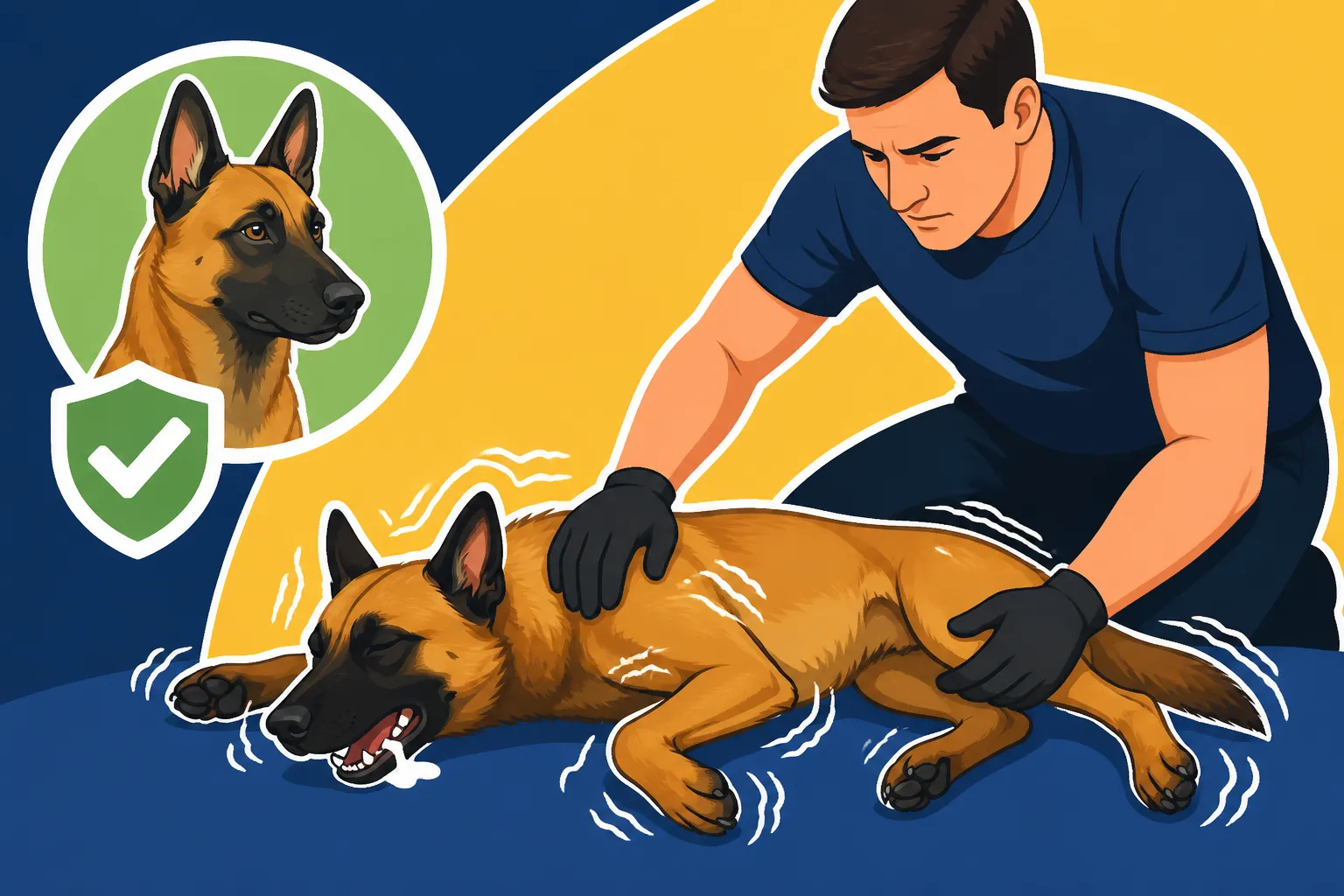
Handling a Seizing Malinois Safely
Witnessing your high-drive Belgian Malinois suddenly collapse into a seizure can be one of the most frightening experiences a dog owner can face. That sudden, uncontrolled thrashing, the vacant stare, the drooling – it can make you feel utterly helpless and terrified for your beloved companion. This guide is here to walk you through exactly what to do when your Malinois has a seizure, focusing on immediate safety and what steps to take next to protect them and yourself.
Recognizing the Signs of a Seizure in a Malinois
Understanding what a seizure looks like, and even the subtle cues leading up to it, can help you react more effectively and reduce your panic when it inevitably happens again. Seizures aren't always the dramatic full-body convulsions you might imagine; they can present in various ways in a Belgian Malinois.
Pre-Ictal Phase: Subtle Cues Before a Seizure
Sometimes, if you're very observant and know your Malinois well, you might notice subtle changes in their behavior right before a seizure. This is called the pre-ictal phase, and it can last from a few minutes to several hours. For a breed as intensely focused and sensitive as a Belgian Malinois, these signs might be particularly noticeable to a handler accustomed to their dog's routines and temperament. Your Malinois might become unusually anxious, pacing restlessly, seeking excessive attention, or conversely, trying to hide. Some dogs might appear confused, disoriented, or even start drooling or staring blankly into space. It's like their internal wiring is starting to short-circuit, and they can feel it happening. They might whine or tremble, or perhaps become overly clingy, leaning into you more than usual. While not every dog shows these signs, becoming attuned to your individual Malinois's pre-seizure behaviors can give you a crucial heads-up, allowing you a moment to prepare for what's coming. For more on this, you might find our article on What Triggers a Belgian Malinois Seizure helpful in understanding potential precursors.
Ictal Phase: What a Seizure Actually Looks Like
The ictal phase is the actual seizure itself, and it can vary significantly. The most commonly recognized type is a generalized or grand mal seizure. This is where your Malinois will typically lose consciousness, fall to the ground, and exhibit uncontrolled muscle activity. You'll see their legs paddling, their body stiffening, and they might drool excessively, chew their tongue, or even lose bladder and bowel control. Their eyes might be fixed or roll back in their head. It's a truly terrifying sight, especially with a powerful dog like a Malinois. These episodes usually last from a few seconds to a few minutes. If a seizure goes on for more than five minutes, or if your dog has multiple seizures in a short period without regaining full consciousness in between (known as cluster seizures), it's a critical emergency and requires immediate veterinary attention.
Beyond the dramatic grand mal seizures, some Malinois might experience focal or partial seizures. These are often much more subtle and can be harder to identify. They might involve twitching in just one part of the body, like a limb or a side of the face. Your dog might seem "fly-biting" (snapping at invisible flies), stare blankly, or exhibit unusual, repetitive behaviors like tail chasing or pacing in circles. They might appear dazed or confused but remain somewhat conscious. These types of seizures can easily be mistaken for behavioral quirks or even pain, so keen observation is key. Knowing the difference, and being able to accurately describe what you see to your vet, is invaluable for proper diagnosis.
Post-Ictal Phase: The Disorientation After a Seizure
Once the actual seizure activity stops, your Malinois will enter the post-ictal phase. This is essentially the recovery period, and it can be just as disorienting and upsetting for your dog as the seizure itself. During this time, your Malinois might be extremely confused, disoriented, and temporarily blind. They might stumble, bump into things, or wander aimlessly. Some dogs become incredibly hungry or thirsty, while others might appear exhausted and want to sleep. They won't recognize you, or they might act strangely, perhaps snapping or growling if you approach them too quickly, even if they're normally the sweetest dog. This is not aggression; it's a neurological effect of the seizure, and they're simply not themselves. This phase can last anywhere from a few minutes to several hours, or even a full day in some cases. It's a time when they need quiet, gentle reassurance, and most importantly, safety.
Immediate Steps During a Malinois Seizure
When a seizure strikes, panic is a natural reaction. But taking quick, calm action can make a huge difference in keeping your Malinois safe. Remember, the most important thing is to protect your dog from injury and gather crucial information for your veterinarian.
Creating a Safe Space Around Your Malinois
The first and most critical step is to make the area around your seizing Malinois as safe as possible. Their body movements during a seizure are completely involuntary and can be quite violent, so they could easily injure themselves on furniture, stairs, or sharp objects. Gently push away any furniture, tables, or anything they might strike their head or limbs on. If they are near stairs, a pool, or any other hazard, try to create a barrier with your body, but without directly touching or restraining them in a way that could cause injury to either of you. You might throw a blanket or a soft towel over them loosely to prevent them from hitting their head on a hard floor, but again, do not try to hold them down or restrict their movement.
A common instinct is to try and comfort them, but during the ictal phase, your Malinois is not conscious and cannot respond to you. Your primary role here is damage control. If they are on a slick surface, you might try to gently slide a rug or mat under them if it can be done safely without putting your hands near their mouth. The goal is to cushion them and clear their immediate environment of potential dangers. Remember, they are completely unaware of their surroundings, so don't be surprised if they don't react to your voice or presence.
Timing the Event and Noting Details
This is incredibly important for your veterinarian. As soon as you realize your Malinois is having a seizure, look at a clock or start a timer on your phone. Note the exact start time and the exact end time of the involuntary physical activity. The duration of the seizure is a key piece of information for diagnosis and treatment. Even 30 seconds can feel like an eternity, but it's vital to get an accurate measurement.
Beyond timing, try to observe and mentally (or vocally, if alone) note as many details as possible without getting too close or interfering. What did the seizure look like? Did it start with just one limb twitching, or was it a full-body event immediately? Was there drooling, vocalizing, or loss of bladder/bowel control? What was the intensity of the paddling or thrashing? Which side of the body was more affected, if any? These details, no matter how small, paint a clearer picture for your vet. Don't worry about writing things down in the moment; your priority is safety and timing. You can jot down notes after the episode has passed and your Malinois is in recovery. This detailed information will be crucial, especially when discussing When Epilepsy First Appears in a Malinois with your veterinary team.
What Not to Do During a Seizure
Just as important as knowing what to do is knowing what not to do. There are some common misconceptions that can actually cause harm to both you and your Malinois during a seizure.
Firstly, never put your hands near your Malinois's mouth or try to pull out their tongue. This is perhaps the most dangerous misconception. Dogs do not swallow their tongues during seizures. While they might bite their tongue or cheek, their airway remains open. Putting your hand in their mouth puts you at extreme risk of a severe bite injury, as their jaw muscles will be clamping down involuntarily with immense force. Even your well-trained Malinois cannot control this.
Secondly, do not try to restrain or hold your dog down. Their movements are involuntary. Trying to restrict them can lead to muscle strains, joint injuries, or even fractures for your Malinois. It can also cause you to get accidentally hit or injured by their powerful thrashing. Your job is to create a safe perimeter, not to become part of the seizure itself.
Lastly, do not try to give your dog medication, food, or water during a seizure. They are unconscious and cannot swallow properly, which could lead to choking or aspiration. Wait until they are fully recovered and alert before offering anything by mouth. Focus solely on their immediate physical safety and observation during the event.
Post-Seizure Care and What to Expect
Once the convulsive part of the seizure ends, your Malinois will enter the post-ictal phase. This is where your gentle support and careful observation become paramount.
Comforting Your Malinois During Recovery
After the seizure, your Malinois will likely be disoriented, confused, and possibly exhausted. They might stumble, pace, or even wander aimlessly. This is when your calming presence is most helpful, but approach with caution. Speak to them in a soft, soothing voice, but avoid sudden movements or loud noises that could startle them further. Keep the environment quiet and dimly lit.
Do not expect them to immediately be their usual self. Their brain is recovering, and they might not recognize you or their surroundings for a while. If they are pacing, guide them gently away from obstacles or stairs. Offer them a comfortable, soft place to lie down away from any commotion. Some Malinois might crave water after a seizure, as they often drool heavily and exert themselves. Offer a small amount of water in a bowl once they are steady enough to drink without choking. If they are extremely hungry, which is common in the post-ictal phase for some dogs, offer a small, easily digestible snack, but again, only when they are fully aware and can swallow safely. Patience and quiet reassurance are your best tools here.
When to Contact Your Veterinarian
Not every single seizure warrants an emergency dash to the vet, but many do, especially the first one. You should always contact your veterinarian immediately if:
- The seizure lasts longer than five minutes. This is a critical situation known as status epilepticus.
- Your Malinois has multiple seizures in a row (cluster seizures) without regaining full consciousness in between.
- It's your Malinois's first-ever seizure. Your vet will need to perform a thorough examination and likely some diagnostics to try and determine the cause.
- Your Malinois is showing signs of severe disorientation, aggression, or other concerning neurological symptoms that don't improve after an hour or two.
- They appear injured from the seizure activity.
For a Malinois that has a known seizure disorder and is on medication, and the seizure is typical in duration and recovery, a phone call to your regular vet during business hours might suffice, just to update them. However, always err on the side of caution. Even if you're managing an epileptic Malinois on medication, any deviation from their typical seizure pattern should prompt a call. Early intervention can prevent more severe complications and help in Managing an Epileptic Belgian Malinois on Medication effectively. Consider a pet insurance plan like Healthy Paws, which can help cover unexpected vet bills for chronic conditions such as epilepsy, making the decision to seek emergency care less financially stressful.
Keeping a Detailed Seizure Log
This cannot be stressed enough: a detailed seizure log is an invaluable tool for your veterinarian. It provides objective data that helps them track the frequency, duration, and characteristics of your Malinois's seizures, which is crucial for diagnosis and adjusting medication dosages.
Right after your Malinois has recovered from a seizure, sit down and record everything you observed. Here’s a helpful table you can use:
| Date & Time of Seizure | Duration (Start to End of Convulsion) | Pre-Ictal Signs (e.g., pacing, drooling) | Ictal Characteristics (e.g., paddling, stiffness, vocalization, loss of bladder/bowel control, specific body parts affected) | Post-Ictal Behavior (e.g., disorientation, blindness, hunger, duration) | Potential Triggers Noted (e.g., stress, loud noise, specific activity) | Notes/Severity (e.g., mild, moderate, severe) |
|---|---|---|---|---|---|---|
| MM/DD/YYYY, HH:MM AM/PM | X minutes, Y seconds | Ex: Pacing, seeking attention | Ex: Full body convulsions, drooling, lost bladder control, 1 min 30 sec | Ex: Blind for 30 min, very hungry, slept for 2 hours | Ex: Thunderstorm, new dog in neighborhood | Ex: First severe one |
Keeping this log will allow your vet to see patterns, assess the effectiveness of treatment, and make informed decisions about your Malinois's care. It takes the guesswork out of your memory during a stressful time.
Long-Term Management and Preparedness
Once your Malinois has experienced a seizure, the focus often shifts to understanding the underlying cause and implementing a long-term management plan. This is a journey that requires close partnership with your veterinarian and a commitment to preparedness.
Understanding Epilepsy and Treatment Options
If your Malinois experiences recurrent seizures, the diagnosis is often epilepsy. Epilepsy in dogs is a neurological disorder characterized by recurrent, unprovoked seizures. While some cases might have a known cause (structural epilepsy), many Malinois will have idiopathic epilepsy, meaning no underlying cause can be identified despite thorough investigation.
Your vet will likely recommend a series of diagnostic tests to rule out other potential causes for seizures, such as metabolic disorders, liver disease, kidney disease, brain tumors, or exposure to toxins. These tests might include a complete blood panel, urinalysis, and potentially advanced imaging like an MRI, which can be useful but also costly. An article like Whether an MRI Is Worth Running on a Seizing Malinois delves into this. If a cause is found, treatment will focus on that specific issue. If it's idiopathic epilepsy, the goal shifts to managing the seizures to improve your dog's quality of life.
Treatment typically involves anti-epileptic drugs (AEDs) to reduce the frequency and severity of seizures. Common medications include phenobarbital, potassium bromide, Levetiracetam (Keppra), and Zonisamide. The choice of medication, dosage, and whether to use one or multiple drugs (polypharmacy) will depend on your Malinois's individual case, their response to treatment, and potential side effects. It's a process of titration and careful monitoring, often involving regular blood tests to check drug levels and liver function. This is where your detailed seizure log becomes critical, helping your vet fine-tune the treatment plan.
Working with Your Vet for a Management Plan
Managing a Malinois with epilepsy is a team effort between you and your veterinarian. Regular check-ups are essential, and you should adhere strictly to the medication schedule provided. Never adjust medication dosages or stop treatment without consulting your vet, as this can lead to severe rebound seizures or status epilepticus.
Your vet might also discuss lifestyle adjustments. While a Malinois is a high-energy breed, excessive stress or over-exertion might be considered as potential seizure triggers for some dogs. Understanding What Triggers a Belgian Malinois Seizure can help you proactively avoid situations that might precipitate an episode. Maintaining a consistent routine, ensuring adequate rest, and providing a stable, calm environment can all contribute to better seizure control. Discuss dietary considerations with your vet, as some research suggests certain diets, particularly those rich in medium-chain triglycerides, might have a beneficial effect on seizure control.
Financial considerations for long-term care can be significant. The cost of medication, regular bloodwork, and potential emergency visits can add up quickly. This is where pet insurance, such as Healthy Paws, can be incredibly beneficial. Their coverage can help alleviate the financial burden of chronic conditions like epilepsy, allowing you to focus on getting your Malinois the best possible care without constant worry about the cost of Monthly Medication for an Epileptic Belgian Malinois or unexpected emergencies.
Emergency Preparedness for Future Episodes
Once your Malinois has been diagnosed with epilepsy, it's wise to have an emergency plan in place. Keep a written copy of your Malinois's diagnosis, current medications (including dosage and frequency), and your vet's contact information readily accessible. This is especially important if someone else might be caring for your dog.
Many vets will prescribe an emergency medication, often a rectal or oral gel like midazolam or diazepam, for you to administer at home if a seizure lasts longer than a few minutes or if cluster seizures occur. Make sure you understand exactly when and how to administer this medication. Knowing how to use it confidently can be a lifesaver. Your vet will demonstrate the proper technique, and you should practice with a dummy applicator so you're not fumbling during an actual emergency.
Consider informing close family members, dog sitters, or anyone who regularly interacts with your Malinois about their condition and what to do if a seizure occurs. Educating others will not only help them react appropriately but also reduce their fear and confusion if they witness an episode. Having a well-thought-out plan, knowing who to call, and having emergency medication on hand will empower you to handle future seizures with greater confidence and less stress, ensuring your Malinois remains as safe and comfortable as possible. For overall wellness, keeping up with The Bloodwork a Working Malinois Should Have Annually and The Checkup Schedule a Sport Malinois Should Keep can help identify other health issues early.
Disclaimer
The information provided in this article is for general informational purposes only and is not intended as a substitute for professional veterinary advice. Always seek the advice of your veterinarian or other qualified animal health provider with any questions you may have regarding a medical condition or the health and welfare of your Belgian Malinois.