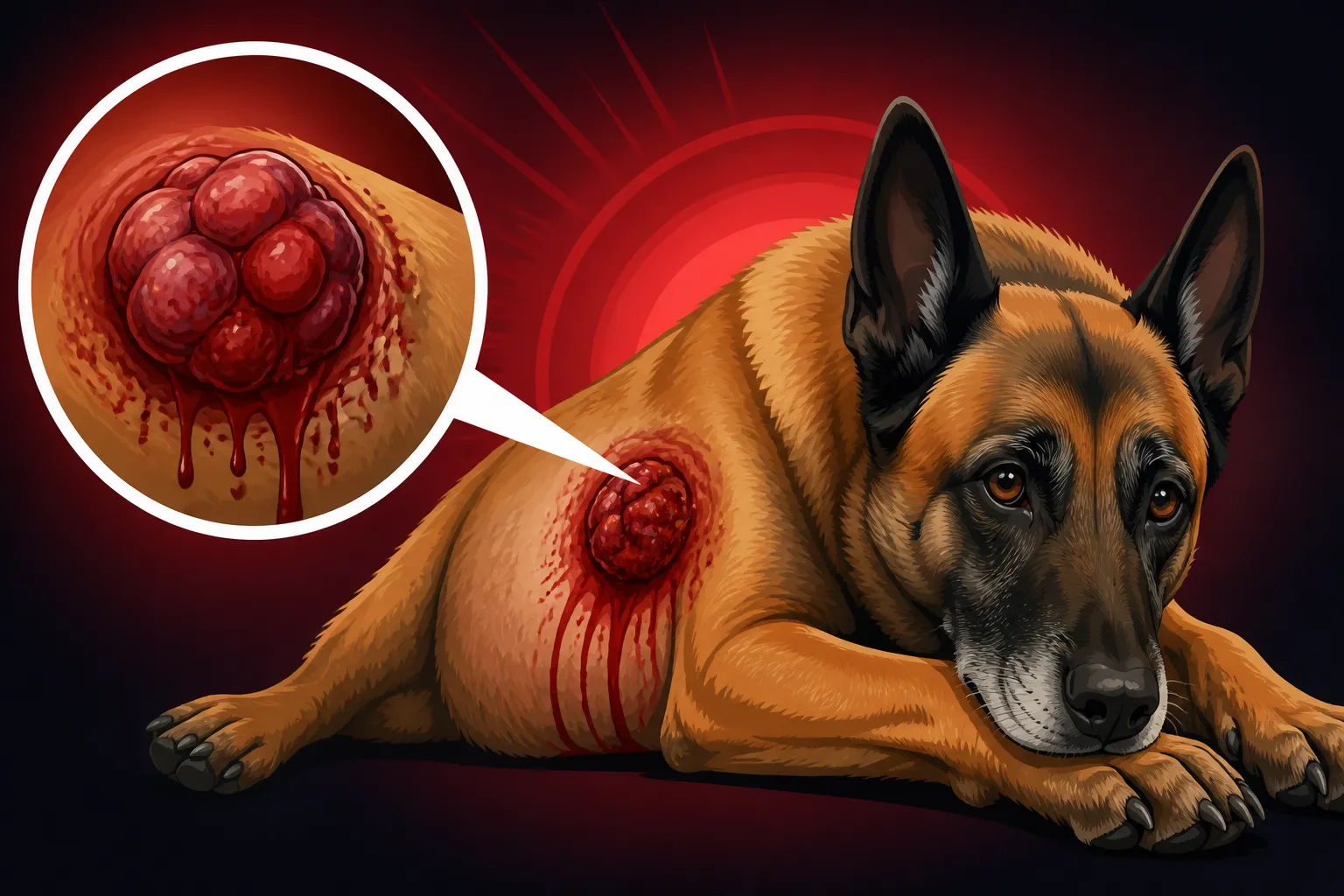
The Bleeding Tumor That Kills an Older Malinois
It’s a scenario no Malinois owner ever wants to face: you walk into the room, and your usually vibrant, indefatigable companion is suddenly down, pale, and struggling to breathe. This terrifying, abrupt collapse, often without any prior warning, is a hallmark of internal bleeding caused by a ruptured tumor, a devastating reality for many older Belgian Malinois. This guide will walk you through understanding these silent, life-threatening growths, recognizing the subtle and acute signs of internal hemorrhage, and navigating the difficult decisions that come with such a critical diagnosis.
Understanding the Silent Threat of Hemangiosarcoma
One of the most insidious threats to an older Belgian Malinois's health is a type of cancer known as hemangiosarcoma. This aggressive malignancy originates from the cells that line blood vessels, meaning it can arise anywhere in the body where there are blood vessels. However, it most commonly strikes in highly vascularized organs, primarily the spleen, heart, and sometimes the liver or skin. What makes it so terrifying is its ability to grow silently, often reaching a significant size before any outward symptoms become apparent.
What is Hemangiosarcoma and Why Malinois Are at Risk?
Hemangiosarcoma is, in simple terms, a cancer of the blood vessels. It’s highly malignant, meaning it spreads rapidly and aggressively throughout the body. While it's particularly well-known in breeds like German Shepherds, Golden Retrievers, and Labrador Retrievers, it's a significant concern for any large, active dog breed, including our beloved Belgian Malinois. The precise genetic predisposition in Malinois isn't as widely researched or publicized as in some other breeds, but given their high metabolism and active lifestyles, these dogs can be more susceptible to the silent progression of such a devastating disease.
The nature of hemangiosarcoma is that it forms fragile, blood-filled tumors. These tumors are essentially unstable bags of blood vessels, prone to rupturing. When they rupture, they bleed internally, which is where the real danger lies. Because many of these tumors develop deep within the body, on organs like the spleen or heart, they can grow quite large without you ever seeing or feeling a lump. This is a cruel twist of fate for owners who are always vigilant about their dog’s health, as there’s often nothing visible to alert them to the danger lurking within.
While your Malinois might not be on every "high-risk breed" list for hemangiosarcoma, their active nature can sometimes mask early, vague symptoms. They are so driven and stoic that they often push through discomfort until a condition is quite advanced. This makes it even more challenging for owners to catch subtle changes, underscoring the importance of understanding the disease and being extra watchful as your Malinois ages. It's a cruel reality that The Cancers That Take a Belgian Malinois often do so without much fanfare until it's a crisis.
The Insidious Progression and Lack of Early Signs
The truly terrifying aspect of hemangiosarcoma is its "silent killer" reputation. It often progresses without any clear external signs until it reaches a critical point. Imagine a tumor slowly growing on the spleen, gradually becoming larger and more fragile. Your dog might show no more than a slightly reduced appetite for a day, or seem a touch more tired after a long walk, signs easily dismissed as "just getting older" or a temporary off-day. These tumors are literally ticking time bombs, filling with blood until the pressure becomes too great or a sudden movement causes them to burst.
When a splenic tumor ruptures, blood pours into the abdominal cavity. This internal hemorrhage is what causes the sudden and dramatic collapse. The body's circulatory system struggles to cope with the rapid blood loss, leading to shock. What’s more, sometimes these tumors don't fully rupture but rather leak intermittently. This can cause episodes of weakness and lethargy that then seem to improve as the body reabsorbs some of the leaked blood, giving owners a false sense of security that their dog is simply having an "off day" or a mild illness. This waxing and waning pattern is incredibly deceptive.
For a Malinois, whose default setting is "on," a slight dip in energy can feel like a normal part of aging, especially when your dog is nearing the point of When a Malinois Is Considered Old. They're often so intensely focused and resilient that they'll hide discomfort until they simply cannot anymore. This makes the job of a vigilant owner even harder, as you're looking for incredibly subtle shifts in a dog that naturally runs hot. It’s this insidious progression, hidden from plain sight, that often leads to the devastating sudden collapse.
Recognizing the Emergency: Signs of Internal Bleeding
When a hemangiosarcoma tumor ruptures and causes internal bleeding, your Malinois will go from seemingly fine to critically ill very quickly. Recognizing the signs of this emergency is paramount, as prompt veterinary attention can be the difference between life and death. You need to know what to look for, both the subtle cues you might have missed and the overt signs of a full-blown crisis.
Subtle Indicators You Might Miss
Before the full-blown crisis, there might be subtle, fleeting signs that, in hindsight, could point to an underlying issue. These are often vague and can mimic many less serious conditions, making them incredibly easy to overlook, especially in a breed as resilient as a Belgian Malinois. You might notice your dog is a little less enthusiastic about their morning play session, or perhaps they're taking slightly longer to finish their meal. They might appear a bit more tired than usual after their normal activities, or seem generally "off" for a day or two before bouncing back.
Another subtle indicator can be a slight paleness to their gums. If you check your Malinois's gums regularly, you might notice they're not as vibrant pink as they usually are. However, this can be hard to spot and might even fluctuate if the tumor is leaking intermittently rather than rupturing completely. Your Malinois might also be slightly less interested in attention or retreat to a quiet spot more often. Because Malinois are often so stoic and driven, they are masters at masking discomfort. They live to work and please, and their incredible pain tolerance means they will often "power through" until they absolutely cannot. This protective instinct, while admirable, can be incredibly frustrating and dangerous when it comes to internal health issues.
These subtle changes are often only recognized in retrospect, after a more severe event has occurred. It's not a reflection of your attentiveness as an owner, but rather a testament to the sneaky nature of this disease and the hardy constitution of the Malinois. This is why for Caring for a Belgian Malinois After Ten, we recommend an even sharper eye for even the smallest behavioral shifts, as these can be the only whispers of trouble brewing internally.
The Sudden Collapse Scenario
The most dramatic and undeniable sign of a bleeding tumor is the sudden collapse. This is not a gradual weakening; it’s an abrupt, critical event that demands immediate emergency veterinary care. Your Malinois might be walking around, perhaps even playing a bit, and then suddenly become weak, wobbly, and unable to stand. They might literally drop to the ground. This isn't just "lying down"; it's a loss of functional mobility, often accompanied by visible distress.
When internal bleeding is severe, you'll observe several critical signs. Their gums will become very pale, almost white or a sickly grayish tint, indicating severe blood loss and shock. Their breathing might become rapid and shallow as their body desperately tries to get oxygen to starved tissues. You might notice their abdomen appears distended or swollen, which is a sign of blood accumulating inside. They may also have a rapid, weak pulse and feel cold to the touch, particularly in their extremities. This is precisely the scenario described in The Sudden Collapse of an Older Malinois.
This is a true emergency, a moment where every second counts. If you witness your Malinois suddenly collapse with these symptoms, do not hesitate. Call your emergency veterinary clinic immediately while you're getting your dog into the car. Time is of the essence for any chance of successful intervention. You cannot wait to see if they "get better" on their own; the internal bleeding will continue, worsening their condition rapidly.
Diagnosing and Confirming the Bleeding Tumor
Once you arrive at the emergency vet with a collapsing Malinois, the diagnostic process needs to be swift and targeted. The veterinary team will be working quickly to assess the situation and determine the source of the internal bleeding. They understand the urgency of these cases, especially with breeds known for their stoicism.
The Urgent Vet Visit and Initial Assessment
Upon arrival, the veterinary team will immediately spring into action. They'll perform a rapid physical examination, checking vital signs like heart rate, respiratory rate, and temperature. Critically, they'll assess the color of your Malinois's mucous membranes (gums) to gauge the severity of blood loss and shock. They'll also palpate the abdomen very carefully. If there's significant internal bleeding, the abdomen might feel distended or tense. The goal is to stabilize your dog while simultaneously gathering diagnostic information.
Imaging plays a crucial role here. An abdominal ultrasound is usually the first line of defense. This non-invasive procedure allows the vet to quickly visualize the abdominal organs. They'll be looking for free fluid in the abdomen (which indicates internal bleeding) and for masses on organs like the spleen or liver. An ultrasound can often pinpoint the exact organ where the bleeding tumor is located, guiding the next steps. X-rays might also be taken to look for fluid in the abdomen and to check for any obvious signs of metastasis to the lungs, though ultrasound provides much clearer images of soft tissues and fluid accumulation.
Sometimes, a quick blood draw might be done to check for severe anemia (low red blood cell count), which would confirm significant blood loss. However, often, the clinical signs are so dramatic that the vet will proceed with imaging and stabilization before even waiting for blood results, prioritizing the immediate threat. This initial assessment is all about getting critical information as fast as possible to make life-saving decisions for your dog.
Confirming Hemangiosarcoma and Staging
While an ultrasound can strongly suggest a bleeding mass, definitively confirming hemangiosarcoma can be challenging without surgical biopsy. In an emergency, if a bleeding mass is identified on an organ like the spleen, the priority often shifts to emergency surgery to stop the bleeding and remove the tumor. The definitive diagnosis usually comes from submitting the removed tissue to a pathology lab after the surgery. Until that report comes back, it's often presumed to be hemangiosarcoma due to its commonality and aggressive nature in these scenarios.
If surgery is successful in removing the primary tumor, the next step involves staging the cancer. This means assessing whether the cancer has spread to other parts of the body. This typically involves further imaging, such as X-rays of the chest to check the lungs for metastatic lesions, and possibly another ultrasound to meticulously examine the liver and lymph nodes. Unfortunately, hemangiosarcoma is known for its high metastatic rate, meaning it often spreads quickly before the primary tumor even ruptures. This is the heartbreaking reality that makes this cancer so challenging to treat.
For some tumors, especially Lumps Worth Aspirating on a Belgian Malinois that are cutaneous (skin) hemangiosarcomas, a fine needle aspirate (FNA) or biopsy might be performed prior to surgery to get an initial diagnosis. However, with internal bleeding from a ruptured organ, there's rarely time for such detailed pre-surgical diagnostics; the immediate priority is stopping the hemorrhage. The full picture of the cancer, its type, and its spread, often only emerges in the days following the emergency surgery.
| Symptom Type | Subtle/Early Signs | Acute/Emergency Signs |
|---|---|---|
| Behavior | Mild lethargy, slightly reduced play drive, seeking solitude, slight decrease in appetite | Sudden collapse, inability to stand, profound weakness, unresponsiveness |
| Physical | Gums a bit paler than usual, minimal abdominal tenderness, occasional deep sighing | Extremely pale or white gums, rapid/shallow breathing, distended/bloating abdomen, cold extremities, rapid/weak pulse |
| Other | May wax and wane (brief improvements), seemingly "off" for a day | Vomiting, diarrhea (less common but possible), signs of pain or discomfort (groaning, whimpering) |
Emergency Treatment and Management Options
Dealing with a ruptured tumor and internal bleeding in your Malinois is one of the most stressful veterinary emergencies. The treatment is intense, often requiring immediate, aggressive intervention. It’s a race against time, and decisions must be made quickly under immense pressure.
Stabilizing Your Malinois in Crisis
When your Malinois arrives at the emergency vet in collapse from internal bleeding, the very first priority is stabilization. This means stopping the shock and supporting their failing systems. They will immediately receive intravenous (IV) fluids, often at a high rate, to help maintain blood pressure and hydrate them. In cases of severe blood loss, a blood transfusion is critical. This is where having a veterinary emergency hospital with a blood bank or access to donors can be life-saving. The blood helps replace lost red blood cells, which carry oxygen, and improves the dog’s ability to clot.
Beyond fluids and blood, your Malinois will likely be placed on oxygen therapy to ensure their tissues are getting as much oxygen as possible. Pain medication will be administered to keep them comfortable, as internal bleeding can be incredibly painful. The veterinary team will continuously monitor their heart rate, blood pressure, and oxygen saturation. This initial stabilization phase is crucial to prepare them for potential surgery. It’s a whirlwind of activity, and as an owner, you'll be faced with difficult decisions about care, often under a tight timeline. The financial implications can also be staggering, as emergency critical care is expensive, leading many to consider options like pet insurance, with providers like Healthy Paws offering peace of mind for unexpected incidents.
It's an emotional rollercoaster, watching your strong, resilient Malinois in such a vulnerable state. The vet team will work to make them stable enough to withstand an anesthetic procedure and surgery, giving them the best possible chance. This preparatory phase can take anywhere from minutes to several hours, depending on the severity of the bleeding and your dog's response to treatment.
Surgical Removal and Post-Operative Care
If the bleeding tumor is located on the spleen, the most common site, emergency surgery involves a splenectomy – the complete removal of the spleen. This is a major abdominal surgery. The surgeon will meticulously examine the abdomen for other tumors, especially on the liver, and to remove any free blood. While removing the spleen itself can be done without major long-term health consequences for a dog (the body has other organs that perform similar functions), the challenge with hemangiosarcoma is its highly metastatic nature. The surgery might stop the immediate bleeding crisis and buy some precious time, but it often isn't a cure because microscopic cancer cells may have already spread elsewhere.
For Splenic Tumors in an Older Belgian Malinois, the goal of surgery is primarily to save their life from acute blood loss and to improve their immediate quality of life. During recovery, your Malinois will require intensive post-operative care. This includes close monitoring for internal bleeding, infection, and other complications. Pain management is paramount, often involving a combination of injectable and oral medications. Their activity will be severely restricted for several weeks to allow the surgical site to heal properly. This can be particularly challenging for a high-drive Malinois, who will likely feel better quickly and want to get back to their normal routine.
The veterinary team will provide detailed instructions for at-home care, including medication schedules, wound care, and activity restrictions. This period requires a dedicated owner to ensure proper healing and to prevent any setbacks. While the surgery itself is a life-saving measure, the true battle against hemangiosarcoma continues beyond the operating table.
Adjuvant Therapies and Quality of Life
After successful surgery to remove a bleeding tumor, particularly if it's confirmed as hemangiosarcoma, your veterinary oncologist will discuss adjuvant therapies. "Adjuvant" means additional treatments given after the primary one (surgery) to help prevent recurrence or spread. Chemotherapy is the most common adjuvant therapy for hemangiosarcoma. While it doesn't typically cure the disease due to its aggressive nature, it can significantly extend the period of good quality of life and improve survival times. The specific chemotherapy protocol will depend on the individual dog, the stage of cancer, and the owner's wishes.
Chemotherapy for dogs is generally much better tolerated than in humans, with fewer severe side effects. The goal is to maximize quality of life, not merely extend it at any cost. Your Malinois might experience mild side effects like a few days of reduced appetite or slight lethargy after a treatment session, but severe nausea or hair loss is rare. Beyond conventional treatments, some owners explore integrative therapies, such as specific diets, herbal supplements, or anti-angiogenic compounds. While these might offer supportive benefits, it’s crucial to discuss them thoroughly with your veterinary oncologist to ensure they don't interfere with conventional treatments and that expectations are realistic.
Ultimately, the focus must remain on your Malinois's quality of life. This means having very honest and sometimes heartbreaking conversations with your veterinary team about prognosis, treatment effectiveness, and when it might be time to prioritize comfort over continued aggressive treatment. This is a deeply personal journey, often leading to Making the Last Decision for a Malinois to ensure they don't suffer unnecessarily. Pet insurance, such as a plan from Healthy Paws, can significantly ease the financial burden of these ongoing treatments, allowing owners to focus more on their dog’s well-being and less on the exorbitant costs.
Prevention, Monitoring, and Emotional Support
While a ruptured hemangiosarcoma often strikes suddenly, there are steps you can take to monitor your older Malinois and prepare for the unexpected. The emotional toll of this disease is immense, and it’s important to acknowledge and address your own needs as well.
Proactive Steps and Early Detection
When you have an older Malinois, especially one past the age of eight or nine, proactive monitoring becomes even more critical. While there's no guaranteed way to prevent hemangiosarcoma, regular veterinary check-ups are paramount. During these visits, your vet can perform thorough physical exams, feeling for any new lumps or unusual abdominal distension. They can also perform routine blood work to check for general organ health and signs of anemia, although early internal bleeding might not always show up on standard blood panels until it’s significant.
For breeds at higher risk of splenic issues, and given the general concern for our Malinois, some owners opt for routine abdominal ultrasounds as their dogs get older, perhaps annually or every six months after age eight. This isn't a universally recommended practice by all vets, as it can be costly and may not always catch microscopic disease, but it can potentially detect larger, non-bleeding masses on the spleen or liver before they rupture. It's a discussion to have with your veterinarian to weigh the pros and cons for your specific dog. The most important tool you have, however, is your own keen observation. You know your Malinois best. Be vigilant about any subtle changes in appetite, energy levels, gum color, or abdominal appearance, no matter how minor they seem.
Knowing what What Actually Ends a Belgian Malinois's Life generally covers can help you be prepared for some of the common age-related challenges, including cancers. Early detection, even of a non-ruptured mass, can allow for planned surgery, which generally has a better prognosis than emergency surgery for a bleeding tumor, simply because the dog isn't in critical shock from blood loss.
Financial Planning for Unexpected Health Crises
The financial impact of a sudden, life-threatening emergency like a ruptured bleeding tumor can be staggering. Emergency vet visits, diagnostics, surgery, blood transfusions, and post-operative care can quickly accumulate to thousands of dollars, easily reaching $5,000 to $10,000 or more depending on the hospital and the complexity of the case. This unexpected burden adds an enormous amount of stress during an already traumatic time, sometimes forcing difficult decisions based on finances rather than what’s best for your dog.
This is where proactive financial planning becomes invaluable. Many Malinois owners opt for pet insurance, and a comprehensive plan from a reputable provider like Healthy Paws can be a lifesaver. Pet insurance works by reimbursing you for a percentage of eligible veterinary expenses, greatly reducing your out-of-pocket costs for accidents, illnesses, and even some cancer treatments. It’s important to enroll your Malinois when they are young and healthy, as pre-existing conditions are typically not covered. Investing in insurance means that should an emergency like a bleeding tumor strike, you can focus on your dog's care without the added weight of monumental vet bills.
Beyond insurance, having a dedicated emergency fund for your pets is a smart move. Even if you have insurance, there's typically a deductible and a reimbursement percentage. A savings account specifically for pet emergencies, or a reliable credit option like The Credit Line a Belgian Malinois Owner Should Have, can provide that critical financial buffer. No one wants to make medical decisions for their beloved companion based solely on cost, and proper planning can help ensure you have every option available when it matters most.
Coping with the Emotional Toll
Receiving a diagnosis of a bleeding tumor, especially hemangiosarcoma, and facing the sudden collapse of your Malinois is emotionally devastating. The speed and severity of the disease often leave owners feeling shocked, helpless, and guilty, wondering if they missed any signs. It’s important to acknowledge that these feelings are entirely normal and valid. This isn't just a pet; it's a family member, a working partner, and a huge part of your daily life.
Allow yourself to grieve and to feel the full spectrum of emotions. Talk to trusted friends, family, or other Malinois owners who understand the unique bond and demands of the breed. There are also pet loss support groups and hotlines that can provide invaluable comfort and guidance during such a difficult time. Remember, you did everything you could with the information you had. The insidious nature of hemangiosarcoma means it often leaves little room for early intervention, even for the most vigilant owners.
Making decisions about intensive care, surgery, and especially end-of-life care can be incredibly difficult. Rely on your veterinary team for honest, compassionate advice. They can help you assess your Malinois's quality of life and guide you through the process of deciding what is best for them. This journey with a Malinois battling such an aggressive cancer is heartbreaking, but knowing you provided the best care and love possible, even when faced with insurmountable odds, is what truly matters.
Disclaimer
The information provided in this guide is for educational purposes only and is not a substitute for professional veterinary advice. Always consult with a qualified veterinarian for any health concerns or before making any decisions about your Belgian Malinois's care.