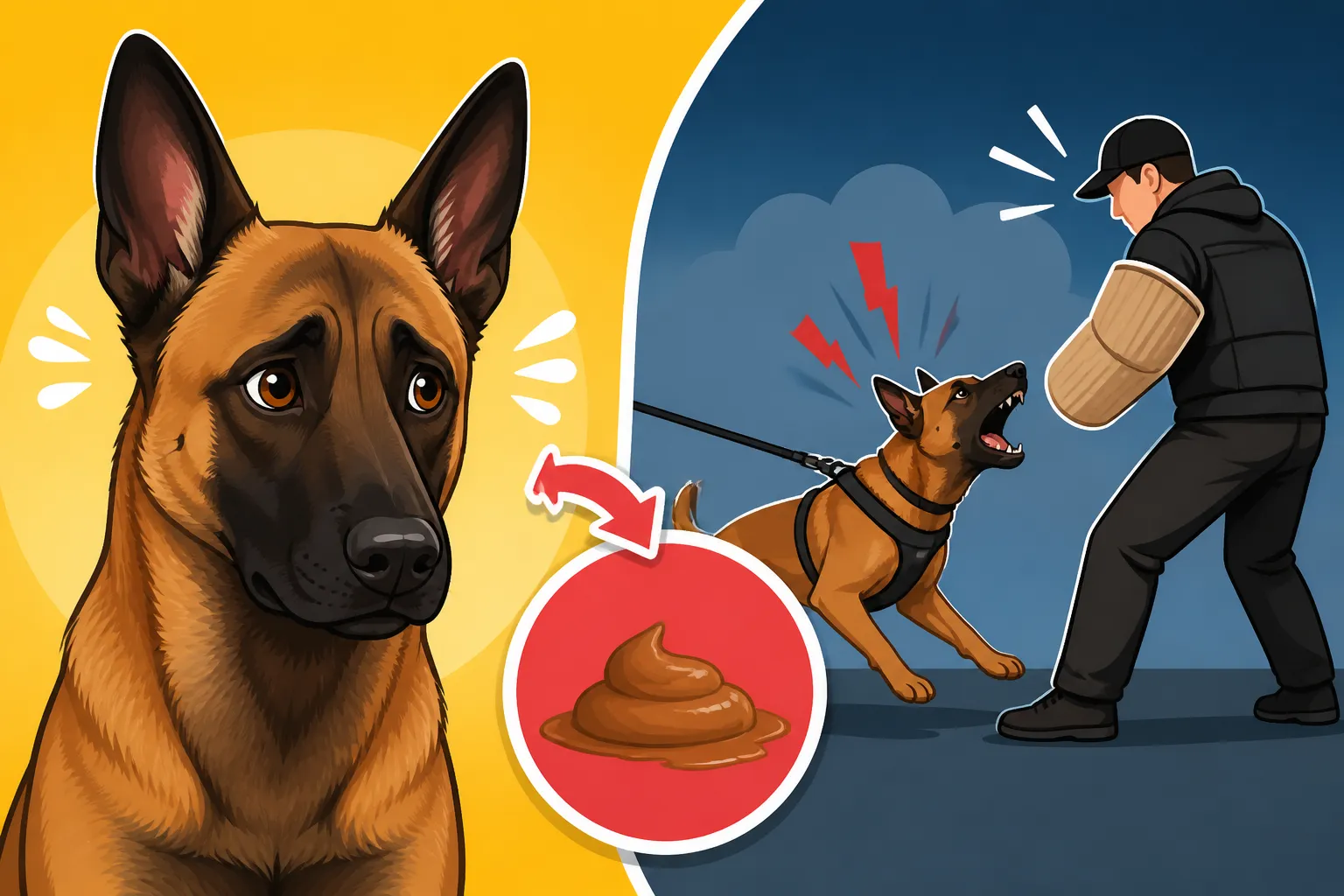
Soft Stools in a Malinois Under Training Stress
Oh, the joys of owning a Belgian Malinois! If you're reading this, chances are you've experienced the peculiar frustration of a dog whose digestive system seems to mirror their high-strung nature. You're putting in the work, pushing through training sessions, only to find yourself cleaning up soft stools, and you're left wondering if it's the food, the stress, or just another "Malinois quirk." This guide is here to shed some light on why your driven Malinois might be experiencing soft stools under training stress and, more importantly, what you can realistically do about it to get things back to normal.
Understanding the Malinois Gut Under Pressure: Why Stress Causes Soft Stools
It's a common scenario: your Malinois is absolutely dialed in, working hard, focusing intensely, and then… a puddle of loose stool. It can feel like a setback, a sign that something is wrong, but often, it's a direct physiological response to the mental and physical demands you're placing on them. Belgian Malinois are incredible athletes, both physically and mentally, and their bodies are wired for intense work. This intensity, however, can sometimes manifest in ways we don't always anticipate, like a sensitive stomach.
When a Malinois is under the kind of focused pressure that training for protection sports, advanced obedience, or detection work demands, their sympathetic nervous system goes into overdrive. This is the "fight or flight" response, designed to prepare the body for action. Hormones like adrenaline and cortisol flood the system. While these are fantastic for enhancing focus, speed, and drive, they can wreak havoc on the digestive tract. Blood flow can be diverted away from the gut to more critical muscle groups, digestion slows down, and the normal rhythmic contractions that move food through the intestines can become erratic. This altered state means food isn't broken down or absorbed as efficiently, and water absorption can be compromised, leading directly to softer, less formed stools. It's not uncommon for a dog to have perfectly firm stools at home, only to loosen up as soon as they hit the training field or step into the club. It's their body’s way of saying, "Whoa, that was a lot!"
Moreover, the breed itself has a reputation for being somewhat "gutty" or sensitive. Many Malinois owners report that their dogs can be prone to stress-induced diarrhea or loose stools, especially during periods of high excitement, travel, or intense training. It's not necessarily a sign of a weak dog, but rather a characteristic of their hyper-responsive nervous system. Think about it – if they're so sensitive to environmental cues and the handler's emotions, it makes sense that their internal systems would also be highly reactive. Understanding that this is a common, almost "normal" reaction for a Malinois can help you approach the problem with less panic and more strategy. It's about recognizing that their drive, while a superpower in training, can also have digestive side effects. This physiological response is often a key factor in Diarrhea in a Stressed Belgian Malinois.
Beyond Training Stress: Ruling Out Other Causes of Loose Stools
While training stress is a significant culprit for soft stools in a Belgian Malinois, it's crucial not to jump to conclusions and dismiss other potential issues. A change in stool consistency can be a red flag for various health problems, and it’s important to systematically rule them out, especially if the problem is persistent, severe, or accompanied by other symptoms. The last thing you want is to overlook a treatable condition because you assumed it was "just stress."
First and foremost, diet plays an enormous role. Even subtle changes in food can throw a sensitive Malinois gut off balance. Have you recently switched kibble brands or protein sources? Introduced new treats or chews? Even a different batch of the same food can sometimes cause an upset. Food sensitivities or allergies are also common, where certain ingredients (often common ones like chicken, beef, or grains) can trigger an inflammatory response in the gut, leading to chronic soft stools. It's worth reviewing your dog's diet with a fine-tooth comb. Sometimes, a high-fat diet, while providing energy for active dogs, can also lead to softer stools if the fat content is too rich for their system to process effectively. Brands like Ollie, which offer fresh, limited-ingredient diets, or even specific formulas found on Chewy that cater to sensitive stomachs, might be worth exploring if you suspect dietary issues. Always transition food slowly over several days to avoid further upsetting the stomach.
Parasites are another common, and often overlooked, cause. Intestinal worms like roundworms, hookworms, whipworms, or even single-celled organisms like Giardia and Coccidia, can cause chronic or intermittent soft stools, diarrhea, and sometimes weight loss or a dull coat. Even if your Malinois is regularly dewormed, some parasites require specific medications, and routine fecal exams are essential. It's not just puppies who get parasites; adult dogs, especially those spending a lot of time in training fields, parks, or kennels where other dogs frequent, are susceptible. A quick trip to the vet for a fecal test can easily rule these out. Infections, whether bacterial or viral, can also cause sudden onset diarrhea and soft stools, often accompanied by lethargy, vomiting, or fever. These require immediate veterinary attention.
Finally, underlying health conditions, though less common for just soft stools without other symptoms, should always be in the back of your mind if the problem persists despite managing diet and stress. Conditions like inflammatory bowel disease (IBD), exocrine pancreatic insufficiency (EPI), or even certain types of cancer can manifest with digestive upset. For this reason, maintaining The Checkup Schedule a Sport Malinois Should Keep is vital. If your Malinois is consistently producing soft stools, losing weight, showing signs of pain, or just generally not thriving, a full veterinary work-up is prudent. It’s always better to be safe than sorry when it comes to your dog’s health.
| Stool Consistency | Description | Potential Implications | Action Needed |
|---|---|---|---|
| Type 1 | Hard, dry pellets | Constipation, dehydration, too much bone/fiber | Increase water, review diet |
| Type 2 | Firm, segmented, log-like | Healthy, well-formed | Maintain diet & routine |
| Type 3 | Log-like with cracks | Mildly firm, slightly dry | Monitor hydration |
| Type 4 | Smooth, soft, log-like | Healthy, optimal | Maintain diet & routine |
| Type 5 | Soft, moist blobs | Mildly loose, easily picked up | Monitor, mild stress/diet |
| Type 6 | Piles of mush, no shape | Moderate diarrhea | Review diet, stress, vet if persistent |
| Type 7 | Watery, liquid | Severe diarrhea, urgent | Vet immediately |
Nutritional and Management Strategies for a Stable Malinois Stomach
Once you've ruled out significant health issues, and you suspect training stress is a major contributor to your Malinois's soft stools, it's time to implement some targeted strategies. Getting that gut stable means looking at both what goes into their body and how you manage their environment and stress levels. This holistic approach is often the most effective for a high-drive breed like the Malinois.
First, let's talk nutrition. Even if you're feeding a "performance" kibble, it might not be the right performance kibble for your specific dog. Some Malinois do better on a lower fat, higher fiber diet, even when they're working hard. Consider switching to a high-quality, easily digestible food. Look for foods with fewer ingredients, novel protein sources if sensitivities are suspected, or those specifically formulated for "sensitive stomachs." Many reputable brands offer these options, readily available through retailers like Chewy or Amazon. Remember, Feeding a Belgian Malinois Around Training Sessions is also crucial. Avoid feeding immediately before or after intense work, as this can exacerbate digestive upset. Splitting their daily ration into two or three smaller meals can also help ease the digestive load. You might want to experiment with Whether a Malinois Trains Better on One Meal versus multiple.
Supplements can also play a vital role. Probiotics, for example, introduce beneficial bacteria to the gut, helping to restore balance and improve digestion. There are many excellent canine-specific probiotic supplements available, and exploring Whether a Probiotic Settles a Malinois's Gut can be a game-changer. Prebiotics (types of fiber that feed the good gut bacteria), digestive enzymes, and even certain types of fiber like psyllium husk or canned pumpkin can help firm up stools. Always introduce new supplements gradually and observe their effect. For dogs experiencing severe stress-related loose stools, sometimes a temporary bland diet (boiled chicken and rice) can reset the gut, followed by a slow reintroduction of their regular food.
Beyond diet, managing stress is paramount. This is where your deep understanding of your Malinois comes into play. If your dog gets particularly revved up before training, build in a calming routine. This might involve a quiet walk, some low-key scent work, or a structured "place" command session before you even head to the training grounds. Teaching your Malinois Building an Off Switch Into a Belgian Malinois is not just for behavior, but for their physical well-being too. During training, watch for signs of over-arousal. While you want drive, pushing them past their threshold can lead to both behavioral and digestive issues. Short, focused sessions with ample breaks for sniffing, drinking, and decompressing can be more beneficial than long, grueling ones. Sometimes, the problem isn't the intensity of the training, but the duration or the lack of breaks.
Also, consider the overall environment. Is the kennel quiet and secure? Is travel stressful? Are there other dogs or people who cause anxiety? Even seemingly minor stressors can accumulate. For a dog that tends to get worked up and perhaps is A Malinois That Screams Rather Than Settles, finding ways to reduce overall environmental stressors can have a profound impact on their gut health. Consistency in routine, clear expectations, and a predictable schedule can do wonders for a high-strung Malinois.
When to Call the Vet: Red Flags and Professional Guidance
Even with the most diligent diet and stress management, there are times when soft stools warrant a professional veterinary consultation. It's easy for Malinois owners, given the breed's predisposition to stress-related gut issues, to normalize persistent digestive upset. However, certain signs should always prompt a call or visit to your veterinarian. Ignoring these can lead to dehydration, nutrient deficiencies, or masking a more serious underlying condition.
One of the primary red flags is persistence. If your Malinois has soft stools for more than 24-48 hours, especially if it's consistently Type 6 or 7 on the stool chart, it's time to consult your vet. Acute, watery diarrhea can quickly lead to dehydration, which is a medical emergency, particularly for active dogs. While a single episode of stress-related soft stool might resolve on its own, a prolonged period signals that something deeper might be going on or that your current strategies aren't enough.
Accompanying symptoms are another major indicator. If the soft stools are accompanied by any of the following, seek veterinary attention without delay:
- Vomiting: Especially if it's frequent or severe.
- Lethargy or weakness: Your normally energetic Malinois is suddenly subdued or uninterested in activities.
- Loss of appetite: Refusing meals or treats for more than a day.
- Blood in the stool: Fresh red blood (hematochezia) or dark, tarry stools (melena) are always emergencies.
- Mucus in the stool: While a small amount can be benign, excessive mucus can indicate inflammation or irritation.
- Fever: Your dog feels unusually warm, or a rectal temperature is elevated.
- Pain or discomfort: Whining, restlessness, difficulty getting comfortable, or abdominal tenderness.
- Weight loss: Gradual or sudden, especially if their food intake hasn't changed.
These symptoms suggest more than just stress; they point towards infection, inflammation, or another serious health issue that requires a professional diagnosis and treatment plan. Your vet can perform a thorough physical exam, fecal tests to check for parasites, and potentially blood work or imaging if needed. They can also discuss specific prescription diets, medications to firm up stools, or other therapeutic interventions tailored to your Malinois's individual needs. Don't hesitate to reach out to your vet if you're concerned. They are your best resource for keeping your incredible working dog healthy and happy.
Disclaimer
This article is for general informational purposes only and does not constitute professional advice. Laws, prices and regulations vary by location and change over time. Consult a qualified professional for guidance on your specific situation.