Why Malinois Hair Weaves Into Upholstery
If you've ever owned a Belgian Malinois, you know the frustration: you clean your couch, vacuum the rug, and five minutes later, it looks like a miniature Malinois exploded in your living room. The hair isn't just on the upholstery; it seems to fuse with it, weaving itself deep into the fibers, making removal feel like an Olympic sport. This guide will dive into the unique characteristics of Malinois hair and why it behaves this way, offering insights and practical advice to help you tackle this never-ending battle.
The Unique Nature of Malinois Hair: More Than Just "Dog Hair"
It's not just your imagination, or some personal failing on your part. Belgian Malinois hair is different, and it absolutely has a knack for embedding itself into everything soft you own. This isn't just about shedding volume, though they certainly deliver on that front; it's about the very structure and composition of their coat, which is perfectly designed for both protection from the elements and, unfortunately, maximum adherence to your furniture.
The Double Coat's Design for All Weather Conditions
Belgian Malinois possess a dense double coat, a classic trait of many working breeds. This isn't just for aesthetics; it's a highly functional design that evolved to protect them in diverse climates. The outer coat, or guard hairs, is typically straight, coarse, and relatively short. These hairs are designed to be water-resistant and provide a barrier against external elements like dirt, debris, and thorny bushes they might encounter while herding or working. Underneath this protective layer lies a softer, woollier undercoat. This undercoat is incredibly dense and serves as insulation, keeping them warm in cold weather and helping to regulate their body temperature in warmer conditions.
When a Malinois sheds, it's primarily this undercoat that comes out in astounding quantities, especially during seasonal blows. While the guard hairs shed too, it's the fine, wispy, and often slightly crimped undercoat that truly becomes one with your sofa. These hairs are lighter, more numerous, and their texture makes them exceptionally good at clinging. Imagine trying to get tiny, feathery fibers out of a wool sweater – that's often what you're up against. This dual-layer system means that even though their coat appears short, there's a lot more going on than meets the eye, contributing significantly to the challenge of keeping your home hair-free. You might notice this especially during The Two Week Stretch When a Malinois Drops Coat.
The Hair Shaft's Structure and Adherence Qualities
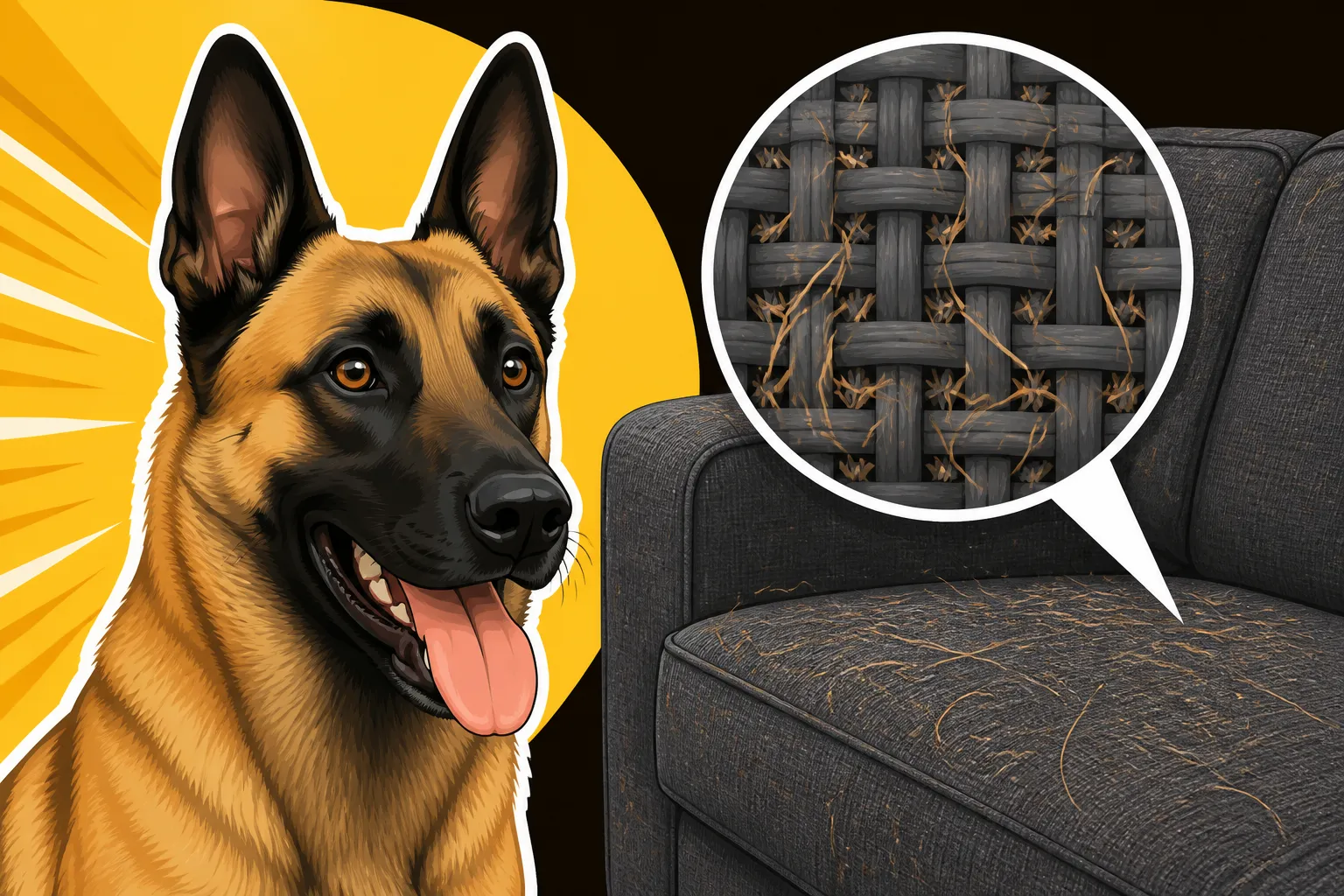
Beyond the double-coat system, the individual structure of a Malinois hair shaft plays a critical role in its ability to weave into fabric. Unlike some dog breeds with smooth, cylindrical hair shafts that tend to lie flat and are easier to brush away, Malinois hair, particularly the undercoat, often has a microscopic texture that isn't perfectly smooth. These hairs can have slight barbs or a somewhat irregular surface, making them inherently "sticky" at a microscopic level. Think of it like a tiny, natural Velcro. When these hairs land on fabric, especially those with an open weave or a napped surface like fleece, microfiber, or even certain carpets, these microscopic features latch onto the fabric fibers.
The static electricity often present in household environments, especially in drier climates or during certain seasons, only exacerbates this. Static charges cause the hairs to stand on end and actively seek out a surface to cling to, turning your upholstery into a giant magnet. Once they've made contact and settled into the weave, their short length and tendency to clump slightly means they don't just sit on top; they burrow in. They intertwine with the existing fabric threads, creating a strong bond that ordinary vacuuming or a simple lint roller struggles to break. It's a testament to the Malinois coat's efficiency, unfortunately working against our clean homes.
How Malinois Hair Migrates and Adheres: The Dynamics of Canine Detritus
It’s not enough that Malinois hair can weave into upholstery; it seems to actively want to. The sheer volume, combined with the physics of static electricity and the nature of household fabrics, creates a perfect storm where shed hair becomes a permanent fixture in your soft furnishings. Understanding these dynamics can help you strategize better for removal and prevention.
Electrostatic Cling and Fabric Types
One of the primary culprits behind Malinois hair's tenacious grip is electrostatic cling. As your Malinois moves, plays, or even just rubs against surfaces, friction builds up a static charge on their fur. When these charged hairs detach and land on oppositely charged surfaces – which many synthetic fabrics like polyester, nylon, and acrylic are prone to becoming – they are quite literally attracted to them. This isn't just a gentle settling; it's an active adherence, almost as if the hair is being pulled into the fabric.
Different fabric types present varying levels of challenge. Loosely woven fabrics, like certain tweeds, chenilles, or even some thicker cottons, offer ample space for the short, fine Malinois undercoat hairs to work their way deep into the structure. The individual fibers of these fabrics act like tiny nets, trapping the dog hair within their weave. Microfiber, while often marketed as easy to clean, can be particularly problematic due to its incredibly fine, dense fibers which effectively grip and hold onto pet hair, making it incredibly difficult to dislodge without specialized tools. Even seemingly smooth fabrics can fall prey to the persistent static and fine texture of Malinois hair.
| Fabric Type | Hair Adherence Level | Ease of Removal | Notes |
|---|---|---|---|
| Microfiber | Very High | Difficult | Fine, dense fibers trap hair deep. Static cling is common. |
| Velvet/Chenille | High | Difficult | Plush texture provides many anchor points. Hairs sink into the pile. |
| Tweed/Loosely Woven Cotton | Medium to High | Moderate to Difficult | Open weave allows hairs to burrow in. Texture can hide embedded hairs. |
| Denim/Twill | Medium | Moderate | Denser weave helps, but static and friction can still embed hair. |
| Leather/Faux Leather | Low | Easy | Smooth surface, minimal texture for hair to cling. Wipes away easily. |
| Silk/Satin | Low | Easy | Smooth, slick surface prevents embedding. Static can cause temporary cling but not deep weaving. |
This table illustrates why choosing certain fabrics for furniture in a Malinois home can either simplify or amplify your cleaning efforts. Opting for smoother, denser weaves or materials with inherent anti-static properties can make a noticeable difference in the daily hair battle.
The Sheer Volume of Shed and Its Impact
Let's be real, Malinois aren't exactly low-shedding dogs. Even with their short coat, the volume of hair they can drop is truly astounding, especially during seasonal shedding cycles. It's often underestimated, but a single Malinois can produce enough hair to knit a small sweater every week, sometimes even more. This constant, pervasive shedding means that even if only a small percentage of hairs "weave" themselves into your upholstery, the sheer quantity of those hairs quickly adds up to a noticeable problem. You might find yourself thinking, "How Much a Malinois's Short Coat Actually Sheds?" and the answer is usually "a lot."
Imagine a steady snowfall in your living room. Each flake is tiny, but cumulatively, they cover everything. Malinois hair is similar. There's a perpetual cloud of fine, nearly invisible hairs being released into the air, carried by drafts, and settling on every available surface. Every time your dog shakes, brushes past furniture, or settles down for a nap, a fresh wave of hair is distributed. This continuous replenishment means that even if you perform a thorough cleaning, the surface is quickly re-populated by new shed hair. Over time, these fresh layers settle, get pushed into the fabric by movement, and the weaving process begins anew, creating that dense, matted layer that seems impossible to fully remove. This volume, combined with the hair's clinging properties, makes it a formidable challenge for even the most diligent homeowner.
Strategies for Minimizing and Managing Malinois Hair: Taking Back Your Home
While you can't stop a Malinois from shedding—it's a natural, healthy process—you absolutely can manage the amount of hair that ends up woven into your upholstery. It requires a multi-pronged approach that combines proactive grooming, smart cleaning techniques, and even attention to your dog's diet. It's a commitment, but one that can significantly improve your quality of life (and the cleanliness of your home!).
Proactive Grooming Techniques
The single most effective way to combat woven hair on your furniture is to intercept it before it ever leaves your dog. Regular, consistent grooming is paramount. Don't underestimate the power of a good brush. For a Belgian Malinois, tools designed to penetrate the dense undercoat are key.
- Daily Brushing with the Right Tools: A slicker brush followed by a de-shedding tool (like a Furminator or similar brand) can work wonders. The slicker helps to remove loose guard hairs and untangle the outer coat, while the de-shedding tool is specifically designed to pull out the copious amounts of loose undercoat before it has a chance to settle on your belongings. Focus on thorough strokes, working in sections, and be prepared for a substantial pile of hair to accumulate. Many owners find success with specialized rakes that target the undercoat, as discussed in Which Rake Pulls a Malinois's Coat Out Fastest. This daily routine, ideally done outdoors or in an easy-to-clean area, drastically reduces the amount of hair circulating indoors.
- Regular Baths: While Malinois aren't typically bathed weekly, a bath every few weeks or once a month, especially during peak shedding seasons, can help loosen and remove dead hair. Use a good quality dog shampoo and conditioner. During the rinse, you'll see an incredible amount of hair wash away. Follow up with a thorough towel-drying and brushing session to remove even more. Just remember that some Malinois aren't thrilled about bath time, so teaching them to tolerate it early on is helpful. If your Malinois isn't a fan, you might find tips in Washing a Malinois That Hates Standing Still.
- Professional Grooming (if needed): For some owners, or during particularly heavy shedding periods, a professional groomer can be a godsend. They often have high-velocity dryers that can literally blow out tons of loose undercoat, a service that’s incredibly effective but hard to replicate at home without specialized equipment.
By diligently removing hair directly from your Malinois, you're preventing it from ever getting the chance to weave itself into your beloved couch.
Smart Home Solutions and Cleaning Methods
Even with the best grooming routine, some Malinois hair is inevitable. That's where smart cleaning and home management come into play. You need tools and techniques that are specifically designed to tackle deeply embedded pet hair.
- Specialized Vacuum Attachments: Your standard vacuum head might struggle, but many vacuum cleaners come with or offer specialized pet hair attachments. These often have rotating brushes or rubberized nubs that are designed to agitate the fabric and lift embedded hair. Look for ones marketed for pet owners; they often make a significant difference.
- Rubber Brushes and Gloves: Believe it or not, rubber is incredibly effective at attracting and pulling out pet hair. A simple rubber-bristled brush, often sold for car detailing or pet hair removal, can be brushed across upholstery to gather hair into clumps. A clean, dry rubber glove (like a dishwashing glove) can also be surprisingly effective. Put it on, slightly dampen it, and rub your hand across the fabric. The static and friction generated will lift the hair, allowing you to gather and discard it. These can be particularly good for getting hair off smaller items or those tricky corners.
- Lint Rollers (for surface hair): While not ideal for deeply woven hair, a strong lint roller (or even packing tape wrapped around your hand) is excellent for picking up surface-level hair before it has a chance to settle further. Keep them handy and use them frequently. Brands like Scotch-Brite offer extra-sticky versions that are a bit more robust for pet hair.
- Dedicated Throws and Covers: If you have a favorite spot where your Malinois loves to curl up, consider investing in a durable, washable throw blanket or slipcover. Choose materials that are less prone to hair embedding, like smooth, tightly woven cotton canvas or certain micro-suedes that can be easily vacuumed or shaken out. This creates a barrier between your dog and your upholstery, protecting your furniture and making cleaning much easier. Look for options on sites like Chewy or Amazon that cater to pet owners.
- Air Purifiers: While they won't remove hair from your couch, an air purifier with a HEPA filter can help reduce the amount of airborne dander and loose hair floating around, which in turn means less settling onto surfaces.
Combining these cleaning methods with your regular household routine will make the task less daunting and keep the accumulation of woven hair at bay.
Diet and Coat Health
It might seem counterintuitive, but your Malinois's diet plays a role in the health of their coat and, by extension, the amount and quality of hair they shed. A healthy coat sheds less excessively and the hair that does shed tends to be stronger, which can sometimes make it marginally easier to clean.
- High-Quality Nutrition: Ensure your Malinois is on a high-quality, balanced diet that provides all the necessary nutrients. Diets rich in essential fatty acids (like Omega-3 and Omega-6) are particularly beneficial for skin and coat health. A healthy coat is a strong coat, and while it won't stop shedding, it can reduce excessive breakage and dullness. If you're using a brand like Ollie, ensure it’s meeting their specific dietary needs for a strong coat.
- Omega Fatty Acid Supplements: Many owners supplement their Malinois's diet with fish oil or other omega fatty acid supplements. These can dramatically improve coat shine, reduce dryness, and help maintain skin health, which can lead to healthier hair follicles and potentially less breakage and shedding. Always discuss supplements with your veterinarian to ensure they are appropriate for your dog. For more on this, check out Whether Omega Oils Calm a Malinois's Skin.
- Hydration: Just like humans, adequate hydration is crucial for your dog's overall health, including their skin and coat. Ensure your Malinois always has access to fresh, clean water. A well-hydrated dog typically has healthier skin and a more vibrant coat.
By focusing on internal health, you're giving your Malinois the best chance for a healthy, manageable coat, which is one more layer of defense against that incredibly persistent, weaving hair.
Disclaimer
This article is for general informational purposes only and does not constitute professional advice. Laws, prices and regulations vary by location and change over time. Consult a qualified professional for guidance on your specific situation.