Whether a Belgian Malinois Fits a Farm
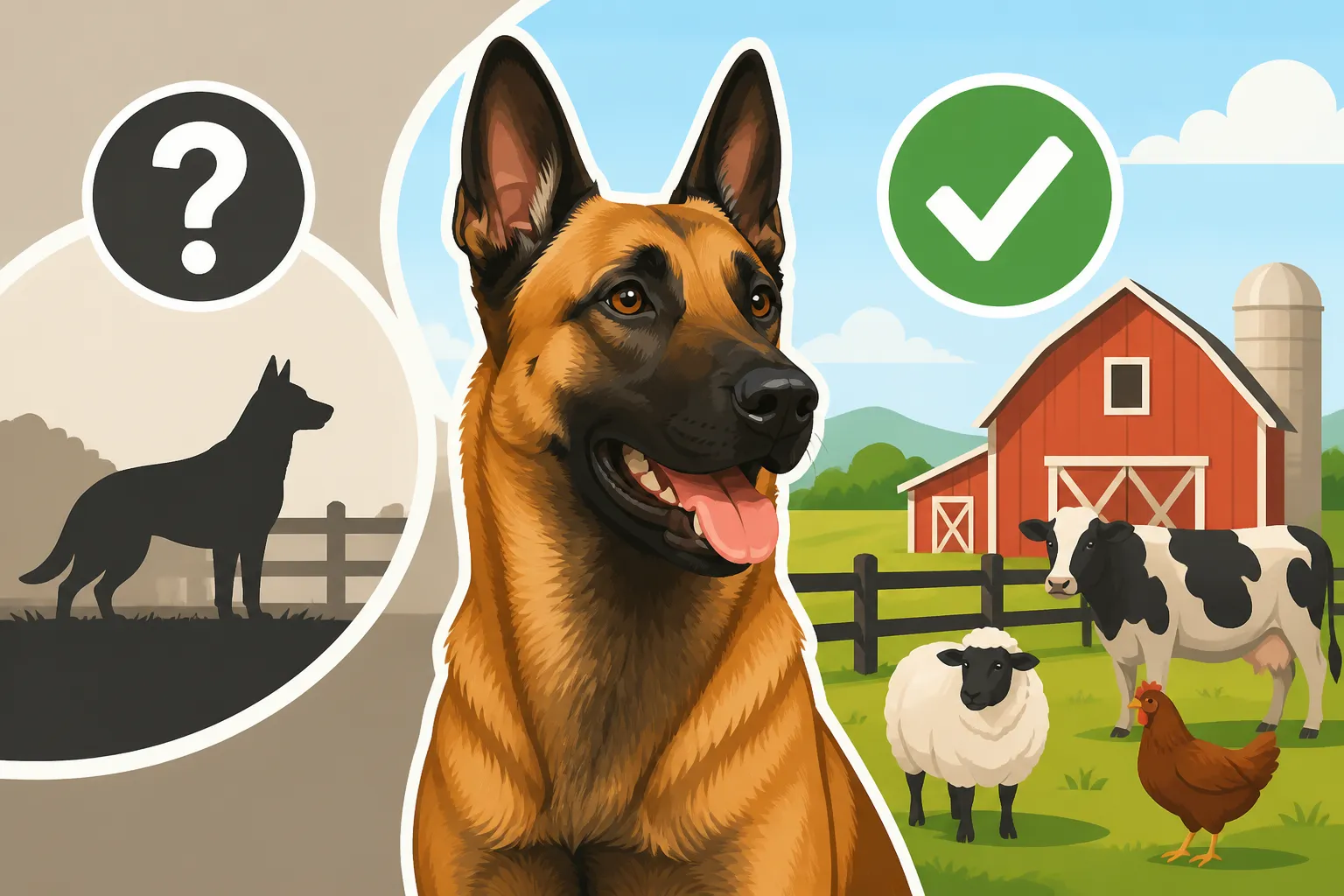
A Belgian Malinois can enjoy farm life, but acreage alone does not make a good fit. The breed’s energy, vigilance, and interest in movement can be useful around a working property—or stressful and risky around livestock, visitors, and machinery. This guide explains what farm living really asks of a Malinois, how to assess your setup, and what to plan before bringing one home.
What farm life does and does not provide a Malinois
A large property is not a substitute for daily work
It’s easy to picture a Malinois happily roaming a wide-open farm, keeping watch while the chores get done. In practice, open space doesn’t automatically give a dog the kind of purposeful activity, clear boundaries, or human interaction this breed needs. A dog can have acres to explore and still become restless if its day consists mostly of waiting alone.
Malinois tend to notice and respond to movement, noise, and changes around them. A tractor starting, a delivery van arriving, sheep shifting in a pen, or children running past the barn may all become exciting events. Without guidance, that energy can turn into chasing, barking, fence-running, or constant attempts to insert the dog into every task. A property’s size may give you room to train and exercise, but it won’t train the dog for you.
Think about the routine you can offer on an ordinary Tuesday, not just on a day when there’s extra time. Does the dog get structured walks or training, supervised time with you, and practice settling in the house or kennel? Can you provide mental work as well as physical activity? A Malinois generally needs predictable involvement. The practical question is not simply whether the farm is large enough; it’s whether your daily life can include the dog in safe, organized ways. The Structure a Belgian Malinois Needs Every Day offers more detail on building that kind of routine.
A farm is not automatically a herding job
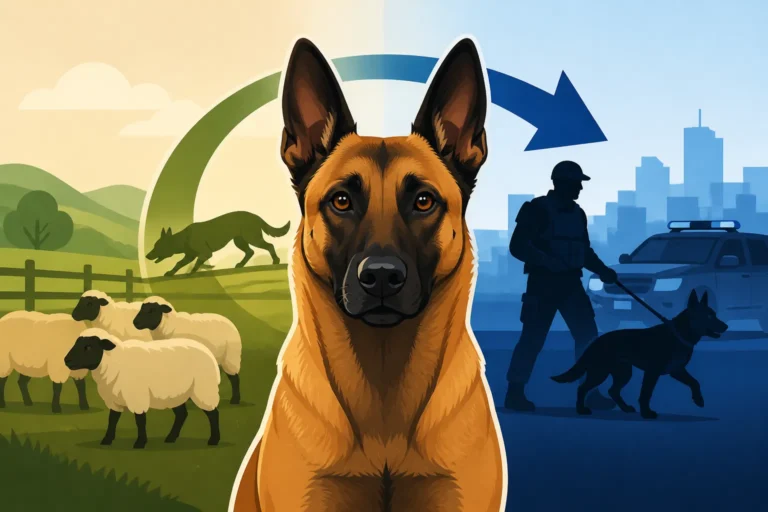
The breed has roots in herding, but that history doesn’t mean every Malinois will instinctively manage livestock safely—or that a pet Malinois should be left to do so. Herding involves specific behaviors shaped by breeding, training, and experience. A dog that chases animals, grabs at heels, or rushes a fence may be displaying excitement or prey-driven behavior, not useful stock work. The Herding Job the Belgian Malinois Was Built For explains the difference between the breed’s background and what an individual dog may be suited to do.
Even a dog with genuine herding ability needs appropriate instruction and supervision. Poultry, young stock, and small animals can be especially vulnerable to chasing or rough play. Larger animals may also injure a dog that rushes, nips, or gets underfoot. If you want a dog to help move livestock, look for a qualified trainer with experience in the relevant type of stock and be prepared to assess whether your particular dog has the right temperament and skills. Whether a Belgian Malinois Still Herds is a useful starting point for understanding the limits of breed expectations.
A Malinois can be a farm companion without having a livestock job. It might accompany you on chores from a secure distance, practice obedience near the barn, or learn to relax in a designated area while you work. Those are valuable farm skills, but they are different from working stock. Keeping that distinction clear protects both the dog and the animals.
Farm tasks can create excitement rather than enrichment
Some owners expect a dog to tire itself out by following them around the property. But a dog that spends hours chasing birds, patrolling a fence line, or reacting to every passing vehicle may be getting a lot of stimulation without learning how to settle. Repetition can make certain behaviors stronger: if barking at a gate reliably brings people over, or chasing livestock becomes a daily game, the dog may become more invested in doing it.
That’s why farm life often requires more active management than people expect. You may need to use gates, a leash, a secure run, or a crate while handling feed, moving equipment, treating an animal, or opening a delivery gate. The dog’s participation should be planned rather than assumed. Why a Fenced Yard Does Nothing for a Malinois explores why space and fencing alone don’t meet a Malinois’s needs.
Livestock, boundaries, and safety
Assess your animals and your dog as individuals
A calm adult horse behind a sturdy fence presents a different situation from free-ranging chickens or lambs in a pen. The species, age, temperament, layout, and routines of the animals all matter. So does the Malinois: age, prior exposure, impulse control, confidence, and any history of chasing or grabbing should shape your plan. A dog that is gentle with one resident animal may react very differently to a flock taking off suddenly.
Start by listing the animals your dog will encounter and how those encounters happen. Will livestock be visible from the house or kennel? Are there narrow paths where a dog and a horse might meet? Do you have gates that must be opened while carrying tools or feed? Are there times when animals are loose or young animals are present? This sort of inventory helps reveal where a dog could get access before you bring it into the environment.
Do not use a live animal as a test to see whether the dog “will be fine.” Early exposure should be controlled, with the Malinois on leash and far enough away to remain responsive. Reward calm attention to you and give the dog a way to move farther from the animals. If it locks on, lunges, barks intensely, or cannot disengage, increase distance and get help from a qualified trainer. A Belgian Malinois Around Livestock covers common challenges in more depth, and Whether a Belgian Malinois Can Learn to Ignore Livestock focuses on a crucial skill for many farm households.
Make physical separation part of the plan
Training is important, but it is not a replacement for secure barriers. A farm dog may encounter open gates, loose feed, delivery drivers, contractors, livestock being moved, or family members who are focused on a task rather than the dog. A reliable recall is helpful, but it should not be the only safeguard between an excited Malinois and a vulnerable animal.
Use management tools suited to your property: secure fencing, self-closing gates where appropriate, a leash or long line during training, and a separate place for the dog when you cannot supervise. Check the fence for gaps, loose panels, climbable objects, and spots where the dog can dig or build momentum. Consider whether a visitor could accidentally leave a gate open. A dog that learns to stay back from animals still needs a safe physical boundary when attention is divided.
Make the dog’s “work area” predictable. For example, it might accompany you to a fenced garden but remain leashed near the livestock pens. It might rest in the house or kennel while you unload a trailer, then join you for a short training session once equipment is parked. These arrangements aren’t failures of training; they’re practical ways to prevent one moment of excitement from becoming an injury.
Avoid turning guarding into a free-for-all
A Malinois may naturally alert to people and sounds, but that doesn’t mean it can safely decide who belongs on the property. Farm visitors may include veterinarians, delivery drivers, neighbors, seasonal workers, and emergency responders. A dog that rushes toward every person, blocks a path, or barks uncontrollably can make routine farm operations harder and potentially unsafe.
Teach clear behaviors around arrivals: settling behind a barrier, going to a mat, waiting for permission before approaching, and responding to a recall away from a gate. Keep the dog secured when visitors enter if you cannot supervise closely. Don’t encourage the dog to patrol beyond your control or confront people. A useful farm companion should be manageable when the property is busy, not simply watchful when it is quiet.
How to decide whether your farm is a good fit
Compare the setup with the dog’s actual needs
A good match depends on the household’s experience and routine as much as the land. Someone who already trains working dogs and can offer structured activity may be able to integrate a Malinois into farm life thoughtfully. A first-time owner who expects the dog to entertain itself outside may find the same property overwhelming. Whether a Belgian Malinois Suits a Family Home is relevant if the farm is also a busy household with children, guests, or other pets.
| Farm setup or routine | Potential fit | What to plan for |
|---|---|---|
| Secure, divided areas and an owner who trains regularly | More promising | Keep livestock introductions controlled and maintain daily training |
| Open property with animals roaming freely | Higher risk | Add secure separation before allowing the dog access |
| Long workdays with little time for interaction | Often difficult | Arrange meaningful activity and supervision, not just outdoor access |
| Experienced handler with a clear job and rest routine | Potentially suitable | Match the job to the individual dog and use qualified instruction |
| Frequent visitors, machinery, and open gates | Requires careful management | Teach settling and gate routines; secure the dog during busy periods |
| Young livestock or poultry near the dog’s usual area | Higher risk | Use reliable barriers and never rely on supervision from a distance |
The table is a starting point, not a pass-or-fail test. A well-planned farm can still be unsuitable for an individual dog, and a smaller property can work well if the household provides structure, training, and safe outlets. Think through what happens when the ideal routine breaks: you’re sick, a worker needs access, an animal is injured, or chores take longer than expected. A plan that only works when you have spare time is not a robust plan.
If you are choosing a puppy, talk with the breeder about the parents’ temperaments, working style, and suitability for your intended environment. Ask what the breeder has observed about the puppy’s response to movement, frustration, handling, and recovery after excitement. For an adult dog, ask about known behavior around livestock, cats, poultry, and unfamiliar people. General breed reputation cannot answer those individual questions. The Kind of Owner a Belgian Malinois Requires can help you consider the experience and lifestyle the breed demands.
Build a realistic daily routine before the dog arrives
Write down a normal day, including the parts that are inconvenient. When will the dog get exercise and training? Where will it stay during chores that involve animals or equipment? Who handles it if you are away? What will happen during bad weather, harvest, lambing, or a busy visitor day? The more specific your answers, the easier it is to spot gaps before a dog is depending on you.
A workable routine might include a morning walk or training session, supervised participation in a limited part of the day, a quiet rest period, and another structured activity later. The exact mix depends on the dog’s age, health, temperament, and training. Avoid assuming that hours of uncontrolled running will produce a settled dog; high-intensity activity can increase arousal, and young dogs need age-appropriate exercise. The goal is a dog that can engage and then recover, not one kept in a constant state of stimulation.
You’ll also need practical equipment and enrichment: a well-fitted collar or harness, leash, secure crate or resting space, and durable toys appropriate for supervised use. If you shop online, a retailer such as Chewy may be one place to compare everyday supplies, but choose items for fit, safety, and the dog’s behavior rather than relying on a product to solve a training problem. Check chew items for wear and remove anything that breaks into pieces or presents a choking risk. Chewy may also be convenient when you need to restock routine supplies, while local trainers, veterinarians, and farm-supply stores can help with needs that require in-person advice.
Decide what you will do if the plan is not working
A farm arrangement needs a backup plan. If the dog begins fixating on livestock, repeatedly tests the fence, or cannot settle when machinery or visitors are present, reduce access and seek help early. Don’t wait for the dog to injure an animal or for a neighbor’s complaint before changing the setup. A veterinarian can help rule out health issues that affect behavior, while a qualified trainer can assess the environment and create a safe training plan.
It may turn out that the dog should have no direct access to livestock, even after training. That can still allow a good life on a farm if you can provide exercise, companionship, and mental work separately. Conversely, if your work schedule leaves the dog isolated for much of the day and secure separation is not possible, the farm may not be the right setting for a Malinois. It is kinder to recognize that mismatch before committing than to expect the dog to adapt to a routine that leaves it frustrated.
Making farm life safe and satisfying
Teach calm behavior as deliberately as active skills
On a farm, useful training is not limited to recall and obedience while moving. The ability to wait at a gate, settle while you handle a task, ignore a flock, and return attention to you after a sudden noise can matter just as much. Practice these skills in easy settings first, then gradually introduce realistic distractions at a distance the dog can manage.
Reward the behavior you want before the dog is overwhelmed. If it notices a horse and then looks back to you, mark and reward that choice. If it begins staring hard, stiffening, or pulling toward an animal, create distance rather than repeating a cue the dog is no longer able to follow. Short, successful sessions are more useful than prolonged exposure that rehearses chasing or frustration. For a Malinois that fixates on motion, A Belgian Malinois That Fixates on Moving Things may help you think through the behavior without confusing intense interest with safe control.
Teach a reliable rest routine in the house, crate, or another secure area. A dog that has learned to settle can spend part of the day safely out of the way instead of trying to join every activity. This is especially important when work involves sharp tools, moving vehicles, livestock treatment, or other situations where a dog underfoot could be hurt.
Treat supervision as an ongoing responsibility
Farm environments change. A gate that is usually closed may be left open during a delivery; a normally calm animal may be startled; a new puppy may have less impulse control than the adult dog you planned for. Reassess access as seasons and routines change. Supervision means being close enough to notice the dog’s behavior and intervene—not merely knowing it is somewhere on the property.
If you are looking for practical supplies such as a crate, leash, or enrichment toy, Chewy may offer a way to browse options, but the most important investment is a safe routine and appropriate training. Do not leave the dog with toys or chews unsupervised unless you know they are safe for that dog. For health questions, injuries, or a sudden behavior change, speak with a veterinarian; for persistent chasing or reactivity, seek a qualified trainer who can observe the dog in context.
Farm life can suit a Belgian Malinois when the owner wants an active, involved partnership and can provide boundaries, training, and daily engagement. It is a much poorer fit when “farm dog” means a dog left to roam, guard, and entertain itself. The land can be a wonderful setting, but the relationship and management plan are what make it workable.
Disclaimer
This article is for general informational purposes only and does not constitute professional advice. Laws, prices and regulations vary by location and change over time. Consult a qualified professional for guidance on your specific situation.