The Belgian Malinois as a Herding Trial Dog
A Belgian Malinois can be fast, focused, and intensely eager to work, but those traits do not automatically make a successful herding trial dog. The real challenge is teaching the dog to control livestock thoughtfully rather than chase, grip, or overwhelm it. This guide explains what trials involve, how a Malinois may fit, and how to prepare safely and realistically.
What herding trials ask of a Belgian Malinois
The instincts are there, but control matters
The Belgian Malinois was developed as a herding dog, and many still show an interest in movement, pressure, and gathering animals. That heritage can give a Malinois useful raw material for herding work. But instinct is only a starting point: a dog that wants to chase sheep is not necessarily a dog that can move them calmly and follow a handler’s direction.
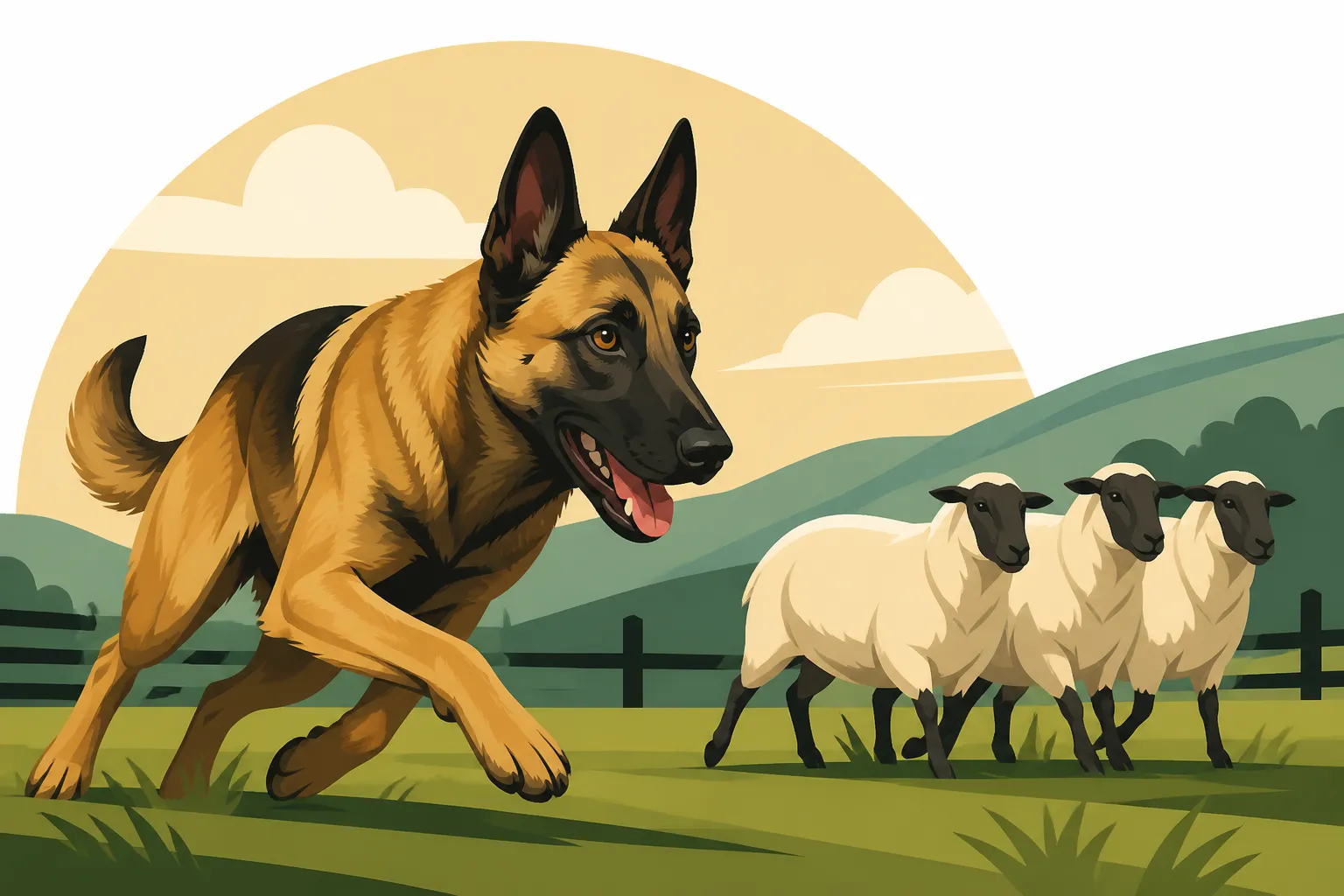
In a trial, the dog and handler work together to move livestock through a course or complete a set of tasks. The dog must respond to cues, adjust its position, and apply enough pressure to influence the animals without creating needless stress. A fast dog that rushes in or cuts off the stock can make the job harder, not easier.
That distinction is especially important with a high-drive Malinois. Strong toy or prey motivation may help the dog engage, but it does not replace livestock sense, thoughtful pacing, or reliable control. For background on the breed’s original role, see The Herding Job the Belgian Malinois Was Built For and The Sheep Work a Belgian Malinois Was Bred To Do.
Trial formats and livestock vary
“Herding trial” can mean different things depending on the organization, event, course, and livestock being used. Some events focus on basic instinct and introductory handling; others require more advanced work moving animals through gates, around obstacles, or across a larger area. Sheep are common, while some programs or events may use other livestock.
In the United States, owners may encounter events governed by organizations such as the American Kennel Club or the American Herding Breed Association. Each organization has its own rules, test levels, course types, and title requirements. A trial that suits one dog and handler may not be the best first setting for another, so read the event rules and speak with the host before entering.
A beginner may first attend a herding instinct test or introductory lesson rather than signing up for a full trial. That gives the handler a chance to see whether the dog shows useful interest and whether the dog can work around stock without becoming frantic. For a broader look at the breed’s herding background today, read Whether a Belgian Malinois Still Herds.
What judges and livestock handlers are looking for
The goal is not to see which dog can run the fastest or look the most intense. Good work is controlled and purposeful. The dog should respond to the handler, influence the livestock’s movement, and maintain enough composure to keep working when the animals hesitate or change direction.
A judge or instructor may notice whether the dog can take direction, recover after a mistake, and avoid scattering the stock. The handler’s timing matters too. A dog cannot work well if the person gives unclear cues, crowds the animals, or asks for more than the dog understands.
Livestock welfare is central. Sheep and other stock are not props for a dog’s excitement; they are animals that can become distressed or injured if they are chased, cornered, or pressured too hard. A responsible instructor will explain safe distances, body position, and when to pause or end a session.
Is a Malinois a good fit for herding trials
Strengths that can help in the ring
A Malinois often brings energy, responsiveness, and a strong willingness to work with a handler. These qualities can be useful in training, where repetition and quick feedback matter. A dog that enjoys learning may progress well when lessons are broken into manageable steps and the handler rewards calm, correct choices.
The breed’s athleticism can also be useful on a larger course, but athletic ability is not the same as good stock work. The ideal dog is not simply quick; it can change speed, hold position, and respond when asked to back off. In practice, a dog that can pause and think may be more useful than one that charges forward at every opportunity.
Some Malinois may also be comfortable working in busy environments, though that varies by individual. A trial venue can include unfamiliar people, dogs, livestock, trailers, and noise. A dog that can focus amid those distractions has an advantage, but the handler should build that ability gradually rather than assume it will appear on trial day.
Common challenges for a high-drive dog
The same intensity that makes a Malinois exciting to train can make stock work difficult. A dog may fixate on the animals, rush toward them, bark excessively, or struggle to disengage. If the handler has mostly practiced fast obedience or toy-based play, the dog may expect every task to move at that same pace.
Some dogs are also inclined to use their mouths when frustrated or over-aroused. Any gripping or attempted biting around livestock is a serious safety concern, not a behavior to dismiss as enthusiasm. Stop the session and get guidance from an experienced herding instructor who can assess the dog and the situation. Do not try to solve unsafe behavior by simply exposing the dog to more stock.
A Malinois may also find the slower, less predictable rhythm of herding frustrating. Sheep may stop, split, or move in a direction the dog did not anticipate. The handler needs patience, and the dog needs time to learn that waiting and adjusting can be part of the job. For a related perspective on how different working programs shape the breed, see What the KNPV Program Selects For in a Malinois.
The individual dog matters more than the label
Not every Malinois will enjoy livestock work, and no pedigree or sport title guarantees herding ability. Two dogs from similar backgrounds can respond very differently when they meet sheep. One may show balanced interest and recover quickly from excitement; another may become so aroused that safe instruction is difficult.
A good instructor will assess the dog in person and make a cautious plan. They may begin with a short introduction, observe the dog’s response, and decide whether to continue, adjust the setup, or try another activity. A fair assessment is not a pass-or-fail verdict on the dog’s worth. It is a way to find work that suits the dog’s temperament and keeps livestock safe.
If you are choosing a puppy with herding in mind, ask the breeder about the parents’ behavior around livestock, not just their titles or general drive. For a wider discussion of the responsibilities that come with the breed, see The Kind of Owner a Belgian Malinois Requires.
Preparing for a first lesson or trial
Find an instructor before testing the dog
Look for a herding instructor who has experience with both livestock and energetic, inexperienced dogs. Ask how they introduce a dog to stock, what safety rules they use, and whether they let handlers observe a lesson before bringing a dog. A knowledgeable instructor should welcome questions and be willing to stop if the dog or livestock is becoming overwhelmed.
Before booking, describe your dog honestly. Mention any chasing, gripping, barking, reactivity, or difficulty disengaging from moving animals. It is better for the instructor to know about a problem in advance than to discover it after the dog is loose near sheep.
You can also visit a local trial as a spectator. Watching from a designated area lets you see how handlers position themselves, how livestock move through the course, and how dogs are managed between runs. Keep your own dog home unless the event specifically allows spectators to bring dogs; an unfamiliar venue is not the place to test whether your Malinois can stay settled beside livestock.
Build useful foundations away from stock
Before a first lesson, practice everyday skills in a low-distraction setting. A dependable recall, the ability to pause, and the ability to move with the handler can make a session safer. The dog should also be comfortable waiting calmly in a crate or vehicle when it is not working, following the event’s rules and the instructor’s directions.
Do not rehearse livestock chasing with wildlife, farm animals, or animals behind a fence. Those encounters can reinforce unsafe habits and give you little control over distance or consequences. Instead, work with a qualified instructor who can choose appropriate livestock, manage the environment, and explain what the dog is learning.
Bring only the equipment the instructor requests. Depending on the lesson, that may include a leash, water, and rewards. A treat pouch or other basic training supplies can help with ordinary obedience practice; if you already shop at Chewy, it may be convenient for those everyday items. Avoid assuming that a particular toy or piece of gear belongs in the stock area without the instructor’s approval.
Start with short, careful sessions
A first exposure should be about observation and safe learning, not proving how much the dog can do. The instructor may begin at a distance, watch the dog’s response, and gradually adjust the setup. Short sessions allow the dog to process the experience and give the handler a chance to notice early signs of over-arousal.
Before and after work, check that your dog is physically comfortable and has access to water. Use a suitable crate or safe waiting area between turns, and avoid letting the dog rehearse frantic barking or lunging while watching other teams. If you need to organize basic travel supplies, Chewy may be one place to find routine items such as bowls or grooming supplies, while the instructor should guide any equipment specific to herding.
A useful first-lesson checklist:
- Confirm the instructor’s experience, safety practices, and required equipment.
- Tell the instructor about the dog’s behavior around moving animals.
- Arrive with the dog rested, leashed, and under control.
- Follow directions about where to stand and when to release the dog.
- Stop and ask for help if the dog becomes difficult to redirect or the livestock appear distressed.
- Afterward, note what the dog did well and what needs more foundation work.
Choosing a path from lessons to competition
Decide whether trialing suits your goals
Some owners are happy with lessons that give their dog a meaningful activity without aiming for titles. Others enjoy the structure of a trial and want to progress through formal tests and courses. Both are valid. The right goal depends on the dog’s interest, the handler’s time, the availability of suitable instruction, and the quality of the dog’s work around stock.
Talk with your instructor about what the dog is ready for. A dog that looks enthusiastic in a short lesson may need many sessions before it can work reliably in a more demanding setting. The handler may also need practice reading livestock and learning how small changes in position affect the animals.
Before entering an event, check its rules carefully. Confirm which breeds and classes are eligible, what equipment is permitted, what the course requires, and how dogs are expected to wait between runs. Event procedures vary, so do not rely on assumptions based on another organization’s trial.
Track progress by behavior, not speed
Keep simple notes after lessons. Record whether your dog could respond to the handler, settle between turns, maintain an appropriate distance, and recover from excitement. Note the conditions too: the type of livestock, the environment, and how long the session lasted. These details help you and your instructor identify patterns instead of judging progress by one dramatic moment.
If the dog gets over-aroused, that is useful information. It may mean the next session should be shorter, less difficult, or focused on control outside the stock area. If the dog shows little interest, an instructor can help determine whether the setup, livestock, or activity is a poor fit. Not every dog needs to become a trial competitor.
Herding can be a rewarding way to explore the Malinois’s working heritage, but it asks for patience and respect for livestock. The best outcome is not necessarily a ribbon. It is a dog and handler who can work safely, learn together, and choose a level of activity that genuinely suits them.
Disclaimer
This article is for general informational purposes only and does not constitute professional advice. Laws, prices and regulations vary by location and change over time. Consult a qualified professional for guidance on your specific situation.