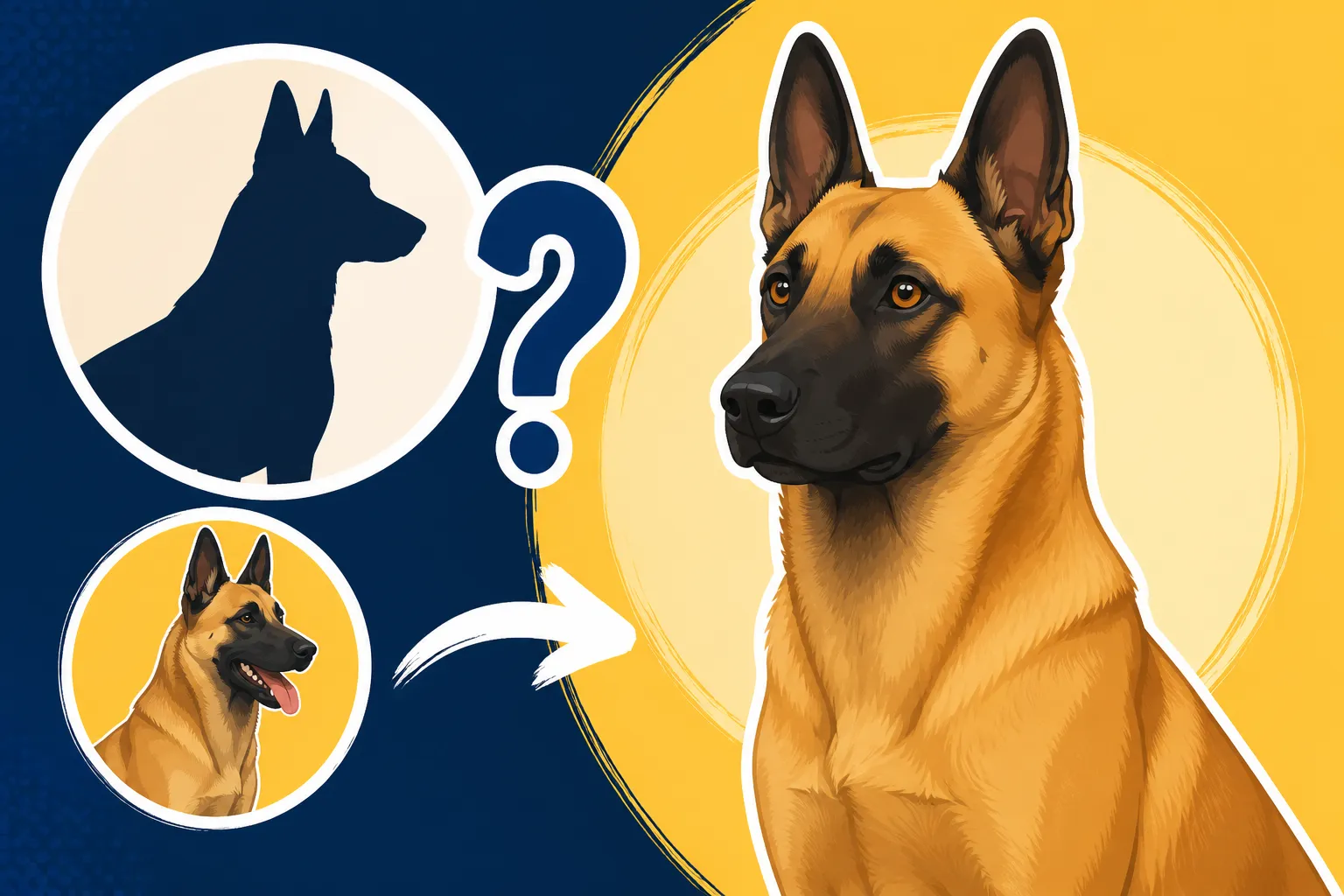
Whether a Belgian Malinois Can Be Solid Fawn
It's easy to look at a stunning Belgian Malinois and get caught up in their incredible drive and athleticism. But then you might notice their coat color and wonder, "Wait, isn't that… solid fawn?" This confusion is completely understandable, especially with how varied dog coats can appear under different lighting and as a dog matures. Many people find themselves puzzled, comparing photos online or seeing different shades at the park. Today, we're going to clear up once and for all what the official breed standard says about a solid fawn Belgian Malinois, and why understanding these nuances is so important for appreciating this magnificent breed.
Understanding the Belgian Malinois Breed Standard for Color
When we talk about whether a Belgian Malinois can be "solid fawn," we're really digging into the very heart of the breed standard – the blueprint that defines what a Malinois should look and act like. The Fédération Cynologique Internationale (FCI), which is the international umbrella organization for many kennel clubs, and the American Kennel Club (AKC) both have very specific guidelines regarding coat color for the Belgian Malinois, one of the four Belgian Shepherd varieties. And neither of them describes a solid fawn dog as ideal or even permissible without caveats.
The standard typically calls for a rich fawn to mahogany color on the body. This isn't just a plain, uniform fawn. It's often described as fawn with black overlay, also known as 'charbonnage'. This means that while the base color is indeed fawn, many individual hairs are tipped with black, creating a dynamic, almost smoky effect over the fawn. This isn't always immediately obvious, especially on lighter fawn dogs or in certain lighting, which can lead to the "solid fawn" perception. The intensity of this charbonnage can vary greatly, with some dogs appearing much darker due to heavier black tipping, leaning towards a mahogany or even a reddish fawn, while others are a paler fawn with a lighter dusting of black.
What is absolutely non-negotiable, however, is the presence of a black mask. This is arguably the most defining color characteristic of a Belgian Malinois. The mask should be well-defined, covering the muzzle and extending to the corners of the eyes, and the ears should also have black tips. Without this distinctive black mask, a dog might be a fawn shepherd-type, but it would not meet the official color standard for a Belgian Malinois. This mask is not just a cosmetic feature; it's a key identifier of the breed. We'll explore How Dark a Belgian Malinois Mask Should Be in more detail later, but for now, understand that its presence, not its absence, is crucial.
The Nuances of Fawn Coloring and Why It's Often Misunderstood
So, if the standard specifies fawn with black overlay and a black mask, why do some Malinois appear solid fawn? There are a few reasons for this common misunderstanding, and they often come down to genetics, age, and environmental factors. Puppy coats, for instance, can be deceiving. A young Malinois puppy might appear quite light, with minimal charbonnage. As they mature, especially around their first year, their adult coat comes in, and the black tipping often becomes much more pronounced. This is why looking at a puppy and assuming its final color can be a mistake.
Another factor is the actual genetic expression of the black overlay. Some Malinois carry genes for lighter charbonnage, meaning they will have fewer black-tipped hairs. While technically not "solid fawn" because the genetic potential for black tipping is still there, their coats can certainly look much more uniformly fawn than a heavily charbonnaged sibling. Think about it: when you pick up a bag of high-quality kibble from a retailer like Chewy, you expect consistency, but dogs' coats are a bit more like a unique artisanal blend – similar ingredients, but with subtle variations. These lighter dogs still must have the black mask and black ear tips to meet the standard. If they lack these, they are considered atypical for the breed's appearance.
Sunlight, believe it or not, can also play a trick on the eyes. Intense sunlight can bleach a dog's coat over time, making black tipping appear less vibrant or even turning it to a reddish-brown. This can make a fawn Malinois appear even more 'solid' than they actually are. Similarly, the undercoat of a Malinois is often a lighter, softer fawn, and when the topcoat is sparse, or if the dog is shedding, this lighter base can create the illusion of a more uniform color. Understanding The Black Overlay on a Belgian Malinois Coat is essential to grasp these distinctions, as it highlights how the charbonnage isn't always a solid black blanket but a subtle, intricate pattern on each hair.
The Importance of Masking and Color in Malinois Identification
The black mask is more than just a beauty mark; it's a critical component of the Belgian Malinois's breed identity. It helps to differentiate them from other fawn-colored shepherd breeds, or even from mixed breeds that might share some Malinois characteristics. Without that distinct mask, a dog's head takes on a completely different appearance, losing that characteristic intensity and expression that is so admired in the Malinois. It's one of the key features a judge looks for in the show ring, just as much as The Height Limits a Belgian Malinois Is Judged Against or their overall conformation.
Beyond the aesthetic, the mask and charbonnage are part of what defines the Fawn to Mahogany and the Black Malinois Mask described in breed standards. It speaks to the historical selection for a specific look that sets the Malinois apart from its fellow Belgian Shepherds, like the long-haired Tervuren or the black Groenendael. While all these varieties share a common heritage as The Four Belgian Varieties the Malinois Belongs To, their distinctive coats are a major part of how they are recognized.
For individuals looking at buying a Malinois, especially from working lines, understanding these color specifics is important. While temperament and working ability should always be paramount – these dogs are, after all, bred for demanding jobs and are often called upon for tasks like Whether a Belgian Malinois Was Bred to Bite or high-level obedience – adhering to the breed standard, including color, indicates a breeder's commitment to preserving the integrity of the breed. This isn't to say a dog without a perfect mask can't be an incredible companion or working partner, but it's a deviation from what the breed is defined as.
Ethical Breeding Practices and Color Expectations
When you're looking for a Belgian Malinois puppy, particularly if you're concerned about specific aesthetic traits like coat color, it's absolutely crucial to seek out ethical and reputable breeders. These breeders prioritize health, temperament, and adherence to the breed standard, rather than breeding for trendy or non-standard colors. A responsible breeder will be transparent about the genetics of their lines and can show you both parents, often including photos of past litters, so you can see The Shades a Malinois Litter Comes Out In and how they develop. They’ll explain how puppy coats can change and how the charbonnage and mask develop over time.
Ethical breeders are typically registered with national kennel clubs and are deeply involved in the breed, whether through conformation showing, obedience trials, or various protection sports. They invest in health testing, like Looking Up a Malinois Sire's OFA Record, and can provide detailed pedigrees. They aren't trying to produce "solid fawn" Malinois because that's not what the breed standard calls for. Instead, they aim for the rich fawn to mahogany with black overlay and a distinct black mask. They understand that while a dog's primary purpose might be work, maintaining breed type is part of responsible breeding.
It's also worth noting that sometimes, what looks like a "solid fawn" Malinois might actually be a mix, or a dog from lines where the standard was not strictly adhered to. While a mixed-breed dog can be a wonderful companion, it won't be a purebred Belgian Malinois, and its appearance might deviate significantly from the established standard. Always ask questions, view the parents if possible, and scrutinize pedigrees if color is a major consideration for you. Don't be swayed by unusual colors being marketed as "rare" or "unique" if they fall outside the recognized standard. While a quality dog food from Chewy supports a healthy coat, the underlying genetics determine the color and markings.
To summarize the key points on Malinois coat color requirements:
| Feature | Breed Standard Expectation | What Might Make it Appear "Solid Fawn" |
|---|---|---|
| Body Color | Fawn to mahogany with black overlay (charbonnage) | Minimal charbonnage, puppy coat, sun bleaching |
| Black Mask | Essential, well-defined on muzzle, extending to eyes | A very light or poorly defined mask (fault) |
| Ear Tips | Must be black | Fawn ears without black tips (fault) |
| White Markings | Small white patch on chest and tips of toes acceptable | Extensive white markings (disqualification) |
| Overall Look | Fawn base with dynamic black tipping, strong mask | Uniform fawn appearance without clear mask/overlay |
Remember, the Belgian Malinois is a dog of incredible energy and demands a serious commitment. Whether it's the right fit for you depends more on your lifestyle and ability to provide Two Hours and a Job a Belgian Malinois Demands Daily than on the exact shade of its fawn coat. While color is a part of the standard, focusing too much on minor variations can distract from the crucial aspects of health, temperament, and drive. If you're wondering Why a Belgian Malinois Is the Wrong First Dog, these discussions about breed-specific traits will often extend beyond mere aesthetics to the very core of their being. For anyone considering bringing one of these magnificent dogs into their home, it's far more important to understand their fundamental needs and characteristics.
Disclaimer
This article is for general informational purposes only and does not constitute professional advice. Laws, prices and regulations vary by location and change over time. Consult a qualified professional for guidance on your specific situation.