The Black Overlay on a Belgian Malinois Coat
If you've ever spent time admiring a magnificent Belgian Malinois, you've likely noticed that distinct shading on their coat. It's not just a flat fawn or mahogany; there's often this incredible overlay of black hairs, giving them a depth and intensity that's truly captivating. This "black overlay," sometimes called sooting or charbonnage, is a hallmark of the breed, contributing to their striking appearance. For many owners, understanding this aspect of their dog's coat is part of appreciating the breed's unique characteristics, and it raises questions about genetics, appearance standards, and even how it might change over time. This guide will delve into everything you need to know about the black overlay on a Belgian Malinois coat, from its genetic origins to how it's evaluated and what it means for your dog.
Understanding the Standard for Malinois Coat Color
The Belgian Malinois is renowned for its specific coat color and markings, and the black overlay plays a significant role in defining this. It's not just a random occurrence but an expected, and often desired, characteristic within the breed standard. Getting to grips with what the standard says helps us appreciate why this overlay is so important.
The Fawn to Mahogany Base
At its core, a Belgian Malinois's coat color is a base shade of fawn or mahogany. Imagine a canvas painted in rich, warm earth tones. Fawn can range from a very light, almost sandy blonde to a deeper, more golden hue. Mahogany leans towards a reddish-brown, often quite vibrant and deep. These base colors are what gives the Malinois its primary warmth. It's the foundation upon which all other markings are built, and it's what often catches the eye first, especially in natural light. This underlying color needs to be clear and strong, without being muddy or washed out, providing a beautiful contrast to the darker elements.
The standard emphasizes these clear, rich tones because they speak to the breed's heritage and type. A Malinois isn't meant to be dull; it should radiate an active, alert presence, and its coat color contributes to this impression. Breeders carefully select for these desirable base shades, as they form the canvas for the iconic black overlay that makes the Malinois so distinctive. Understanding this base is the first step to appreciating the complexity of the full coat. You can learn more about the specific colors in Fawn to Mahogany and the Black Malinois Mask.
The Importance of the Black Mask
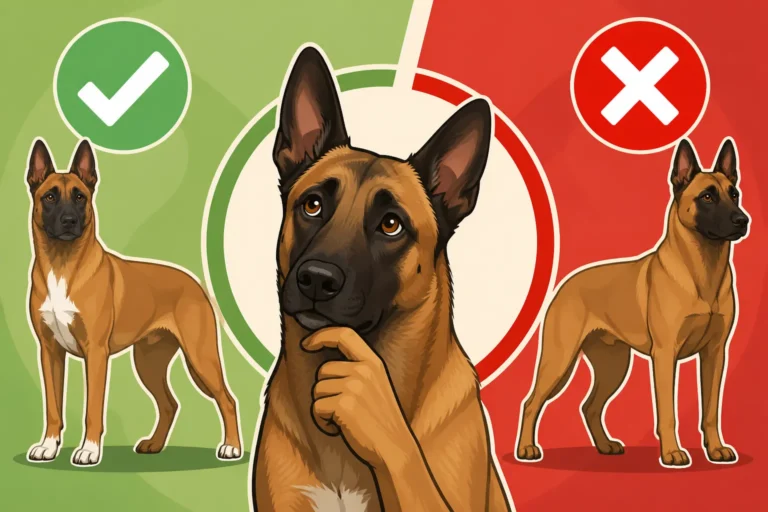
While the base color is crucial, it's the black mask that truly pulls the Malinois's face together and gives it that intense, intelligent expression we all recognize. This mask typically covers the muzzle, extending around the eyes and often up onto the forehead. It's a non-negotiable part of the breed standard, and its absence is considered a serious fault. The mask provides contrast, highlighting the eyes and giving the face a strong, authoritative look that is so characteristic of the breed. Without a proper mask, a Malinois can appear softer, less defined, and frankly, less like a true Malinois to the discerning eye.
The intensity and spread of the mask can vary somewhat, but it should always be distinctly black and well-defined. It's not just a dusting of dark hairs but a solid area of black pigment. This mask is intrinsically linked to the black overlay on the body, as both are expressions of similar genetic factors that distribute black pigment throughout the coat. The mask, much like the overlay, is a testament to the meticulous breeding over generations to establish and maintain these specific breed traits.
What Constitutes a "Black Overlay"
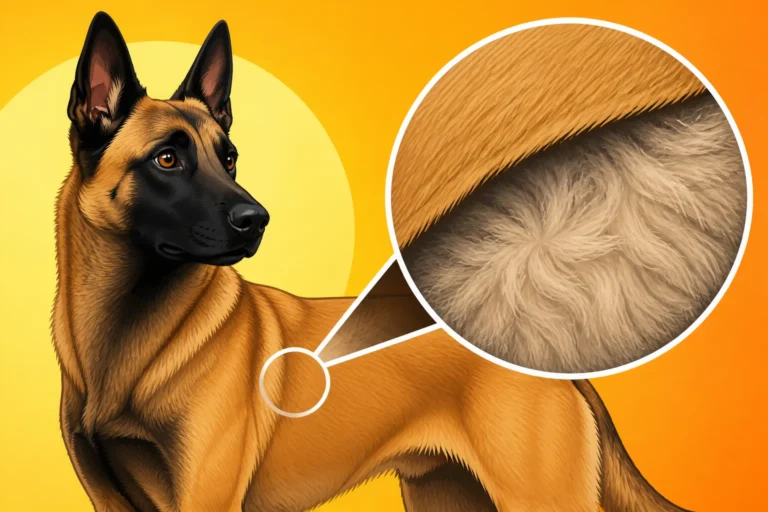
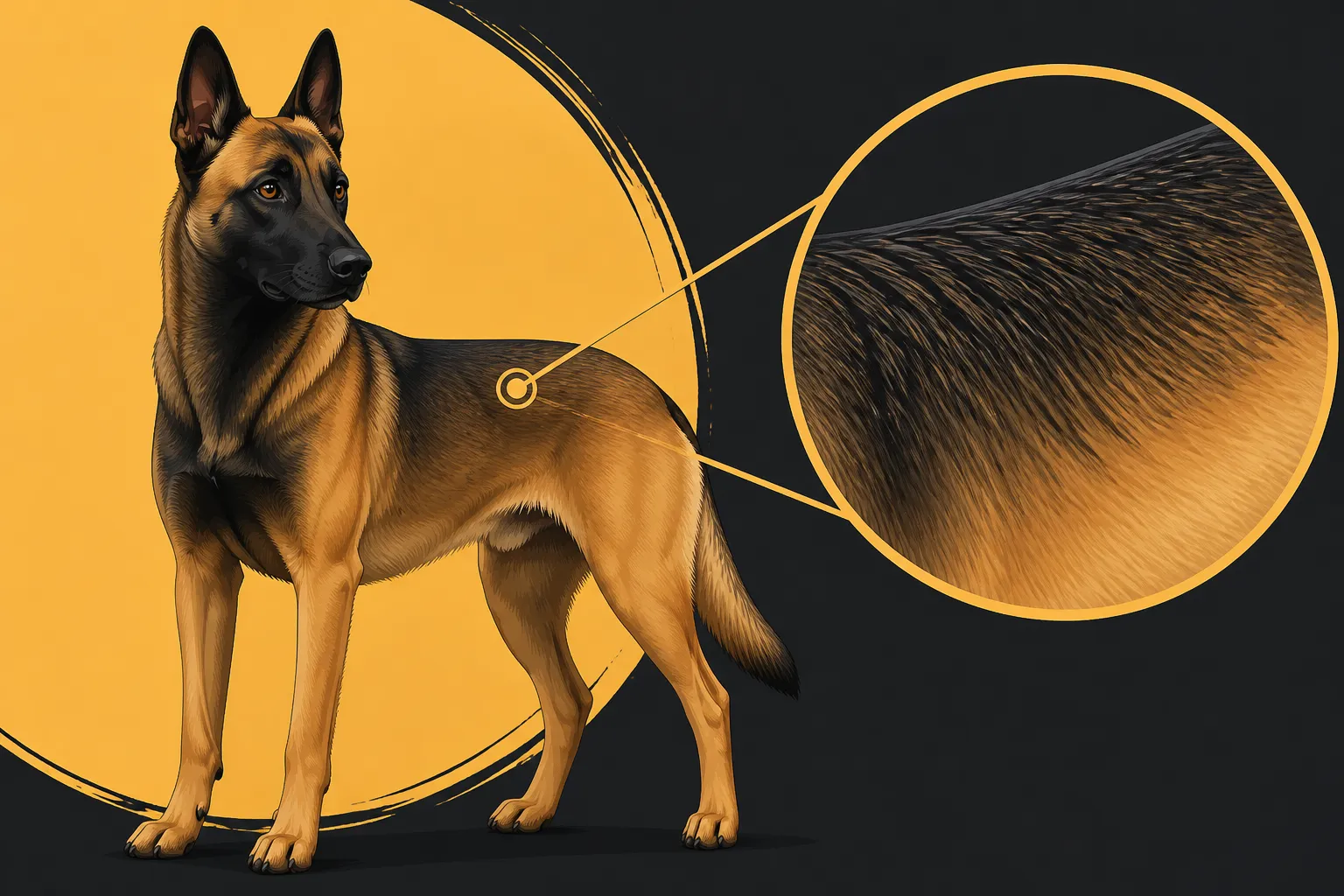
So, what exactly is this black overlay we're talking about? Simply put, it's the presence of black tipping on the fawn or mahogany hairs, giving the coat a shaded, often smoky appearance, particularly on the back, shoulders, and tail. Imagine taking handfuls of the primary colored hairs and dipping just the very tips into black ink. This creates a gradient effect, where the undercoat and roots are the base color, but the top layer of the coat appears darker due to these black tips. It's not a solid black patch, but rather a blending of black into the base color.
This overlay, also known as "charbonnage" in French (meaning "coal dust"), can range from very light and subtle to quite heavy and dramatic, making the dog appear much darker overall. It contributes significantly to the Malinois's rugged, natural look, suggesting resilience and a heritage tied to working outdoors. The quality of this overlay, alongside the base color and mask, is part of what makes a Malinois coat so striking. It's part of The Harsh Outer Coat a Malinois Should Carry and gives it a distinct appearance compared to a solid colored dog.
Genetics Behind the Black Overlay
Understanding the genetics behind the black overlay can feel a bit like cracking a secret code, but it's fascinating once you get a handle on it. The distinct look of the Malinois coat, with its fawn to mahogany base and black tipping, is not just a random occurrence but the result of specific genes interacting in a very particular way. It's a dance of pigment distribution that creates that iconic appearance.
The Agouti Gene and its Role
The agouti gene (A locus) is a major player in creating the black overlay. This gene is responsible for determining the distribution of black and red pigments along each hair shaft. Think of it like a switch that turns black pigment production on and off during the growth of a single hair. In Malinois, the "aw" allele (wild-type agouti) is often at play, which produces banded hairs. This means each individual hair isn't just one solid color; instead, it has bands of black pigment and bands of red (fawn/mahogany) pigment. It's this banding that creates the visual effect of "sooting" or overlay.
When you look closely at a Malinois hair, you'll see a segment of the base color (fawn/mahogany) closer to the skin, followed by a band of black, and then often a fawn tip. This intricate banding is what gives the coat its depth and allows the black overlay to appear as a blended shading rather than a stark patch. Without the agouti gene's influence, the Malinois coat would look quite different, perhaps solid red or solid black depending on other genes. It's a foundational element for the breed's classic coloration.
The K Locus and Dominant Black (Kbr)
While the agouti gene sets the stage for banded hairs, the K locus also plays a critical role, particularly the Kbr allele. Kbr stands for "dominant black with brindle modifier." Now, a Malinois isn't typically brindled in the traditional sense like a Boxer or a Great Dane, but the Kbr allele is still significant. It interacts with the agouti gene to express the black overlay. Essentially, Kbr allows the black pigment on the tips of the hairs to be fully expressed and spread, enhancing the overall effect of the charbonnage.
This allele works by modifying how the agouti pattern is displayed. In Malinois, it helps ensure that the black banding on the hair shafts is pronounced enough to create the visible overlay. It helps push the expression of black pigment in those specific areas of the coat where the overlay is desired. So, while agouti provides the potential for banded hairs, the Kbr allele on the K locus helps define how that black banding manifests as the distinct overlay we associate with the Belgian Malinois. This is an important distinction to make if you are exploring Whether a Sable Belgian Malinois Is Standard as sable is a different genetic expression.
Polygenic Modifiers Affecting Expression
It's rarely just one or two genes that decide a dog's final appearance; often, there are many "modifier" genes at play, and this is certainly true for the black overlay in Malinois. These polygenic modifiers are a collection of genes that don't directly determine color, but rather influence the intensity, distribution, and overall presentation of the colors produced by the main genes like agouti and K locus. Think of them as fine-tuning dials. Some modifiers might increase the spread of black tipping, making the overlay heavier and more extensive, while others might restrict it, leading to a lighter, more fawn-dominant coat.
This is why you can see a range of overlay intensity within the breed, even among dogs with similar primary color genes. Some Malinois will have a very dark "sooty" look across their back, while others might have just a hint of black shading. These modifier genes can also influence how the color matures, which explains why some puppies look one way and then develop a much darker or lighter overlay as they grow. The complex interplay of these many genes is what creates the rich diversity in coat appearance that we see within the breed, making each individual Malinois unique while still adhering to the breed's general look.
Variation in Black Overlay Intensity and Distribution
One of the beautiful things about the Belgian Malinois coat, despite its adherence to a standard, is the subtle variation you can see in the black overlay. It's not a one-size-fits-all characteristic; rather, it presents along a spectrum, giving each dog a slightly different depth and texture to their coat. Observing these differences can be truly fascinating for owners and enthusiasts alike.
Light vs. Heavy Sooting Charbonnage
The term "charbonnage" itself refers to the black tipping or sooting, and its intensity can vary greatly. On one end of the spectrum, you have light sooting. These Malinois might appear primarily fawn or mahogany with just a delicate dusting of black hairs, often most noticeable along the spine and on the tips of their ears. The overall impression is still warm-toned, with the black acting almost like a subtle shadow, enhancing contours without dominating the color. Their mask might still be strong, but the body overlay is minimal, allowing the base color to shine through.
On the other end, you find heavy sooting. These dogs look significantly darker, almost charcoal-colored over their back, shoulders, and sometimes even down their legs. The black tipping is so dense that it can make the fawn or mahogany base appear much deeper, sometimes almost obscuring it until you part the hair. This heavy charbonnage gives the Malinois a very dramatic, rugged appearance, often making them look incredibly powerful. It's this range that makes each individual coat distinctive, adding character to every Malinois.
Common Areas for Black Overlay
While the black overlay can technically appear anywhere on the body where fawn or mahogany hairs are present, certain areas tend to show it most prominently. The most common and expected areas are the back, particularly along the spine, and extending over the shoulders. This creates a "saddle" effect, though not as distinct as in some other breeds. The top of the neck and the tips of the ears are also frequently darkened by the overlay. You'll often see it on the upper side of the tail, too, giving the tail a shaded look.
Less commonly, but still within the acceptable range, some Malinois will have a more extensive overlay that extends down the sides of their body, and even to the outside of their legs. The degree to which these areas are affected contributes to the overall impression of light or heavy sooting. The chest and underside of the dog, as well as the insides of the legs, typically remain the clearer, lighter fawn or mahogany, providing a crucial contrast to the darker overlay on the dorsal surfaces. This distribution follows a logical pattern, mimicking how sunlight might naturally darken the exposed areas of an animal's coat.
Age-Related Changes in Overlay
It's common for a Belgian Malinois's black overlay to change as they mature, which can sometimes surprise new owners. Puppies, especially those with what appears to be a lighter overlay, might darken significantly as they grow. Conversely, some puppies that start out quite dark might lighten slightly as their adult coat comes in. This phenomenon is largely due to the continuous growth cycle of hair and the hormonal changes associated with maturity. The expression of those polygenic modifiers can also shift, altering the intensity of the black tipping. Whether Malinois Puppies Darken With Age is a common question among prospective owners.
Many owners report their Malinois puppies looking quite "plain" or "pale" when very young, only to develop a rich, dark overlay and mask by the time they are six months to a year old. Others might see their dog's coat reach its peak intensity around two or three years of age, and then it may hold relatively steady. You might even notice subtle seasonal changes in the overlay, with the coat sometimes appearing darker in winter when the undercoat is thicker, and perhaps lighter after a heavy shed. This dynamic nature of the coat means your Malinois's appearance can evolve, always showcasing a beautiful range of color. This also applies to The Undercoat Hidden in a Malinois's Short Coat which can influence overall appearance during shedding cycles.
Distinguishing Acceptable Overlay from Faults
When it comes to the Belgian Malinois coat, there's a fine line between a beautiful, characteristic black overlay and a coat color that deviates from the breed standard. Breeders and judges pay close attention to these nuances, as they are crucial for maintaining breed type and ensuring genetic integrity. Understanding these distinctions is important for anyone involved with Malinois, whether you're showing, breeding, or simply appreciating your companion.
When Too Much Black Becomes a Fault
While a heavy black overlay is generally acceptable and often admired, there's a point where "too much" black can become a fault or even a disqualification in the show ring. The primary concern is when the black becomes so dominant that it obscures the underlying fawn or mahogany entirely, or when it appears in solid patches rather than as a blended tipping. A Malinois is not meant to be a solid black dog; the characteristic is a overlay on a lighter base. If the black is so extensive that the dog appears largely black, with only hints of fawn, it can be considered a fault.
Specific areas where solid black is generally considered a fault include solid black patches on the body, or if the mask extends so far back over the skull that it resembles a different breed. The standard emphasizes the fawn to mahogany base with charbonnage, not replaced by solid black. It's about proportion and how the black integrates with the base color. Extreme blackness, or "melanism" in some contexts, can indicate genetic deviations that move away from the established breed type, which breeders strive to avoid.
The Difference Between Overlay and Sable
This is a point of confusion for many, but it's a critical distinction: the black overlay (charbonnage) is not the same as sable. While both involve black-tipped hairs, the genetic basis and the visual presentation are different. Sable, genetically represented by the Ay allele at the agouti locus, typically results in hairs that are black-tipped over a red or fawn base, similar to the charbonnage, but often with a much more even and uniform distribution across the entire body, including the legs and belly. Think of a German Shepherd Dog's sable pattern – the black tipping extends everywhere.
In contrast, the Malinois's charbonnage, while involving black-tipped hairs, is usually more concentrated on the back and upper surfaces, with the belly and inner legs remaining clearer fawn. Furthermore, the overall genetic expression in a Malinois with overlay is geared towards that specific fawn/mahogany with black tipping, often less uniformly distributed than a true sable. While a Malinois can genetically carry sable, its expression is refined by other modifiers to produce the characteristic overlay. A true sable Malinois, especially one with a very uniform sable pattern, might be seen as deviating from the breed's preferred aesthetic, which emphasizes the fawn or mahogany background with distinct black shading rather than an all-over sable pattern. This can be complex, and breeders use DNA testing to understand these distinctions.
Assessing Coat Color in Puppies
Evaluating coat color in Belgian Malinois puppies can be a bit of a guessing game, especially when it comes to predicting the final intensity of their black overlay. As mentioned earlier, puppies often undergo significant changes as they mature. A puppy that looks quite pale and fawn at eight weeks might develop a deep, rich charbonnage by six months or a year. Conversely, a very dark puppy might not necessarily maintain that extreme darkness. Experienced breeders often look for hints of the mask and the presence of any black tipping, understanding that the full expression will come later.
Key indicators in puppies include a clear, strong base color (not diluted or muddy) and evidence of black pigment on the muzzle and around the eyes for the mask. Even a faint dusting of black on the back can be a good sign that the overlay will develop nicely. Reputable breeders can often give you an educated guess based on the parents' coat colors and the history of their lines, but ultimately, Mother Nature will have the final say. Patience is key when assessing a young Malinois's potential adult coat. Whether a Malinois Puppy's Biting Is Aggression is often a more pressing concern for new owners than coat color, but understanding both aspects of development is important.
Here's a quick comparison of key coat characteristics in Malinois:
| Characteristic | Description | Standard Expectation | Potential Fault/Deviation |
|---|---|---|---|
| Base Color | Fawn to Mahogany (reddish-brown) | Clear, rich, and warm tones | Diluted, muddy, or washed-out fawn; too light or too dark without overlay |
| Black Mask | Distinct black pigmentation on muzzle, around eyes, sometimes forehead | Well-defined, extensive, and distinctly black | Incomplete, broken, or absent mask; grayish instead of black |
| Black Overlay (Charbonnage) | Black tipping on individual fawn/mahogany hairs, creating shading | Present on back, shoulders, neck, tail; can be light or heavy but blended | Solid black patches; black obscuring base color completely; brindling (stripes) |
| Undercoat | Dense, softer hair underneath the harsher outer coat | Present and generally matching base color (fawn/mahogany) | Sparse or absent undercoat |
| Overall Impression | Fawn/Mahogany with black overlay, strong mask, harmonious blend | Striking, balanced appearance; working dog aesthetic | Monotone, dull, or overly dark/light appearance; lacking contrast |
Impact of Coat Color on Health and Function
When we talk about the black overlay on a Belgian Malinois, it’s mostly an aesthetic discussion, focusing on breed standards and visual appeal. However, it's natural to wonder if something as prominent as coat color could have any deeper implications for the dog’s health or practical working ability. For a breed as performance-driven as the Malinois, every detail can sometimes feel significant.
No Direct Link to Health Issues Generally
The good news is that, for the vast majority of cases, the black overlay itself has no direct link to specific health issues in Belgian Malinois. Unlike some coat colors in other breeds that are genetically tied to deafness, blindness, or skin conditions (like merle or extreme white spotting), the fawn/mahogany with black overlay combination is considered a very natural and healthy coloration for the Malinois. It's a standard expression of pigment that has been present in the breed for generations without adverse health correlations.
The genes responsible for the black tipping (agouti, K locus, and their modifiers) primarily affect pigment distribution, not organ function or structural integrity. Therefore, you won't typically find a veterinarian linking a heavy overlay to a higher risk of hip dysplasia or a lighter overlay to increased chances of epilepsy. When looking for a healthy Malinois, focus on proper health clearances, reputable breeding practices, and genetics related to common Malinois health concerns, such as hip and elbow evaluations or eye certifications. The coat is beautiful, but generally not a health indicator.
Practical Considerations for Working Malinois
While the black overlay doesn't pose health risks, there can be some subtle practical considerations for working Malinois, especially those deployed in various climates and environments. A darker coat, due to heavy black overlay, can absorb more sunlight and heat than a lighter fawn coat. This might make dogs with a very heavy overlay slightly more prone to overheating during strenuous outdoor work in hot, sunny conditions. Conversely, in colder, snowy environments, a darker coat might absorb a bit more solar radiation, potentially offering a marginal benefit in staying warm.
For detection dogs or military and police K9s, camouflage can sometimes be a factor. A heavily overlaid Malinois might blend into certain environments better than a very light fawn dog, or vice versa, depending on the terrain. However, these are often minor considerations, and the dog's drive, training, and physical conditioning are far more important for its working success. Handlers are always diligent about monitoring their dogs for signs of heat stress regardless of coat color, ensuring proper hydration and rest. The critical factor is the dog's overall physical soundness and mental fortitude.
Grooming and Maintenance with a Double Coat
The black overlay is, of course, part of the Belgian Malinois's double coat. This means they have a harsh, weather-resistant outer coat and a soft, dense undercoat. The overlay itself doesn't change the fundamental grooming needs of this type of coat, but it can affect the appearance of shedding. Malinois are known for being prolific shedders, especially during seasonal coat blows when they "drop" their undercoat. This shedding applies to The Season a Malinois Sheds Worst. You'll find Malinois hair absolutely everywhere, and sometimes those black-tipped hairs can be quite noticeable on lighter furniture or clothing. Using a high-quality de-shedding tool can help manage this, and products from reputable retailers like Chewy often include options for short-coated, heavy-shedding breeds.
Regular brushing, at least a few times a week, is essential to remove loose hairs, distribute natural oils, and keep the coat healthy. During heavy shedding seasons, daily brushing might be necessary. This helps prevent matting in the undercoat, even though Malinois don't typically mat badly due to their short outer coat, and reduces the amount of hair floating around your home. While the black overlay doesn't require special grooming techniques, maintaining the coat's health through good nutrition and regular care will ensure that the overlay always looks vibrant and well-defined. You can find excellent brushes and grooming tools on Chewy to help with Getting a Brush Through a Malinois's Undercoat. Keeping their coat in top condition means less loose hair and a happier, healthier Malinois.
Disclaimer
This article is for general informational purposes only and does not constitute professional advice. Laws, prices and regulations vary by location and change over time. Consult a qualified professional for guidance on your specific situation.