Whether Belgian Malinois Served in Both World Wars
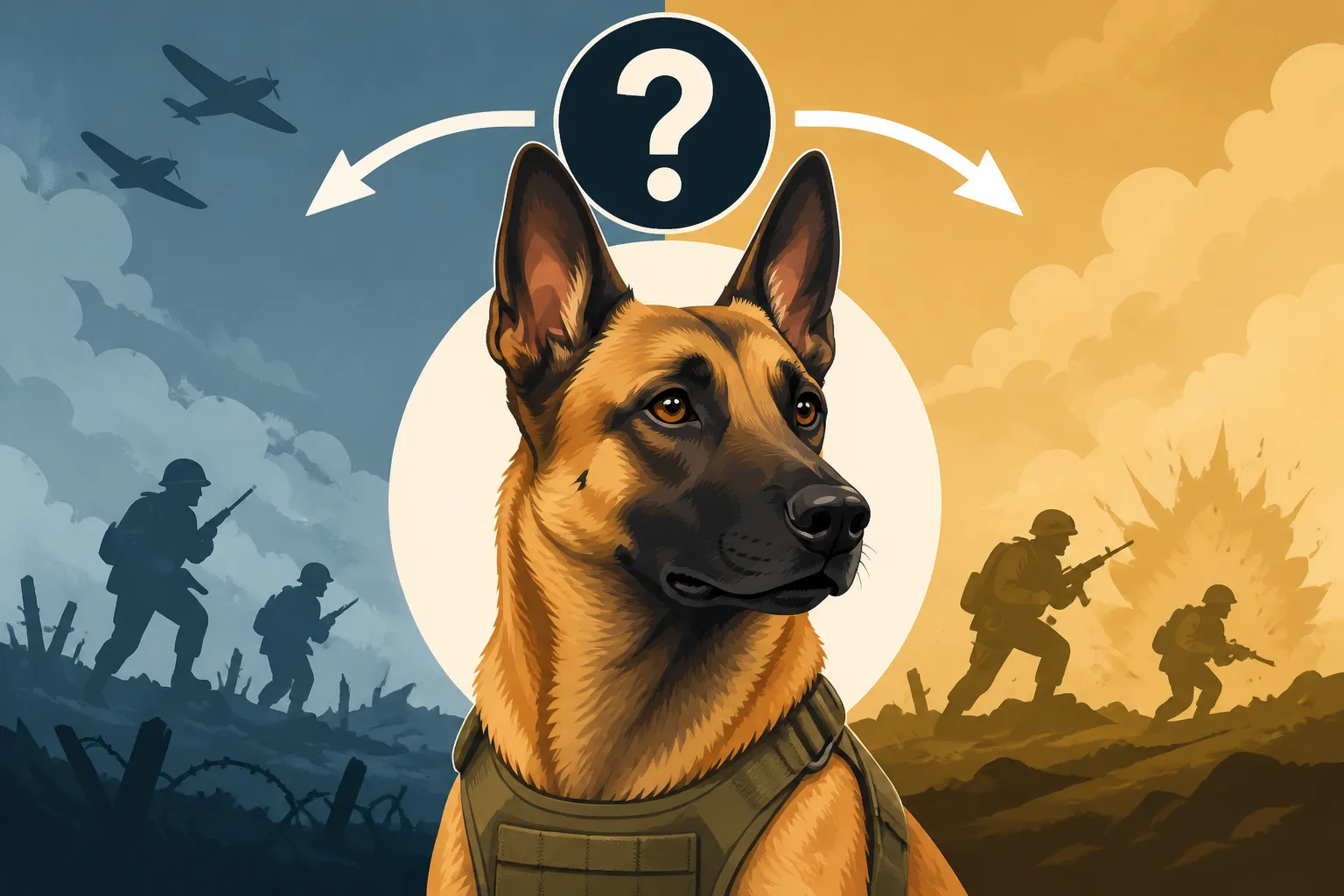
Belgian dogs served in wartime roles, but the history is often blurred: “Belgian dog” can mean several varieties, not just the Malinois. This guide explains what Belgian Shepherds did in the First and Second World Wars, where the Malinois fits into that record, and why it is difficult to credit every wartime dog to one variety with certainty.
What “Belgian Malinois” meant in wartime history
The Malinois is one variety of Belgian Shepherd
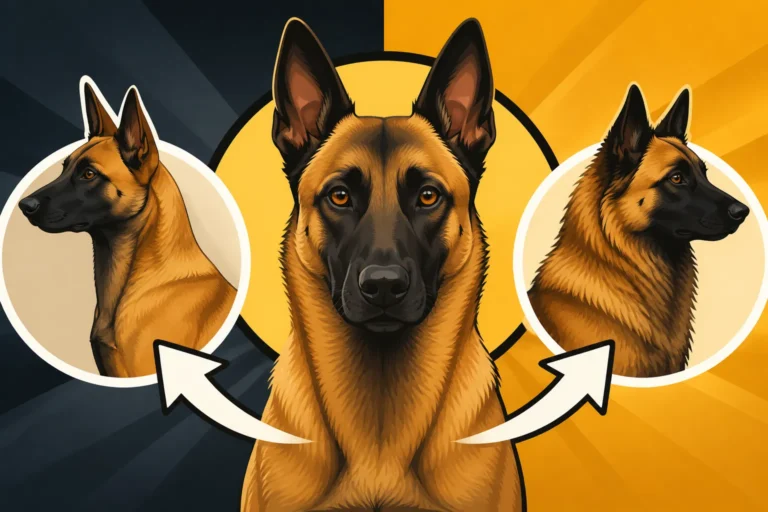
The Belgian Malinois is one of four Belgian Shepherd varieties, alongside the Tervuren, Groenendael, and Laekenois. They share a common working-dog background, while coat and color help distinguish the varieties. That distinction matters when reading older military accounts: a source may refer to Belgian Shepherds or Belgian sheepdogs without specifying which variety it means.
The modern name “Malinois” is connected to the Belgian city of Malines, also known as Mechelen. The dogs and their types were organized and described as the breed took shape in the late nineteenth century. Wartime records, however, were not always written using today’s familiar breed labels. A report might describe a dog by its job, nationality, or general appearance rather than identify it as a Malinois.
For a broader look at the varieties and how they relate to one another, see The Four Belgian Varieties the Malinois Belongs To. The historical naming question is also explored in What Malines and Mechelen Have to Do With the Malinois.
Why the distinction affects claims about military service
It is fair to say that Belgian dogs were used in wartime service. It is less reliable to claim that every Belgian military dog was a Malinois. Many accounts do not provide enough detail to establish the variety, and the broad term “Belgian Shepherd” may cover dogs that would now be identified differently.
This isn’t just a technicality. If a history says “Belgian dogs carried messages,” that can support the idea that dogs from Belgium worked in military roles. It does not automatically prove that a particular Malinois lineage, or the modern breed as a whole, performed every task mentioned. The safest description is that the Malinois belongs to a Belgian working-dog tradition that served in war, while the exact variety of individual dogs is not always recorded.
It also helps to separate a breed’s historic working background from the modern reputation of the Malinois. Dogs were selected for practical jobs long before today’s police and sport programs became familiar. The Herding Job the Belgian Malinois Was Built For provides context for the working traits that existed before military and police roles became central to the breed’s public image.
Belgian dogs in the First World War
The jobs dogs performed on the battlefield
During the First World War, military forces used dogs for practical work in conditions where people and equipment faced serious risks. Depending on the army and the situation, trained dogs could carry messages, patrol, guard positions, help locate wounded soldiers, or move small loads. A dog’s usefulness came from its ability to travel through difficult ground, respond to a handler, and work amid noise and confusion.
Messenger dogs were especially valuable when telephone lines were damaged or communications had to cross exposed ground. A dog carrying a written message could move quickly between a unit and a command point. This was never a guaranteed or risk-free method: the animal had to be trained, the route had to be passable, and the message still needed to reach someone who could use it. But in a war where communication could break down, trained dogs offered another way to relay information.
Dogs also supported medical and rescue work. Some were used to search for wounded men or to help handlers locate casualties. Accounts sometimes call these animals “ambulance dogs,” though the term can give the misleading impression that a dog carried injured soldiers. More often, the dog’s role was to find or assist in locating the wounded, not to transport them.
What can be said specifically about Malinois service
Belgian dogs were part of the broader wartime use of working dogs, but the surviving descriptions do not always identify them by variety. It is therefore more accurate to say that Belgian Shepherds, including dogs from the population that later became associated with the Malinois, fit into this history than to claim a definitive list of Malinois units, missions, or named war dogs.
The breed’s alertness, trainability, and willingness to work made it well suited to demanding tasks. Those qualities do not prove that every Malinois was a military dog, or that a particular task was performed exclusively by the Malinois variety. Wartime service depended on training, the handler, and the needs of the unit—not simply on a dog’s ancestry.
The Malinois’s later reputation for service work grew from a wider history of practical use, rather than from one single event. For historical background on that shift, How the Malinois Went From Herding to Police Work traces the transition from traditional work toward modern public-service roles.
| Wartime role | What the dog might do | What the role does not necessarily mean |
|---|---|---|
| Messenger | Carry a written message between positions | That every message arrived safely or on time |
| Patrol or guard | Alert a handler to movement or help watch a position | That the dog worked independently without training |
| Search for wounded | Help a handler locate injured soldiers | That the dog carried casualties to safety |
| Transport support | Pull or carry small loads in some settings | That all Belgian dogs performed this task |
| Sentry work | Warn of people approaching a guarded area | That the dog could identify friend from foe without a handler |
The table describes types of work associated with military dogs; it should not be read as a confirmed assignment list for Malinois alone. When accounts use broad labels such as “Belgian dog,” the variety may remain unknown.
Belgian dogs in the Second World War
How wartime work changed
The Second World War also relied on dogs for military and support tasks, including communication, guarding, patrol, and search work. The exact duties varied across armies and locations. Dogs could be valuable where vehicles could not easily travel, where a handler needed an alert partner, or where other communication methods were unavailable or unreliable.
The setting was different from the First World War, but the basic strengths valued in working dogs were familiar: a dog could be trained to attend closely to a handler, move through challenging environments, and respond to repeated cues. These were learned working skills, not an automatic result of breed. A dog that lacked suitable training, health, or temperament would not become useful simply because it belonged to a working breed.
As with the earlier conflict, general accounts of military dogs do not always name the breed variety. Some may identify a dog as Belgian, while others describe its function or its country of origin. That makes it difficult to confirm how many were Malinois, what units they served with, or how their service compared with that of other breeds.
Why the Malinois is associated with service work today
The modern image of the Malinois as a police, military, or detection dog can make it tempting to read that same certainty into earlier history. But contemporary use and wartime records are not interchangeable. Today, organizations may select and assess individual dogs for specific roles and maintain detailed records. Older military descriptions may be brief, incomplete, or use names that do not map neatly onto today’s breed categories.
The Malinois became particularly visible in modern police and military work because it can combine athleticism, focus, and trainability. Those qualities have made the breed a prominent choice for demanding jobs. They help explain why people connect the Malinois with service, but they do not settle every question about which variety served in a historical unit. For more on the breed’s modern working reputation, see How the Belgian Malinois Took Over Police Work and Why Military Units Buy Malinois Over Shepherds.
It is also worth remembering that “served” does not mean every dog completed a dramatic mission or returned unharmed. Many military dogs worked as part of a handler team in dangerous conditions. Their contributions could be routine but still useful: carrying information, providing an alert, searching an area, or helping a unit manage its surroundings.
How to read claims about Malinois in both world wars
Look for the wording behind the claim
When you encounter a claim that “the Malinois served in both world wars,” check what the account actually says. Does it name the Malinois specifically, or does it refer to Belgian dogs generally? Does it identify a unit, handler, or documented task? Is the claim about the Belgian Shepherd breed as a whole, or about the Malinois variety in particular?
Small differences in wording change how strong a claim is. “Belgian dogs were used as messengers” is a broad historical statement. “A named Malinois carried messages for a named unit” is more specific and needs evidence that identifies both the dog and its role. If an account gives no variety, it is best not to supply one on its behalf.
A careful description can still recognize the breed’s working heritage without overstating what is known. For example: Belgian Shepherds were used in wartime roles, and the Malinois belongs to that broader Belgian working-dog history; surviving accounts do not always distinguish the Malinois from the other varieties. That wording is both meaningful and appropriately cautious.
Separate historical service from modern ownership
The Malinois’s wartime history can be fascinating, but it should not be mistaken for a recommendation that the breed suits every household. A dog bred and selected for work may need structured training, appropriate outlets, and an owner prepared to manage high energy and intensity. Military history does not tell you whether an individual dog will fit your home, your experience, or your daily routine.
If you are considering a Malinois because of its service reputation, spend time learning about the breed beyond its wartime story. The Kind of Owner a Belgian Malinois Requires discusses the commitment involved, while Whether a Belgian Malinois Belongs in a Pet Home examines how working traits can play out in everyday life. Understanding the dog in front of you matters more than imagining a heroic historical role.
In short, Belgian dogs did serve in both world wars in a range of working capacities. The Malinois is part of that Belgian working-dog tradition, but the historical record does not always identify individual dogs by modern variety. The most responsible account recognizes the contribution of Belgian military dogs while being clear about what the records can—and cannot—say specifically about Malinois.
Disclaimer
This article is for general informational purposes only and does not constitute professional advice. Laws, prices and regulations vary by location and change over time. Consult a qualified professional for guidance on your specific situation.