Handling a Malinois Puppy That Latches Onto Clothing
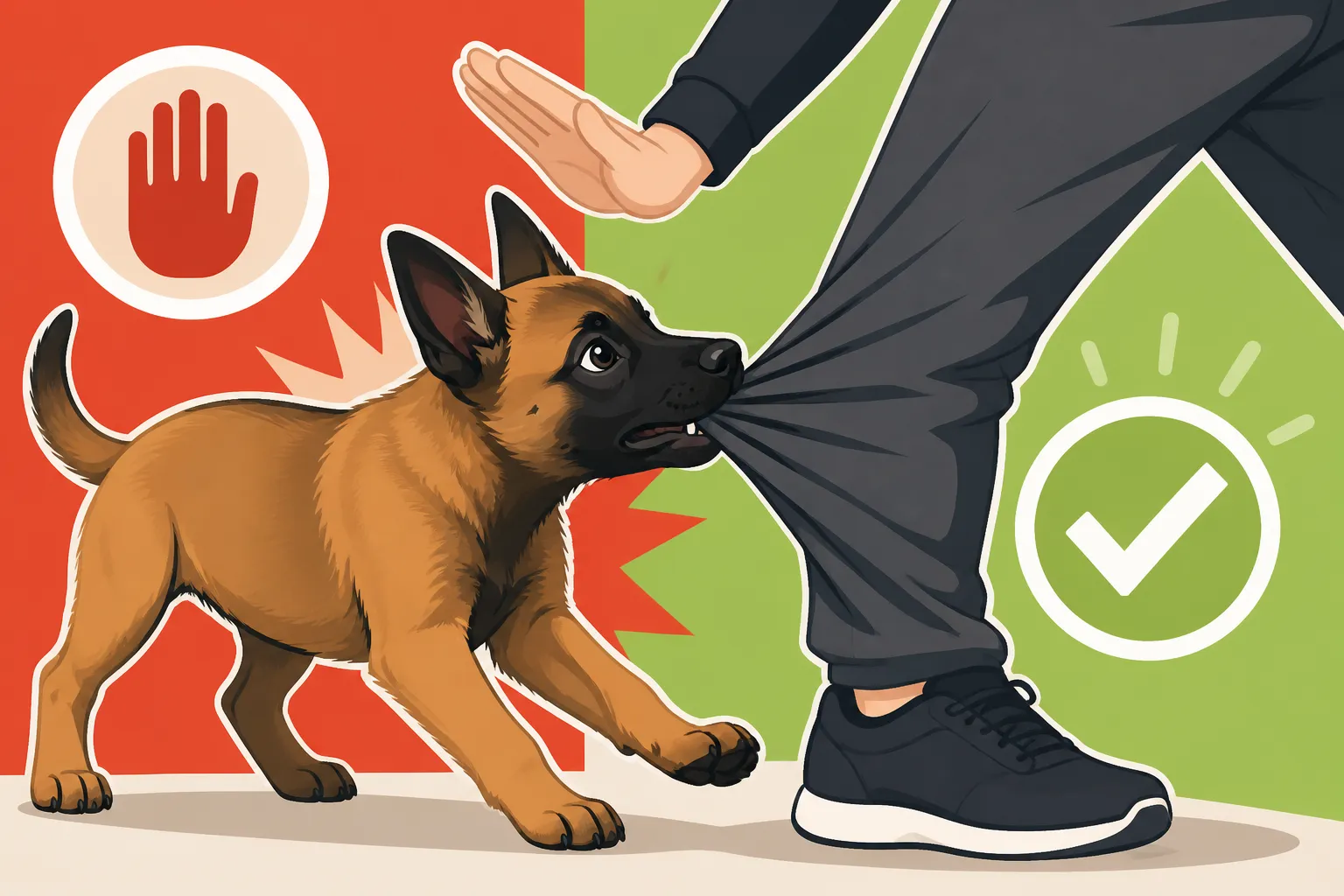
Few things are as instantly frustrating, and frankly, a little alarming, as a Belgian Malinois puppy who decides your pant leg, sleeve, or even your hair is the perfect new chew toy. One minute you're trying to walk across the room, and the next you're locked in a tug-of-war with a furry land shark who seems absolutely convinced your expensive jeans are actually a super-fun, interactive bite rag. It's not just annoying; it can be painful and leaves you wondering if you've made a terrible mistake getting such a high-drive breed. This guide is here to walk you through understanding why your Malinois puppy is latching onto your clothing and, more importantly, what actionable steps you can take to stop it and prevent it from becoming a deeply ingrained habit.
Understanding Why Your Malinois Puppy Latches Onto Clothing
It's easy to take your Malinois puppy's nipping and latching personally, or to think they're being aggressive. But the truth is, this behavior is usually a perfectly normal, albeit intense, part of Malinois puppyhood. These aren't just any puppies; they come from lines bred for working, for using their mouths, and for incredible drive. When they latch onto your clothing, it's almost always one of a few key things at play, and understanding these can help you respond more effectively.
The "Shark Phase" and Teething Discomfort
Every Malinois owner knows, or quickly learns, about The Shark Phase Every Malinois Puppy Goes Through. This isn't just a cute nickname; it’s a very real period where your puppy's mouth is their primary tool for exploring the world. Everything new gets investigated with their teeth, and that includes you and your clothes. They don't yet have fine motor control over their jaws and they certainly haven't learned bite inhibition. Think of it like a human baby putting everything in their mouth, but with sharper teeth and far more enthusiasm.
Compounding this is the process of teething. Malinois puppies, like all puppies, go through stages where their needle-sharp baby teeth fall out and are replaced by adult teeth. This can be an uncomfortable, even painful, experience for them. Latching onto and chewing on things, including your clothing, can provide relief by putting pressure on their gums. They're not being malicious; they're just trying to soothe an ache. Your clothing, with its texture and movement, can feel like a satisfying outlet for that discomfort.
High Drive and Natural Instincts
Belgian Malinois are intensely driven dogs. They're bred to work, to chase, to engage, and often, to use their mouths as part of that work. This means they have an innate prey drive that is strong from a very young age. When you're moving, when your clothes are flapping, or when you interact with them playfully, you might inadvertently be triggering that natural drive. To a Malinois puppy, a moving pant leg isn't just fabric; it can be a "prey item" to be caught, engaged with, and held.
They learn through interaction, and if tugging on your shirt or pants gets a reaction – even a negative one like "Ow!" or "No!" – it's still attention. This can reinforce the behavior because, for a high-drive Malinois puppy, any attention is often better than no attention at all. They're seeking engagement, and if clothing becomes a successful way to get it, they'll keep doing it. This is why it's so important to understand the root cause rather than just trying to suppress the symptom. A Malinois Puppy That Bites Everything Including You is often just acting on these strong, inherent drives.
Immediate Responses When Your Puppy Latches On
When your Malinois puppy has a death grip on your favorite sweater, your first instinct might be to pull away or shout. However, these reactions often make the problem worse, inadvertently turning you into an even more exciting game of tug. The key is to disengage calmly and effectively, teaching your puppy that latching onto clothing ends the fun.
The "Be a Tree" Method
This is a classic and highly effective technique, especially for puppies with strong prey drive that are latching onto moving objects like clothing. The moment your puppy’s teeth touch your skin or clothing, immediately stop all movement. Cross your arms over your chest (to protect your hands and arms from being grabbed) and stand perfectly still. Become as boring and uninteresting as a tree. Do not look at your puppy, do not speak, do not push them away, and absolutely do not try to pull your clothing free.
Your puppy is seeking interaction. When you stop moving, you remove the "prey" aspect of your clothing. When you stop talking or looking, you remove the attention they crave. Without the reward of movement or attention, the game becomes instantly un-fun. Wait until your puppy voluntarily releases your clothing, even if it's just for a second. The instant they let go, calmly walk away to a place where they cannot reach you (like behind a baby gate or into another room). This teaches them that biting clothing makes you disappear and ends all interaction. It’s crucial that the release is what triggers your departure, not the bite itself.
Redirecting with Appropriate Chew Toys
Having appropriate chew toys readily available is not just helpful; it's absolutely essential for a Malinois puppy. The moment your puppy releases your clothing, or even better, before they latch on, offer them an acceptable chew toy. This requires quick reflexes on your part! Keep a variety of sturdy, engaging toys in your pockets or scattered around the house. When you see that glint in their eye, or they start to mouth your hand near your pants, immediately present a toy.
When they latch onto the toy, praise them calmly and enthusiastically, and engage with them by wiggling the toy or playing a short game of tug with the toy. This teaches them: "My clothing is not for biting, but this toy absolutely is!" Brands like KONG offer durable rubber toys that can stand up to a Malinois puppy's strong jaws, and filling them with something tasty can make them even more appealing than your jeans. For redirection, consider soft but durable tugs or squeaky toys that capture their attention instantly. Redirecting a biting Malinois onto a toy is a skill you'll hone over the first few months.
Time-Outs for Over-Stimulation
Sometimes, a Malinois puppy latches onto clothing because they're simply over-stimulated, overtired, or just can't control their drive in that moment. They're like toddlers who get cranky and lash out. In these cases, even redirecting might not be enough. If your puppy is repeatedly latching on, ignoring redirects, or becoming too wild, it's time for a short, calm time-out.
A time-out should not be a punishment in the aggressive sense, but rather a chance for your puppy to de-escalate. Lead or carry your puppy to a quiet, safe space like their crate or a designated puppy playpen. The key is to do this calmly, without anger or excessive talking. They should stay in the time-out space for only a few minutes – just long enough for them to settle down. Once they are calm, let them out. This teaches them that overly excited, mouthy behavior leads to a brief, boring isolation period. This also ties into Building an Off Switch Into a Belgian Malinois, a critical skill for this breed.
Long-Term Training Strategies to Prevent Latching
Stopping the immediate latching is only part of the battle. To truly solve the problem, you need long-term strategies that teach your Malinois puppy appropriate mouth manners, impulse control, and alternative behaviors. This is where consistent training and management come into play.
Teaching Bite Inhibition
Even though Malinois puppies are intense, teaching them bite inhibition is vital. This means teaching them how much pressure they can use with their mouths. While we don't want them biting us at all, accidents happen, and it's better if they learn to inhibit the force of their bite. When playing, if your puppy's teeth touch your skin with too much pressure, let out a high-pitched "YIP!" or "OW!" and immediately stop play. Withdraw your hand or body part and ignore them for 10-20 seconds. If they bite hard again, the game ends completely, and you leave the area.
Over time, you'll gradually reduce the acceptable pressure. First, they learn that hard bites hurt and end play. Then, you teach them that even moderate pressure ends play. Eventually, the goal is for them to learn that any teeth on skin, even light pressure, means the fun stops. This is a gradual process but crucial for a dog with a powerful bite. It’s also closely linked to Teaching a Malinois Puppy to Take Food Gently, where you can practice controlled mouthing.
Consistent Redirection and Engagement
The core of preventing clothing latching lies in consistently redirecting your puppy to appropriate items and engaging them with those items. Your Malinois needs a job for their mouth and their brain. Provide a wide array of sturdy chew toys, puzzle toys, and interactive toys. Rotate them regularly to keep them novel and exciting.
When you see your puppy about to mouth your clothing, pre-emptively offer a toy and enthusiastically engage them with it. Play short, intense games of tug (following Tug Rules for a Belgian Malinois, always ending with an "Out" command), fetch, or nose work games that involve them using their mouth on a toy or object, not on you. If you consistently make toys the most exciting and rewarding thing to bite, your clothing will become far less appealing. Many online retailers, such as Amazon, offer a vast selection of durable puppy toys perfectly suited for Malinois jaws, from hard rubber chews to interactive puzzle feeders.
Structured Play and Training Sessions
A Malinois puppy needs structure. They thrive on knowing what's expected of them. Integrate short, frequent training sessions throughout your day, focusing on basic obedience commands like "sit," "down," "stay," and "come." These sessions build a foundation of impulse control and engagement with you. A puppy that is focused on learning and working with you is less likely to be latching onto your clothes.
Incorporate structured play where you initiate and end the games. Use toys that are easily manipulated by you, giving you control over the game. This teaches your puppy that you are the source of fun, and that the fun happens when they engage with your rules and your chosen objects. Consider enrolling in online puppy classes or programs, like those offered by BAXTER & Bella, which can guide you through structured training methods specifically designed to build a well-behaved companion and curb problematic puppy behaviors like excessive mouthing.
Managing the Environment
Prevention is always better than cure. Manage your environment to set your puppy up for success.
- Wear less tempting clothing: For a while, avoid long, flowing skirts, baggy pants, or anything with dangling drawstrings that screams "tug toy" to a Malinois puppy. Opt for more fitted clothing that offers fewer tempting handles.
- Keep valuables out of reach: This goes without saying, but any item of clothing you value should be safely stored away during the "shark phase."
- Use barriers: Baby gates or puppy pens can be invaluable for creating safe zones where your puppy can't reach you or your clothes when you need a break or can't actively supervise. This allows you to enforce the "be a tree" method more easily by simply stepping out of their reach.
- Provide appropriate outlets: Ensure your puppy has plenty of mental and physical exercise throughout the day. A tired, mentally stimulated Malinois puppy is less likely to resort to desperate measures like chewing your clothes out of boredom or excess energy. The Mental Work That Finally Tires a Malinois Out is just as important as physical exercise.
Common Mistakes and How to Avoid Them
It’s easy to fall into traps that inadvertently reinforce the very behavior you’re trying to stop. Being aware of these common pitfalls can help you navigate this challenging phase with greater success.
Using Hands as Toys
This is perhaps the most common mistake new puppy owners make, especially with a high-drive breed like a Malinois. Wiggling your fingers, rough-housing with your hands, or letting your puppy mouth your hands during play teaches them that human skin is an acceptable chew toy. Once they learn this, it’s a very short leap to grabbing at your clothes, hair, or anything else attached to you.
Avoid this at all costs. Always use a toy as a barrier between your hands and your puppy's teeth. If your puppy mistakenly mouths your hand during play, even gently, immediately yelp, pull your hand away, and stop play for a moment. This reinforces that human skin is sensitive and off-limits for teeth.
Inconsistent Responses
One day you let them mouth your sleeve, the next day you scold them. This inconsistency is incredibly confusing for a Malinois puppy, who thrives on clear rules. If sometimes they get attention for grabbing clothing and other times they get reprimanded, they won't understand what you want. They'll simply learn that sometimes it works, so it's worth trying again.
Every member of your household needs to be on the same page regarding how to respond to clothing latching. If one person allows it while another corrects it, you're undermining all your training efforts. Discuss and agree upon a consistent strategy – "be a tree," redirect, or time-out – and ensure everyone adheres to it every single time. This consistency builds trust and helps your puppy understand the boundaries.
Punishing Too Harshly or Not Enough
There's a fine line between effective correction and counterproductive punishment. Harsh physical corrections, yelling, or hitting your Malinois puppy can damage your bond, make them fearful, or even escalate the biting into something more defensive or aggressive. This is especially true for sensitive Malinois lines.
Conversely, ignoring the behavior entirely or making weak, ineffective attempts at correction won't teach them anything. The response needs to be clear, immediate, and consistent: the undesired behavior always makes the fun stop. The "be a tree" method and time-outs work precisely because they remove the desired outcome (attention/interaction) without resorting to fear-inducing punishment.
| Behavior Scenario | Immediate Response | Goal |
|---|---|---|
| Puppy latches onto clothing | "Be a tree" (stop all movement, cross arms, ignore) | Puppy learns: Biting clothes = fun ends. |
| Puppy releases clothing | Calmly walk away to an inaccessible spot (e.g., behind a gate) | Puppy learns: Release = disappearance of desired interaction. |
| Puppy is about to latch | Immediately offer a highly engaging toy | Puppy learns: Toys are for biting, not clothes. |
| Puppy over-stimulated/ignoring redirects | Calm, brief time-out in crate/pen until settled | Puppy learns: Over-excitement = temporary isolation. |
| Puppy mouths human skin too hard | High-pitched "YIP!"/ "OW!", withdraw hand, stop play | Puppy learns: Hard bites hurt and end play. |
Remember, your Malinois puppy isn't trying to be a menace. They're just being a Malinois puppy, full of drive and natural instincts. With patience, consistency, and the right strategies, you can guide them through this phase and help them grow into a well-mannered, cherished companion. It takes effort, but seeing them learn and thrive is incredibly rewarding.
Disclaimer
This article is for general informational purposes only and does not constitute professional advice. Laws, prices and regulations vary by location and change over time. Consult a qualified professional for guidance on your specific situation.