Splenic Tumors in an Older Belgian Malinois
The sudden collapse of an otherwise vibrant, older Belgian Malinois is a truly terrifying experience for any owner. Too often, this acute crisis points to a hidden danger: splenic tumors, which can grow silently for months, only to rupture without warning, causing life-threatening internal bleeding. This guide aims to thoroughly explore splenic tumors in senior Malinois, offering a comprehensive understanding of their nature, the subtle signs to watch for, the critical diagnostic steps, and the difficult treatment and management decisions you might face.
Understanding Splenic Tumors in Senior Malinois
The spleen is one of those organs we rarely think about until something goes wrong. For our high-drive Belgian Malinois, who often seem invincible, a problem with the spleen can be particularly devastating because it so often presents as a sudden, acute emergency. Understanding what the spleen does and why it's a common site for tumors is the first step in preparing for this potential health challenge.
What the Spleen Does and Why Tumors Matter
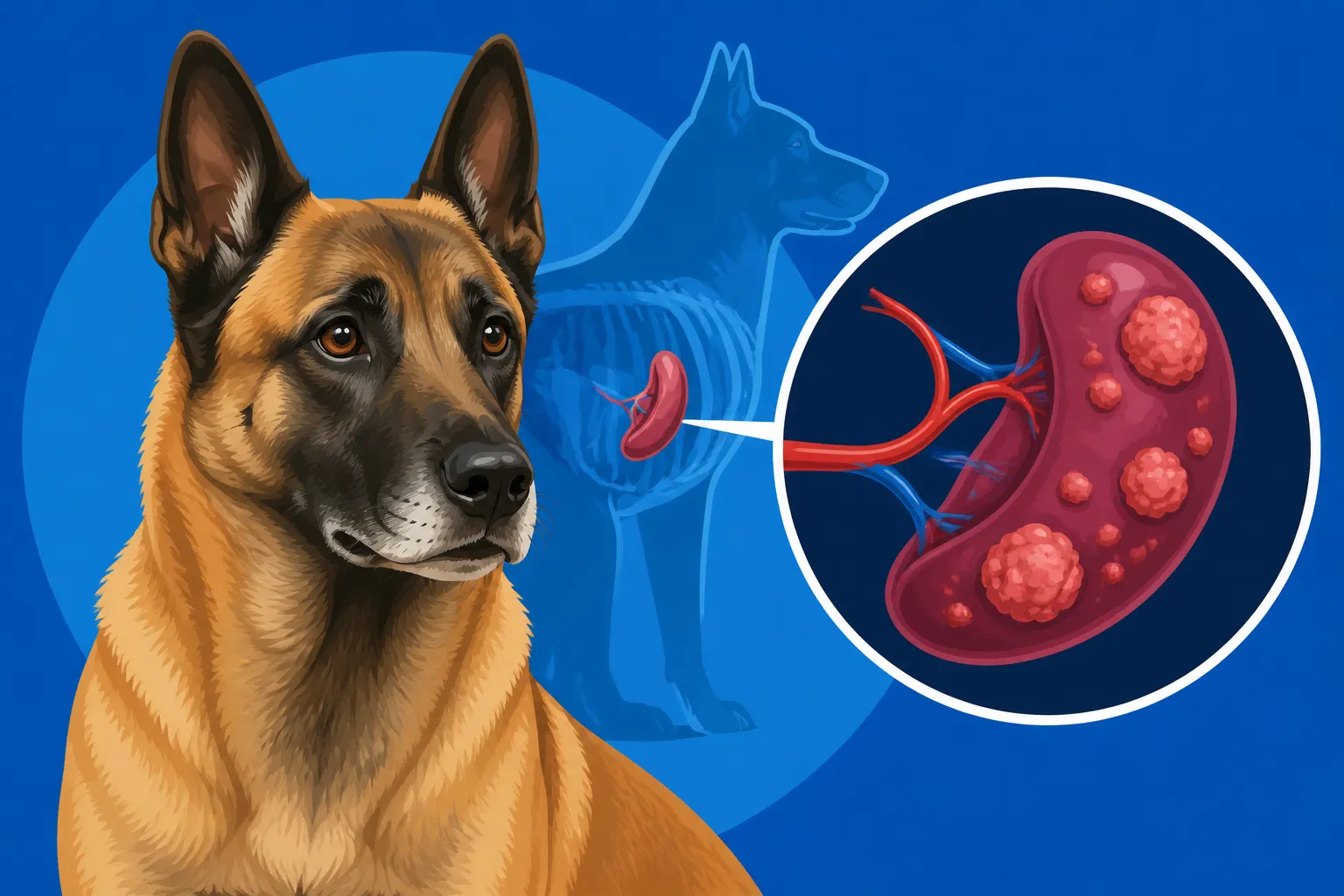
Your Malinois's spleen is a vital, blood-rich organ located in the abdomen, near the stomach. It performs several critical functions, acting as a filter for old and damaged red blood cells, a storage unit for blood, and an important part of the immune system, helping to fight off infections. Because of its abundant blood supply and its role in blood filtration, the spleen is unfortunately a common site for both benign and malignant tumors in dogs, especially as they age. When a tumor develops here, it can grow quite large, stretching the splenic tissue and making it fragile. The real danger, and the reason these tumors are so feared, is their propensity to rupture. A ruptured splenic tumor can cause rapid, severe internal bleeding, leading to a medical emergency that can quickly become fatal if not addressed immediately.
The sheer vascularity of the spleen means that even a small tear in a tumor can release a significant amount of blood into the abdominal cavity, overwhelming the dog's system. Owners often report that their Malinois was perfectly normal one moment and then suddenly collapsed. This is the heartbreaking reality of a ruptured splenic mass – it's a silent killer, offering little to no warning until it reaches a critical stage. It’s a stark reminder that even the most robust breeds, like our beloved Malinois, are susceptible to age-related health issues that can strike with alarming speed.
Distinguishing Benign from Malignant Splenic Masses
This is where the fear truly sets in for many owners. Splenic masses can be either benign (non-cancerous) or malignant (cancerous), and herein lies the cruel twist: you often cannot tell the difference without microscopic examination of the tissue after it has been surgically removed. The most common benign splenic tumor is a hemangioma, which, despite being non-cancerous, can still grow large and rupture, causing significant bleeding. If caught and removed before rupture, the prognosis for a dog with a benign hemangioma is generally excellent.
However, the malignant counterpart, hemangiosarcoma, is the one that strikes terror into the hearts of veterinarians and owners alike. Hemangiosarcoma is an aggressive, rapidly metastasizing cancer, meaning it spreads quickly to other parts of the body, most commonly the liver, lungs, and heart. Statistics vary, but a significant percentage of ruptured splenic masses turn out to be hemangiosarcoma, often around 50-70%. This grim reality means that even if a Malinois survives the initial emergency surgery, they may still have cancer spreading throughout their body. Knowing this possibility underscores the need for thorough diagnostic work-ups and, often, a difficult conversation about prognosis.
The Urgency of Diagnosis and Intervention
When a splenic tumor ruptures, immediate veterinary attention is not just recommended, it's absolutely critical. The primary threat is severe blood loss, which can quickly lead to hypovolemic shock. If your Malinois suddenly collapses, becomes extremely weak, or shows signs of abdominal pain and distension, it's an emergency. Every minute counts. The goal in these situations is to stabilize the dog, often with intravenous fluids and blood transfusions, and then proceed to emergency surgery to remove the bleeding spleen (splenectomy). This surgical procedure, while major, is often the only way to stop the internal hemorrhage and save the dog's life in the short term.
Even when splenic masses are discovered incidentally during a routine ultrasound or X-ray—before they've had a chance to rupture—veterinarians will often recommend prophylactic splenectomy. The reasoning is sound: the risk of rupture and subsequent emergency is so high and the outcome so precarious that removing the spleen electively, under controlled conditions, is often seen as the safer choice. This allows for thorough pre-operative assessment and better management of potential complications. It's a proactive measure to prevent a terrifying, life-or-death scenario down the road, giving your Malinois a better chance at recovery, especially if the mass turns out to be benign.
Recognizing the Silent Signs and Symptoms
One of the most frustrating aspects of splenic tumors is their ability to remain hidden until a crisis hits. Your intelligent, driven Belgian Malinois might be excellent at masking discomfort, making it even harder to spot the early indicators. However, by being vigilant and knowing what subtle changes to look for, you might be able to detect a problem before it becomes a full-blown emergency.
Subtle Behavioral Changes to Watch For
While splenic tumors are often called "silent," there can be subtle cues if you know your Malinois intimately. These signs are easily dismissed as just "getting old" or being a bit "off" – and that's precisely why they're so dangerous. You might notice your Malinois seems a little more lethargic than usual, perhaps less enthusiastic about their daily walks or training sessions. Their appetite might decrease, or they might pick at their food, which is highly unusual for a breed known for its robust drive and appetite.
Sometimes, owners report a mild abdominal discomfort, a reluctance to be touched on the belly, or a change in posture, such as standing with their back slightly arched. Other non-specific signs can include pale gums (though this is often difficult to spot until significant blood loss has occurred), a slightly increased breathing rate, or just a general sense of weakness or lack of energy. If the tumor experiences intermittent, slow bleeding that stops on its own, your Malinois might even have brief fainting spells or periods of profound weakness that then resolve, only to return later. These fleeting symptoms are particularly tricky to interpret but can be critical indicators that something serious is happening internally.
Acute Crisis: The Sudden Collapse of an Older Malinois
This is the scenario every Malinois owner dreads, and it's often the first definitive sign that something is terribly wrong with the spleen. The classic presentation of a ruptured splenic tumor is a dog that suddenly collapses, sometimes mid-activity, or is found unresponsive. Upon examination, their gums are often stark white or extremely pale due to severe blood loss. Their breathing becomes rapid and shallow as their body tries to compensate for the lack of oxygen-carrying red blood cells, and their abdomen might appear distended or feel rigid due to the internal hemorrhage. This is the moment when The Sudden Collapse of an Older Malinois becomes a grim reality.
The internal bleeding can be massive and progress rapidly, leading to a state of shock. There is no time to waste when this happens. Even if your Malinois appears to rally slightly after an episode of collapse, the underlying problem of internal bleeding has not resolved, and another, potentially fatal, bleeding event can occur at any moment. This situation demands immediate transportation to the nearest emergency veterinary hospital. Understanding what to tell a vet before a Malinois is sedated, especially during an emergency, is also crucial, as their unique physiology requires careful consideration.
Routine Vet Visits and Incidental Findings
While the acute crisis is the most dramatic presentation, sometimes, a splenic mass is discovered purely by accident during a routine veterinary examination or imaging for an unrelated issue. For instance, your Malinois might be getting an X-ray for an orthopedic concern, or an ultrasound to investigate persistent gastrointestinal upset, and then a suspicious mass is spotted on the spleen. These "incidental findings" can feel like a punch to the gut, but in reality, they can be a blessing in disguise.
An incidentally discovered splenic mass allows your veterinary team to perform a more thorough, planned diagnostic work-up. This proactive approach often means you can elect for surgery under controlled circumstances, reducing the risks associated with emergency procedures for a bleeding tumor. It also gives you and your vet time to discuss all options, understand the financial implications (including what pet insurance runs on a working Malinois), and mentally prepare for what lies ahead. This highlights the immense value of regular wellness check-ups for your senior Malinois, as early detection, even accidental, can drastically improve outcomes.
Diagnosis, Treatment, and Prognosis
Once a splenic tumor is suspected in your Belgian Malinois, the next steps involve a series of diagnostic tests to confirm its presence, assess its nature, and determine the best course of action. The path from diagnosis to treatment can be rapid and intense, especially in emergency situations, requiring clear communication with your veterinary team.
Diagnostic Tools From Ultrasound to Biopsy
The diagnostic journey usually begins with a thorough physical examination, where your vet might feel a mass in the abdomen or note signs of anemia like pale gums. Blood work will almost certainly be performed, often revealing anemia (low red blood cell count) due to internal bleeding, or other changes indicative of systemic illness. However, the most crucial diagnostic tool for splenic masses is imaging. An abdominal ultrasound is generally preferred as it allows the veterinarian to visualize the spleen in detail, identify the size and characteristics of any masses, and, critically, detect any free fluid (blood) in the abdominal cavity. The ultrasound can also be used to check for evidence of metastasis to other organs, such as the liver.
X-rays can also show a large abdominal mass effect, but they offer less detail than an ultrasound. While fine-needle aspirates (FNA) can sometimes be attempted to sample the mass, they carry a risk of causing further bleeding if the mass is vascular. More importantly, FNAs often don't provide a definitive diagnosis between benign and malignant, as the sample size is small and may not represent the entire tumor. Ultimately, a definitive diagnosis of whether the mass is benign or malignant typically requires a histopathology report—a microscopic examination of the entire spleen and tumor after surgical removal. Before any surgery, especially for a working Malinois, a full pre-anesthetic blood panel and thoracic X-rays are essential to assess overall health and check for lung metastasis, which would significantly impact the prognosis.
Surgical Intervention Splenectomy and Its Risks
For any significant splenic mass, especially if it's bleeding or has a high risk of rupture, surgical removal of the spleen, known as a splenectomy, is the primary treatment. This is a major abdominal surgery. In an emergency setting, with a Malinois in shock from blood loss, the procedure is even more challenging. Your Malinois may require blood transfusions before or during the surgery to stabilize them. Anesthesia protocols for a lean Belgian Malinois need careful consideration, as their high metabolism and lean body mass can make them more sensitive to anesthetic agents.
During the splenectomy, the surgeon will carefully remove the entire spleen and any associated tumor. They will also meticulously inspect the rest of the abdominal cavity for any signs of tumor spread, particularly to the liver. While dogs can live a perfectly normal life without their spleen—other organs take over its functions—the surgery itself carries risks. These include anesthesia complications (especially in a compromised patient), further bleeding, potential cardiac arrhythmias (especially right after the spleen is removed), and infection. Despite these risks, a successful splenectomy is often the only immediate life-saving measure for a ruptured splenic tumor.
Post-Operative Care and Long-Term Outlook
The period immediately following a splenectomy is critical for your Malinois. They will typically require intensive monitoring in the veterinary hospital for several days, receiving pain management, intravenous fluids, and close observation for any post-operative complications. Once home, activity will need to be strictly restricted for several weeks to allow the incision to heal and prevent internal complications. This can be a challenge for a high-energy Malinois, so creative solutions for Keeping an Old Belgian Malinois Mentally Busy might be necessary to keep them calm during recovery.
The long-term outlook largely hinges on the histopathology results of the removed spleen. If the mass is benign (a hemangioma), the prognosis is generally excellent once your Malinois has recovered from surgery. They can often go on to live out their remaining years without further issues related to the spleen. However, if the mass is diagnosed as malignant hemangiosarcoma, the prognosis is unfortunately grim. This aggressive cancer often recurs and spreads quickly. Even with successful surgery, average survival times are typically only 1-3 months without further treatment, and perhaps 4-6 months with adjunctive chemotherapy. This is the devastating reality behind The Bleeding Tumor That Kills an Older Malinois and why it’s such a feared diagnosis.
Managing Life After a Splenic Tumor Diagnosis
Receiving a diagnosis of a splenic tumor, whether benign or malignant, brings a wave of emotions and practical considerations. Beyond the immediate medical care, managing your Malinois's life effectively involves supportive care, financial planning, and making deeply personal quality-of-life decisions.
Supportive Care and Palliative Measures
If your Malinois is diagnosed with hemangiosarcoma and surgery is either not possible, or the prognosis remains poor even after the procedure, the focus often shifts to supportive care and palliative measures. The goal here is to maximize comfort and maintain the best possible quality of life for the time your Malinois has left. This can involve a multi-modal approach to pain management, utilizing medications like NSAIDs, gabapentin, or even stronger opioids as needed. Your vet might also prescribe anti-nausea medications or appetite stimulants to help your dog eat and feel better.
Creating a comfortable, low-stress environment at home becomes paramount. This means soft bedding, easy access to food and water, and minimizing anything that might cause anxiety. Gentle, short walks might still be enjoyable, but strenuous activity will likely be out of the question. For some owners, exploring alternative therapies like acupuncture or herbal supplements in conjunction with conventional medicine might provide additional comfort, though always discuss these with your primary veterinarian. This period is incredibly emotionally taxing, as you're constantly evaluating your Malinois's daily well-being and grappling with their declining health.
Financial Considerations and Pet Insurance
The cost of diagnosing and treating splenic tumors can be substantial. Emergency surgery, blood transfusions, intensive post-operative care, and potentially chemotherapy can quickly accumulate into thousands, even tens of thousands of dollars. This financial burden, on top of the emotional stress, can be overwhelming. This is where having comprehensive pet insurance, such as policies from Healthy Paws, can make a monumental difference. A good pet insurance plan can cover a significant portion of these unexpected, high-cost veterinary treatments, allowing you to focus on your Malinois's care rather than agonizing over the bills.
It's critical to remember that pet insurance, like Healthy Paws, works best when purchased before any illness manifests, as pre-existing conditions are typically not covered. If you don't have insurance, discussing costs transparently with your veterinary team is essential. They can often provide estimates and help you explore options like CareCredit, which offers payment plans, or direct assistance programs from organizations dedicated to helping working dogs. Planning ahead by maintaining an emergency fund, as discussed in How Much a Malinois Owner Should Bank Each Month, or having The Credit Line a Belgian Malinois Owner Should Have readily available, can alleviate some of this financial strain.
Quality of Life Decisions for Your Beloved Companion
Perhaps the most difficult aspect of dealing with a malignant splenic tumor, or even a very aggressive benign one that impacts your Malinois's overall health, is making quality of life decisions. This isn't just about extending life; it's about ensuring the life they have is still meaningful and free from undue suffering. Regularly assessing your Malinois's daily comfort level, their appetite, their ability to move around, and their engagement with you and their environment is crucial. Are they still finding joy in their favorite toys, a gentle head scratch, or a sniff around the yard?
This process involves honest conversations with your veterinarian about your Malinois's prognosis, pain management effectiveness, and what the future might realistically hold. It's a deeply personal decision, and there's no single right answer. Many owners find solace in resources that provide frameworks for assessing quality of life, focusing on metrics like hunger, hydration, hygiene, happiness, mobility, and the presence of pain. Ultimately, it’s about honoring your bond and making the most compassionate choice for your loyal companion, even if it’s the hardest decision you’ll ever have to make, as explored in Making the Last Decision for a Malinois. Even for a breed known for its resilience and vigor, there comes a point where their body can no longer keep up, especially as they approach or surpass The Age Most Malinois Live To.
| Feature | Benign (e.g., Hemangioma) | Malignant (e.g., Hemangiosarcoma) |
|---|---|---|
| Prevalence | Common, often incidental finding | Common, aggressive cancer |
| Growth Rate | Variable, can be slow | Often rapid |
| Metastasis | Does not metastasize | Highly metastatic (liver, lungs, heart) |
| Rupture Risk | Yes, can still rupture and cause bleeding | High, ruptures are common |
| Prognosis | Excellent with surgical removal | Poor, even with surgery and chemotherapy |
| Recurrence | No | High risk of local recurrence and new tumors |
| Treatment | Splenectomy | Splenectomy (often followed by chemotherapy) |
Disclaimer
The information provided in this article is for general informational purposes only and is not a substitute for professional veterinary advice. Always consult with a qualified veterinarian for any health concerns or before making any decisions related to your Belgian Malinois's care.