Whether a Belgian Malinois Competes at Westminster
Yes. Belgian Malinois can compete at the Westminster Kennel Club Dog Show in conformation, where they are judged in the Herding Group. That’s different from police, military, or protection-sport work: at Westminster, the focus is how closely each dog matches the breed standard, along with its movement, condition, and presentation.
How a Belgian Malinois Competes at Westminster
The Malinois is shown in the Herding Group
The Belgian Malinois is an American Kennel Club-recognized breed and competes in Westminster’s conformation show. Its placement is in the Herding Group, not the Working Group. Group assignments reflect how breeds are classified in the show system, not necessarily every job a breed can perform today. Malinois may be known for police and detection work, but those roles don’t determine their conformation group.
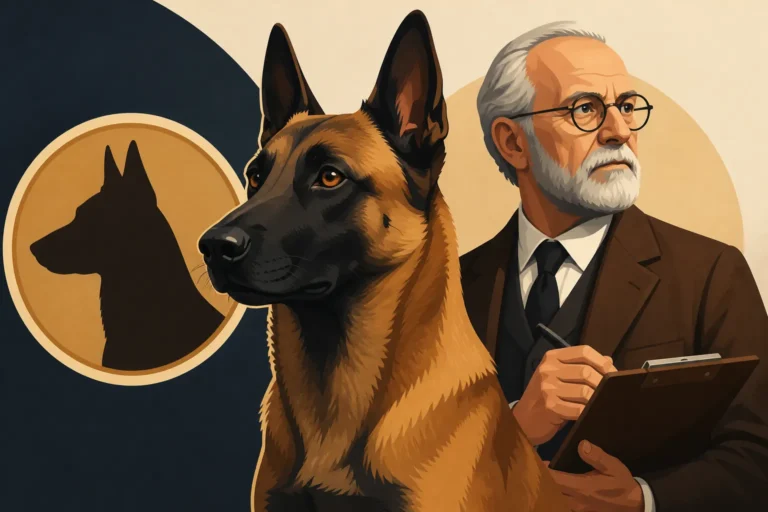
A conformation show is a structured comparison against a written breed standard. Judges assess each dog’s overall outline, proportions, coat, head, bite, movement, and condition. The question isn’t simply which dog is fastest, strongest, or most impressive in a working situation. It’s which dog most closely represents the characteristics the standard describes.
If you’re new to breed groups, it can help to read The Four Belgian Varieties the Malinois Belongs To and When the Belgian Malinois Joined the Herding Group. Those distinctions explain why a Malinois may be recognized as a herding breed in the show ring even when you most often see one working in detection, sport, or law enforcement.
Westminster conformation is not a working trial
A Malinois does not need to demonstrate tracking, obedience, bite work, or scent detection to be judged in conformation. Those skills may be part of the dog’s life outside the ring, but they are not the basis for its Westminster conformation result. In the ring, handlers move their dogs at a controlled pace, present them for examination, and show them standing in a way that lets the judge assess their structure.
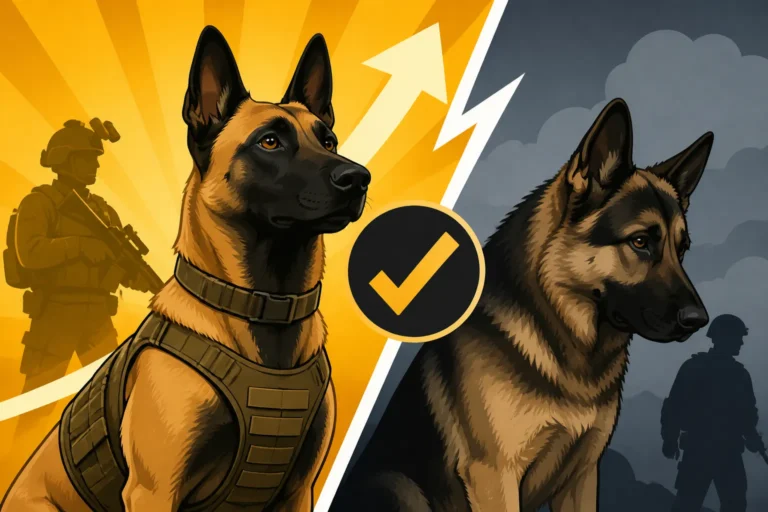
That distinction matters because a dog can be highly capable at work without being an ideal conformation representative. The reverse is also true: a dog that earns a strong conformation result is not automatically proven in police, sport, or service work. These are different evaluations, with different goals.
If you’re interested in how show and working priorities can differ, Working Malinois Against Show Malinois offers helpful context. A dog’s pedigree or appearance alone cannot tell you everything about its temperament, training, health, or suitability for a particular job.
What Judges Look for in a Belgian Malinois
Structure, proportions, and breed type
Judges compare each dog with the Belgian Malinois breed standard. They look at the overall picture rather than treating one feature, such as a dark mask or a striking expression, as proof of quality. A balanced, athletic outline is important. The dog should appear capable of moving efficiently and doing sustained work, not exaggerated in a way that interferes with soundness.
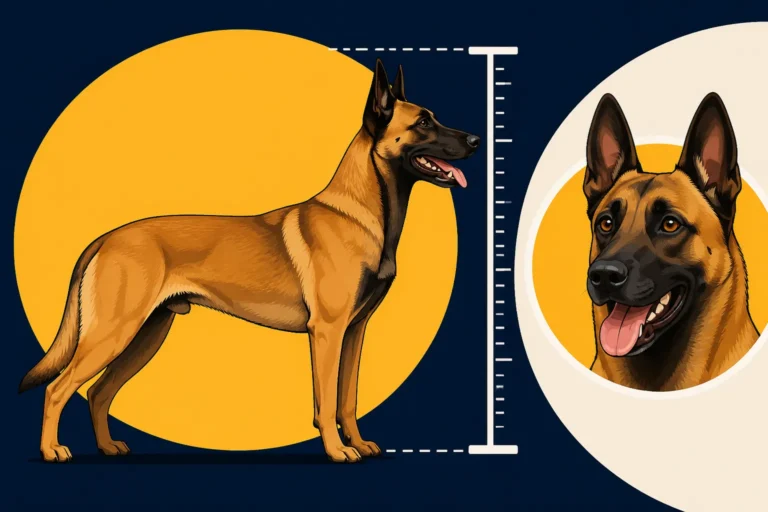
Proportions matter, too. A Malinois should present as a square, well-balanced dog, with enough substance for its size while retaining an agile appearance. The standard describes acceptable size ranges, but being within a height range by itself does not make a dog a strong example of the breed. Judges consider how the dog is put together and how its parts fit as a whole.
For more detail, see The Height Limits a Belgian Malinois Is Judged Against. It helps explain why the judge’s assessment is about more than a quick glance at a dog’s height or weight. In the ring, the dog is evaluated in motion and at rest, so both its build and how that build functions can be seen.
Head, bite, coat, and expression
A judge may examine the dog’s head, teeth, and bite, as well as the shape and set of its ears. The expected expression is alert and attentive, but a dog that looks intense is not necessarily a better match for the standard. Judges are assessing breed characteristics, not rewarding a particular level of excitement.
Coat and color are also part of the overall evaluation. The Malinois is typically fawn to mahogany with a black mask and overlay, though appearance can vary within the standard. A dramatic color or especially dark mask may catch a spectator’s eye, but it cannot make up for shortcomings in structure or movement. Grooming should keep the coat clean and presentable without changing the dog’s natural appearance.
The mouth is another part of the examination. The judge checks whether the bite and teeth meet the breed standard, rather than making a judgment about the dog’s working grip or bite-sport ability. The Scissors Bite a Malinois Judge Checks For explains the conformation detail behind that examination, while The Head a Belgian Malinois Judge Wants gives more context on the features judges assess.
Movement and ring manners
Movement reveals things that are harder to judge when a dog is standing still. The handler may be asked to move the Malinois around the ring and in a straight line so the judge can assess its gait from different angles. The goal is to show the dog moving naturally and with coordination, not to make it sprint or perform athletic tricks.
Ring manners matter in a practical sense because the judge needs to examine the dog safely and efficiently. The Malinois should be manageable on a lead, tolerate the judge’s hands, and remain attentive enough to be presented. That doesn’t mean every dog must look completely relaxed in a busy venue. A noisy arena, close quarters, unfamiliar dogs, and long waits can be a lot to take in, especially for a high-drive breed.
Good preparation is gradual. A dog might first practise standing briefly on a nonslip surface, being touched by a familiar person, and walking calmly beside its handler in a quiet place. Later, the handler can build toward busier environments. For general breed background, Where to See Malinois Working Before You Buy may help readers understand the difference between watching a dog perform a job and seeing one assessed in a conformation ring.
What It Takes to Enter Westminster
Registration and show eligibility
Being a Belgian Malinois makes a dog eligible by breed category, but it does not automatically guarantee an entry at every Westminster show. Dogs must meet the event’s eligibility and entry requirements, which can depend on the show’s rules for that year. Those details may include registration status, qualifications, or an invitation process, so anyone planning to enter should read the official Westminster information and the applicable kennel-club rules carefully.
It’s useful to separate three questions: Is the breed eligible? Is this particular dog eligible under the event rules? And has the owner completed the entry process correctly? The answer to the first is yes for Belgian Malinois. The other two depend on the individual dog and the show’s current procedures.
A dog does not have to win Best in Show to have competed at Westminster, and competing does not require that it be a national celebrity. The show includes breed-level judging, followed by group competition and the final Best in Show selection. A Malinois may be evaluated against other Belgian Malinois first; only a group winner advances to compete for Best in Show.
Preparing a dog for the setting
Preparation involves more than teaching a dog to stand. Westminster is a large, unfamiliar environment with bright lights, announcements, crowds, other dogs, and periods of waiting. A dog that is comfortable in a quiet training building may still need time to acclimate to that kind of activity.
A sensible preparation plan might include:
- Practise standing for brief periods while a handler checks the dog’s body and feet.
- Build comfortable, controlled movement on a lead in different locations.
- Gradually introduce unfamiliar people and dogs without forcing close greetings.
- Help the dog settle on a mat or in a crate between practice sessions.
- Keep grooming, feeding, water, rest, and bathroom routines predictable.
- Review the event’s rules for handling, equipment, and backstage access before travelling.
Travel and grooming logistics are easy to underestimate. A handler may need a secure crate, familiar bedding, grooming tools, cleanup supplies, water, and a plan for breaks. Chewy can be one place to look for ordinary travel and grooming supplies, but check that any item you bring is allowed under the event’s rules and suits your dog. For the show itself, the dog’s comfort and safe handling matter more than assembling an elaborate kit.
Is Westminster the Right Goal for Every Malinois?
The ring rewards a specific kind of preparation
Westminster can be an exciting goal for an owner who enjoys conformation showing, but it is not a requirement for a well-bred or well-loved Malinois. Some owners enjoy studying the standard, practising presentation, and travelling to shows. Others focus on obedience, scent work, herding, sport, or simply building a steady routine at home.
Those interests can overlap, but one does not replace another. Conformation training can help a dog become comfortable with handling and lead work. It does not, by itself, provide the structured activity or training plan many Malinois need. Likewise, intense daily exercise does not teach a dog how to stand calmly for a judge.
If you are considering a Malinois primarily because you have seen one in a show ring, it’s worth learning about the breed’s everyday needs before making a decision. The show setting is a short glimpse of a dog under specific handling conditions. It cannot tell you how that individual behaves at home, how much training it has had, or whether its temperament fits your household. Whether a Belgian Malinois Belongs in a Pet Home is a useful next read if you are weighing the breed’s demands against your own routine.
For show preparation, some owners also put together a simple kit with a brush, towels, water container, and cleaning supplies. Chewy may be a practical retailer to browse for general pet-care basics, while breed-specific grooming or handling questions are best discussed with an experienced handler or mentor. The dog’s daily comfort should guide what you pack, not the assumption that more equipment automatically means better preparation.
A Westminster appearance does not define the breed
A Malinois seen at Westminster represents one dog, one handler, and one moment in a highly organised event. It does not represent every Malinois or settle debates about working ability, temperament, health, or breeding choices. Viewers may be drawn to the dog’s polished presentation, but that finish is the result of preparation and handling—not a guarantee that every Malinois will behave the same way.
If you’re watching from home, notice how the handler presents the dog, how the judge examines it, and how the dog moves. Those details make the judging easier to understand than focusing only on which dog receives a ribbon. It can also be interesting to compare conformation viewing with seeing Malinois in other settings, while remembering that each venue assesses different qualities.
For owners travelling with a dog to a show, practical supplies can reduce avoidable stress. Chewy is another option for browsing basic items such as cleanup materials or travel accessories, but introduce any new equipment before the trip so the dog is not encountering it for the first time in a crowded venue. Confirm show requirements separately, and keep the dog’s normal food and routine as consistent as possible.
Westminster is a prestigious conformation event, but a dog’s value is not measured by whether it appears there. A sound, well-cared-for Malinois can live a fulfilling life in many roles, and the right role depends on the individual dog as well as the person responsible for it.
Disclaimer
This article is for general informational purposes only and does not constitute professional advice. Laws, prices and regulations vary by location and change over time. Consult a qualified professional for guidance on your specific situation.