Whether the Belgian Malinois Is Belgium’s National Dog
Belgium’s connection to the Belgian Malinois is clear: the breed takes its name from the Belgian city of Mechelen and developed as a Belgian herding dog. But that does not automatically make it Belgium’s official national dog. This guide separates the breed’s Belgian roots and cultural importance from formal national symbols, so you can understand what the label really means.
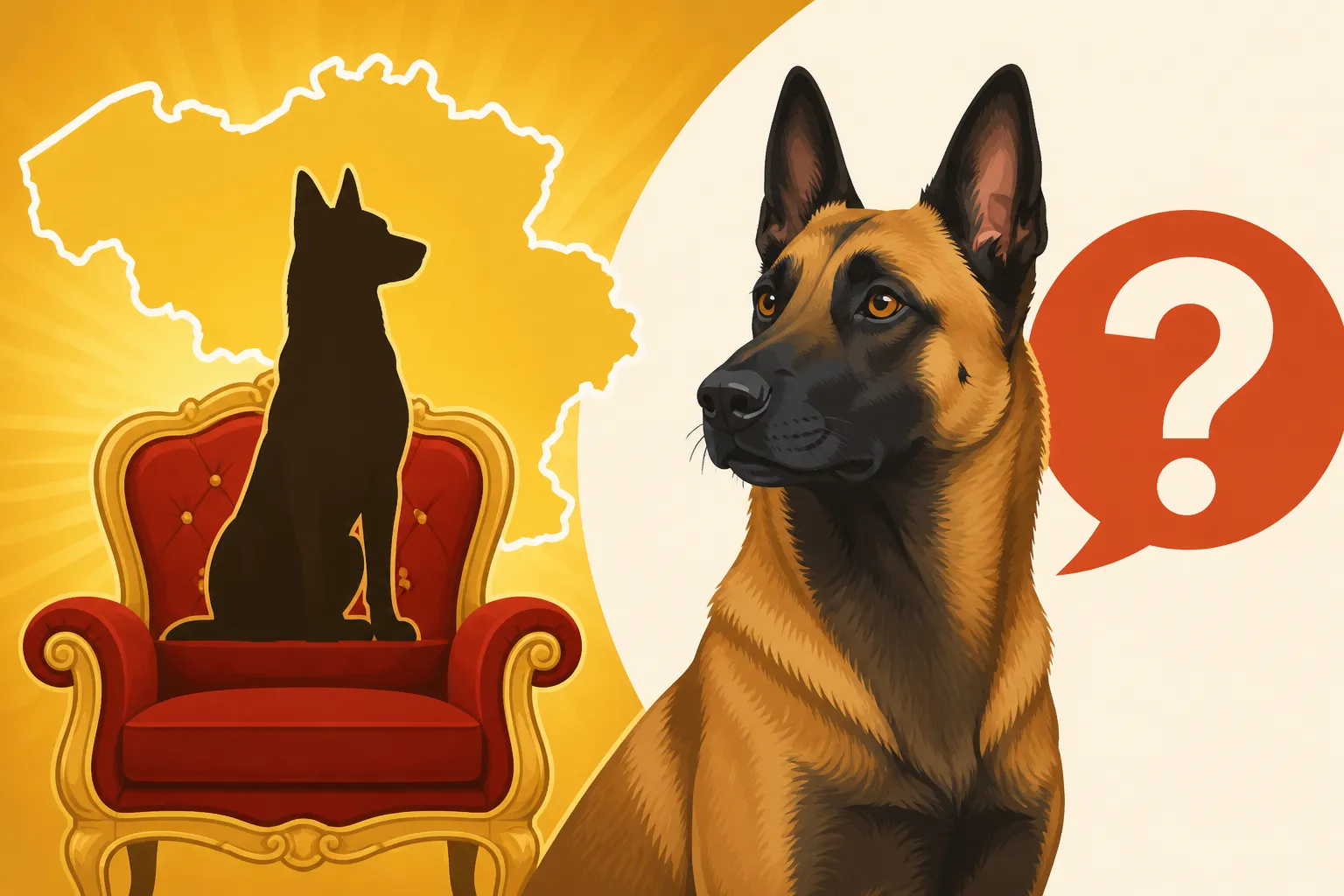
Is the Belgian Malinois officially Belgium’s national dog
The short answer on official status
The Belgian Malinois is not generally established as Belgium’s officially designated national dog. It is a Belgian breed with deep historical roots, and people may informally call it a national dog because of that connection. But informal pride and formal designation are not the same thing.
The distinction matters because “national dog” can mean several different things. A government might formally recognize a breed, a kennel organization might treat a breed as a national heritage, or the public might simply associate a dog strongly with its country of origin. Those usages often get blurred together online.
Belgium’s national symbols are more clearly associated with the Belgian flag, the national anthem and the Belgian lion. The lion is widely recognized as a national symbol, while the Malinois is best described as a Belgian breed with international prominence—not as a dog officially named to represent the country.
Why people call the Malinois a national dog
The Malinois looks and sounds unmistakably tied to Belgium: its name points to Mechelen, known in French as Malines, and it belongs to the Belgian Shepherd family. That origin gives the breed an authentic national connection, rather than a name attached to Belgium for marketing or convenience.
Its international visibility adds to the impression. Belgian Malinois work in police, military, detection and sport settings around the world. When people see the breed performing high-profile work, it can become an unofficial ambassador for Belgium, even though working-dog popularity is not the same as an official national title.
There is also a broader language issue. In everyday conversation, “Belgium’s national dog” may simply mean “a dog breed that comes from Belgium and is strongly associated with it.” That’s a reasonable casual description, but it is more precise to say the Malinois is one of Belgium’s best-known native dog varieties. For the place-name story, see The Belgian Town the Malinois Is Named After.
What makes the Malinois distinctly Belgian
The breed’s origins and name
The Malinois is one variety of the Belgian Shepherd Dog, a group developed in Belgium as versatile farm and herding dogs. The name “Malinois” refers to the Mechelen area, where the short-coated type became associated with the town. That regional name is one reason the breed’s Belgian identity is so strong.
The Malinois did not appear in isolation from the other Belgian Shepherd varieties. The familiar Belgian group includes the short-coated Malinois, the long-coated Tervuren, the long-coated black Groenendael and the rough-coated Laekenois. Their coats differ, but they share a Belgian herding-dog background. More on how the varieties fit together is covered in The Four Belgian Varieties the Malinois Belongs To.
That origin story is also a reminder that the breed was not created solely for police or military work. Its roots lie in practical farm work, including moving and managing livestock. If you want to separate that early role from the breed’s later reputation, Whether the Belgian Malinois Was Ever a Sheepdog Variety and How the Malinois Went From Herding to Police Work explore those parts of its history.
A Belgian breed with a global working reputation
The Malinois became widely recognized beyond Belgium because its athleticism, trainability and drive suit demanding working roles. Today, people may encounter the breed through police teams, detection work, protection sports or films. That global visibility can make the Malinois seem like a symbol of modern security work as much as a Belgian herding breed.
But a dog’s fame abroad does not establish official status at home. A breed can become internationally iconic without a government or cultural institution formally declaring it a national emblem. In this case, the Malinois’ Belgian origin is a solid fact; the “national dog” wording is generally a popular shorthand.
It is also worth remembering that working ability varies among individual dogs and breeding lines. A Malinois is not automatically suited to every job simply because the breed is associated with police or military service. That reputation reflects selected dogs, skilled handlers and structured training—not a guarantee that every Malinois will have the same temperament or role.
| Question | Careful answer |
|---|---|
| Is the Belgian Malinois from Belgium? | Yes. It is a Belgian variety of the Belgian Shepherd Dog. |
| Is it named after a Belgian place? | Yes. The name is linked to Mechelen, also called Malines in French. |
| Is it commonly associated with Belgium? | Yes. Its origin and history make the connection strong. |
| Is it officially designated Belgium’s national dog? | It is not generally recognized as having a formal national-dog designation. |
| Is it Belgium’s national animal? | No. The Belgian lion is the country’s widely recognized national animal symbol. |
National dog, national animal and national breed are different labels
What “national dog” can mean
There is no single worldwide rule defining a “national dog.” In one country, the phrase might refer to a breed formally recognized by law or government. In another, it might be a popular description used by tourism materials, breed organizations or the public. Without a specific formal designation, the phrase can sound more official than it is.
A “national breed” is similarly ambiguous. It may mean a breed developed in a country, a breed considered part of its heritage, or a breed recognized by a national kennel organization. Those meanings overlap, but none automatically proves that the country has declared the breed its national dog.
For the Malinois, “Belgian breed” is the most straightforward description. “Belgium’s national dog” is better treated as an informal label unless a speaker can point to a clear official act establishing that title. That difference lets you appreciate the dog’s heritage without repeating a claim that may imply a legal status that is not there.
How official and cultural recognition differ
Formal national symbols are usually documented through a country’s institutions or conventions. Cultural symbols can develop more organically: through history, public affection, international recognition or repeated use in media. A breed may be a powerful cultural ambassador without being included among a country’s official symbols.
The Malinois’ case is easy to understand if you imagine a visitor arriving in Brussels and seeing a Belgian flag beside a police dog demonstration. The dog may immediately feel like a fitting emblem of Belgian capability and history. That impression is meaningful, but it is not evidence of a formal national designation.
This is why careful wording helps. You can call the Malinois a well-known Belgian breed, a Belgian Shepherd variety, or an unofficial canine emblem of Belgium. Those phrases recognize its origin and reputation while keeping formal claims in proportion. For more on breed organizations and recognition, see The Parent Club Behind the Belgian Malinois.
What this distinction means for visitors and prospective owners
If you are visiting Belgium
Travelers interested in the Malinois can treat the breed as part of Belgium’s living dog heritage, rather than expecting a formal national-dog ceremony or a single official attraction. Mechelen is the most relevant place to explore the name’s connection, while Brussels and other Belgian cities may offer opportunities to see working dogs in everyday public settings.
If you hope to meet dogs, do so respectfully. A Malinois on duty is working, not posing for visitors, and approaching or distracting a police or security dog can interfere with its handler. At public events, follow the organizers’ instructions and give working teams space.
For anyone interested in seeing the breed in a training context, local clubs and demonstrations may be more useful than searching for a symbolic “national dog” site. Where to See Malinois Working Before You Buy can help frame what to look for, while remembering that a public demonstration is only a small glimpse of the time, skill and management behind the work.
If you are asking because you may own one
The national-dog question can lead to a more personal one: does the Malinois fit your life? A breed’s heritage and reputation do not tell you whether its daily needs match your household. Before choosing one, learn about exercise, training, rest, social management and the commitment involved. Whether the Belgian Malinois Suits a Family Home offers a useful starting point.
If you are preparing for a dog, practical supplies matter more than symbolic status. A secure crate, suitable leash, grooming tools and enrichment items can help establish a routine. Some owners compare options at retailers such as Chewy, alongside local pet shops and recommendations from a veterinarian or qualified trainer. The right choices depend on the individual dog, your setup and the advice of professionals who know your situation.
Food and enrichment are also ongoing considerations, not one-time purchases. A retailer such as Chewy may be one place to compare basic supplies, but product selection should follow your dog’s health needs and training plan. For toys or equipment, consider durability and safe use rather than choosing something solely because it is marketed for a high-drive breed. A third place to compare routine supplies is Chewy, though a trainer or veterinarian can help identify what is actually appropriate for your dog.
Finally, be wary of choosing a Malinois because it is described as Belgium’s national dog or because it appears impressive in working footage. The label does not predict temperament, and the breed’s demanding traits can be difficult for an unprepared home. Ask breeders or rescues about the particular dog, its history, health and behavior, and be honest about the time and structure you can provide. The breed’s Belgian identity is fascinating; living well with an individual Malinois requires a much more practical assessment.
Disclaimer
This article is for general informational purposes only and does not constitute professional advice. Laws, prices and regulations vary by location and change over time. Consult a qualified professional for guidance on your specific situation.