The Square Outline a Belgian Malinois Should Have
One of the biggest head-scratchers for new Belgian Malinois owners, or even those considering bringing one of these incredible dogs into their lives, is understanding all the jargon in the breed standard. You read things like "square outline" or "moderately angled," and it can feel like you need a geometry degree just to know what you're looking for. It's frustrating when you just want to understand what makes a Malinois look like a Malinois and, more importantly, what structural traits contribute to their amazing capabilities. This guide is here to demystify the concept of the "square outline" in a Belgian Malinois, explaining why it's so important for their health, function, and athletic prowess, and what it really means when you're assessing a dog.
Understanding the Breed Standard's Ideal Proportions
When the breed standard talks about a "square outline," it's not trying to describe a box on legs. Instead, it's defining a harmonious balance that allows the Belgian Malinois to excel at the demanding work they were bred for. This isn't just about aesthetics; it's fundamentally about efficiency, power, and the ability to perform complex movements with grace and stamina. Without these correct proportions, a Malinois might look a bit "off" to the trained eye, but more critically, they might struggle with the very tasks that define their breed.
What "Square" Actually Means in Canine Terms
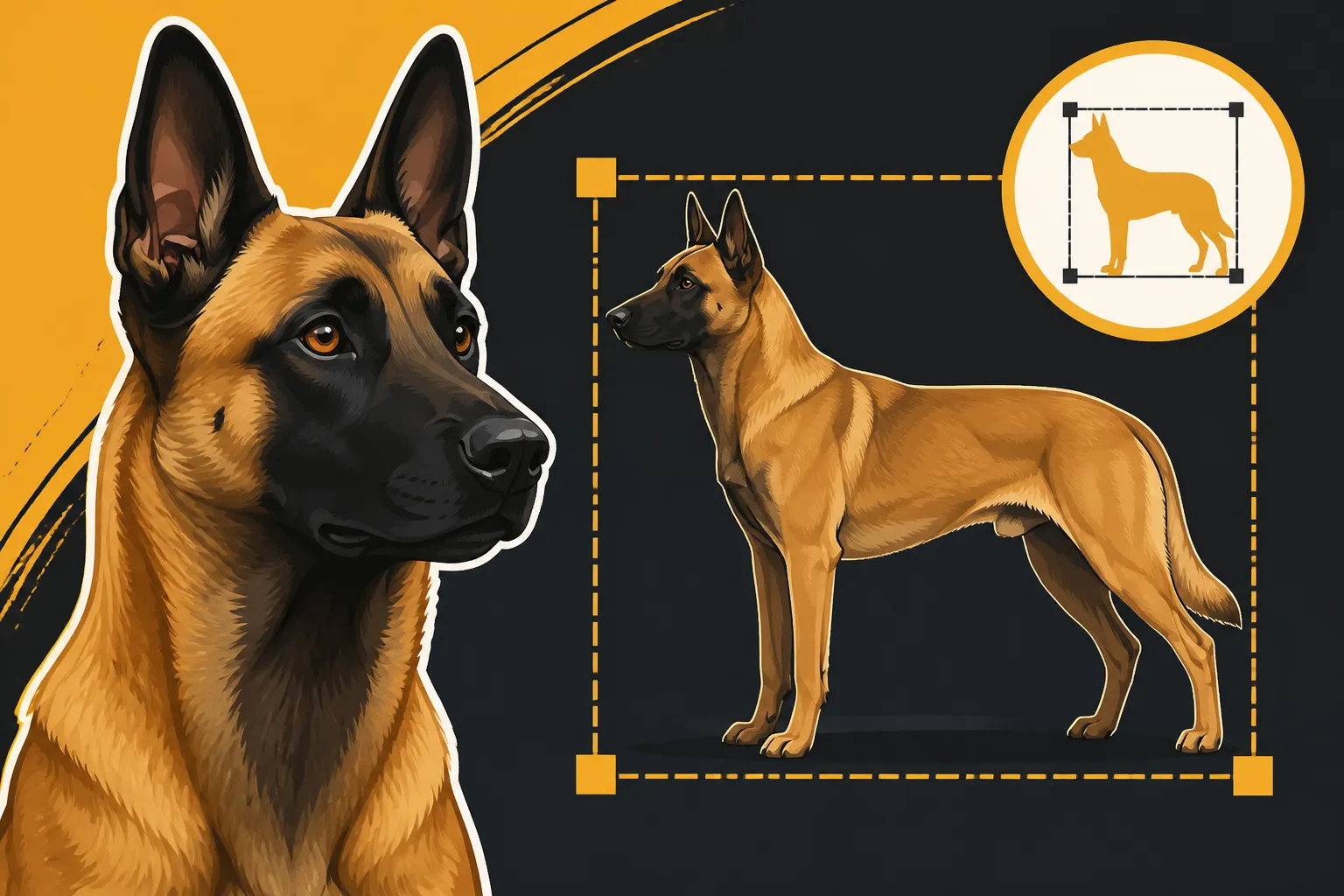
In the world of dog breed standards, a "square outline" refers to a dog whose length, from the point of its prosternum (the front of the chest) to the point of its ischium (the rear of the pelvis, often referred to as the point of buttock), is approximately equal to its height at the withers (the highest point of the shoulder blades). Think of it like a perfectly proportioned square box when viewed from the side. This isn't always an exact 1:1 ratio, and some standards might allow for a very slight difference, but the ideal is to be as close to square as possible.
This particular ratio is a hallmark of many active, agile breeds, especially those used for herding or protection work, like the Malinois. It's what gives them that compact, powerful appearance and allows for a truly balanced gait. A dog that is significantly longer than it is tall, for example, might have a different type of movement, perhaps better suited for endurance trotting or pulling, but typically less agile for quick turns and jumps. Conversely, a dog that is much taller than it is long might lack stability. The square outline ensures that the dog's center of gravity is well-placed, giving them both power and nimbleness.
Why Square is Crucial for Malinois Function
The Belgian Malinois was originally developed as a herding dog in Belgium, tasked with controlling livestock over varied terrain, and later evolved into one of the most respected working dog breeds globally, excelling in police, military, and protection sports. The Herding Job the Belgian Malinois Was Built For All of these roles demand extreme athleticism, quick bursts of speed, incredible agility, and sustained endurance. The square outline is not a mere aesthetic preference; it's a functional necessity that directly supports these capabilities.
A square-bodied Malinois has the optimal leverage and balance for swift changes in direction, tight turns, and powerful leaps. Imagine a police K9 navigating an obstacle course or a sport dog performing complex bite work scenarios. They need to be able to accelerate, stop on a dime, pivot, and launch themselves over obstacles with minimal effort and maximum control. A longer dog might be slower to turn, while a shorter, more cobby dog might lack the reach or spring. This perfectly proportioned body allows for efficient movement, reducing wasted energy and minimizing strain on joints, which is paramount for a dog that works day in and day out. It's a design for optimal athletic performance, ensuring that every movement is as effective as possible whether they are Running a Belgian Malinois Beside a Bike or clearing a wall.
Deciphering the Malinois's Physical Measurements
Understanding the theoretical "square" is one thing, but actually assessing it on a live, wiggling Malinois is another. It comes down to taking accurate measurements and knowing the breed's general parameters. You're not expected to carry a tape measure to every puppy viewing, but understanding how these measurements define the breed's structure helps you appreciate why certain traits are valued.
Measuring Height at the Withers
The height of a Belgian Malinois is always measured at the withers. This is the highest point of the shoulder blades, where the neck meets the back. For an accurate measurement, the dog needs to be standing four-square, meaning all four legs are evenly placed and perpendicular to the ground, with its head in a natural, alert position. You'd typically use a measuring stick (often called a wicket) that has a horizontal arm that can be lowered to touch the top of the withers.
According to the breed standard, there are specific height ranges that are considered ideal. For males, the desired height is generally around 24 to 26 inches. Females are typically a bit smaller, with an ideal height of 22 to 24 inches. Of course, individual dogs will fall slightly outside these ranges, but significant deviation can be considered a fault. For instance, you can dive deeper into the specifics for The Twenty Two to Twenty Four Inch Female Malinois or The Height a Male Belgian Malinois Must Measure. These heights reflect the functional needs of the breed—tall enough to be powerful and cover ground efficiently, but not so tall as to become gangly or unwieldy for agility and close-quarter work.
Assessing Body Length
Once you have the height, you need to consider the body length to determine that squareness. Body length is measured from the point of the prosternum (the prominent bone at the front of the chest) to the point of the ischium (the rear-most bone of the pelvis, often easily felt beneath the tail). Again, the dog needs to be standing square, not stretched out or tucked in.
The goal is for this length measurement to be as close as possible to the height at the withers. If your Malinois measures 24 inches tall at the withers, an ideal length would also be around 24 inches. A dog with a significantly longer back might appear more rectangular, potentially impacting its structural integrity and efficiency of movement. A shorter back might make the dog appear more compact or "cobby," which could limit reach and stride length. This balanced proportion is what allows for the powerful spring and fluid movement that is characteristic of the breed, crucial for their intense work.
The Impact of Proportions on Movement and Performance
A Belgian Malinois is a marvel of canine engineering, built for peak athletic performance. Every aspect of their structure contributes to their ability to run, jump, turn, and respond with incredible speed and power. The square outline isn't just a pretty picture; it's the foundation for their legendary athleticism. It's about how the whole body works together as a cohesive unit.
The Gait of a Square Malinois
When you watch a properly built Malinois move, it's like poetry in motion. Their gait is typically described as free, fluid, and powerful, covering a lot of ground with minimal effort. This is largely thanks to their square proportions. The balance between leg length and body length allows for a long, reaching stride in the front and a powerful drive from the rear. This creates an efficient, ground-covering trot, which is their natural working gait.
A dog with ideal square proportions doesn't have to work harder to maintain balance or propel itself forward. Its limbs are positioned to function like well-oiled pistons, distributing impact evenly and maximizing propulsion. This leads to that characteristic spring in their step and the ability to switch from a relaxed trot to a full-out gallop almost instantaneously. Without this structural harmony, a dog might appear choppy, unbalanced, or "paddling" in their movement, using up more energy and putting unnecessary strain on their joints, which can shorten their working life. You can often spot these subtle differences even in younger dogs, long before any real issues arise.
Agility and Balance: More Than Just Speed
Beyond speed, the square outline plays a huge role in a Malinois's agility and balance – qualities that are absolutely non-negotiable for a working dog. Whether it's weaving through obstacles in an agility course, performing complex routines in IGP, or navigating treacherous terrain in search and rescue, a Malinois needs to be able to change direction instantly, jump cleanly, and land safely. Whether a Malinois Has the Body for Agility
The compact nature of a square body means the dog's center of gravity is closer to its core, making it more stable and less prone to tipping over during rapid maneuvers. This allows for tighter turns and quicker recoveries from leaps and bounds. Think about a Malinois performing a protection exercise where it has to sprint, bite, out (release), and then reposition itself for the next command. Every second counts, and every movement needs to be precise. A dog that is too long might struggle with the tight turns, while one that is too cobby might lack the reach for a powerful jump or the length of stride for sustained speed. The square configuration creates a powerful, integrated athletic package designed for explosive yet controlled movement, enabling them to excel in dynamic and challenging environments.
Common Deviations from the Square Outline
While the breed standard paints a clear picture of the ideal, not every Malinois will fit the mold perfectly. Just like with people, there's natural variation, but some deviations from the square outline can have more significant implications for a dog's health and ability to perform their intended function. Recognizing these differences can help you understand the compromises involved, even if a dog is still a wonderful companion.
Long-Backed Malinois: What It Means and Why It's Undesirable
A Malinois that is significantly longer than it is tall is often referred to as "long-backed." While a slightly longer-than-square build might be acceptable in some breeds, it's generally considered undesirable in the Malinois. This longer proportion can compromise the dog's structure and lead to a number of functional and health concerns. The back acts as a bridge between the powerful rear drive and the forward propulsion, and a longer bridge can be inherently weaker and less efficient.
A long back can mean increased stress on the spine, particularly in the lumbar region. This can predispose a dog to back problems, disc issues, or general discomfort, especially in a breed as active and high-impact as the Malinois. It can also reduce the efficiency of their gait, as the power from the rear might get "lost" in the longer back before it can be fully transmitted to the front. This makes them less agile, slower to turn, and less able to absorb the shock of jumping and landing. Over a lifetime of intense work, these structural weaknesses can compound, potentially leading to early retirement or chronic pain. Concerns about The Spinal Disease That Ends a Malinois's Mobility are very real when considering dogs with less than ideal back length.
Short-Backed or Cobby Malinois: Pros and Cons
On the other end of the spectrum is the "short-backed" or "cobby" Malinois, meaning the dog's body length is noticeably shorter than its height, making it appear very compact. While some smaller terrier breeds might aim for a cobby build, it's not the ideal for a Malinois, though it's often less detrimental than being overly long-backed.
A cobby build can sometimes give an impression of immense power and might make a dog seem incredibly quick in very tight, small spaces. However, it can also limit stride length, making the dog less efficient at covering ground over longer distances. Imagine a horse with very short strides – it has to take many more steps to cover the same distance, expending more energy. Similarly, a short-backed Malinois might lack the fluid, far-reaching gait that allows them to work tirelessly. It can also affect flexibility and agility in some movements, as the compact body may not allow for the full extension or flexion required for certain tasks. While perhaps not as prone to spinal issues as a long-backed dog, a cobby Malinois might not have the endurance or the same powerful, effortless movement that defines the breed's working prowess. This is why careful breeding and selecting for balance is so important.
How Structure Influences Health and Longevity
It’s easy to get caught up in how a Malinois looks, but the truth is, proper structure is deeply intertwined with their long-term health and ability to live a full, active life. Just like a well-engineered sports car will perform better and last longer with fewer mechanical issues than one built with shortcuts, a well-structured Malinois is less prone to physical breakdowns. This is especially vital for a breed that lives to work and play hard.
Avoiding Stress on Joints and Spine
One of the most critical health benefits of a correct square outline is the reduction of undue stress on the dog's joints and spine. When a Malinois has the correct proportions, its weight is distributed evenly, and its limbs and spine are aligned in a way that minimizes impact and wear and tear. This is paramount for a dog that engages in high-impact activities like jumping, sprinting, and powerful bite work. Think about the repetitive strain on a dog's body over years of training and competition – every stride, every leap, every hard stop adds up.
A dog with a correctly angled shoulder and hindquarter, combined with a square body, will absorb shock more effectively, protecting the hips, elbows, and spinal column. The Hip and Elbow Numbers Behind a Malinois Clearance are not just arbitrary values; they reflect a commitment to sound structure that can withstand the rigors of a Malinois's active lifestyle. Deviations, such as being too long-backed, can put immense strain on the vertebrae and discs, leading to conditions that can be painful and debilitating. Similarly, incorrect angulation, which often goes hand-in-hand with an imbalanced body, can exacerbate issues like elbow dysplasia or contribute to cruciate ligament injuries. It's a complex interplay, and the square outline is a cornerstone of this structural integrity. Many dedicated Malinois owners invest in high-quality joint supplements, often found on sites like Chewy, to further support their dog's hard-working joints, but good structure is the first line of defense.
Longevity and the Sound Malinois
Ultimately, a sound structure contributes significantly to a Belgian Malinois's overall longevity and quality of life. A dog that is well-built and moves efficiently is less likely to suffer from debilitating injuries or chronic pain as it ages. This means more years of active enjoyment for both the dog and its owner. We all want our beloved companions to be with us, happy and healthy, for as long as possible.
While genetics play a huge role in overall health, and issues like cancer or genetic diseases can arise regardless of structure, a dog that is structurally sound is simply better equipped to handle the physical demands of life. They can continue to participate in activities, whether it's daily walks or advanced sport training, without their body giving out prematurely. This allows them to stay mentally stimulated and physically fit well into their senior years. Keeping a Belgian Malinois Sound Past Twelve is a goal many owners share, and starting with a dog that has correct, functional conformation is a massive advantage. While good food, regular vet care, and proper conditioning are all vital, the foundational structure is what dictates how well a Malinois's body holds up over the long haul.
What to Look for in a Malinois Puppy's Structure
When you're looking at a litter of adorable Malinois puppies, it can be incredibly hard to envision what they'll look like as adults, let alone assess their future "squareness." However, there are definitely some early indicators that a knowledgeable eye can pick up, which can give you a good idea of a puppy's potential for sound structure. It's a bit like looking at a blueprint; you can see the intentions even if the building isn't finished.
Early Indicators of Good Proportion
Even in a gangly puppy stage, a well-bred Malinois puppy will start to show hints of its future proportions. You're looking for a general balance, rather than specific measurements. A puppy should not appear overly long in the back, even if they're going through a lanky growth spurt. Their legs should look proportionate to their body, not too long or too short, and their bone structure should appear substantial but not heavy.
Pay attention to how the puppy moves. While they will be clumsy and playful, look for puppies that move freely and easily, without any obvious stiffness or awkwardness. Their little tails should typically be carried relatively straight, not tucked tightly or curled sharply over their back, which can sometimes indicate structural or temperament issues. While a puppy's angulation will change as it matures, you want to see a general sense of balance between the front and rear assembly. A reputable breeder will be able to show you the parents and explain their structure, which gives you the best glimpse into how the puppies will mature. When browsing online for specific products for a new puppy, sites like Chewy often have excellent resources on puppy development.
Asking a Breeder About Structure and Pedigrees
This is where a responsible breeder truly shines. When you're speaking with a breeder, don't be shy about asking specific questions about the structure of their adult dogs, especially the parents of the litter you're interested in. They should be able to articulate why they consider their dogs to have good structure and how it aligns with the breed standard's emphasis on the square outline. A good breeder will talk openly about their dogs' strengths and any areas they might be looking to improve through their breeding program.
Beyond just discussing the parents, ask to see pedigrees and health clearances. Reading a Belgian Malinois Pedigree Before Paying is crucial not only for health testing results (like hip and elbow scores) but also for understanding the lineage and the structural consistency within those lines. A breeder who focuses on functional conformation will be able to show you how the square outline and sound structure are maintained across generations. They might even have photos or videos of previous litter offspring growing up, demonstrating how their puppies mature. This kind of transparency and focus on foundational structure, rather than just flash, is what separates a dedicated breeder from someone just looking to sell puppies. Even if you're exploring What a Working Line Belgian Malinois Litter Charges, you're investing in more than just a puppy; you're investing in a lifetime of health and capability, which starts with excellent structure.
Disclaimer
This article is for general informational purposes only and does not constitute professional advice. Laws, prices and regulations vary by location and change over time. Consult a qualified professional for guidance on your specific situation.