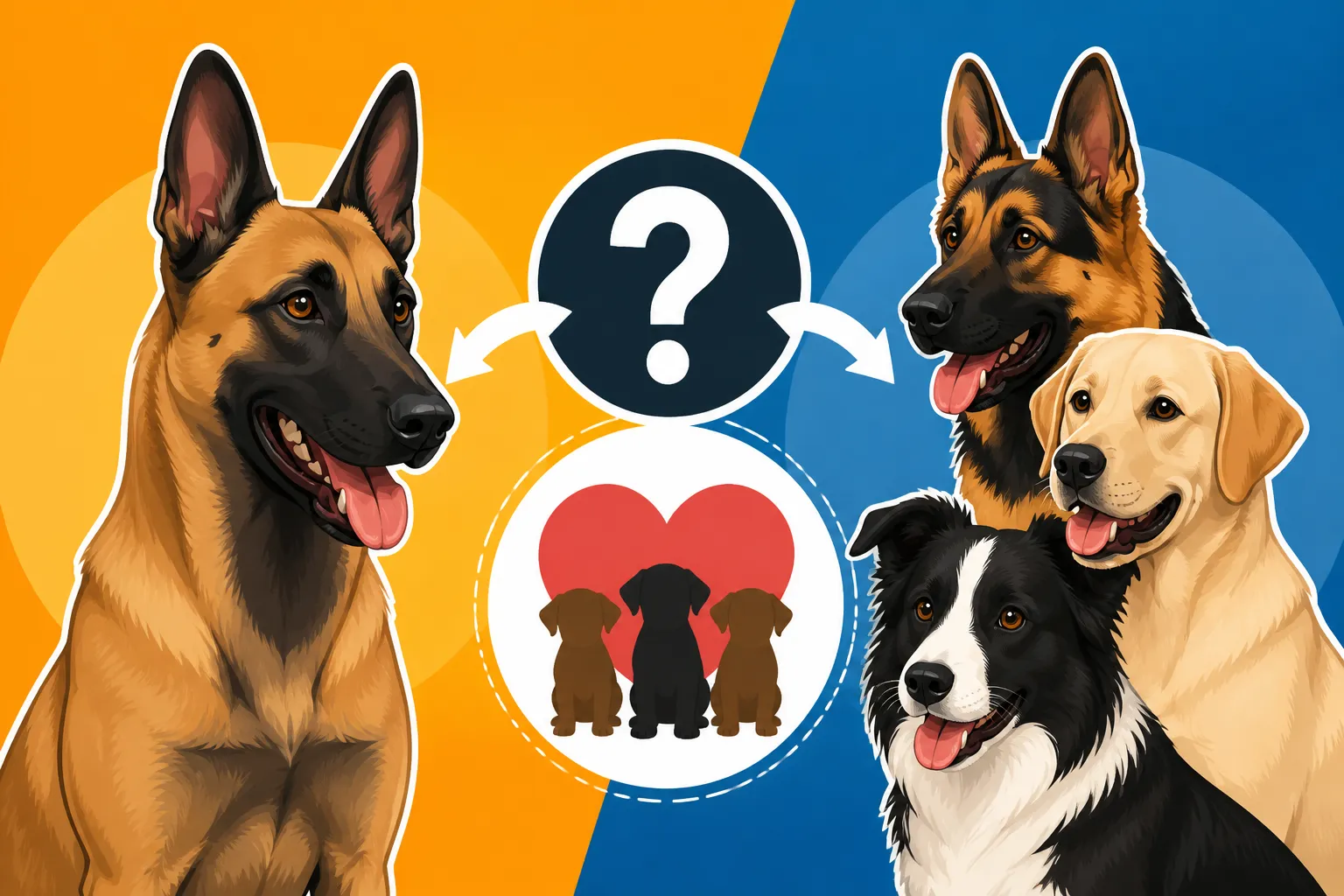
Whether a Malinois Can Be Bred to Another Variety
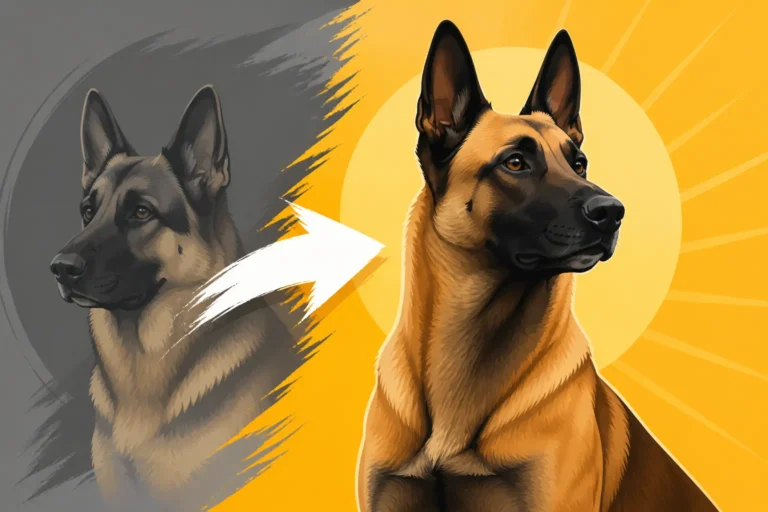
There’s a common misconception, even among seasoned dog enthusiasts, that a Belgian Malinois is simply a type of German Shepherd, or that all the Belgian Shepherd varieties are interchangeable. This can lead to a lot of confusion, especially when people start talking about breeding, wondering if they can mix a Malinois with, say, a Tervuren, and what the implications might be. This guide aims to clear up that fog, delving into the nuances of breeding within and across the Belgian Shepherd family.
Understanding the Four Belgian Shepherd Varieties
Before we dive into the complexities of inter-variety breeding, it’s absolutely essential to understand that the Belgian Malinois isn't just a standalone breed in some parts of the world. It’s one of four distinct varieties that make up the single Belgian Shepherd Dog breed, as recognized by the Fédération Cynologique Internationale (FCI), the international canine organization. This is where a lot of the initial confusion stems from, because different kennel clubs have taken different approaches to their classification.
The Shared Heritage and Divergent Paths
All four Belgian Shepherd varieties – the Malinois, Tervuren, Groenendael (also known as the Belgian Sheepdog in North America), and Laekenois – share a common ancestry, hailing from the working farm dogs of Belgium in the late 19th century. They were originally bred for herding sheep and guarding property, prized for their intelligence, athleticism, and protective instincts. It was largely in the 1890s that breeders and fanciers began to systematically categorize these dogs based primarily on their coat type and color. This led to the formal recognition of different varieties. If you're curious about the history, you can read more about How Malinois Breeders Organized in the 1890s.
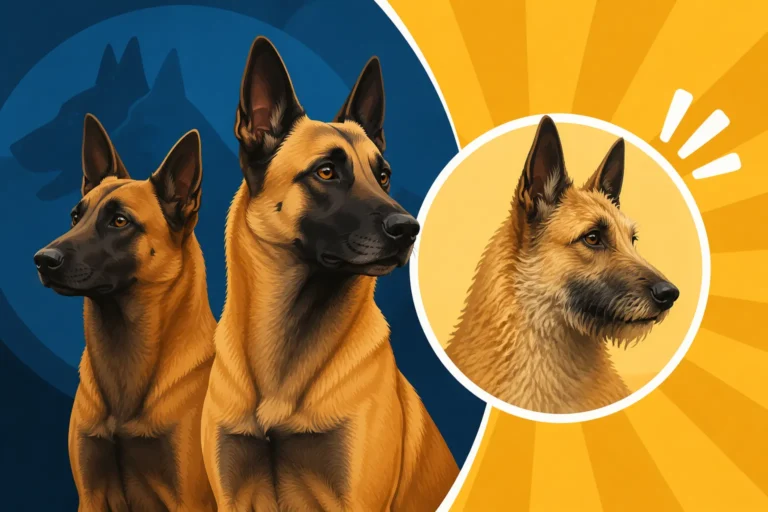
Despite their shared genetic roots and similar underlying temperaments, each variety developed a distinct look. The Malinois, with its short fawn coat and black mask, became the preferred choice for many working lines due to its ease of grooming and suitability for demanding environments. The Tervuren boasts a long, fawn-to-mahogany coat, similar to the Malinois in color but dramatically different in length. The Groenendael is characterized by its long, solid black coat, giving it a majestic appearance. And finally, the Laekenois is the rarest, sporting a harsh, wiry, fawn-colored coat. Each has its own dedicated enthusiasts and a very specific set of characteristics that defines its appearance.
Distinguishing Features of Each Variety
While their temperaments and working drives can be quite similar, the physical distinctions are what primarily separate them according to the FCI standard. For instance, the sheer difference between The Malinois Against the Tervuren or The Malinois Against the Groenendael is immediately apparent in their coat length alone. The Laekenois stands out even more with its rough, wiry texture, making it The Laekenois Beside the Malinois and Why It Is Rare. These coat differences, developed through selective breeding over a century, are not merely cosmetic; they influence grooming needs, climate tolerance, and often, even public perception of the dog.
When you think about grooming, for example, a Malinois with its short coat is relatively low maintenance compared to a long-coated Tervuren or Groenendael, which require regular brushing to prevent mats and manage shedding. These distinctions are deeply ingrained in their breed standards, and reputable breeders work diligently to maintain these characteristics within their lines.
Here's a quick overview of the main distinctions:
| Variety | Coat Type | Color | Distinctive Feature |
|---|---|---|---|
| Malinois | Short, straight | Fawn to mahogany, black mask, black overlay | Predominantly working lines |
| Tervuren | Long, straight | Fawn to mahogany, black mask, black overlay | Plumed tail, dense undercoat |
| Groenendael | Long, straight | Solid black | Profuse ruff, long leg feathering |
| Laekenois | Harsh, wiry | Fawn, black overlay, lighter mask | Rough, unkempt appearance |
Kennel Club Recognition and Breeding Standards
The question of whether a Malinois can be bred to another variety isn't just a matter of genetics; it's heavily influenced by the rules and regulations of various kennel clubs around the world. These organizations dictate what constitutes a "purebred" dog and, crucially, what breeding practices are acceptable for registration purposes. The difference in recognition between the FCI and the American Kennel Club (AKC) is particularly significant here.
The FCI's "One Breed, Four Varieties" Approach
Internationally, the FCI recognizes the Belgian Shepherd Dog as a single breed with four varieties: the Groenendael, Laekenois, Malinois, and Tervuren. Under FCI rules, inter-variety breeding is permitted, but often with specific regulations and only in certain circumstances. The idea behind this is to maintain genetic diversity within the broader Belgian Shepherd gene pool and to allow for the introduction of desired traits (like working drive) from one variety into another, especially if a particular variety is facing population bottlenecks or a lack of certain characteristics. However, these crosses are typically approved on a case-by-case basis and require careful documentation, with the offspring registered as the variety they most closely resemble, or sometimes in an "inter-variety" registry until further generations.
This approach acknowledges the shared heritage and recognizes that at their core, these are all Belgian Shepherds. The primary reason for their initial separation was coat type, so allowing breeding between them with proper oversight makes a certain amount of sense from a genetic health perspective. For instance, if a rare trait or specific health issue is becoming problematic in one variety, breeding to another variety that is free of that issue could be a way to diversify the gene pool.
The AKC's "Four Separate Breeds" Stance
In stark contrast, the American Kennel Club (AKC) views each of the four Belgian Shepherds as entirely separate breeds. The Belgian Malinois, Belgian Tervuren, Belgian Sheepdog (Groenendael), and less commonly recognized Belgian Laekenois are registered as distinct entities. This means that, according to AKC rules, breeding a Malinois to a Tervuren, for example, would result in offspring that cannot be registered as purebreds of either breed. They would be considered mixed-breed dogs, even though their parents are both "Belgian Shepherds" by FCI standards. This is a fundamental difference that has significant implications for breeders and owners in North America.
This separation was established when the breeds gained individual recognition in the US, largely due to different coat types and appearances. For an AKC breeder, maintaining the purity of their specific breed (e.g., Belgian Malinois) means strictly breeding within that recognized type. A cross-variety litter would simply not be eligible for AKC registration, impacting show potential, breeding programs, and even perceived value. This difference in classification can be a source of confusion for those new to the world of Belgian Shepherds, especially if they are looking at both international and national standards.
Motivations and Outcomes of Inter-Variety Breeding
So, if some kennel clubs allow it, why would a breeder consider breeding a Malinois to another Belgian Shepherd variety? And what are the potential outcomes, both desired and unintended? It's not a decision taken lightly, and it often sparks considerable debate within the canine community.
Reasons for Considering a Cross
One of the primary motivations for inter-variety breeding, particularly under FCI rules, is to improve genetic health and diversity. Sometimes, a particular variety might have a very small gene pool, leading to an increased risk of inherited health issues. Introducing genetics from another variety could broaden that pool, potentially reducing the incidence of conditions like certain cancers, or improving overall vigor. Breeders might also seek to reinforce specific working traits. For example, if a Tervuren line is becoming too focused on conformation and losing some of its intense working drive, introducing a Malinois known for its exceptional drive could be an appealing prospect. Many working Malinois are bred for pure utility, and that drive is something that is sometimes sought after in other varieties.
Another reason might be to improve the physical type or correct certain conformational faults without sacrificing other qualities. Perhaps a breeder wants to refine coat texture or achieve a more robust bone structure while retaining the proven working ability. The debate often centers around whether these benefits outweigh the potential for unpredictable outcomes in terms of appearance or temperament, especially when strict breed standards are involved. Finding a breeder who understands these intricate genetic considerations and who knows the working histories of the lines can be crucial. Sometimes you can find excellent breeders selling quality supplies for their dogs at stores like Chewy, which shows their dedication to their animals' well-being.
Unpredictable Traits and Coat Combinations
The biggest challenge with inter-variety breeding, even when permitted, is the potential for unpredictable outcomes. While all four varieties are genetically similar, they carry different genes for coat length, texture, and color. Breeding a short-coated Malinois to a long-coated Tervuren will almost certainly result in a litter with a mix of coat lengths, or perhaps even offspring with intermediate coat types that don't conform perfectly to any recognized standard. Imagine a litter where some puppies have short Malinois coats, others have long Tervuren coats, and some might have medium-length coats that are neither here nor there.
Similarly, if you breed for certain working traits, you might find that the strong prey drive and intensity typically associated with a Malinois don't translate uniformly across an entire cross-variety litter. You could end up with some puppies that perfectly combine the best of both worlds, and others that inherit an undesirable mix of traits, or even diluted versions of the characteristics you were aiming for. These "in-between" dogs, while perfectly healthy and functional, might struggle to find their place in specific breeding programs or conformation shows, which value strict adherence to established standards. This is why thorough knowledge of genetics and a clear breeding plan are paramount.
Ethical Considerations and Responsible Breeding
The decision to breed any dog, let alone to undertake an inter-variety cross, comes with significant ethical responsibilities. It's not just about creating puppies; it's about contributing to the future of the breed and ensuring the health and well-being of every dog produced.
Prioritizing Health and Temperament Above All
A responsible breeder, whether dealing with purebreds or considering a controlled cross, always prioritizes health and temperament. This means both parents should undergo comprehensive health screenings for common issues in Belgian Malinois, such as hip and elbow dysplasia, eye diseases, and certain seizure disorders. You can learn more about The Hip and Elbow Numbers Behind a Malinois Clearance and The Eye Diseases Behind a Malinois Eye Certificate. Genetic testing for conditions like SDCA1 and SDCA2 ataxia is also becoming increasingly common and recommended. Testing a Belgian Malinois for SDCA1 and SDCA2 is a critical step for any ethical breeder.
Beyond physical health, temperament is paramount, especially with high-drive breeds like the Malinois. Both parent dogs should have stable, sound temperaments, be well-socialized, and exhibit appropriate working drives for their intended purpose. Breeding two dogs, even of the same variety, simply because they "look nice" or have titles, without considering their underlying health and psychological soundness, is irresponsible. For an inter-variety cross, these considerations are amplified, as the genetic lottery might combine traits in unforeseen ways, making an already intense breed even more challenging for an inexperienced owner.
Impact on Breed Standards and Registry Integrity
One of the most contentious aspects of inter-variety breeding, especially where it's not universally recognized, is its impact on breed standards and the integrity of registries. Kennel clubs dedicate immense effort to defining and preserving the distinct characteristics of each breed or variety. When crosses occur, particularly in systems like the AKC where varieties are treated as separate breeds, it can be seen as diluting those carefully established distinctions. For an individual who specifically wants a purebred Malinois with its defined physical and temperamental traits, an undocumented cross-variety dog, even if phenotypically similar, could be confusing or undesirable.
This is why, even in FCI countries where inter-variety breeding is allowed, it's typically done under strict guidelines and often with specific goals in mind, such as improving genetic diversity in a struggling line, rather than simply mixing for novelty. The goal is usually to eventually breed back to the original variety's standard after achieving the desired genetic infusion. Breeders must be transparent about these crosses, and purchasers should always ask to see the full pedigree and any relevant health and breeding certificates. Reputable breeders understand the importance of clear documentation, whether it's for their own kennel or for customers seeking specific products like high-quality dog food from trusted retailers like Chewy.
What to Expect from a Malinois x Other Variety Cross
If you were to encounter or deliberately choose a Belgian Malinois cross with another Belgian Shepherd variety, what might you expect in terms of appearance, temperament, and potential for sport or work? The answer, as we've touched upon, can be quite varied.
Physical Manifestations: A Mix of Coats and Colors
The most immediate and obvious changes you'd see in a cross between, say, a Malinois and a Tervuren, would be in the coat. Since a Tervuren has a long coat and a Malinois a short one, the puppies could potentially exhibit a range of coat lengths: some short, some long, and possibly some with a medium-length coat that might not conform to any recognized standard. You can imagine What a Malinois Crossed With a Tervuren Produces and the genetic lottery that plays out in each litter. Coloration would likely remain within the fawn-to-mahogany spectrum with a black mask, as these are common to both, but the distribution of the black overlay might vary.
If you cross a Malinois with a Groenendael, the coat length would also be variable, but the color could be more interesting. While Groenendaels are solid black, Malinois are fawn. You might get black puppies, fawn puppies, or even some unique sable patterns or very dark fawns that show the influence of both parents. The coat texture, too, could be a blend – perhaps not as plush as a Groenendael's, but not as harsh and short as a Malinois's either. These puppies would be healthy and functional dogs, but their appearance would be distinct from what is traditionally expected of a purebred Malinois.
Temperament and Drive: The Working Ethic Endures
While the physical appearance might be a mixed bag, the core temperament and working drive are likely to remain very much in line with the Belgian Shepherd heritage. All four varieties are known for their intelligence, high energy, intense drive, and strong protective instincts. A Malinois cross with a Tervuren or Groenendael would still be a highly intelligent, active dog that requires significant mental and physical stimulation. Don't expect a couch potato! You can still expect that powerful desire to work, that keen observation, and that bond with their handler that makes them such effective working dogs.
The specific nuances of their temperament, however, could still be a blend. You might find a slightly "softer" temperament than a pure working line Malinois, or perhaps a dog with a stronger guarding instinct than some Tervuren lines. The intensity of their drive could vary within the litter, with some puppies being as "on" as a typical Malinois, while others might have a slightly more moderate off-switch. Regardless, any cross of these varieties would need a knowledgeable and committed owner who understands the demands of a high-drive dog. These are not breeds for the faint of heart, and that holds true for their crosses as well. They need a job, every single day, to be truly fulfilled.
Alternatives to Cross-Variety Breeding for Desired Traits
For breeders and owners who are looking to enhance certain traits or address perceived deficiencies in their current lines, inter-variety breeding isn't the only solution, nor is it always the most appropriate. There are often effective strategies within one's chosen variety that can achieve similar goals without venturing outside the established breed standard.
Selective Breeding Within the Malinois Variety
One of the most powerful tools available to a breeder is careful and informed selective breeding within the Belgian Malinois variety itself. The Malinois gene pool is vast, encompassing a wide range of working lines (police, military, sport) and some show lines. If a breeder is looking to improve working drive, they can seek out breeding partners from proven, high-drive lines. If they want to improve conformation or address a specific health concern, they can select a mate known for those positive traits and who comes from a family history free of the issue. A key part of this is understanding the pedigrees, not just the names, but the actual performance and health clearances of ancestors. This often involves extensively researching dogs, attending trials, and networking with other serious breeders.
This strategy respects the integrity of the Malinois as a distinct variety (as recognized in many countries) while still allowing for genetic improvement. It requires patience, deep knowledge of genetics, and an unwavering commitment to responsible breeding practices, including rigorous health testing and temperament evaluation. When considering a dog for a breeding program, a good starting point is often looking at What a Titled Belgian Malinois Adds to a Breeding Program – titles often signify proven temperament and working ability, complementing health clearances.
Utilizing Diverse Malinois Lines (Working vs. Show)
Another effective alternative is to tap into the diversity that already exists within the Malinois variety. While the Malinois is primarily known for its working prowess, there are distinct differences between "working line" and "show line" Malinois, even if the lines occasionally cross. Working lines are typically bred for extreme drive, nerve, and utilitarian conformation, often prioritizing functionality above cosmetic perfection. Show lines, while still active, tend to focus more on adherence to the written breed standard's physical appearance.
A breeder looking for specific traits might find what they need by carefully selecting a mate from a different type of Malinois line than their own. For example, a show-line breeder might incorporate a working-line dog to infuse more drive or improve genetic health, while still maintaining the short, fawn coat. Similarly, a working-line breeder might occasionally look to a show line for a dog with excellent conformation or a particularly stable temperament, ensuring the offspring retain the essential Malinois characteristics. However, this must be done thoughtfully, as mixing lines indiscriminately can lead to unpredictable temperament combinations. Always seek out resources from knowledgeable sources, whether it's books, online communities, or even reputable pet supply sites like Chewy that also offer educational content on breed-specific needs.
Disclaimer
This article is for general informational purposes only and does not constitute professional advice. Laws, prices and regulations vary by location and change over time. Consult a qualified professional for guidance on your specific situation.