Looking Up a Malinois Sire’s OFA Record
It can be incredibly frustrating when you're trying to make the best decisions for a future Belgian Malinois puppy, but you hit a wall trying to verify the health claims made about the sire. You want to ensure your puppy comes from a healthy line, free from preventable genetic issues, and that starts with understanding how to access and interpret official health clearances. This guide will walk you through the precise steps to look up a Malinois sire's Orthopedic Foundation for Animals (OFA) record, helping you gain peace of mind and make informed choices.
Why OFA Records Are Crucial for Belgian Malinois Sires
Bringing a Belgian Malinois into your life is a huge commitment, and ensuring their long-term health is paramount. These are incredibly athletic, high-drive dogs, and pre-existing conditions can severely impact their ability to work, play, and live a comfortable life. Trusting a breeder's word alone about a sire's health isn't enough; objective, verifiable health clearances like those from the OFA are essential to truly understand the genetic foundation of your future companion.
Understanding the Importance of Health Clearances
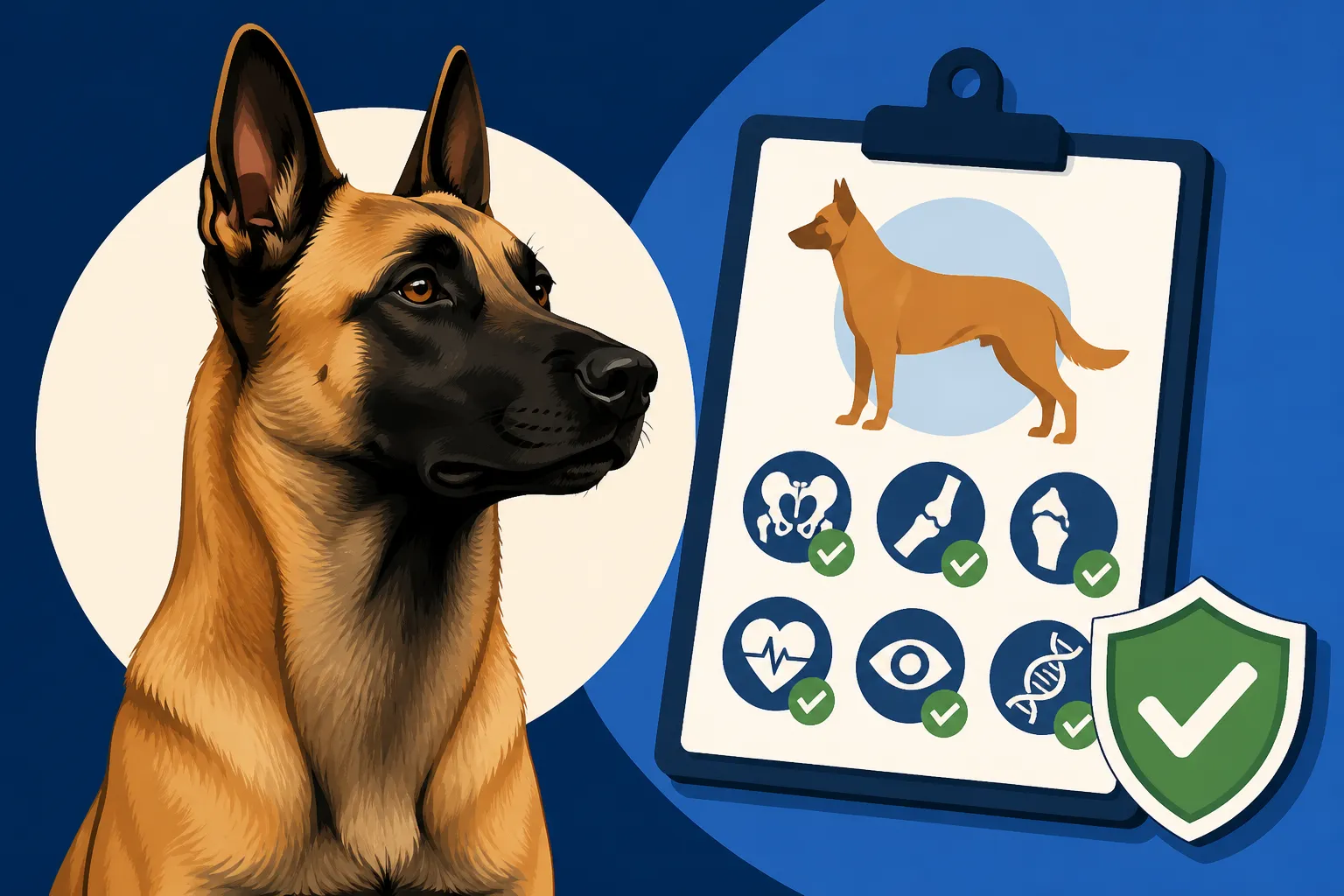
When we talk about health clearances for a breed like the Belgian Malinois, we're not just talking about a vet check-up. We're discussing specific diagnostic tests designed to identify genetic predispositions to certain inherited diseases. For Malinois, common concerns include hip and elbow dysplasia, various eye conditions, cardiac issues, and thyroid disease. A clean bill of health on these fronts means a significantly reduced risk that your puppy will suffer from these debilitating conditions later in life. Imagine the heartbreak and expense of a young Malinois needing major joint surgery because its parents weren't properly screened. These clearances are a proactive measure, safeguarding the breed's health and your future puppy's well-being. Looking up these records is a critical step in Asking a Breeder for Malinois Ataxia Results and other vital health information.
The Role of the Sire in a Puppy's Future Health
It's easy to focus on the dam, as she carries and raises the litter, but the sire contributes half of the genetic material to every single puppy. This means that any genetic weaknesses or predispositions present in the sire can be passed down to his offspring. A sire with excellent hip scores, clear elbows, and healthy eyes significantly increases the probability that his puppies will inherit those same positive traits. Conversely, a sire with borderline or dysplastic results, even if he appears healthy, could be passing on genes that lead to serious health problems. Understanding the sire's genetic blueprint through OFA testing is non-negotiable for responsible breeding and for discerning puppy buyers.
Navigating Breeder Claims vs. Verified Data
Let's be honest, anyone can say their dogs are health tested. Some breeders, unfortunately, might provide outdated or incomplete information, or even misrepresent what "cleared" truly means. This is where verified data becomes your best friend. The OFA database provides a public, transparent record of specific health tests, allowing you to independently confirm the claims made by a breeder. If a breeder tells you the sire has "good hips" but can't provide the OFA registration number or a direct link to the public record, that's a red flag. Always verify. It's about protecting yourself, your investment, and most importantly, the future health of your Malinois. This thorough verification also extends to understanding specific metrics, such as The Hip and Elbow Numbers Behind a Malinois Clearance.
A Step-by-Step Guide to Accessing OFA Records
The Orthopedic Foundation for Animals (OFA) maintains a comprehensive public database of health certifications for various breeds, including Belgian Malinois. Navigating it is fairly straightforward once you know the ropes. This isn't just a list of numbers; it's a testament to a breeder's commitment and a window into the genetic health of your potential puppy.
Starting Your Search on the OFA Website
To begin your detective work, head directly to the OFA website. On their homepage, you'll find a prominent "Search OFA Database" link. Click on this, and you'll be directed to a search page where you can input various pieces of information about the dog you're researching.
The most reliable way to search is by the dog's full, registered name. This is often an official name that includes kennel prefixes and suffixes, like "Ch. [Kennel Name] Fierce Protector of the Realm." If you only have a call name (e.g., "Blitz"), your search might not yield results, as OFA records use registered names. Another highly effective method is to use the dog's OFA registration number, which will be a string of letters and numbers unique to that dog's record (e.g., "BM-12345G24M-VPI"). If the breeder has provided this, it's the fastest way to pull up the exact record. You can also search by registration number from a kennel club like the AKC.
Once you input the information, hit "Search," and if the dog has OFA clearances, its public record should appear. This record will list all the tests the dog has undergone and their respective results. It's a goldmine of information, showing everything from hip and elbow scores to thyroid and eye certifications. Remember that OFA results for hips and elbows are generally final at 24 months of age, so ensure the dog is old enough for these specific clearances.
Deciphering OFA Certificates and Ratings
When you find a Malinois sire's OFA record, it might seem like a jumble of letters and numbers at first glance. Let's break down what you're looking at, focusing on the most common clearances for Malinois.
- Hip Dysplasia: This is perhaps the most well-known clearance. OFA rates hips as Excellent, Good, Fair, Borderline, Mild, Moderate, or Severe.
- Excellent, Good, Fair: These are all considered passing grades, indicating healthy hips. "Excellent" is the best, "Good" is very good, and "Fair" means still within normal limits but with some minor structural irregularities. A breeder striving for the best will often aim for Good or Excellent.
- Borderline, Mild, Moderate, Severe: These indicate varying degrees of hip dysplasia. Any result below "Fair" is a fail and means the dog should not be bred. Understanding Reading a Belgian Malinois Hip Result can help you interpret these grades more effectively.
- Elbow Dysplasia: This is rated as Normal (Grade 0), Grade 1, Grade 2, or Grade 3.
- Normal (Grade 0): This is the ideal result, indicating no evidence of elbow dysplasia.
- Grade 1, 2, 3: These indicate increasing severity of elbow dysplasia. Any grade above 0 is considered a fail, and such dogs should not be bred.
- Eye Certification (CERF/OFA Eye): These clearances indicate whether the dog's eyes are free from inherited eye diseases at the time of examination. Look for "Normal" or "Clear" results. Conditions like cataracts, progressive retinal atrophy, or pannus (often seen in Malinois, and worsened by sunlight) can be screened for. For more detail on these specific conditions, consider researching The Eye Diseases Behind a Malinois Eye Certificate.
- Thyroid: OFA certifies thyroid function as "Normal" or "Abnormal." Hypothyroidism can impact a dog's health and temperament, so a normal result is desirable.
- Cardiac: OFA offers both practitioner and specialist evaluations for heart health. Look for "Normal" or "Clear" results. Sometimes, a "Cardiac Normal – Echo" indicates an echocardiogram was performed by a specialist. A heart murmur found on a Malinois before breeding should always be thoroughly investigated, which you can learn more about by looking up The Murmur Found on a Malinois Before Breeding.
- Patella: While less common as a major issue for Malinois, patella luxation can occur. OFA will certify patellas as "Normal" or "Luxating."
Each entry on the OFA record will have a date, indicating when the test was performed, and a registration number specific to that test. Always check these dates to ensure the clearances are recent and valid, especially for eye certifications which often need annual renewal.
What to Do if a Record Isn't Found
It can be disheartening to search for a sire's OFA record only to come up empty-handed. But don't despair; there are a few reasons this might happen, and steps you can take.
Firstly, double-check the spelling of the registered name. Even a slight typo can prevent the record from appearing. If you're using a kennel club registration number, ensure it's the correct one for the OFA database, as some clubs have different numbering systems.
If your spelling is correct and still no record, the most straightforward reason is that the dog simply hasn't been health tested through OFA. This is a significant red flag. A reputable breeder will always perform these foundational health tests on their breeding stock. If the sire hasn't been tested, that breeder is not adhering to responsible breeding practices, and you should seriously reconsider acquiring a puppy from them.
Another possibility is that the tests were done, but the breeder opted not to make the results public. OFA allows breeders to submit results for "Confidential" evaluation, meaning they receive the results but they don't appear in the public database. This is rare for a breeder who is truly confident in their dog's health, as transparency is key. If a breeder claims clearances were done but aren't public, respectfully ask for a copy of the official certificate for verification. If they refuse, that's another significant red flag.
Finally, some breeders use other health registries or clearances, particularly if they are breeding under different international kennel clubs or specific working dog organizations. For example, some may use PennHIP for hip evaluations instead of OFA. While PennHIP is also an excellent system, its results won't appear on the OFA database. If this is the case, the breeder should be able to provide clear documentation from the alternative registry. Always ask for verifiable documentation, regardless of the testing body.
Beyond OFA: Other Health Considerations for Malinois Sires
While OFA provides critical foundational health clearances, it's important to remember that it's just one piece of the puzzle. The Belgian Malinois is a complex breed with specific genetic considerations, and a truly responsible breeder goes above and beyond the basics to ensure the health and longevity of their lines.
Complementary Health Screenings
Beyond the standard OFA hip, elbow, eye, thyroid, and cardiac clearances, there are other important health screenings that a responsible Malinois breeder should undertake. Genetic DNA tests are becoming increasingly prevalent and crucial for identifying carriers of specific diseases that might not be visible in a physical exam or x-ray.
For Belgian Malinois, two conditions that warrant specific DNA testing are Ataxia (Spongy Degeneration with Cerebellar Ataxia – SDCA1 and SDCA2). These are severe neurological conditions that can manifest in puppies as early as six weeks old, causing a wobbly gait and eventual inability to walk. A good breeder will have tested their breeding stock for these conditions, ensuring that no affected puppies are produced. You can learn more about these specific tests in articles like Testing a Belgian Malinois for SDCA1 and SDCA2 or The Two Ataxia Genes Belgian Malinois Are Tested For. If a sire carries one copy of an ataxia gene, he can still be bred to a clear mate, but never to another carrier, to avoid producing affected puppies.
Additionally, some breeders might test for Degenerative Myelopathy (DM), though its prevalence in Malinois is lower than in some other shepherd breeds. This is another neurological condition that affects older dogs. While not always a deal-breaker if a dog is a carrier (as DM is a late-onset disease and many carriers never develop it), it's still good information to have. Whether a Malinois Should Be DNA Tested for Myelopathy delves deeper into this specific concern.
These additional DNA tests, often done via a simple cheek swab or blood sample, add another layer of assurance regarding a puppy's future health. They show a proactive commitment to breed health, looking beyond just orthopedic issues.
Assessing Overall Longevity and Pedigree
A single dog's health clearances, while essential, don't tell the whole story. To truly understand the genetic health of a Malinois sire, you need to look deeper into his pedigree. What's the longevity of his immediate family members? Do his parents, grandparents, and siblings show consistent health and vigor into their senior years? A pedigree with many long-lived, healthy dogs is a strong indicator of robust genetics.
Ask the breeder about the health issues, if any, that have appeared in the sire's lineage. No line is perfectly free of all issues, but an honest breeder will be transparent about what has cropped up and how they are working to minimize it through selective breeding. Are there patterns of cancer, seizures, or specific autoimmune diseases in the family tree? For instance, The Seizure Disorder Running in Malinois Lines is something to be aware of and discuss with a breeder.
A strong pedigree means more than just titles and championships; it means a history of health, sound temperament, and working ability passed down through generations. It means less guesswork for you and a higher probability of a healthy, long-lived companion.
Questions to Ask Breeders About Sire Health
When you're speaking with a potential breeder, come prepared with a list of questions that go beyond just "Are your dogs health tested?" Here are some examples to help you gather comprehensive information about the sire's health:
- "Can you provide me with the registered name and OFA registration numbers for the sire so I can look up his public records?" (This is your starting point.)
- "What were the specific OFA grades for the sire's hips and elbows, and at what age were those final clearances obtained?"
- "Has the sire had current eye certifications (OFA Eye/CERF)? What were the results, and when was the last exam?"
- "What other genetic health tests (e.g., SDCA1, SDCA2, DM, cardiac) has the sire undergone, and what were the results? Can I see copies of these certificates?"
- "Are there any health issues that have appeared in the sire's immediate family (parents, siblings, previous offspring)?"
- "What is the average lifespan and common causes of death in this particular line of Malinois?"
- "What specific preventative care measures do you take for your breeding dogs to ensure their ongoing health?"
- "Do you offer any health guarantees against genetic conditions in your puppy contract, and what are the terms?"
A reputable breeder will not only welcome these questions but will be eager to provide detailed answers and supporting documentation. They understand that health transparency is fundamental to finding good homes for their puppies and upholding the integrity of the breed.
Making Informed Decisions for Your Future Malinois Puppy
Choosing a Belgian Malinois puppy is an exciting journey, but it requires careful consideration, especially when it comes to health. The information you gather about a sire's OFA records and other health clearances is invaluable in making a decision that will impact the next decade or more of your life.
Interpreting the Data for Breeding Decisions
Once you've looked up the OFA records and discussed other health screenings with the breeder, it's time to synthesize all that information. Don't just look for "passed" – aim for "excellent." A sire with "Good" or "Excellent" hips, "Normal" elbows, and clear eye, thyroid, and genetic panels demonstrates a strong commitment to health. If any results are borderline or show minor issues, understand the breeder's rationale for breeding that dog and what measures they take to mitigate risks. For instance, a dog with "Fair" hips might still be bred if paired with a mate with "Excellent" hips, and if the overall health of the line is outstanding.
It's about assessing the whole picture. Is the breeder upfront about any potential weaknesses in their lines, or do they only highlight the positives? Are they actively working to improve health, or just meeting minimum requirements? Remember, a Malinois is a long-term companion and often a working partner. Investing time now in thorough health research will save you potential heartache and significant veterinary expenses down the road. For example, conditions like pannus require lifelong management, and the associated Monthly Cyclosporine Costs for a Malinois With Pannus can be substantial.
The Long-Term Impact of Health Testing
The rigorous health testing of breeding dogs isn't just about avoiding problems in the next litter; it's about the long-term health and vitality of the entire Belgian Malinois breed. Every responsible breeding decision, backed by verifiable health clearances, contributes to a healthier genetic pool. As future owners, supporting breeders who prioritize these clearances helps ensure that these magnificent dogs continue to thrive for generations.
Think about the quality of life for your Malinois. A dog free from debilitating hip pain, clear of vision problems, or neurological disorders can live a full, active life, performing demanding tasks and enjoying every moment with you. This proactive approach to health means more joyful years together, whether your Malinois is a working partner or a beloved family companion. It truly showcases why responsible breeding practices are a cornerstone of canine welfare.
Support Systems for Malinois Owners
Even with the best health clearances, owning a Malinois means being prepared for anything. These are active dogs, prone to injuries or unexpected health events just like any athlete. Having a strong support system in place can make all the difference.
Consider pet insurance from providers like Healthy Paws. While it won't prevent genetic issues, it can certainly cushion the financial blow if your Malinois does encounter an accident or illness, even with the most rigorously health-tested parents. Understanding what type of insurance best fits a high-drive dog like a Malinois is essential.
Beyond insurance, good nutrition plays a vital role in maintaining a Malinois's health and vigor. High-quality food options, whether traditional kibble from a trusted supplier like Chewy or fresh food services like Ollie, can support strong bones, healthy joints, and overall well-being. Always choose a diet appropriate for their activity level and life stage.
Finally, connect with other Malinois owners and reputable trainers. They can be an invaluable resource for navigating the breed's unique needs, from finding specialized vets to discussing common health quirks or training challenges. Being part of a supportive community helps ensure you're never alone in your Malinois ownership journey.
Disclaimer
This article is for general informational purposes only and does not constitute professional advice. Laws, prices and regulations vary by location and change over time. Consult a qualified professional for guidance on your specific situation.