The Shark Phase Every Malinois Puppy Goes Through
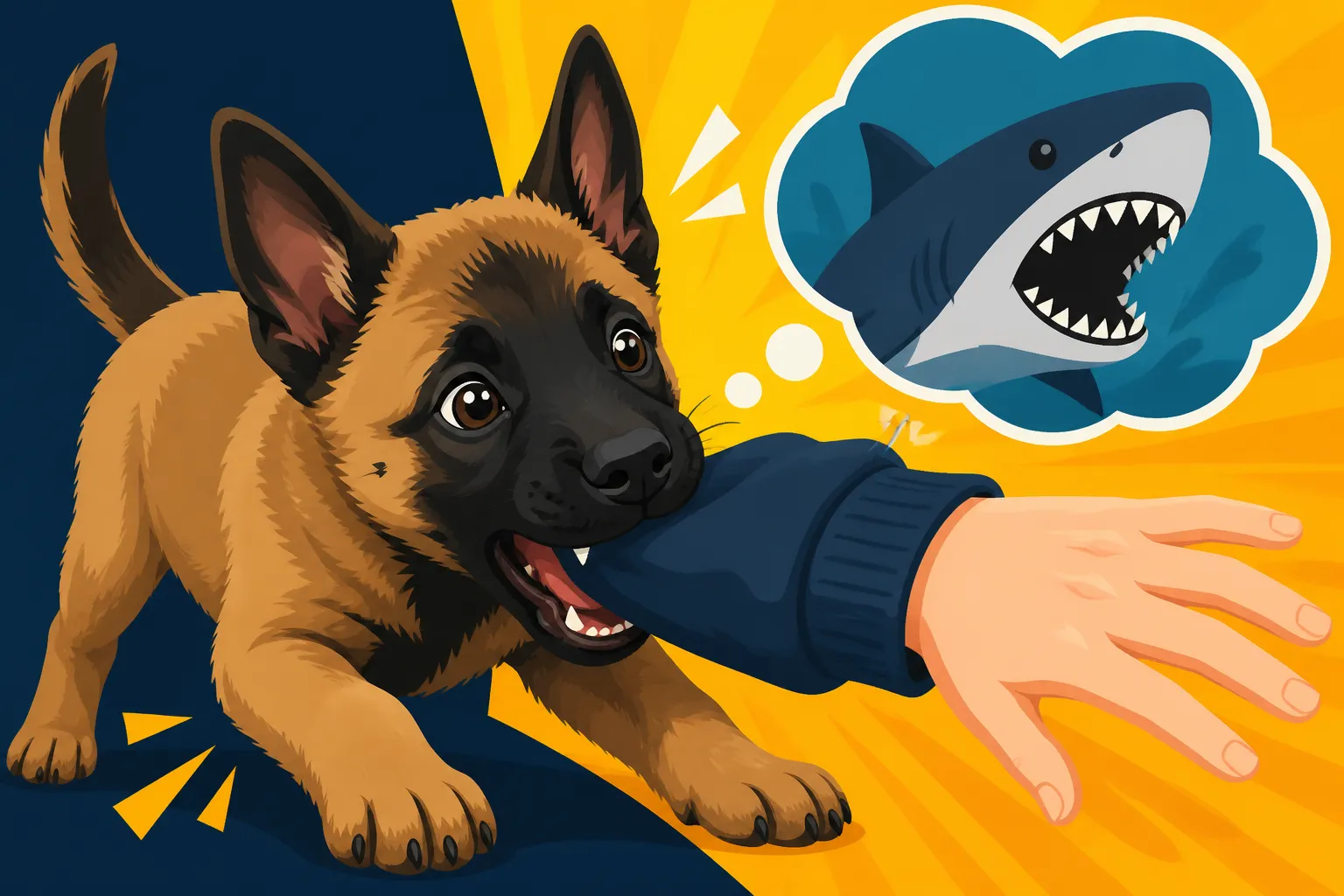
If you've recently brought home a Belgian Malinois puppy, you've likely already discovered a phenomenon many owners affectionately, or perhaps a little fearfully, refer to as the "shark phase." This isn't just regular puppy nipping; it's an intense, often painful period where your sweet, fuzzy land shark seems to believe every part of you is a chew toy. This guide is here to walk you through understanding why this happens, how to manage the relentless mouthing, and practical strategies to help your Malinois puppy develop a soft mouth and mature into a well-mannered companion, without losing a digit in the process.
Understanding the Malinois "Shark Phase"
Bringing a Belgian Malinois puppy into your home is an exciting time, filled with dreams of a loyal, intelligent, and capable working partner. However, many new Malinois owners quickly hit a wall when their adorable fluff ball transforms into a relentless, razor-toothed piranha, seemingly intent on shredding hands, ankles, and anything else within reach. This isn't just typical puppy behavior; it's the legendary Malinois "shark phase," and it can be incredibly taxing on even the most experienced dog owners.
What Exactly Is the Shark Phase?
The "shark phase" in a Belgian Malinois puppy refers to an extended period of intense biting, mouthing, and nipping that goes far beyond what you might expect from other breeds. While all puppies explore their world with their mouths and use biting as a primary form of communication and play, Malinois puppies take this to an entirely different level. It's not uncommon for owners to describe feeling like they've adopted a wild animal rather than a domestic dog, with nips that draw blood and a persistence that can feel overwhelming.
This phase typically begins as soon as the puppy leaves its littermates, usually around 8 weeks of age, and can last intensely until 5-6 months, sometimes even longer for particularly high-drive individuals. It's characterized by rapid, often hard nips at hands, feet, clothing, and anything that moves. For the bewildered owner, it can feel like a direct assault, leaving hands riddled with tiny punctures and frustration mounting with every broken boundary. It's crucial to understand that this is not aggression in the adult sense; it's an amplified version of natural puppy exploratory and play behavior, deeply rooted in their breed characteristics.
Why Malinois Puppies Are Different
Belgian Malinois are bred for intense working roles—police, military, protection, and sport. These roles demand exceptional drive, resilience, and a strong prey drive. These same traits, while highly desirable in a working adult, translate into a rather formidable puppy. Their high drive means they have an immense amount of energy and an inherent need to do something, and often, that "something" involves their mouths. Their prey drive, which will later be channeled into tracking or bite work, means they are incredibly stimulated by movement, making your wiggling fingers or quick movements irresistible targets.
Think about it: a Malinois is inherently wired to chase, catch, and hold. In a young puppy, these instincts are raw and unrefined. While a Labrador puppy might mouth gently, a Malinois puppy is often already putting significant pressure behind its bites, learning quickly what works to get attention or satisfy its urge to interact. This intensity isn't a flaw; it's a feature of the breed, but it's one that requires careful, consistent, and early management to ensure it develops into controlled, appropriate mouth use, rather than a permanent habit. Without proper guidance, that strong bite can become a real problem later on, making Why a Belgian Malinois Is the Wrong First Dog a common refrain.
Natural Instincts vs. Problem Behavior
Every puppy uses its mouth to explore its environment. They chew on objects to understand their texture, shape, and even taste. Biting is also how puppies in a litter learn crucial bite inhibition. When one puppy bites another too hard during play, the bitten puppy will typically yelp loudly and disengage from play, teaching the offender that painful bites end the fun. This natural feedback loop is essential for a puppy to learn how much pressure is too much.
For a Malinois, the challenge lies in the intensity of these natural instincts. Their powerful jaws and high drive mean their "play bites" can easily draw blood, and they might not respond to the typical "yelp" as readily as a softer breed. The problem behavior isn't the act of mouthing itself, but when it's uncontrolled, persistently painful, or doesn't respond to redirection. If your puppy consistently targets your skin, ignores attempts to redirect to a toy, or bites with increasing force, it's time to step up your management and training strategies. The goal isn't to stop them from using their mouths entirely, but to teach them what to bite (appropriate toys) and how gently to interact with human skin.
Surviving the Initial Onslaught: Immediate Management Strategies
When you're in the thick of the Malinois shark phase, it can feel like you're constantly on the defensive. But there are immediate, actionable steps you can take to manage the biting and start teaching your puppy better habits. Consistency is the name of the game here, and every member of the household needs to be on board with these strategies.
Redirecting a Biting Malinois Puppy Onto a Toy
This is your number one defense, your ultimate superpower against those needle-sharp puppy teeth. Always, and I mean always, have a suitable chew toy within arm's reach. As soon as your Malinois puppy's teeth make contact with your skin or clothing, immediately, but calmly, interrupt the behavior. A sharp "No!" or "Ah-ah!" can work, but the most effective next step is to instantly offer them a desirable toy. The key here is the immediate redirection. You want to make it clear that teeth on skin means the game stops, but teeth on a toy means the fun continues.
The type of toy matters immensely for a Malinois. They need durable, engaging toys that can stand up to their powerful jaws and high drive. Think heavy-duty rubber toys, tough nylabones, or thick rope tugs. Avoid flimsy plush toys that can be easily shredded and ingested. Keep several scattered around your living space so you're never caught off guard. When they choose the toy, praise them lavishly. This isn't just about stopping the bad behavior; it's about rewarding the correct behavior, building a positive association with chewing appropriate items. For more on setting up your home for success, you might want to look into The First Week With a Belgian Malinois Puppy.
The "Yelp and Withdraw" Technique
This classic puppy training technique is designed to mimic how puppies teach each other bite inhibition. When one puppy bites another too hard, the bitten puppy will often yelp loudly and stop playing. The idea is to replicate this reaction to teach your Malinois puppy that hard bites hurt and end the fun interaction with you.
Here's how it works: the moment your puppy's teeth touch your skin too hard, let out a sharp, high-pitched "YIP!" or "OUCH!" (make it sound like a puppy yelp, not an angry shout). Immediately withdraw your hand or stand up and turn away, disengaging completely for a few seconds. The goal is to make the puppy understand, "Oh, I bit too hard, and now the fun person is gone." For a Malinois, you might need to be extra dramatic or even physically remove yourself from the puppy's immediate vicinity for a brief moment, stepping behind a baby gate or into another room. This technique needs to be applied consistently, every single time, by everyone the puppy interacts with, for it to truly sink in.
Managing the Environment
Prevention is always better than cure, especially with a Malinois puppy. You wouldn't leave a toddler unsupervised near electrical outlets, and similarly, you shouldn't leave a Malinois puppy unsupervised in an un-puppy-proofed environment where they can practice undesirable biting.
First, puppy-proof your home meticulously. Remove anything valuable or dangerous that your puppy might be tempted to chew. This includes loose wires, shoes, remote controls, and delicate furniture. Second, use management tools like crates and playpens. These aren't just for potty training; they are invaluable for providing your puppy with supervised, safe spaces where they can't get into trouble or practice inappropriate biting. When you need a break, or your puppy is becoming over-stimulated and bitey, a scheduled "crate rest" in a comfortable, safe crate can work wonders. Finally, consider your attire. Long sleeves and thicker pants can offer some protection against those sharp teeth, especially during peak shark-phase hours. Remember, the less opportunity your puppy has to practice biting you, the faster they will learn to redirect to appropriate outlets.
Teaching Bite Inhibition and "Soft Mouth"
Beyond immediate management, the long-term goal is to teach your Malinois puppy true bite inhibition – understanding the pressure of their jaws – and to develop a "soft mouth" when interacting with humans. This isn't about suppressing their natural instincts, but refining them.
The Role of Socialization in Bite Inhibition
Safe and well-managed socialization is absolutely critical for teaching bite inhibition. While you might be tempted to avoid other dogs when your puppy is in full shark mode, carefully chosen interactions can be incredibly beneficial. Puppies learn much about appropriate play and bite pressure from their littermates and stable adult dogs. A confident, well-socialized adult dog will provide clear, immediate, and effective feedback to an overly bitey puppy – often a growl, a snap, or a quick body block – which teaches the puppy much faster than we humans ever could.
However, a word of caution: not all dog interactions are good interactions. Avoid chaotic environments like dog parks where a high-drive Malinois puppy can quickly become overwhelmed or learn bad habits from less-than-ideal playmates. Instead, seek out structured puppy classes or arrange playdates with known, calm, and vaccinated adult dogs who have a track record of being good "teachers." These controlled environments allow your puppy to learn social cues and bite inhibition in a safe setting. A platform like BAXTER & Bella offers guidance on appropriate socialization steps, often stressing quality over quantity.
Consistency and Timing are Key
This cannot be stressed enough: consistency from every single person who interacts with the puppy is paramount. If one person allows hard biting and another tries to stop it, the puppy will become confused and progress will be slow, if not non-existent. Every time those shark teeth make contact with human skin, the same sequence of events should occur: a "yelp" or "ouch," immediate withdrawal of attention, and then redirection to an appropriate toy.
The timing of your intervention is equally important. It needs to happen in the moment the undesired behavior occurs. If you wait even a few seconds, the puppy won't connect the consequence (loss of fun/attention) with the action (biting). This quick feedback loop helps them understand cause and effect. Think of it as a constant stream of tiny lessons throughout the day. Over time, your Malinois will start to understand the threshold for acceptable mouthing. This also applies to activities like Teaching a Malinois Puppy to Take Food Gently, where immediate feedback shapes behavior.
Understanding Pressure and Release
Teaching a "soft mouth" goes beyond just stopping hard bites; it's about helping your puppy understand the concept of pressure. You can start this early, even before their adult teeth come in. For example, when giving treats, hold them gently but firmly. If your puppy nips your fingers too hard, immediately withdraw the treat and your hand. Re-offer after a brief pause, encouraging them to take it more gently. Over time, they'll learn that a gentle mouth gets the reward.
You can also practice this during playtime. Allow some gentle mouthing on your hands, but as soon as the pressure increases, give your "yelp" and withdraw. The idea is to teach them that playful mouthing is okay, but hard mouthing is not. Gradually, your puppy should learn to self-regulate the pressure of their bite. Remember, a Malinois will always be a mouthy breed, but a soft mouth makes all the difference in living safely and comfortably with them.
Tools and Resources to Help
Dealing with the relentless biting of a Malinois puppy can be exhausting, and it's okay to enlist help! Thankfully, there are many tools and resources available that can make a significant difference in navigating the shark phase and fostering good habits.
Durable Chew Toys and Interactive Puzzles
As we've discussed, appropriate chew toys are your first line of defense. But for a Malinois, "durable" isn't just a suggestion; it's a necessity. Their powerful jaws can make short work of toys that would last other breeds for months. Investing in high-quality, tough chew toys is paramount. Brands known for their durability, like KONG, Nylabone (the hard, non-edible kind), and GoughNuts, are often recommended by Malinois owners. Look for toys made of tough rubber or nylon that are designed for aggressive chewers. Having a variety of textures and shapes can also keep your puppy's interest piqued. You can find a vast selection of these durable toys on platforms like Amazon, ensuring you always have a fresh supply.
Beyond just chewing, interactive puzzle toys are invaluable for a Malinois. These toys, often fillable with kibble or treats, force your puppy to use their brain to get the reward. This provides mental stimulation, which is often more tiring than pure physical exercise for a high-drive breed. A frozen KONG stuffed with wet food or peanut butter can provide a significant period of quiet, focused chewing and mental engagement, giving you a much-needed break from the shark attacks. Rotate these toys regularly to keep them novel and exciting for your puppy.
Harnessing the Power of a Flirt Pole
If you've never used one, a flirt pole is about to become your new best friend. Essentially, it's a long pole with a rope attached, and a lure (often a fuzzy toy or rag) at the end. It's like a giant cat toy for dogs, designed to tap directly into a Malinois's intense prey drive. Instead of your hands becoming the target of lunges and bites, the lure at the end of the pole becomes the focus.
Using a flirt pole allows your puppy to chase, pounce, and "catch" the lure, fulfilling their natural instincts in a safe and structured way that doesn't involve your body parts. It's an incredible tool for burning off excess energy and providing intense mental and physical engagement in short bursts. Crucially, it teaches impulse control when you eventually ask your puppy to "leave it" or "out" the lure. Always ensure you teach a solid "out" or "drop" command so the toy can be released, and avoid letting your puppy win and destroy the lure every single time. Short, intense sessions are usually more effective than long, drawn-out ones. For more on this, check out Flirt Poles and a Belgian Malinois's Drive.
Professional Guidance and Online Programs
Sometimes, despite your best efforts, the shark phase feels insurmountable. If you're struggling to manage the biting, if the bites are escalating in intensity, or if you simply feel overwhelmed, don't hesitate to seek professional help. A qualified dog trainer or behaviorist experienced with working breeds can provide tailored advice and hands-on guidance. They can help you fine-tune your techniques, identify triggers, and develop a comprehensive training plan that addresses your specific puppy's needs.
Beyond in-person help, online resources and structured programs can be a lifesaver. Companies like BAXTER & Bella offer comprehensive online puppy training programs that guide you through various stages, including bite inhibition, with video tutorials and expert support. These programs can be particularly helpful for Malinois owners, as they often provide a structured curriculum that ensures consistency and progression. Participating in group puppy classes can also offer supervised socialization and guidance from experienced instructors, providing a crucial external perspective and support system. If you're considering the financial aspect of such endeavors, What Puppy Classes Cost a Belgian Malinois Owner can provide some perspective.
The Mental Component: Tiring the Malinois Brain
It's a common misconception that a tired dog is always a good dog. While physical exercise is essential for a Belgian Malinois, for this breed, a mentally tired dog is often a much calmer and less bitey dog. Their minds are constantly whirring, and if not given appropriate outlets, that mental energy can manifest in destructive or unwanted behaviors, including excessive biting.
Mental Stimulation Over Pure Physical Exercise
While your Malinois puppy might run for hours and still seem to have boundless energy, pure physical exercise alone rarely "tires" their brains. In fact, too much unguided physical activity can sometimes make them more aroused and prone to biting. The key is to engage their incredibly intelligent minds. Think about the jobs they were bred for: herding, protection, detection. These roles demand focus, problem-solving, and decision-making.
Incorporate brain games into their daily routine. Scent work, even simple games like "find the treat" hidden around the house, can be incredibly engaging. Teaching them new tricks, even silly ones, makes them think. Use interactive puzzle feeders instead of just a bowl for meals, forcing them to work for their food. These activities tap into their innate drives and provide a mental workout that is far more satiating than endless fetch. A mentally stimulated Malinois is less likely to invent its own (often destructive or bitey) ways to entertain itself. For great ideas on this, refer to Puzzle Work for a Belgian Malinois Indoors.
Structured Training Sessions
Short, frequent, and structured training sessions are invaluable for a Malinois puppy, especially during the shark phase. These aren't just about teaching commands; they're about building focus, impulse control, and a strong working relationship with you. Instead of one long, overwhelming session, aim for multiple 5-10 minute sessions throughout the day.
Focus on fundamental obedience commands like "sit," "down," "stay," "come," and "leave it." The "leave it" command is particularly crucial for a mouthy puppy, as it teaches them to disengage from something desirable. As your puppy progresses, gradually introduce distractions to increase the challenge. These structured sessions give your puppy a "job," a purpose for their intelligence and drive. They learn that engaging with you in a focused way is rewarding, and it helps them channel their intense energy into productive tasks rather than biting.
The Importance of Forced Calm and "Off Switches"
Perhaps one of the most challenging, yet crucial, aspects of raising a Belgian Malinois is teaching them an "off switch." These dogs are naturally high-drive and often struggle to self-regulate their arousal levels. They can go from zero to a hundred in a split second, and the shark phase is often exacerbated by over-arousal and over-tiredness. Teaching them to settle and be calm on command is not innate for most Malinois; it's a skill that must be meticulously taught and reinforced.
The "place" command is an excellent tool for this. Teach your puppy to go to a designated mat or bed and stay there calmly, even amidst household activity. Start with short durations and gradually increase the time, rewarding calm behavior. Crate training also plays a vital role here, providing a secure, quiet space where your puppy can be forced to decompress and sleep without external stimulation. These periods of forced calm teach your Malinois that it's okay, and even rewarding, to not be in motion or actively engaging. This is a foundational concept for a well-adjusted Malinois, and Building an Off Switch Into a Belgian Malinois delves deeper into this essential training.
When Does It End? Anticipating the Transition
The question on every Malinois owner's mind during the peak of the shark phase is usually, "When will this end?!" While it feels like it might last forever, rest assured, it is a phase, and it does gradually subside with consistent effort. However, understanding the typical timelines and what to expect next is important.
The Month a Malinois Puppy's Biting Eases
Generally speaking, the most intense and frustrating period of the Malinois shark phase tends to ease around 4 to 6 months of age. This often coincides with several developmental milestones. Firstly, their adult teeth are usually coming in, which can temporarily increase chewing, but also signals the end of the sharp "needle teeth" of puppyhood. More importantly, as they mature slightly, their ability to learn and retain information improves, and the consistent feedback they've received about bite pressure starts to really sink in.
You'll notice a gradual reduction in the frequency and intensity of the hard bites. They might still mouth, but it will likely be softer, more exploratory, and more responsive to redirection. It's not usually an abrupt stop, but rather a slow tapering off as they learn better self-control. However, it's crucial not to become complacent during this period. The foundation you've laid during the peak shark phase will continue to shape their behavior as they move into adolescence.
Adolescent Challenges and Setbacks
Just when you think you've turned the corner, your Malinois will enter adolescence (roughly 6 months to 2 years, sometimes even longer). This stage can bring a whole new set of behavioral challenges, and sometimes, a temporary resurgence of mouthiness or boundary-testing behavior. Adolescence in dogs is much like human teenage years: hormones are kicking in, they're exploring their independence, and they might start testing the rules you thought were firmly established.
Stress, over-arousal, or a lack of sufficient mental and physical stimulation can all lead to an increase in mouthing during adolescence. They might not be intentionally trying to hurt you, but rather trying to communicate frustration, boredom, or over-excitement with the only tools they truly master – their mouths. Stay vigilant, maintain consistency, and don't be surprised if you have to revisit some of your earlier shark-phase strategies. This is a critical period for reinforcing all the good habits you've built. The Adolescent Malinois That Tests Everything is a topic many Malinois owners become intimately familiar with.
Long-Term Management and Continued Training
Even after the main "shark phase" has passed and adolescence is winding down, it's important to remember that a Belgian Malinois will always be a relatively mouthy breed. Their working genetics mean they naturally use their mouths to interact with the world, whether it's carrying objects, tugging on sleeves, or exploring new items. The goal isn't to eradicate all mouthing, but to ensure it's always appropriate, controlled, and gentle when interacting with humans.
Therefore, long-term management involves continuing to provide plenty of appropriate chew outlets (durable toys are a must!), consistent reinforcement of good behavior, and a rich schedule of mental and physical work to keep their intelligent minds and energetic bodies fulfilled. Even as adults, many Malinois will enjoy a good game of tug or carry objects around in their mouths during excited greetings. With consistent training and plenty of appropriate outlets, you can ensure that these natural behaviors are channeled positively, making your Malinois a joy to live with, rather than a menace to your hands!
Common Biting Scenarios and Solutions
The shark phase isn't a monolithic problem; it manifests in various ways. Understanding these specific scenarios can help you apply the right solution at the right time.
| Scenario | Description | Immediate Response | Long-Term Strategy |
|---|---|---|---|
| Play Biting/Nipping | Puppy nips hands/ankles during play or excitement, often escalating. | Yelp and Withdraw: Make a high-pitched "ouch!" or "yipe!", immediately remove the body part, and disengage for a few seconds. Then, offer a durable chew toy. | Consistent Redirection: Always have a toy handy. Interrupt any skin contact with a sound, then immediately offer the toy. Reward when they choose the toy. Teach "trade" for items they shouldn't have. Build impulse control with "leave it." |
| Attention Seeking Biting | Puppy bites or nips to get attention, especially if ignored or bored. | Ignore and Redirect: Turn your back, cross your arms, or even step behind a gate for a few seconds. When puppy is calm, then engage and offer a toy. Never give attention (even negative) for biting. | Proactive Engagement: Provide ample mental and physical stimulation. Schedule short training sessions and structured play. Teach a "place" command for enforced calm. Reward calm, non-biting attention-seeking (e.g., sitting nicely). |
| Overtired/Over-stimulated | Puppy becomes frantic, zoomy, and bitey, often late in the day or after intense play. | Forced Nap/Time Out: Immediately put the puppy in their crate for a quiet rest. Do not try to reason or train in this state. Provide a chew toy in the crate. | Scheduled Down-Time: Ensure your puppy gets enough naps throughout the day. Recognize signs of overtiredness (frantic energy, increased biting) and preemptively enforce calm time in the crate or on a "place." Focus on mental, not just physical, exercise. |
| Resource Guarding | Puppy growls/snaps if you approach their food, toys, or resting spot. | Immediate Retreat: Do not challenge the puppy. Move away to de-escalate. Seek professional help immediately. This is a serious behavior. | Professional Intervention: Work with a certified professional dog trainer or behaviorist experienced with resource guarding. Avoid punishment, which can worsen the problem. Implement positive counter-conditioning and desensitization protocols under expert guidance. |
| Frustration Biting | Puppy bites when unable to get something it wants, often on leash or during training. | Manage Environment/Remove Stimulus: Remove the puppy from the frustrating situation. For example, if on leash, turn around or move to a less stimulating area. Use "leave it" and redirect to a highly valued toy if appropriate. | Build Tolerance & Impulse Control: Practice "leave it" and "wait" in increasingly distracting environments. Work on focus exercises. Gradually expose the puppy to frustrating stimuli at a level where they can succeed, always ending on a positive note. Strengthen engagement with handler. |
| Fear Biting | Puppy bites out of fear, often when cornered, startled, or feeling threatened. | Create Space/Safe Zone: Do not push the puppy. Give them space and allow them to retreat to a safe place. Avoid direct eye contact or sudden movements. If unavoidable, approach cautiously and slowly. | Positive Socialization & Desensitization: Systematically and positively expose the puppy to new people, places, and experiences at a comfortable pace. Reward calm responses. Avoid forcing interactions. Build confidence through training and positive reinforcement. Seek professional help if severe. |
Disclaimer
This article is for general informational purposes only and does not constitute professional advice. Laws, prices and regulations vary by location and change over time. Consult a qualified professional for guidance on your specific situation.