Whether a Belgian Malinois Needs Muzzle Training for the Vet
For many Belgian Malinois owners, the thought of a veterinary visit can conjure up images of a wrestling match, a symphony of stress barks, and a general state of chaos. These highly intelligent, intensely driven dogs, while loyal to their handlers, often struggle immensely with the unfamiliar environment, invasive procedures, and handling by strangers that come with a trip to the vet. This guide will explore whether muzzle training is a necessary, proactive step for your Malinois’s well-being and the safety of everyone involved.
The Reality of Veterinary Visits for a High-Drive Malinois
Taking your Belgian Malinois to the vet isn't like taking a laid-back golden retriever. These dogs are wired differently. Their senses are sharp, their protective instincts are strong, and they thrive on predictability and control. When thrown into an environment that offers none of these things, it's a recipe for significant stress, not just for your dog but for you and the veterinary staff too.
Why Vet Visits Are Uniquely Stressful for Malinois
Imagine a place filled with strange, often strong, smells – antiseptic, other anxious animals, and the pheromones of fear. Add to that the cacophony of unusual sounds: barking, crying, the whir of equipment, and hushed human voices. For a Malinois, whose entire being is geared towards detection and reaction, this sensory overload is incredibly disorienting. They are acutely aware of everything, and they are constantly assessing threats.
Then comes the handling. A Malinois is often intensely bonded with its primary handler, and having a stranger, no matter how well-meaning, poke, prod, and restrain them can feel like a profound violation of their personal space and trust. Their high drive means they don't easily "settle" or passively accept discomfort. Instead, they might channel that drive into resistance, fight, or flight behaviors, which in a confined space, can quickly escalate. This is why it's so important to understand that their reactions aren't about being "bad"; they're about their inherent nature struggling with a very unnatural situation.
Assessing Your Malinois's Baseline at the Vet
Before you even consider a muzzle, it’s crucial to honestly evaluate your Malinois's current comfort level at the vet. Do they show subtle signs of stress like excessive panting, lip-licking, yawning, or averting their gaze? Are their muscles stiff, or do they freeze when approached by staff? These are early warnings that your dog is uncomfortable and possibly nearing its "bite threshold" – the point where fear or discomfort might lead to a defensive snap.
It's vital to differentiate between simple anxiety and potential aggression. An anxious dog might shake and try to hide, while a dog exhibiting aggressive tendencies might growl, snap, or lunge. Even a dog that has never bitten before can do so out of fear or pain, especially if it feels cornered or its warnings are ignored. Observing these signals closely, perhaps even filming a vet visit (with permission), can give you valuable insight. Remember, early intervention and proactive training are always better than reacting after an incident.
The Ethical Imperative of Safety for All
Ensuring the safety of everyone involved in your Malinois's care is not just practical; it's an ethical responsibility. Veterinary professionals dedicate their lives to animal welfare, and they deserve to do their jobs without fear of injury. A bite, even a seemingly minor one, can have serious consequences, from physical harm to emotional trauma, and can even impact the vet's ability to treat other animals.
Beyond the staff, consider other clients and their pets in the waiting room. A highly reactive Malinois can cause undue stress to other animals, and potentially lead to altercations. Furthermore, allowing your Malinois to repeatedly have negative, unchecked experiences at the vet can reinforce their fear or aggression, making future visits even more challenging and potentially jeopardizing their ability to receive necessary medical care. Muzzle training, in this context, becomes a tool for responsible pet ownership, demonstrating care not just for your dog, but for the entire community.
Proactive Muzzle Training: A Lifesaving Skill, Not a Punishment
For many, the word "muzzle" conjures negative images of aggressive dogs or punishment. However, for a high-drive breed like the Belgian Malinois, muzzle training is one of the most responsible and humane things you can do. It's not about admitting your dog is "bad"; it's about acknowledging their breed-specific traits and equipping them with a tool that ensures their safety and the safety of others in stressful situations.
Understanding the Purpose of a Well-Fitted Muzzle
A muzzle, when properly introduced and fitted, is a safety device, plain and simple. It allows your Malinois to receive necessary medical care, be groomed, or even just exist in public spaces without the risk of biting when overwhelmed or in pain. There are common misconceptions that muzzles are cruel or will prevent a dog from breathing or drinking. This is generally only true for ill-fitting fabric muzzles used improperly for extended periods.
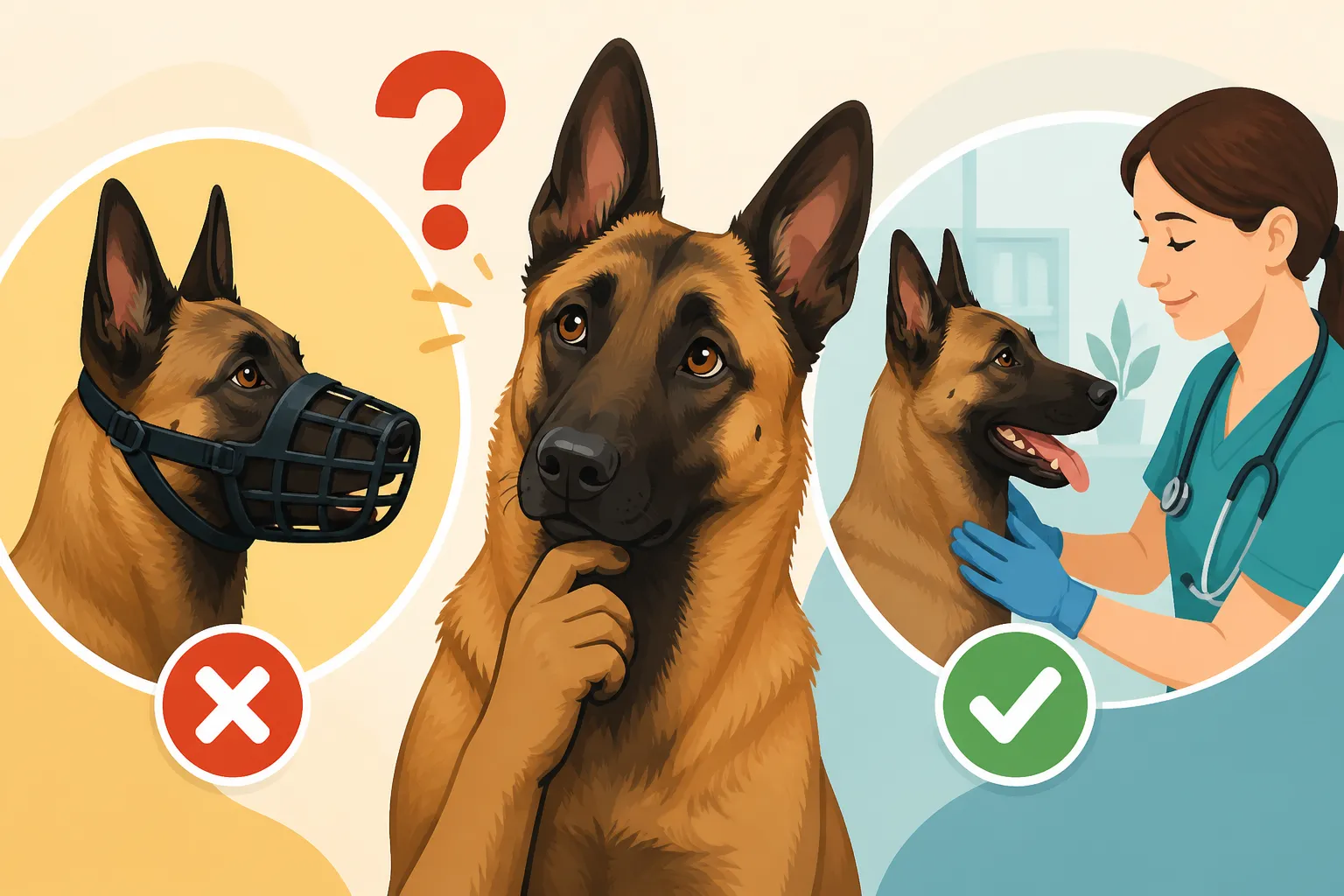
The right muzzle, specifically a basket muzzle, allows your dog to pant freely, drink water, and even take treats. This ability to pant is crucial for temperature regulation, especially for an excitable Malinois. It means the muzzle can be worn for longer durations without causing distress, allowing for proper desensitization and positive association. It’s a tool for cooperative care, not coercion.
Step-by-Step Introduction to Muzzle Training
The key to successful muzzle training is positive association and a gradual approach. You want your Malinois to view the muzzle not as a threat, but as a neutral or even positive object that predicts good things. Start by simply letting them sniff the muzzle, rewarding immediately with a high-value treat. Then, progress to touching their nose to it, then putting their nose into it briefly for a treat. The goal is that they choose to put their nose in the muzzle because they know it means a reward.
Once they are comfortable with that, you can start fastening the straps for just a second or two, immediately followed by removing the muzzle and giving a jackpot of treats. Slowly increase the duration, always ending on a positive note. Use highly palatable treats, like squeeze cheese or peanut butter, which you can deliver through the basket muzzle grid. You can find excellent basket muzzles on platforms like Amazon, offering a range of sizes to fit your Malinois perfectly. For a more detailed guide, consider reading Muzzle Conditioning Before a Malinois Ever Needs One. Remember, patience is key – rushing the process can create negative associations that are hard to overcome.
Integrating Muzzle Training into Your Malinois's Routine
Muzzle training shouldn't be reserved just for scary vet visits. To truly make it a positive and normal part of your Malinois's life, integrate it into routine, enjoyable activities. Practice putting it on before a walk, for a few minutes while playing fetch in the yard, or during a short training session at home. This helps normalize the experience and prevent the muzzle from becoming solely associated with stressful events.
The more your Malinois associates the muzzle with fun and positive experiences, the less stressful it will be when they have to wear it in a high-stakes situation like a vet visit. You can even smear a dollop of peanut butter or cream cheese inside the front of a basket muzzle, turning it into a delicious enrichment toy they look forward to wearing. This ongoing practice builds confidence and resilience. Additionally, working on skills like Teaching a Belgian Malinois to Accept a Stranger's Hands can complement muzzle training, making overall vet experiences smoother. Even general obedience resources, like those offered by BAXTER & Bella, often include principles of cooperative care that can be adapted to muzzle training.
When Muzzle Training Becomes Non-Negotiable
While preventative muzzle training is always a good idea for a Belgian Malinois, there are certain situations where it transitions from a good practice to an absolute necessity. Ignoring these signs not only puts others at risk but can also lead to more severe behavioral issues for your dog in the long run.
Prior History of Nipping, Growling, or Biting
This is perhaps the most obvious, non-negotiable scenario. If your Malinois has ever nipped, growled aggressively, or bitten a person (whether vet staff, groomer, or even a well-meaning family friend) during a medical examination, handling, or in a stressful environment, muzzle training is no longer an option – it's an immediate requirement. Any bite history, no matter how seemingly minor, indicates a significant risk factor.
A single incident is often a warning. Without intervention, these behaviors tend to escalate as the dog learns that aggression can create distance or end an uncomfortable situation. Waiting for a second incident is irresponsible and dangerous. Implementing a muzzle immediately helps break the cycle, providing a critical safety net while you work on behavior modification with a qualified professional. You might consider consulting with a professional if you find your Malinois reacting strongly to unfamiliar people or situations, and understanding What a Behaviorist Charges to Assess a Malinois can help you plan for this.
High Stress or Fear at the Vet, Despite Desensitization
Some Belgian Malinois, despite the most dedicated and patient efforts at desensitization and counter-conditioning, simply cannot cope with the inherent stressors of a veterinary clinic without showing extreme fear or reactivity. You might have tried "happy visits" with treats and praise, practiced handling at home, and slowly exposed them to the clinic environment, but still, they melt down.
For these dogs, the fear is so profound that even gentle restraint or a quick injection pushes them past their threshold. In such cases, forcing them through procedures without a safety measure like a muzzle can be traumatizing and further embed their fear. A muzzle, paradoxically, can reduce overall stress because the dog's handler and the veterinary staff are more relaxed, knowing there's no bite risk. This allows everyone to focus on the procedure, often making the process quicker and less fraught. It's a similar principle to Handling a Belgian Malinois at the Groomer; some dogs just need that extra layer of security.
Complex Medical Procedures or Painful Examinations
There will come a time in every dog's life when they face a painful injury, a sensitive diagnostic procedure, or even just routine vaccinations that might pinch. Even the most tolerant Malinois can react defensively when experiencing unexpected pain or discomfort, especially if it's in a vulnerable area.
Consider situations like stitching a laceration, examining an injured paw, taking X-rays of a painful joint, or giving an intramuscular injection in a tense muscle. In these moments, your dog's natural instinct to protect itself can override its training and trust. A muzzle ensures that necessary medical care can be administered safely and efficiently, without putting staff at risk or causing your dog to have an even worse experience that could hinder future treatment. For procedures requiring more significant intervention, such as those discussed in Anesthesia Protocols for a Lean Belgian Malinois, a muzzle might be part of the pre-procedure routine to ensure calm and safe handling. Always discuss your Malinois's temperament and any concerns with the vet, especially before procedures that might require sedation, as detailed in What to Tell a Vet Before a Malinois Is Sedated.
Choosing the Right Muzzle and Making it a Positive Experience
Selecting the correct muzzle is just as important as the training itself. A poorly chosen or ill-fitting muzzle can be uncomfortable, ineffective, or even dangerous. For a Belgian Malinois, especially in a vet setting, the type of muzzle matters significantly.
Basket Muzzles vs. Fabric Muzzles for Vet Use
When it comes to veterinary visits or any situation where a muzzle might be needed for more than a few seconds, a basket muzzle is almost always the superior choice for a Malinois. Brands like Baskerville offer excellent options readily available on platforms like Amazon. The open-cage design of a basket muzzle allows your dog to pant freely, drink water, and receive treats. This is critical for several reasons:
- Temperature Regulation: Malinois are high-energy dogs, and stress or exertion can quickly lead to overheating. Panting is their primary way to cool down. A basket muzzle ensures this vital physiological function is not inhibited.
- Positive Reinforcement: Being able to deliver treats through the muzzle is key for maintaining positive associations during a stressful vet visit. You can continually reward calm behavior, making the experience less negative over time.
- Duration of Wear: Basket muzzles can be worn for extended periods (if the dog is properly conditioned) without causing discomfort, which might be necessary during longer examinations, waiting times, or while recovering from sedation.
Fabric muzzles (often called "grooming muzzles") should be reserved only for very short-term, emergency situations where a quick, temporary restraint is needed, and breathing/panting is not an immediate concern. They restrict a dog's ability to pant and should never be used for more than a few minutes. For a high-drive dog like a Malinois, who might already be stressed, a fabric muzzle can quickly become dangerous due to overheating and increased anxiety.
Ensuring a Proper Fit
A muzzle is only as good as its fit. An ill-fitting muzzle can chafe, cause pain, or even be pulled off by a determined Malinois. When choosing a basket muzzle, you need to measure two key things:
- Snout Length: Measure from the tip of your Malinois's nose to about an inch below their eyes (where the muzzle will sit).
- Snout Circumference: Measure around the widest part of their snout, just below their eyes.
The muzzle should be long enough that the end of the basket extends slightly past the tip of their nose, preventing them from biting. Crucially, there should be enough room around the circumference for your Malinois to fully open their mouth to pant and yawn comfortably. It shouldn't be tight against their cheeks. Always refer to the manufacturer's sizing guide. Test the fit at home, looking for any rubbing or signs of discomfort. It might take trying a couple of different sizes or brands to find the perfect fit.
Continuous Positive Reinforcement at the Clinic
Even with the right muzzle and proper training at home, the vet clinic can still be a challenging environment. It's essential to continue positive reinforcement throughout the visit. Bring an arsenal of your Malinois's absolute favorite, high-value treats – something they only get at the vet. Squeeze cheese, small pieces of cooked chicken, or even a lick-mat smeared with peanut butter can work wonders.
Work with the vet staff to ensure they understand your approach. Ask them to deliver treats through the muzzle before, during, and after any procedures, if possible. The goal is to create a positive feedback loop: muzzle on, good things happen. If your Malinois is particularly reactive to other dogs, a muzzle can also provide a sense of security and allow for better management in a busy waiting room, similar to strategies used for A Belgian Malinois That Reacts to Other Dogs. Remember, consistent positive reinforcement, combined with your steady presence and a well-fitted muzzle, can transform a stressful vet visit into a manageable one for your Malinois. This overall structure of calm, consistent care is part of The Structure a Belgian Malinois Needs Every Day.
Here's a quick comparison of muzzle types:
| Muzzle Type | Pros | Cons | Best Use Case |
|---|---|---|---|
| Basket Muzzle | Allows panting, drinking, and treats. Durable. | Can look intimidating to others. Requires careful sizing. | Vet visits, grooming, public outings, extended wear. |
| Fabric Muzzle | Compact, easy to carry. Temporarily restrains. | Restricts panting, drinking. Cannot give treats. | Very short-term emergencies (e.g., first aid after injury). |
| Grooming Muzzle (similar to fabric) | Keeps mouth shut. | Restricts panting/breathing. Uncomfortable for long wear. | Brief grooming tasks (e.g., nail trims for reactive dogs). |
Conclusion
Deciding whether your Belgian Malinois needs muzzle training for vet visits isn't about judging their temperament; it's about being a responsible, proactive owner who understands the unique needs and sensitivities of this incredible breed. Given their intelligence, drive, and often intense protective instincts, the sensory overload and invasive handling of a veterinary clinic can be profoundly stressful. Proactive, positive muzzle training transforms a potential liability into a crucial safety tool, ensuring your Malinois can receive necessary care without risking themselves, veterinary staff, or others. It’s an act of kindness, preparation, and responsible ownership that can make a world of difference in your dog's life and your peace of mind.
Disclaimer
This article is for general informational purposes only and does not constitute professional advice. Laws, prices and regulations vary by location and change over time. Consult a qualified professional for guidance on your specific situation.