Ticks on a Belgian Malinois After Field Training
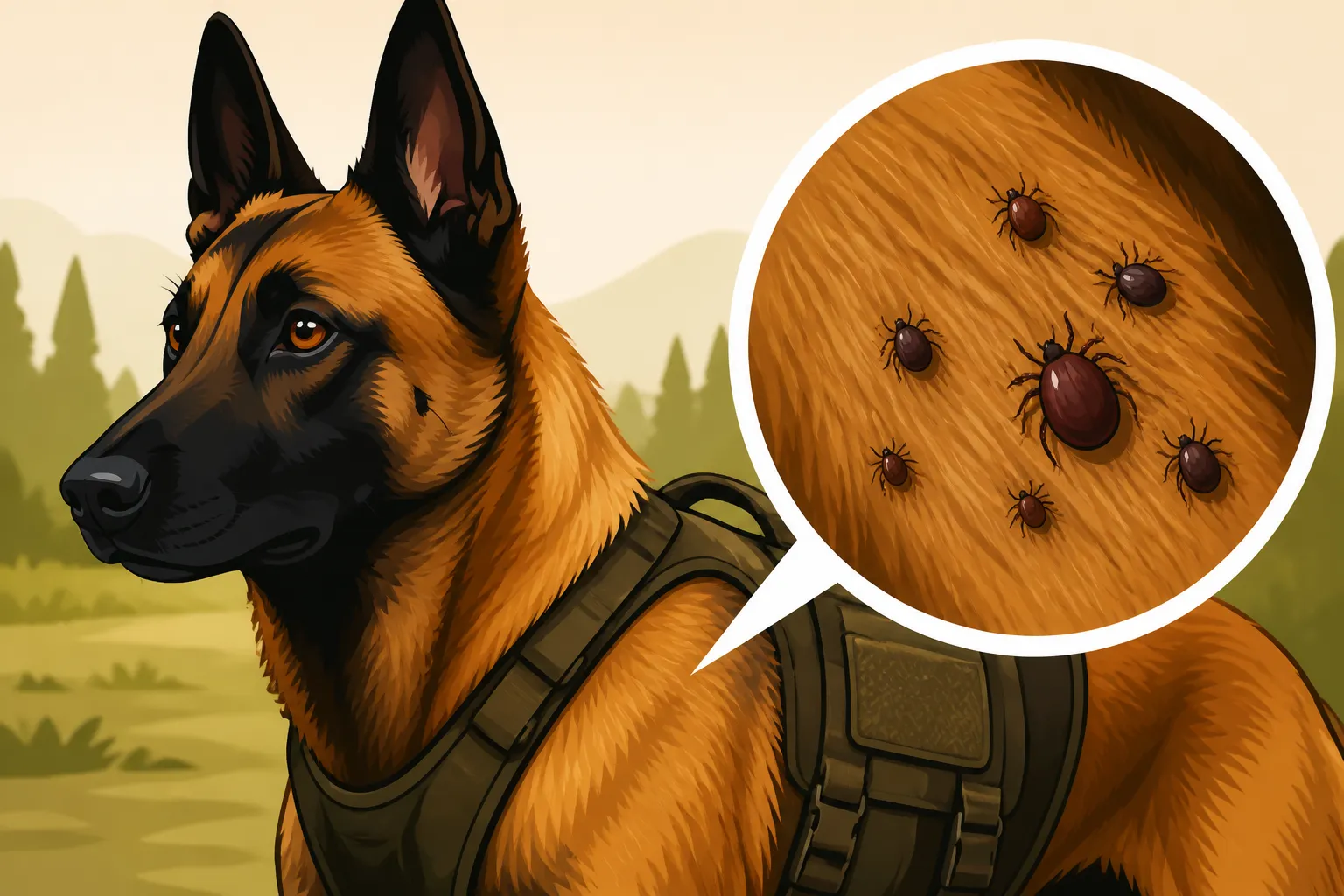
It's an all-too-familiar scenario for Belgian Malinois owners: your high-drive dog has just had an incredible training session, working through tall grass, brush, and maybe even some dense woods. They're happy, tired, and covered in burrs… and potentially ticks. Ticks are a persistent, dangerous menace, and finding one latched onto your working dog after a hard session can be incredibly frustrating. This guide will walk you through preventing, finding, and safely removing these parasites, offering peace of mind and protecting your Malinois from the serious health risks they pose.
Understanding the Tick Threat to Your Malinois
The natural environment of field training often overlaps perfectly with prime tick habitat, making your Belgian Malinois a prime target. It's not just an annoyance; ticks carry diseases that can severely impact your dog's health and performance.
Why Field Training Is a High-Risk Zone for Ticks
Your Malinois lives to work, and that often means plunging headfirst into environments where ticks thrive. Think about it: a tracking exercise through tall, unmown fields, agility practice near a hedgerow, or protection work in a wood line. These are exactly the places ticks lie in wait, clinging to blades of grass or leaves, ready to hitch a ride on a passing host.
The very traits that make Malinois exceptional working dogs – their relentless drive, their fearlessness in diverse terrain, and their incredible focus – also make them highly susceptible to tick exposure. They aren't pausing to consider the tick population; they're fully engaged in the task at hand. As their handler, it falls to us to recognize this increased risk and put robust protections in place. It's often disheartening to finish a stellar training session, only to realize that the real "work" of tick checking is just beginning. You want to celebrate their effort, but you're immediately pulled into vigilance.
Common Tick Species and Their Dangers
Not all ticks are created equal, but all of them pose a potential threat. In North America, you'll commonly encounter species like the Deer Tick (also known as the Blacklegged Tick), the American Dog Tick, and the Lone Star Tick. Each of these can transmit different pathogens, leading to a variety of serious illnesses in dogs.
The real fear with ticks isn't just the creepy-crawly factor; it's the diseases they transmit. Lyme disease, ehrlichiosis, and anaplasmosis are just a few of the more prevalent tick-borne illnesses that can strike a Belgian Malinois. These diseases can cause symptoms ranging from lameness and lethargy to fever, swollen joints, and even life-threatening conditions if left untreated. What makes it even more insidious is that the symptoms can be subtle at first, often mimicking other issues, and may not appear for days or even weeks after the initial bite. Early detection and prevention are absolutely critical. It’s important to remember that even in areas where a specific disease isn't common, the ticks themselves can still be present and carrying other potential threats. Understanding Tick Borne Disease in a Working Belgian Malinois is key to prevention.
The Importance of Year-Round Prevention
Many owners mistakenly believe that ticks are only a problem during the warmer months. While tick activity certainly spikes in spring and summer, ticks can be active any time the temperature is above freezing. This means that year-round prevention is not just a recommendation; it's a necessity for a Belgian Malinois, especially one that regularly engages in field training.
Validating the frustration here: it can feel like an endless, expensive battle. Just when you think you're safe, a warm spell in late autumn or early spring can bring them out. Ignoring prevention, even for a few weeks, can leave your highly active Malinois vulnerable. A single tick bite from an infected tick can transmit a disease that could sideline your dog for weeks or even months, costing a significant amount in vet bills and potentially impacting their long-term health and working career. This proactive approach is part of the extensive care that goes into What a Year With a Working Belgian Malinois Costs.
Proactive Steps: Preventing Ticks on Your Working Malinois
When it comes to ticks, an ounce of prevention is worth a pound of cure. Implementing a consistent preventative strategy is the first line of defense for your active Malinois.
Choosing the Right Tick Preventative
The market is flooded with tick preventatives, and choosing the right one for your Malinois can feel overwhelming. They generally fall into a few categories: topical treatments, oral medications, and collars. Each has its pros and cons, and what works best for one dog or owner might not be ideal for another.
Topical treatments, often applied to the skin between the shoulder blades, typically repel and kill ticks on contact or after they bite. Brands found on platforms like Chewy or Amazon offer these solutions, and they are generally effective for about a month. Oral medications, given monthly or quarterly, work by getting into your dog's bloodstream. When a tick bites your Malinois, it ingests the medication and dies. These can be particularly appealing for dogs that swim a lot or for handlers who want to avoid topical residues. Finally, medicated collars can provide several months of protection, slowly releasing active ingredients across the dog's skin. Discussing these options with your veterinarian is crucial to find the best fit for your dog's lifestyle, health, and your regional tick population. Some areas have developed resistance to certain active ingredients, so local knowledge is vital.
Environmental Management and Training Area Prep
While you can't control every blade of grass your Malinois encounters, some environmental management can significantly reduce tick exposure, especially in your primary training areas or yard. It might not always be feasible on public land, but every little bit helps.
If you have a private training area or a large yard where your Malinois frequently works, keeping the grass mowed short is a simple yet effective step. Ticks prefer tall grass and dense brush to climb and wait for hosts. Clearing leaf litter and brush piles from the edges of fields or trails can also disrupt tick habitats. While your Malinois's drive means they often dive through undergrowth regardless, minimizing the opportunities for ticks to latch on before they even get deep into the field is helpful. For your own gear, consider using permethrin-based sprays on clothing and boots, especially if you're going into particularly high-risk areas. Always ensure any sprays are dry before your dog comes into contact with them, and never use permethrin products directly on your dog as they can be toxic.
Pre- and Post-Training Routines
Consistency is key, and establishing a rigorous routine around your field training sessions can dramatically improve your chances of catching ticks before they embed or transmit disease. This is particularly important for dogs like the Malinois who are constantly active outdoors.
Before you even step out for training, a quick visual check can be beneficial, especially if your dog has been in the yard or a similar area. It's often the immediate post-training routine that is most critical. As soon as the session is over, before you even get in the car, give your Malinois a thorough pat-down. Use a light-colored towel and rub down their coat, particularly around the legs, belly, and chest. Many ticks will still be crawling on the fur, not yet attached, and this friction can dislodge them. The frustration of a Malinois that won't stand still for this inspection is real – they're still buzzing from the work! But even a quick, high-value treat distraction can make them amenable for a moment. Once you get home, a more detailed inspection is warranted, as discussed next. This diligence is part of Checking a Belgian Malinois Over After a Session.
Finding and Removing Ticks Safely from Your Malinois
Even with the best preventatives, some ticks might still find their way onto your Malinois. Knowing how to find them and remove them safely is a critical skill for any working dog owner.
The Thorough Tick Check: Where to Look and What to Feel For
A Malinois's short, dense coat, while not as long as some breeds, can still effectively hide a surprising number of ticks. After every outing, especially field training, a meticulous check is non-negotiable. Don't just look; feel. Ticks often feel like small bumps or scabs on the skin before you see their tell-tale legs.
Start your inspection from head to tail, paying extra attention to certain "hot spots." Ticks love warm, dark, and protected areas. Carefully check around and inside their ears, along their eyelids, and under their chin. Move down their body to their armpits, between their toes (a notorious hiding spot!), in the folds of their groin, and under their tail. Gently run your fingers against the direction of hair growth to better feel for any abnormalities. If your Malinois has been on scent work or tracking, their face and muzzle area are especially vulnerable. The urgency of this check cannot be overstated; the sooner a tick is found and removed, the less likely it is to transmit disease. For quick cleaning after field work, remember to be thorough with Wiping a Belgian Malinois Down After Field Work.
Step-by-Step Tick Removal
Finding a tick is one thing; removing it properly is another. Improper removal can leave mouthparts embedded, increasing the risk of infection, or even squeeze the tick's body, potentially injecting more pathogens into your dog. You'll want the right tools for this job.
Fine-tipped tweezers or specialized tick removal tools (like a tick twister or tick key, available on Amazon or Chewy) are your best friends here. Avoid using your bare fingers. To remove a tick:
- Prepare: Gather your tools, put on gloves if you prefer, and have a small container with rubbing alcohol ready for disposal.
- Part the Fur: Gently part your Malinois's fur around the tick to expose the skin at the attachment point.
- Grasp Firmly: Using your tweezers or tick remover, grasp the tick as close to your dog's skin as possible, around the tick's head.
- Pull Straight Up: With steady, even pressure, pull straight upwards. Do not twist, jerk, or squeeze the tick's body, as this increases the risk of leaving mouthparts embedded or injecting more fluid.
- Inspect: Once removed, examine the tick to ensure the entire head and mouthparts are intact. Also, check the bite site on your dog.
- Dispose: Drop the removed tick into the alcohol to kill it. Never crush ticks with your fingers or flush them down the toilet, as they can survive and find a new host.
The frustration when the head stays in is real, but don't panic. If you can, gently try to remove the remaining mouthparts with the tweezers. If not, disinfect the area and monitor it closely. Often, the body will naturally expel the remaining parts, but watch for signs of infection.
After Removal Care and Monitoring
Once the tick is removed, your job isn't quite done. Proper aftercare and vigilant monitoring are essential to ensure the bite site heals correctly and to watch for any signs of illness.
After successful removal, clean the bite site thoroughly with an antiseptic wipe or a mild soap and water solution. This helps prevent localized infection. For the next few days to a week, keep an eye on the area for any signs of redness, swelling, pus, or a persistent lump, which could indicate a local infection or an embedded mouthpart causing irritation. Beyond the bite site, you'll need to monitor your Malinois for general signs of illness for several weeks to months. Tick-borne disease symptoms can have a delayed onset. Keep an eye out for lethargy, a decrease in appetite, lameness, joint pain, or fever. Prompt veterinary attention is crucial if any of these symptoms appear. While we often think of immediate injuries in training, tick-borne illnesses are a silent threat that can manifest much later, leading to unexpected Emergency Care After a Malinois Training Injury.
What to Do if Your Malinois Gets Sick from Ticks
Despite all your best efforts, sometimes a tick-borne illness can still sneak past your defenses. Recognizing the signs early and knowing when to seek veterinary help is paramount.
Recognizing Symptoms of Tick-Borne Illnesses
The insidious nature of tick-borne diseases is that their symptoms can be varied, non-specific, and often delayed. This makes them incredibly difficult to catch without a high degree of suspicion, especially in a breed as stoic and driven as a Malinois.
Common symptoms to watch for include persistent lethargy, a noticeable loss of appetite, reluctance to move or exercise (which is a huge red flag for a Malinois!), joint pain, shifting lameness (where the lameness moves from one leg to another), fever, and swollen lymph nodes. In some cases, you might even see a "bullseye" rash, though this is less common in dogs than in humans. These signs can appear anywhere from a few days to several weeks or even months after a tick bite. It's incredibly scary when your usually energetic, high-drive Malinois suddenly slows down, becomes withdrawn, or shows signs of discomfort. Don't dismiss these changes; they could be critical indicators of a tick-borne illness. For a better understanding of overall health, consider The Bloodwork a Working Malinois Should Have Annually, as it often includes screening for these diseases.
Veterinary Diagnosis and Treatment
If you suspect your Malinois has contracted a tick-borne illness, a trip to the veterinarian is non-negotiable. Be prepared to provide your vet with a detailed history of any tick exposure, including when and where it occurred, if you know.
Your vet will likely perform a physical examination and may recommend diagnostic tests. A common screening tool is a 4Dx snap test, which can detect exposure to several common tick-borne diseases like Lyme, ehrlichiosis, and anaplasmosis, as well as heartworm. Further blood work may be required to confirm a diagnosis and assess organ function. Treatment protocols typically involve a course of antibiotics, often doxycycline, for several weeks. Supportive care, such as pain management or anti-inflammatory medications, might also be part of the plan, especially if your dog is experiencing significant joint pain or fever. The cost of diagnosis and treatment can add up quickly, highlighting why prevention is always the more economical and humane option. The Vet Bills a Bite Sport Belgian Malinois Runs Up can be substantial, and tick-borne illness is a prime example of an unexpected expense.
Long-Term Management and Prognosis
While many tick-borne illnesses are treatable, some can have long-term or recurring effects, even after the initial infection is cleared. Understanding the potential for chronic issues and what continued management might entail is important for a Malinois owner.
For diseases like Lyme, even after treatment, some dogs may experience recurring joint pain or develop chronic kidney issues years later. Regular follow-up bloodwork may be recommended by your veterinarian to monitor for any lingering effects or re-exposure. The prognosis for most tick-borne diseases is good with early diagnosis and treatment, but complications can arise. Keeping your Malinois sound, both physically and mentally, is the goal, especially for a dog bred for performance. This might mean adjusting their training intensity, providing joint supplements, or simply being extra vigilant for any future symptoms. It's all part of the dedicated effort to Keeping a Belgian Malinois Sound Past Twelve, ensuring they can enjoy a full and active life even after facing such health challenges.
| Tick Species (Common North American Examples) | Common Habitat | Diseases Carried (Examples) | Key Identification Tips |
|---|---|---|---|
| Deer Tick (Blacklegged Tick) | Wooded areas, tall grass, leaf litter | Lyme Disease, Anaplasmosis | Very small, reddish-brown body, dark legs |
| American Dog Tick (Wood Tick) | Grassy areas, brush, open fields | Rocky Mountain Spotted Fever, Tularemia | Brown body, white/gray markings on back (females) |
| Lone Star Tick | Woodlands, fields, thick underbrush | Ehrlichiosis, Cytauxzoonosis, Alpha-gal Syndrome | Distinct white spot on female's back, long mouthparts |
| Brown Dog Tick | Primarily indoors (kennels, homes), also outdoors in warm climates | Ehrlichiosis, Babesiosis | Reddish-brown, uniform color, often found in ears/between toes |
Disclaimer
This article is for general informational purposes only and does not constitute professional advice. Laws, prices and regulations vary by location and change over time. Consult a qualified professional for guidance on your specific situation.