Toys That Damage a Belgian Malinois’s Teeth
It's incredibly frustrating when you're trying your best to keep your high-drive Belgian Malinois happy and healthy, only to find out that some of the toys you thought were safe might actually be causing serious damage to their teeth. Many of us have invested in what we thought were durable, long-lasting chews, only to discover they pose hidden risks. This guide will walk you through the common culprits that can harm your Malinois's formidable bite and offer safer alternatives to keep their teeth strong and intact.
The Hidden Dangers of Extremely Hard Chews for Your Malinois
When you have a Belgian Malinois, you quickly learn that their chew drive isn't just strong; it's practically a force of nature. It's only natural to seek out toys that you hope will stand up to that incredible jaw strength. Unfortunately, many items marketed as "indestructible" or "long-lasting" are actually harder than tooth enamel, leading to significant dental problems.
Natural Bones and Antlers: A Recipe for Fractures
Many owners, thinking they are providing a natural and healthy chew, offer their Malinois items like beef femurs, knuckle bones, or various types of antlers. While these might seem appealing, their extreme density is often a perfect recipe for a fractured tooth. A Malinois, with its powerful bite, doesn't just gnaw gently; they often try to crush and splinter these items.
Consider a scenario: you've given your Malinois a large marrow bone. They're happily chewing away, making good progress, and you think "finally, something that lasts!" But what you might not see or hear is the microscopic stress being placed on their molars. Eventually, that stress can lead to a slab fracture, where a piece of the tooth, often from the carnassial tooth (the large shearing tooth in the back), breaks off. This isn't just a cosmetic issue; it exposes the sensitive dentin and potentially the pulp cavity, leading to excruciating pain, infection, and requiring expensive dental surgery, sometimes even a root canal or extraction. We often worry about Chipped Canines on a Malinois From Sleeve Work, but seemingly innocent bones can cause just as much, if not more, serious damage to other teeth. Antlers, while natural, are equally problematic. They don't flex or give under pressure, meaning the tooth takes the full brunt of the force. The hard, sharp edges can also cause gum trauma or get wedged between teeth.
Nylon and Other Synthetic "Indestructible" Chews
Similarly, many synthetic chews made from hardened nylon or other super-tough plastics fall into the same trap. These are often marketed with promises of lasting for weeks or months against even the most aggressive chewers. And while they might indeed last a long time, it's at the expense of your dog's dental health.
Imagine your Malinois, full of vigor, dedicating itself to a particularly dense nylon bone. The friction and pressure from their intense chewing can slowly wear down the surfaces of their teeth. Over time, this abrasive action can lead to significant dental attrition, flattening the cusps of the teeth and exposing the sensitive inner layers. This wear is permanent and can lead to sensitivity, pain, and a higher risk of further damage or infection. Even worse, if your Malinois manages to break off a piece of these tough synthetic toys – and a determined Malinois often will – those sharp, hard shards can cause internal injuries or become choking hazards. It’s a classic dilemma: you want a toy that lasts, but you don't want to compromise your dog's health in the process. When considering toys, remember that Whether Hard Bite Work Wears Malinois Teeth Down extends beyond just sport equipment to include daily chews.
Common Household and Play Items That Can Cause Dental Injury
Beyond specialized chews, many everyday items we allow our Malinois to play with can also pose significant risks to their teeth and oral health. Sometimes, the most innocent-looking toys can harbor the greatest dangers.
Tennis Balls: The Abrasive Culprit
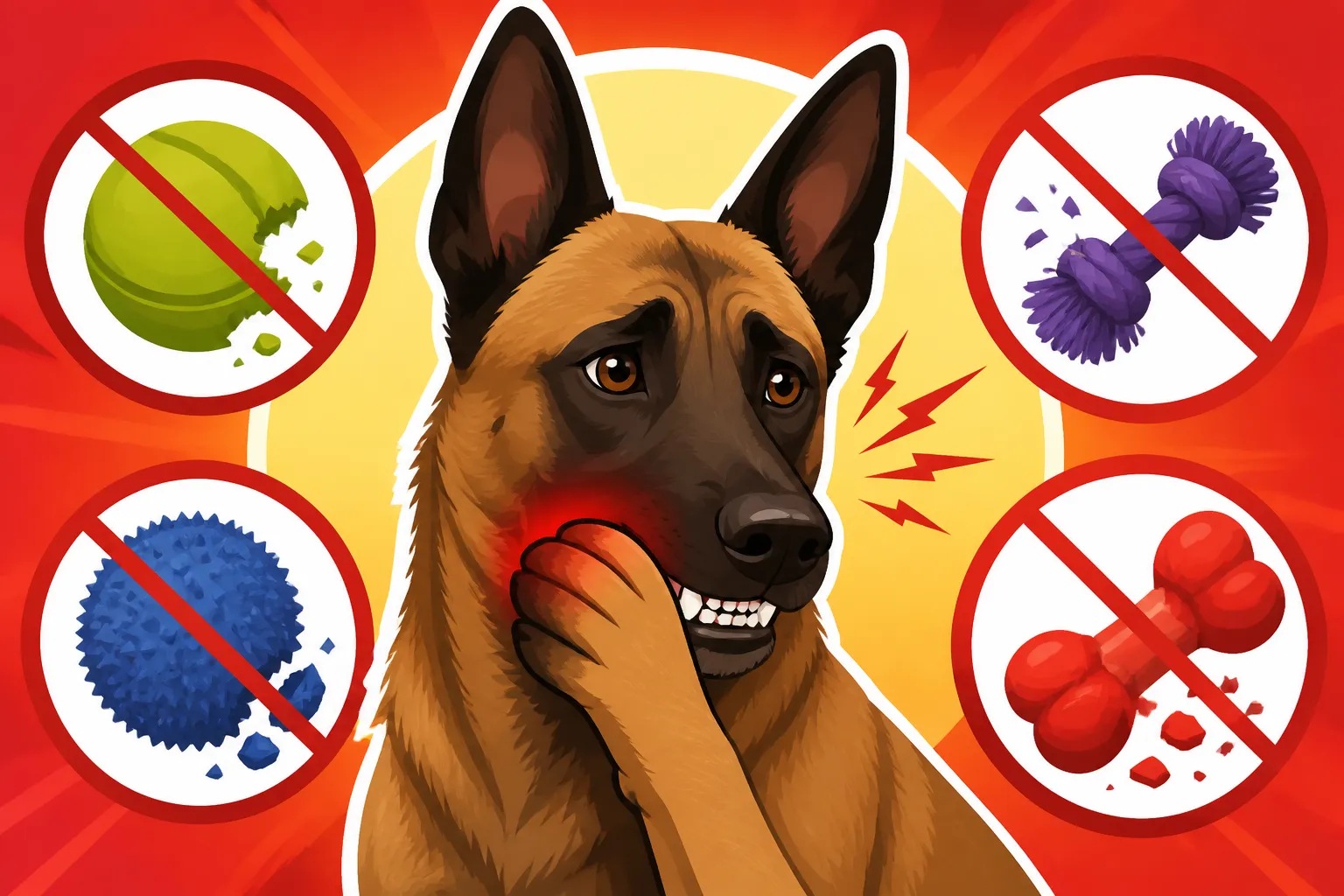
It might seem counterintuitive, as tennis balls are practically synonymous with dog play, but they are a surprisingly common cause of dental wear. The felt on a standard tennis ball acts like sandpaper on your Malinois's teeth, especially if they are a dedicated ball-chaser or have a habit of chewing on the ball.
Think about the texture of that fuzzy felt. Each time your Malinois clamps down or grinds the ball between their teeth, those tiny fibers, often mixed with dirt and grit from outdoor play, act as an abrasive. Over months and years, this constant friction can effectively sand down the chewing surfaces of their teeth. This leads to what veterinarians call "tennis ball mouth" – a noticeable flattening of the incisors and sometimes the canines, exposing the dentin and making the teeth vulnerable. For a Malinois, whose enthusiasm for fetch is boundless, this wear can become quite severe. It's not just about the wear, though; a worn tooth is a weaker tooth, more prone to cracking or discomfort down the line. If your Malinois loves fetch, consider smoother, rubber-based balls designed for dogs, available at pet stores or online retailers like Chewy or Amazon.
Sticks and Stones: Nature's Dental Hazards
Walking through a park or your backyard, it's natural for a Malinois to grab a stick or try to play with a stone. To them, it's just another object to interact with. To their teeth, however, it's a potential disaster.
Sticks splinter easily, and those splinters can become lodged in the gums, between teeth, or even puncture the roof of the mouth or throat. These injuries are incredibly painful, can lead to serious infections, and often require veterinary intervention to remove the foreign bodies. A Malinois, with their drive, isn't just gently carrying a stick; they're often vigorously shaking, chewing, and breaking it apart. Stones are even worse. They are utterly unyielding, and chewing on them is a direct path to fractured teeth. Imagine the force applied by a Malinois jaw onto an unmoving stone – it's far greater than what tooth enamel can withstand repeatedly. These aren't toys; they are hazards that should be actively discouraged. For owners whose Malinois are always picking up outdoor items, teaching a strong "leave it" command is paramount. For dental health, it is essential to focus on proper Tooth Care for a Belgian Malinois That Bites for Sport.
Rope Toys: A Double-Edged Sword
Rope toys are popular because they offer a good grip for tugging and often appear durable. They can be great for interactive play, but they also carry significant risks if used improperly or if your Malinois is a destructive chewer.
The primary danger with rope toys comes from ingestion. A Malinois with a strong chew drive might slowly fray and ingest individual strands of rope. These strands, particularly if swallowed over time, can accumulate in the digestive tract and lead to a linear foreign body obstruction – a life-threatening condition where the rope cinches up the intestines like an accordion. This requires emergency surgery and can be fatal if not caught in time. Furthermore, if the rope is tightly twisted and your Malinois is a vigorous chewer, the abrasive action can cause wear similar to tennis balls, especially if the rope gets gritty from outdoor use. While tugging games with rope toys under strict supervision can be a great outlet for a Malinois's drive, never leave them unsupervised with a rope toy, and discard it immediately if it starts to fray. For a Malinois's overall health and well-being, including dental health, it's also worth considering high-quality dog food options like those offered by Ollie, which focus on fresh ingredients and proper nutrition without problematic toy materials.
Selecting Safe Chew Toys for Your Malinois
Given the incredible drive and powerful jaws of a Belgian Malinois, choosing appropriate chew toys isn't just about entertainment; it's a critical part of their dental and overall health. The goal is to provide mental and physical stimulation without risking injury.
The "Thumbnail Test": A Simple Guideline
A good rule of thumb for any chew toy is the "thumbnail test." If you can't indent the material with your thumbnail, it's likely too hard for your dog's teeth. This simple test helps you quickly assess the relative hardness of a chew.
For example, a solid nylon bone that feels rock-hard and doesn't give at all when you press your nail into it is probably going to cause problems. On the other hand, a quality rubber toy, even a very firm one, might allow a slight indentation, indicating it has enough give to be safer for teeth. This isn't a perfect science, but it's a quick and easy way to eliminate the most dangerous items. Always remember that what feels "chewy" to a human finger might still be incredibly rigid for a Malinois's powerful molars. The ideal chew offers resistance but has enough flexibility or pliability that it won't chip or fracture a tooth.
Recommended Safe Chew Toy Materials
When looking for chew toys, focus on materials known for their durability and appropriate give.
- Firm Rubber Toys: Toys made from high-quality, durable rubber (like those from Kong, or other reputable brands often found on Chewy or Amazon) are often an excellent choice. They are designed to withstand significant chewing, but they have enough flex to prevent tooth fractures. Look for toys that can be stuffed with treats to increase mental engagement and extend chew time. These can provide hours of enrichment without the dental risks.
- Soft Rubber/Flexible Plastic: For less aggressive chewers, or for specific training purposes, softer rubber or more flexible plastic toys can be suitable. However, for a typical Malinois, these might not last long enough to be cost-effective or provide sufficient challenge. Always supervise to ensure pieces aren't being torn off and ingested.
- Chewable Dental Treats: Many brands offer dental chews designed to help clean teeth. These are often softer and meant to be consumed. Always check the ingredients and ensure they are appropriately sized for your Malinois. While they offer some dental benefits, they aren't a substitute for other forms of dental care. Remember to factor these into your dog's daily calorie intake, as we want to maintain The Lean Condition a Belgian Malinois Should Carry.
- Frozen Treats/Vegetables: For a natural and safe chew, consider freezing safe items like carrots, bell peppers, or even a Kong stuffed with pureed pumpkin or peanut butter. These provide a challenge and a cold treat without the hardness that can damage teeth.
Chew Toy Safety Checklist
When bringing any new toy home for your Belgian Malinois, it's wise to run through a quick mental checklist:
| Feature | Safe Choice | Risky Choice |
|---|---|---|
| Hardness | Can be dented slightly with a thumbnail; has some "give" | Rock-hard; no give; feels like stone |
| Durability | Withstands chewing without splintering or breaking into sharp pieces | Splinters easily; chunks break off; becomes sharp when damaged |
| Ingestion Risk | Large enough not to be swallowed whole; non-toxic if small pieces ingested | Small enough to be choked on; frays into ingestible strands; toxic materials |
| Material | High-quality, veterinary-approved rubber; safe dental chews | Natural bones, antlers, hard nylon, sticks, stones, tennis balls (for chewing) |
| Cleanliness | Easy to wash and sanitize | Traps dirt/debris, difficult to clean |
Regularly inspect all your Malinois's toys for wear and tear. Discard any toy that is broken, splintering, or showing signs of becoming a hazard.
Beyond Toys: Comprehensive Dental Care for Your Malinois
While choosing the right toys is crucial, it's just one piece of the puzzle when it comes to maintaining your Belgian Malinois's oral health. A holistic approach that includes professional care and at-home routines will ensure their teeth remain strong and healthy throughout their active life.
The Importance of Daily Brushing
Just like with humans, daily tooth brushing is the gold standard for preventing plaque and tartar buildup in dogs. It might sound daunting with a high-energy Malinois, but with patience and positive reinforcement, it can become a routine.
Start early, even when your Malinois is a puppy, by getting them used to having their mouth handled. Use a dog-specific toothbrush and toothpaste (never human toothpaste, as it contains xylitol which is toxic to dogs). Begin with short sessions, focusing on the outside surfaces of the teeth, especially the large molars and canines. Gradually increase the duration as your Malinois becomes more comfortable. Regular brushing significantly reduces the risk of periodontal disease, which can lead to pain, tooth loss, and even systemic health issues. It's an investment of time that pays huge dividends in long-term health and reduces the likelihood of needing expensive dental procedures down the road. For more tips, check out Daily Tooth Brushing for a Malinois That Bites.
Regular Veterinary Dental Check-ups
Even with diligent at-home care and careful toy selection, professional dental check-ups are essential. Your veterinarian can spot issues that you might miss and perform thorough cleanings that go beyond what you can achieve at home.
During annual wellness exams, your vet will perform an oral examination. They'll look for signs of periodontal disease, fractured teeth, gum inflammation, and any other abnormalities. Often, a professional dental cleaning under anesthesia is recommended periodically. This allows the vet to thoroughly scale away tartar above and below the gumline, polish the teeth, and take dental radiographs to assess the health of the tooth roots and jawbone – issues that are impossible to detect on a conscious exam. While the thought of anesthesia for a Malinois can be a concern, proper Pre-Anesthetic Bloodwork on a Belgian Malinois helps mitigate risks, and the benefits of a clean, healthy mouth far outweigh the potential drawbacks. The cost of these procedures is an important consideration, as What Scaling a Malinois's Teeth Costs Under Sedation can be significant, but it is an investment in your dog's comfort and longevity.
Nutritional Support for Dental Health
Your Malinois's diet also plays a role in their dental health. While kibble alone won't clean teeth, some formulations are designed with dental health in mind.
Look for dog foods that are formulated to help reduce plaque and tartar. These often have specific shapes and textures that gently scrape the tooth surface as the dog chews. However, it's important to understand that these foods are supplementary and not a replacement for brushing or professional cleanings. Some owners also find that feeding a high-quality, balanced diet, whether it's kibble, raw, or fresh food, contributes to overall health, which indirectly supports oral health. Consult with your veterinarian or a canine nutritionist to ensure your Malinois is getting the right balance of nutrients for their active lifestyle and dental needs. Brands like Ollie, known for their fresh, human-grade ingredients, can be explored as part of a comprehensive nutrition plan, but always double-check specific products for dental benefits or concerns.
Disclaimer
This article is for general informational purposes only and does not constitute professional advice. Laws, prices and regulations vary by location and change over time. Consult a qualified professional for guidance on your specific situation.