Whether a Belgian Malinois Gets Cherry Eye
One of the most concerning things for any Belgian Malinois owner is seeing a sudden, alarming change in their dog's health, especially when it involves something as sensitive as their eyes. You spend so much time making sure they're active and well-cared for, only to suddenly spot something out of the ordinary. A bulging, red mass appearing near the corner of their eye can be incredibly frightening, leaving you wondering if your high-drive companion is predisposed to this particular issue. This guide will delve into what cherry eye is, whether Belgian Malinois are susceptible, and how to effectively manage and treat it.
Understanding Cherry Eye in Canines
When we talk about a dog's eye, most people are familiar with the upper and lower eyelids. What many don't realize is that dogs, like many other animals, actually possess a third eyelid, medically known as the nictitating membrane. This isn't just some extra flap; it's a crucial part of their ocular anatomy, tucked away in the inner corner of their eye. And hidden within this third eyelid is a very important tear-producing gland.
What Exactly Is Cherry Eye?
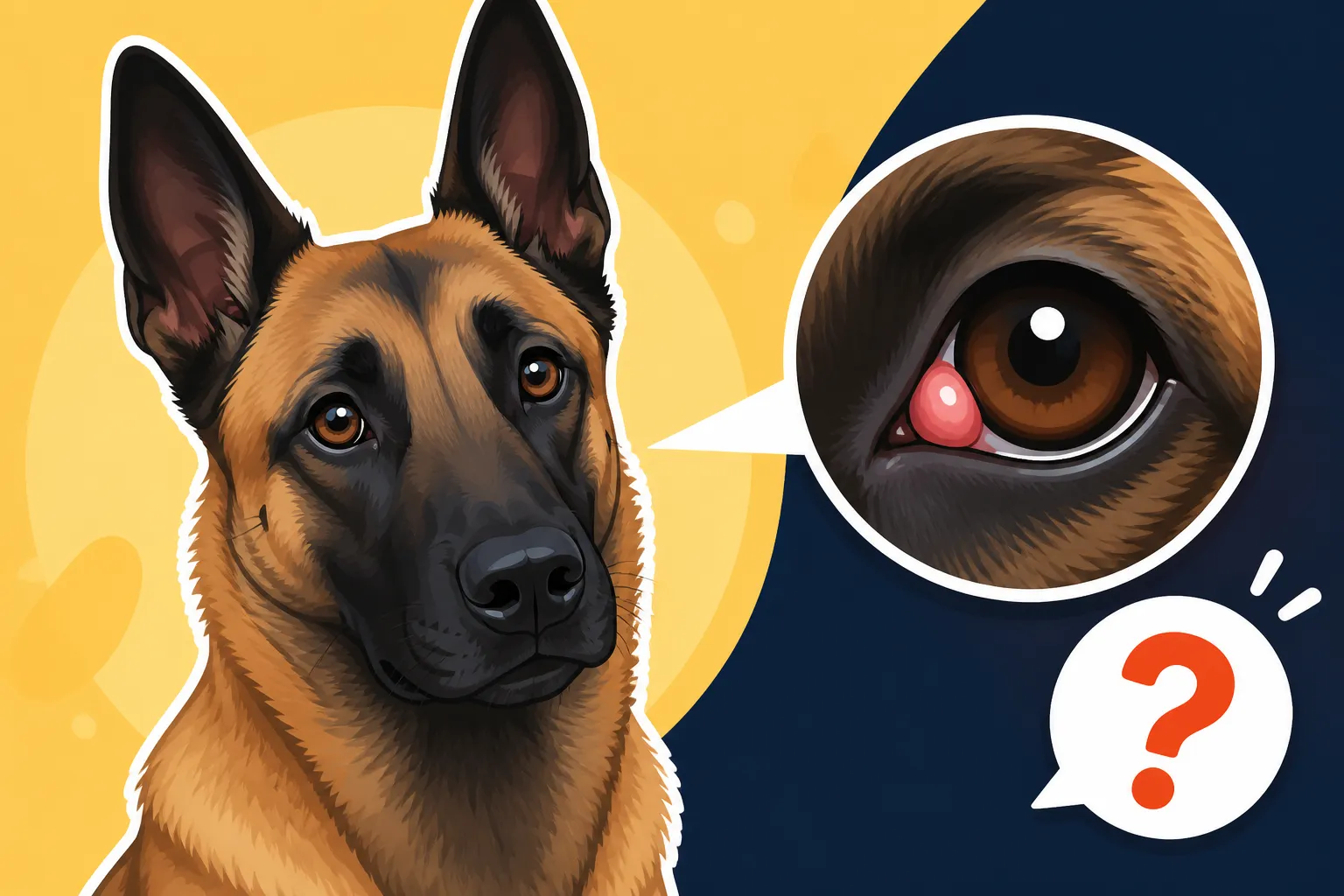
Cherry eye isn't some strange growth or infection, though it can certainly look alarming. It happens when that essential tear gland, typically nestled securely within the third eyelid, actually prolapses or pops out of its normal position. Imagine a small, delicate pink or reddish oval mass suddenly appearing in the inner corner of your dog's eye. It looks exactly like a tiny cherry, hence the common name. This isn't just a cosmetic issue; that gland is responsible for producing a significant portion of your dog's tears – estimates suggest it contributes about 30-50% of the eye's tear film. When it prolapses, it becomes exposed to the air, dirt, and irritants, leading to inflammation, dryness, and discomfort. Without proper tears, your Malinois is at risk for more severe conditions like keratoconjunctivitis sicca (KCS), or "dry eye," which can cause chronic pain and even impair vision over time.
Why Some Breeds Are More Prone
While any dog breed can technically experience cherry eye, it's widely recognized that certain breeds have a much higher predisposition due to their anatomical skull structure and genetic factors. You'll often hear about brachycephalic (short-nosed) breeds like English Bulldogs, French Bulldogs, Pugs, and Boston Terriers suffering from it because their facial anatomy can sometimes contribute to weaker connective tissue around the third eyelid gland. Other breeds such as Beagles, Cocker Spaniels, and Lhasa A Apsos are also frequently listed as susceptible. The genetic component often involves a congenital weakness in the ligament that holds the gland in place. It's not something an owner does wrong; it's simply how some dogs are built. This understanding helps us appreciate that while we can't always prevent it, recognizing the risk factors for your specific breed is key.
Belgian Malinois and Cherry Eye Susceptibility
Given the Malinois's sleek, athletic build and well-proportioned head, you might not immediately think of them as a breed prone to the kind of structural issues that lead to cherry eye. They’re certainly not in the same category as the classic brachycephalic breeds, whose flattened faces are often linked to a host of eye and breathing problems. However, it's important to never assume a breed is entirely immune to a condition just because it's not listed as "high risk."
Is the Malinois a High-Risk Breed?
Generally speaking, the Belgian Malinois is not considered one of the breeds with an exceptionally high genetic predisposition to cherry eye. They don't typically possess the unique facial anatomy that makes breeds like Bulldogs or Shih Tzus so prone to this condition. The structure of their orbits and the connective tissues around their third eyelid gland are usually robust. However, this doesn't mean they are entirely immune. Cases of cherry eye do occur in Belgian Malinois, just as they can appear in virtually any breed. It's simply less common than in breeds specifically identified for their susceptibility.
If your Malinois develops cherry eye, it might be due to an individual genetic anomaly, trauma to the eye area, or simply an isolated incident rather than a widespread breed tendency. What's crucial is not to dismiss the possibility just because your Malinois isn't a poster child for the condition. Every dog is an individual, and a prolapsed gland needs attention regardless of breed statistics. When you're dealing with anything related to their vision, understanding potential issues is paramount. If you notice a The Grayish Film Creeping Across a Malinois Eye or any other unusual discharge, it's always best to consult your veterinarian promptly.
Recognizing the Signs in Your Malinois
Detecting cherry eye in your Belgian Malinois usually isn't subtle once it truly prolapses. The most obvious sign is the appearance of a small, round, red or pinkish mass in the inner corner of one or both eyes. It can look inflamed and quite angry. Sometimes it might pop out and recede initially, almost playing peek-a-boo, before eventually staying prolapsed.
Beyond the visible "cherry," you might observe other symptoms indicative of discomfort or irritation:
- Excessive pawing or rubbing at the eye: Your Malinois might be trying to alleviate the irritation.
- Increased tearing or discharge: The exposed gland can become irritated, leading to watery eyes or even a mucoid discharge as the eye tries to protect itself.
- Redness or inflammation of the conjunctiva: The whites of the eye and the tissues surrounding the "cherry" may appear red and inflamed.
- Squinting or holding the eye partially closed: This is another sign of pain or discomfort.
- Dryness: Paradoxically, while there might be excessive tearing initially, chronic exposure of the gland can lead to it drying out and becoming less effective at producing tears, potentially leading to KCS. This is why addressing the issue quickly is so important.
If you observe any of these signs, particularly the characteristic red mass, it's time to get your Malinois to the vet. Don't wait, hoping it will resolve on its own. The longer the gland is exposed, the more damage it sustains, which can impact its long-term tear production capability. Regular checks, especially as part of annual The Bloodwork a Working Malinois Should Have Annually, can sometimes catch other developing issues, but for something as visual as cherry eye, you're the first line of defense.
Managing and Treating Cherry Eye in Malinois
Once you've identified that distinctive red bulge in your Malinois's eye, your primary goal is to get it evaluated by a veterinary professional. Self-treating cherry eye is generally not recommended, as improper handling can lead to further damage to the delicate gland. The prognosis is typically excellent with timely and appropriate intervention.
Initial Steps and Veterinary Consultation
The moment you notice the prolapsed gland, try to keep your Malinois from pawing at its eye. An Elizabethan collar (cone) might be necessary to prevent self-trauma, which can worsen the inflammation and potentially damage the gland further. Avoid trying to push the gland back in yourself, as this can introduce bacteria or cause more trauma if not done correctly by a professional.
Your first call should always be to your veterinarian. They will be able to accurately diagnose cherry eye and rule out other, less common but similarly appearing conditions. During the examination, your vet will assess the extent of the prolapse, check for any damage to the gland or surrounding eye structures, and perform a Schirmer tear test to evaluate tear production. This initial assessment is crucial for determining the best course of action. They may also discuss general eye health and if it relates to a larger issue like those identified in The Eye Diseases Behind a Malinois Eye Certificate.
Treatment Options: Medical Versus Surgical
The treatment for cherry eye in dogs can generally fall into two categories: conservative medical management or surgical correction. The choice largely depends on the severity of the prolapse, its duration, and the presence of any secondary complications.
Medical Management:
In very mild, acute cases, or as a temporary measure before surgery, your vet might prescribe topical anti-inflammatory eye drops or ointments. These aim to reduce swelling, discomfort, and inflammation, sometimes allowing the gland to retract on its own. However, this is rarely a permanent solution. The underlying weakness that allowed the gland to prolapse usually remains, meaning recurrence is highly likely once medication is stopped. Medical management alone is often unsuccessful in resolving cherry eye long-term for most dogs.
Surgical Correction:
Surgical intervention is the most common and effective long-term solution for cherry eye. The goal of surgery is to reposition the gland back into its normal anatomical pocket within the third eyelid and secure it there permanently. It’s important to emphasize that the gland should not be removed, as this can severely compromise tear production and lead to chronic dry eye, which is a much more difficult and painful condition to manage.
There are several surgical techniques, but the most widely used is the "pocket technique" (Morgan pocket technique). In this procedure, the vet creates a small pocket or flap within the third eyelid, tucks the prolapsed gland inside, and sutures the pocket closed, effectively burying the gland back into its natural home. This technique has a high success rate and preserves the gland's function. In some cases, if the gland has been prolapsed for a very long time and is severely damaged or necrotic, removal might be considered as a last resort, but this is rare and avoided if at all possible due to the long-term consequences of dry eye.
Here's a quick comparison of the two main approaches:
| Feature | Medical Management | Surgical Correction (Pocket Technique) |
|---|---|---|
| Approach | Topical eye drops/ointments | Repositioning and securing the gland internally |
| Effectiveness | Often temporary, high recurrence rate | High success rate (approx. 90%), permanent solution |
| Cost | Lower initial cost (medications) | Higher initial cost (surgery, anesthesia) |
| Gland Preservation | Preserves gland, but function might be compromised due to exposure | Preserves gland, restores function |
| Risk of Dry Eye | High if untreated or recurrent | Low, as gland is preserved |
| Anesthesia Required | No | Yes |
When faced with potential surgery, especially for something as critical as your Malinois's vision, it’s understandable to worry about the financial aspect. This is where comprehensive pet insurance can be a tremendous help. Companies like Healthy Paws are often recommended because their plans typically cover accidental injuries and illnesses, which would include cherry eye surgery once any waiting periods are met. Having a policy from Healthy Paws can alleviate the stress of unexpected vet bills, allowing you to focus on your dog's recovery.
Post-Operative Care and Potential Recurrence
After surgical correction, your Belgian Malinois will need careful post-operative care to ensure a smooth recovery and prevent complications. This usually involves:
- An Elizabethan collar: This is non-negotiable for at least 10-14 days to prevent your Malinois from rubbing or scratching the surgical site. A determined Malinois can easily undo delicate sutures.
- Topical eye medications: Your vet will likely prescribe antibiotic and anti-inflammatory eye drops or ointments to prevent infection and reduce swelling. It can be tricky Applying Eye Medication to a Malinois That Objects, so practice calm handling.
- Oral medications: Pain relief and sometimes oral anti-inflammatories might also be prescribed.
- Restricted activity: High-energy Malinois might find this challenging, but strenuous exercise, jumping, and rough play need to be avoided during the healing period to prevent stress on the surgical site.
- Follow-up appointments: Regular check-ups with your vet are crucial to monitor healing, remove sutures if necessary, and assess long-term tear production.
While the pocket technique has a high success rate, there's always a small chance of recurrence, typically around 5-10%. This might happen if the sutures fail or if there's a predisposition to weak connective tissue. If one eye has had cherry eye, there's also an increased chance that the other eye might develop it in the future, as the underlying anatomical predisposition can affect both sides. This is why vigilance and continuing regular eye checks are so important even after successful surgery. Catching any issues early is always the best approach for Keeping a Belgian Malinois Sound Past Twelve.
Preventing Cherry Eye and Long-Term Eye Health
While cherry eye often has a genetic component that's beyond an owner's direct control, there are still important considerations for overall eye health in your Malinois. Prevention largely focuses on responsible breeding practices and vigilant daily care.
Breeding Considerations
For those involved in breeding Belgian Malinois, understanding genetic predispositions is paramount. While the Malinois isn't a top-tier breed for cherry eye, reputable breeders will always prioritize health and temperament. If a Malinois has a history of cherry eye, especially if it's recurrent or affects both eyes, breeding that dog may not be advisable. This is because there could be an underlying genetic weakness that could be passed on to offspring. Discussing eye health clearances and any family history of ocular conditions with a breeder is essential when acquiring a puppy. A good breeder will be transparent about the health of their lines and provide detailed health information for the parents. They should have a strong grasp of potential health concerns, including those that might require specialized checks like The Eye Diseases Behind a Malinois Eye Certificate.
General Eye Care for Your Malinois
Even without a specific predisposition to cherry eye, every Belgian Malinois owner should practice good general eye care. Their active lifestyles, often involving running through brush or working in dusty environments, can expose their eyes to various irritants.
Here are some tips for maintaining healthy eyes:
- Daily Visual Checks: Make it a habit to quickly glance at your Malinois's eyes daily. Look for any redness, discharge, squinting, or unusual cloudiness. Early detection of issues like The Grayish Film Creeping Across a Malinois Eye or signs of irritation can prevent them from escalating.
- Gentle Cleaning: If you notice any crust or discharge, gently wipe it away with a soft, damp cloth or a sterile eye wipe. Always wipe from the inner corner outwards and use a fresh part of the cloth for each eye to avoid cross-contamination. This is part of general eye care.
- Environmental Awareness: Be mindful of environments that might irritate your dog's eyes. Excessive dust, strong winds, or exposure to allergens can cause discomfort. If your Malinois regularly works in challenging conditions, discuss appropriate protective measures, such as dog goggles, with your vet, especially if they are prone to conditions like pannus, as seen in Goggles for a Belgian Malinois With Pannus.
- Regular Veterinary Check-ups: Routine vet visits aren't just for vaccines; they're an opportunity for your vet to perform a thorough physical examination, including an eye check. This can catch subtle problems you might miss.
- Nutrition: A balanced diet rich in essential fatty acids and antioxidants can contribute to overall health, including eye health. While diet won't prevent a genetic condition, good nutrition supports a robust immune system and cellular function.
By being proactive and observant, you can ensure that your Belgian Malinois's eyes remain healthy and clear, allowing them to enjoy their energetic lives to the fullest. And remember, for any unexpected veterinary needs, a good pet insurance policy from a provider like Healthy Paws can offer significant financial protection and peace of mind.
Disclaimer
The information provided in this guide is intended for educational purposes only and should not be taken as professional veterinary advice. Always consult with a qualified veterinarian for any health concerns or before making any decisions related to your Belgian Malinois's care and treatment. Individual circumstances can vary greatly, and only a professional can provide an accurate diagnosis and appropriate treatment plan.