Cataracts in an Older Belgian Malinois
It's incredibly tough to watch our high-drive Belgian Malinois slow down as they age, especially when their sharp focus and incredible vision, once their greatest assets, start to dim. Many of us find ourselves noticing a subtle cloudiness in their eyes or a hesitation where there was once unwavering confidence, and the immediate worry is often "what's happening to their sight?" This comprehensive guide is here to walk you through everything you need to know about cataracts in an older Belgian Malinois, from recognizing the early signs to understanding diagnosis, treatment options, and how to best support your loyal companion through these changes.
Understanding Cataracts in Older Belgian Malinois
When your keen-eyed Malinois, who once spotted a squirrel a mile away, starts bumping into familiar furniture, it's a heart-wrenching experience. Cataracts are a common, age-related condition that can affect any dog breed, but in a breed like the Belgian Malinois, whose entire existence is often built around intense visual acuity and environmental awareness, the impact can feel particularly profound. It's not just about losing sight; it's about potentially losing their sense of purpose and confidence.
What Exactly Are Cataracts?
At its core, a cataract is simply a clouding of the eye's natural lens. Think of your Malinois's eye like a camera: the lens is supposed to be perfectly clear to focus light onto the retina, which then sends signals to the brain to form an image. When a cataract develops, proteins in the lens clump together, creating opaque areas that scatter light rather than allowing it to pass through clearly. This can range from a small, insignificant speck that barely affects vision to a complete opacification that renders the eye functionally blind.
For an older Belgian Malinois, these changes often come on gradually. You might not notice it at first, as dogs are incredibly adept at compensating for vision loss, especially in familiar environments. Their incredible sense of smell and hearing can often pick up the slack, making it seem like their vision is fine long after a cataract has begun to develop. However, as the clouding progresses, it severely interferes with their ability to see, particularly in dim light or when depth perception is crucial, like navigating stairs or jumping into a vehicle.
How Cataracts Differ From Other Eye Conditions
It’s easy to look at a bluish-gray haze in your older Malinois's eye and immediately jump to "cataract." However, not every cloud is a cataract, and there are other common age-related changes that are far less serious. The most frequently confused condition is nuclear sclerosis, sometimes called lenticular sclerosis. This is a very normal part of aging where the lens becomes denser and develops a bluish-gray, hazy appearance. Unlike cataracts, nuclear sclerosis typically doesn't significantly impair vision; it's more like presbyopia in humans, where reading small print becomes harder, but overall sight remains functional. Your Malinois might struggle a tiny bit with fine detail up close, but they won't be bumping into walls.
Another condition sometimes mistaken for cataracts, especially in breeds like the Malinois, is Pannus and the Sunlight That Drives It in Malinois. Pannus is an immune-mediated condition that causes a fleshy, sometimes cloudy, film to grow over the cornea, often starting at the outer edges. While it can certainly impair vision if left untreated, it's a completely different part of the eye and responds to different treatments than cataracts. It's critical to have a veterinary ophthalmologist differentiate these conditions, as the wrong diagnosis means the wrong, and potentially ineffective, treatment for your dedicated companion.
Why Older Malinois Are Susceptible
While cataracts can be hereditary and appear in younger dogs, age-related cataracts are a common occurrence for many breeds, including the Belgian Malinois. The cumulative effect of years of activity, environmental exposure, and simply the aging process contribute to the breakdown of lens proteins. Think about how much strain their eyes undergo over a lifetime of high-intensity work, whether it’s tracking, bite work, or simply vigilant observation.
Beyond just age, some factors can increase a Malinois’s susceptibility. For instance, diabetes is a known cause of rapid cataract formation in dogs. If your older Malinois has been diagnosed with diabetes, keeping their blood sugar levels meticulously controlled is crucial for slowing or preventing diabetic cataracts. Additionally, eye trauma or chronic inflammation can predispose them to developing cataracts. Regular veterinary check-ups, as outlined in The Checkup Schedule a Sport Malinois Should Keep, are vital not just for general health, but also for early detection of underlying issues that could impact eye health.
Recognizing the Signs of Cataracts
It can be hard to admit your agile, intelligent Malinois isn't quite as sharp as they used to be, especially when it comes to something as fundamental as their vision. However, recognizing the signs of cataracts early can make a big difference in managing the condition and maintaining their quality of life. Don't dismiss those subtle changes as just "getting old" without investigation.
Subtle Early Indicators
Initially, the signs of cataracts might be so subtle that you question if you're even seeing anything at all. One of the first things many owners notice is a slight hesitation in dim light or at night. Your Malinois, who once navigated your backyard with absolute certainty in the dark, might start to move more slowly, or perhaps even bump into things they usually avoid. This Night Blindness Setting In on a Malinois is a key early clue. They might become slightly more clumsy when going down steps or jumping off furniture, misjudging distances.
Another indicator can be a change in their engagement with toys or tasks. If your Malinois suddenly seems less interested in chasing a ball thrown into the shadows, or hesitates on an agility course they once flew through, it could be that their vision is making these activities more challenging. They might start relying more heavily on their other senses, tracking scents more intently or listening more carefully to your voice commands, trying to compensate for what their eyes aren't quite delivering anymore. These subtle shifts can easily be dismissed as just a dog getting older, but for a Malinois, whose drive is so tied to their ability to perform, these are significant changes.
Visible Changes in the Eye
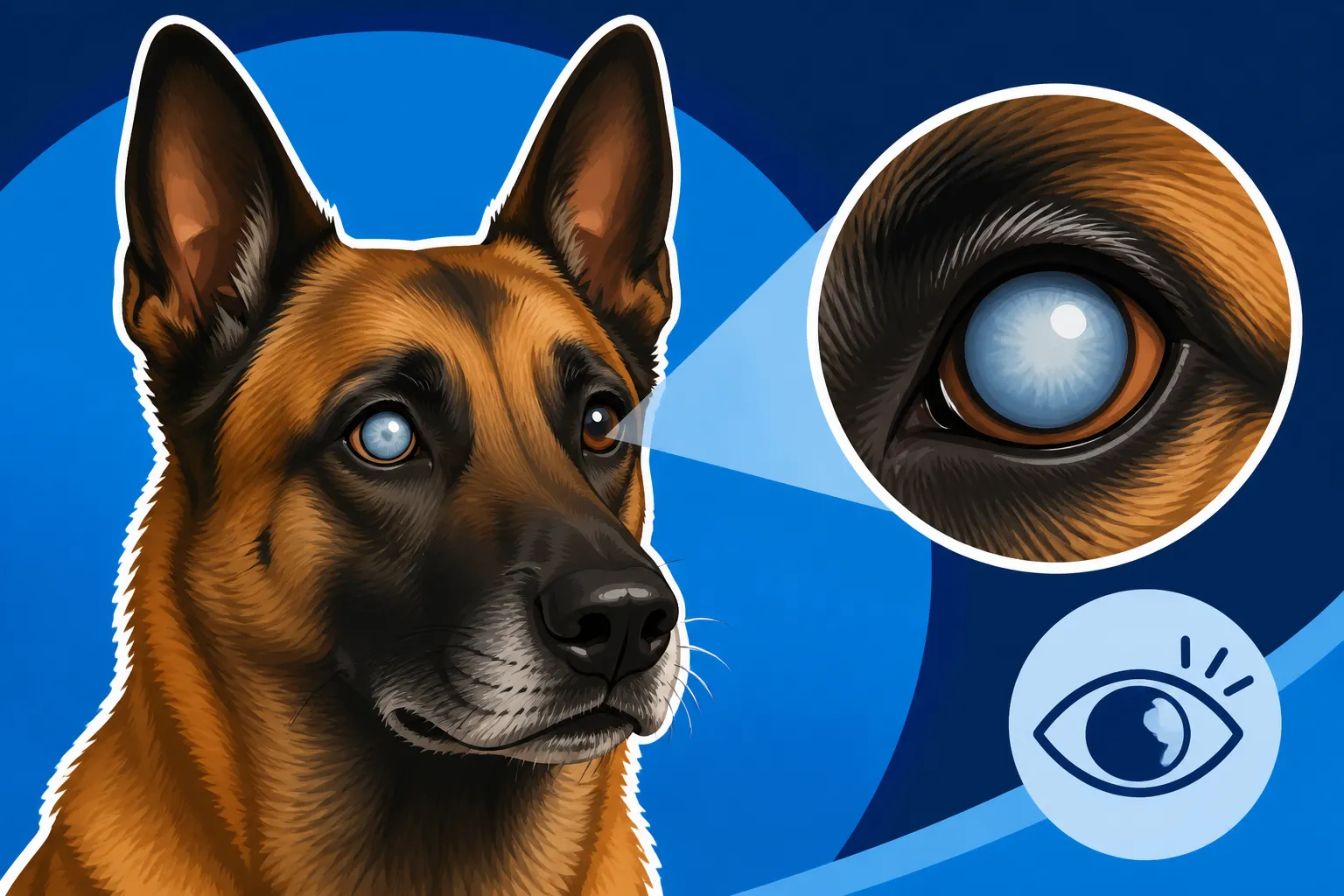
As cataracts progress, the physical changes in your Malinois's eyes become more apparent. You'll typically start to see a milky, whitish, or bluish-gray cloudiness within the pupil, which is the center of their eye. This cloudiness can range from small, scattered flecks in the early stages (incipient cataracts) to a dense, opaque white or gray mass that covers the entire lens (mature cataracts).
It's important to observe these changes in various lighting conditions. Sometimes, the cloudiness is more noticeable in bright light, while other times it might appear more prominent when your Malinois is in a shaded area. If only one eye is affected initially, you might compare it to the clearer eye to truly appreciate the difference. Remember, this visible cloudiness needs to be differentiated from nuclear sclerosis, which is a generalized haziness that doesn't usually progress to blindness. While a casual glance might make them seem similar, the distinct, often "cracked ice" or "shattered glass" appearance of a developing cataract is quite different from the uniform haze of nuclear sclerosis.
Behavioral Cues and Impact on Daily Life
Beyond the visible changes, cataracts can lead to a host of behavioral shifts as your Malinois struggles with impaired vision. They might become more hesitant to go to new places or navigate unfamiliar terrain. You might notice them bumping into doorways or furniture, especially if items have been moved. Their confidence can take a hit, leading them to stick closer to you or become more startled by sudden movements or noises.
For a working or sport-bred Malinois, the impact can be devastating. A dog that once lived to track, jump, or engage in bite work may find these activities increasingly difficult or even impossible. Imagine a dog like yours, built for speed and precision, now struggling with depth perception and light changes. This can lead to frustration, anxiety, or even a decrease in their famous drive. It’s important to remember that this isn't a willful defiance, but a genuine struggle. Providing a stable, predictable environment and adapting their routine can help immensely. For instance, helping an older Malinois off slick floors or clear paths in familiar areas can prevent accidents and build confidence back up. You may even notice them exhibiting behaviors like An Old Malinois That Paces the House at Night, potentially due to disorientation or anxiety caused by their reduced vision.
Diagnosis and Assessment of Cataracts
Once you've noticed those tell-tale signs in your aging Malinois, the next crucial step is getting a proper diagnosis. Guessing can lead to incorrect assumptions and unnecessary worry, or worse, delaying a treatment that could truly help. A precise diagnosis from a veterinary professional, ideally an ophthalmologist, is key.
The Vet Visit: What to Expect
When you take your Malinois to the vet for suspected cataracts, the examination will be much more in-depth than a routine check-up. Your general veterinarian will likely start with a thorough physical exam and an initial eye assessment. They'll use an ophthalmoscope, a handheld device with a light, to look into the back of your dog's eye and assess the lens and retina. They'll also typically administer dilating eye drops to enlarge the pupil, which allows for a much better view of the lens. This can take about 20-30 minutes to take full effect, so be prepared for a bit of a wait in the examination room.
If your regular vet suspects cataracts or has any concerns, they will almost certainly recommend a referral to a board-certified veterinary ophthalmologist. These specialists have advanced training and equipment to provide the most accurate diagnosis and treatment plan. It’s worth the trip and the specialized care, especially for a Malinois whose quality of life is so tied to their vision.
Diagnostic Tools
At a veterinary ophthalmologist's office, the diagnostic process becomes even more precise. They will use specialized equipment like a slit lamp biomicroscope, which provides a magnified, three-dimensional view of the structures within the eye, including the lens. This allows them to precisely locate and characterize the cataracts – how big they are, where they are located on the lens, and how dense they are. This detail is crucial for determining the best course of action.
Another important diagnostic step, especially if surgery is being considered, is an electroretinogram (ERG). This test measures the electrical activity of the retina to ensure it's functioning properly. A healthy retina is essential for vision, even if the cataract is removed. They may also perform an ocular ultrasound to look at the structures behind the lens, ensuring there are no other underlying issues that would complicate surgery or affect the outcome. These comprehensive tests help create a full picture of your Malinois's eye health and potential for restored vision.
Grading the Severity of Cataracts
Cataracts aren't a one-size-fits-all condition; they progress through different stages, each with varying impacts on vision. Veterinary ophthalmologists grade cataracts to describe their severity:
- Incipient Cataract: These are very small, focal opacities, typically affecting less than 15% of the lens. At this stage, your Malinois might not show any noticeable vision impairment, and often, only a veterinary ophthalmologist can detect them.
- Immature Cataract: At this stage, the cataract affects more than 15% of the lens, but the dog can still see through the cloudy areas to some degree. Vision is usually impaired, especially in low light, but not completely lost. This is often the stage where owners first notice behavioral changes or visible cloudiness.
- Mature Cataract: Here, the entire lens is opaque, and the dog is functionally blind in that eye. There is no longer any vision passing through the lens. This is typically the stage where surgical intervention, if appropriate, can yield the most dramatic results in restoring sight.
- Hypermature Cataract: This is an advanced stage where the lens proteins begin to dissolve, and the cataract shrinks and appears shrunken or wrinkled. This can sometimes lead to secondary complications like lens-induced uveitis (inflammation inside the eye) or glaucoma, which are painful and can cause further irreversible damage. Managing these complications, even if surgery isn't an option, becomes paramount.
Understanding these stages helps you and your vet determine the best timing for potential interventions and how to manage your Malinois’s care moving forward.
Managing Life with Cataracts
Finding out your energetic Malinois is losing their sight can be a gut punch, especially when you consider their past life of precision and focus. While surgery offers a path to restored vision, it's not always an option or the right choice for every dog or every owner. Thankfully, there are many ways to manage life with cataracts, ensuring your beloved companion maintains a good quality of life, even with impaired vision.
Non-Surgical Approaches
For various reasons, such as financial constraints, other health issues, or advanced age, surgical intervention for cataracts might not be feasible or advisable. In these situations, the focus shifts to supportive care and managing any secondary complications. There are no miracle eye drops that can truly "dissolve" or reverse cataracts once they've formed, despite what some online sources might claim. However, your vet might prescribe anti-inflammatory eye drops if the cataract is causing lens-induced uveitis, an inflammation inside the eye that can be painful and lead to further damage like glaucoma. This inflammation is a serious complication, especially with mature or hypermature cataracts.
Additionally, some veterinarians may suggest dietary antioxidants or specific supplements, though their effectiveness in preventing or slowing cataract progression once they’ve begun is not definitively proven. The key here is always to consult with your veterinarian before starting any supplements, as some can interfere with other medications or have unintended side effects. The goal of non-surgical management is primarily to keep your Malinois comfortable, prevent secondary issues, and optimize their remaining vision.
Environmental Modifications for Safety and Comfort
Living with a visually impaired Malinois means making some practical adjustments around your home and during walks to ensure their safety and reduce their anxiety. Your Malinois thrives on routine and predictability, and this becomes even more crucial when their vision is compromised.
Here are some essential modifications:
- Maintain Consistency: Avoid rearranging furniture or leaving obstacles in unexpected places. Your Malinois relies on their "mental map" of your home.
- Clear Pathways: Keep floors clear of clutter. Rugs and runners can provide tactile cues and prevent slips on slick surfaces. Consider adding tactile markers near stairs or doorways.
- Consistent Lighting: Ensure well-lit areas, especially where your Malinois eats, sleeps, and navigates. However, avoid harsh, sudden changes in light, which can be disorienting.
- Verbal Cues: Start using more verbal cues to guide them. "Step up," "step down," "stop," "left," and "right" can be incredibly helpful during walks and around the house.
- Safety Barriers: Use baby gates to block off stairs, swimming pools, or dangerous areas to prevent falls.
- Familiar Smells: Keep their bedding and toys in consistent spots. Familiar scents can be very reassuring.
These changes may seem small, but they collectively build a safer, less stressful world for your Malinois.
Enrichment and Mental Stimulation for a Visually Impaired Malinois
Just because your Malinois can't see as well doesn't mean their brain has stopped working! This breed needs mental stimulation as much as, if not more than, physical exercise. When vision declines, you'll need to shift how you provide that vital enrichment. Focus on their other powerful senses.
- Scent Work: This is a fantastic outlet for a Malinois! Hide treats around the house or yard and encourage them to sniff them out. You can also explore formal nose work classes, which build on their natural abilities and provide immense mental satisfaction.
- Auditory Cues: Use toys that make noise, like crinkle balls or squeaky toys, to engage their hearing during playtime. A consistent set of verbal commands and praise will also become increasingly important.
- Texture and Taste: Offer a variety of safe chew toys with different textures. Food puzzles and treat-dispensing toys can keep them mentally engaged, even if they can't visually track a moving object. Brands like Kong and Nina Ottosson offer excellent options.
- "Safe" Walks: Continue to take them on walks in familiar, safe areas. Let them sniff everything and take their time. A long leash in a fenced area can allow them to explore with some freedom while still being secure.
- Continued Training: Reinforce basic obedience commands using strong verbal cues and tactile guidance. This maintains your bond and keeps their mind sharp. Keeping an Old Belgian Malinois Mentally Busy is paramount for their overall well-being and happiness.
| Eye Condition | Affected Part of Eye | Primary Symptom | Impact on Vision | Pain/Discomfort | Treatment Focus |
|---|---|---|---|---|---|
| Cataract | Lens | Opaque cloudiness | Mild to severe blindness | Possible if secondary complications | Surgery (phacoemulsification) or supportive care |
| Nuclear Sclerosis | Lens | Bluish-gray haze | Minimal, minor near-vision issues | None | None required |
| Pannus | Cornea | Pink/red/pigmented film | Can cause blindness if severe | Mild irritation/discomfort | Anti-inflammatory eye drops (topical steroids/cyclosporine) |
| Glaucoma | Optic Nerve | Enlarged pupil, redness, bulging eye | Rapid, painful blindness | Severe pain | Emergency medication, surgery to relieve pressure |
| Progressive Retinal Atrophy (PRA) | Retina | Progressive degeneration of photoreceptors | Night blindness progressing to total blindness | None | None, supportive care |
Surgical Intervention for Cataracts
When vision loss from cataracts significantly impacts your Malinois’s quality of life, surgery often becomes the most effective path to restoring their sight. It's a big decision, certainly, and one that involves careful consideration and preparation.
When Surgery Is Considered
The decision to pursue cataract surgery is highly individualized and depends on several factors. Most importantly, it’s considered when the cataracts have progressed to a point where they are causing significant vision impairment (immature or mature cataracts), and this impairment is negatively affecting your Malinois’s quality of life. If they are constantly bumping into things, showing anxiety, refusing to navigate once-familiar spaces, or can no longer engage in activities they love, surgery might be a strong option. The goal is to improve their daily function and happiness.
Another critical factor is the overall health of your Malinois. Candidates for surgery should be otherwise healthy, as the procedure requires general anesthesia. Your veterinary ophthalmologist will perform extensive pre-operative testing, including bloodwork, an ERG to assess retinal function, and potentially a cardiac workup to ensure your Malinois can safely undergo anesthesia. They will also consider the presence of any other The Eye Diseases Behind a Malinois Eye Certificate or health issues that could impact recovery or the success of the surgery. If your Malinois has concurrent conditions like diabetes, it must be well-managed before surgery.
The Surgical Procedure
Cataract surgery in dogs is a highly specialized procedure performed exclusively by veterinary ophthalmologists. The most common and effective technique used is called phacoemulsification. This is the same procedure used in human cataract surgery and involves using a small ultrasonic probe to break up the cloudy lens into tiny pieces, which are then suctioned out of the eye.
Once the natural, cloudy lens material is removed, an artificial intraocular lens (IOL) is typically implanted. This artificial lens restores the eye's ability to focus, allowing your Malinois to see clearly again. The procedure is performed under general anesthesia and is microsurgical, meaning the ophthalmologist uses a surgical microscope to ensure precision. The incision is very small, leading to a faster healing time. While this procedure offers incredible results, it's also quite costly, and having pet insurance from providers like Healthy Paws can significantly alleviate the financial burden, especially for a complex surgery like this.
Post-Operative Care and Recovery
The surgery itself is only part of the journey; post-operative care is absolutely critical for a successful outcome and preventing complications. Your Malinois will typically need to wear an Elizabethan collar (E-collar or "cone of shame") for several weeks to prevent them from rubbing or scratching their eyes, which could cause serious damage.
A strict regimen of multiple eye drops will be prescribed, sometimes as many as four different types, administered several times a day for several weeks or even months. This can be challenging for both you and your Malinois, especially if they are not keen on having drops applied, so mastering techniques for Applying Eye Medication to a Malinois That Objects will be very important. Oral medications, such as anti-inflammatories or antibiotics, may also be prescribed. Activity will be restricted during the initial recovery period – no roughhousing, jumping, or strenuous exercise. Leash walks for bathroom breaks will be the norm. Regular follow-up appointments with the ophthalmologist are crucial to monitor healing, adjust medications, and catch any potential complications early. The recovery period demands significant commitment from the owner, but the potential reward of restored vision is often well worth the effort.
Prognosis and Long-Term Outlook
Making the decision for cataract surgery is a monumental step, and naturally, you'll want to know what to expect long-term for your Malinois. The prognosis for restoring vision after successful cataract surgery is generally excellent, but it's important to have realistic expectations about life after the procedure.
Success Rates and Potential Complications
Modern veterinary ophthalmology has a very high success rate for cataract surgery in dogs, with many studies reporting vision restoration in 85-95% of cases. However, like any surgery, it's not without potential complications. The most common complications include post-operative inflammation (uveitis), glaucoma (increased pressure in the eye), retinal detachment, or the formation of secondary cataracts (where scar tissue forms behind the artificial lens). These complications can sometimes lead to vision loss, even after a seemingly successful surgery.
Early detection and aggressive management of any post-operative issues are key to minimizing their impact. This is why strict adherence to the prescribed medication regimen and attending all follow-up appointments are so vital. Your veterinary ophthalmologist will carefully explain the risks and benefits specific to your Malinois's case, helping you make the most informed decision. Pet insurance, such as Healthy Paws, can be invaluable here, as it can help cover the costs not just of the surgery itself, but also any unexpected post-operative complications and the ongoing medication needed. This can make the difference between pursuing treatment and feeling overwhelmed by the financial implications.
Life After Surgery: Expectations for Vision and Activity
Assuming a successful surgery and recovery, your Malinois will typically experience a dramatic improvement in their vision. They should be able to navigate their environment with confidence, recognize you more easily, and enjoy their favorite activities again. It's truly incredible to see a dog regain their sight – the renewed zest for life is often palpable.
However, it's important to understand that their vision might not be "perfect" 20/20. The artificial lens may not provide the same range of focus as a young, natural lens. They might still have some limitations, especially in very dim light or when judging extreme distances, but their functional vision will be vastly improved. For a working Malinois, this means they could potentially return to some level of training or activity, though the intensity might need to be adjusted. For a companion Malinois, it means a much richer and safer daily life. Continue to provide a structured environment and consistent cues, as these habits will further enhance their confidence and well-being. The relief you'll feel seeing your Malinois engage fully with the world again is immense. You may find them able to enjoy tasks like Retiring a Working Belgian Malinois From the Job with much more confidence in their later years.
When to Make the Difficult Decision for a Malinois with Advanced, Untreatable Cataracts
Sadly, for some Malinois, surgery isn't an option, or it may not be successful in restoring vision. In cases of advanced, untreatable cataracts, especially when complicated by painful secondary issues like glaucoma that cannot be managed with medication, you might be faced with the heartbreaking decision of considering enucleation (removal of the eye) or, in the most extreme cases, euthanasia.
This is an incredibly difficult time, particularly for a breed so full of life and spirit. If the eyes are causing chronic pain and discomfort, and there's no hope for vision or comfort with medical management, removing the painful eye can significantly improve your Malinois's overall quality of life. Dogs adapt incredibly well to living with one eye or even being completely blind, as long as they are not in pain. The decision to remove an eye or to consider euthanasia is deeply personal and should always be made in close consultation with your veterinary team, focusing on your Malinois’s comfort and dignity. Remember, your Malinois has given you years of unwavering loyalty and joy, and sometimes the greatest act of love is to relieve their suffering. This difficult path is part of Making the Last Decision for a Malinois. Ultimately, your Malinois's quality of life, comfort, and freedom from pain are what matter most. Even with age and challenges like cataracts, many Malinois live long, full lives, often reaching The Fourteen to Sixteen Years a Belgian Malinois Lives.
Disclaimer
This article is for general informational purposes only and does not constitute professional advice. Laws, prices and regulations vary by location and change over time. Consult a qualified professional for guidance on your specific situation.