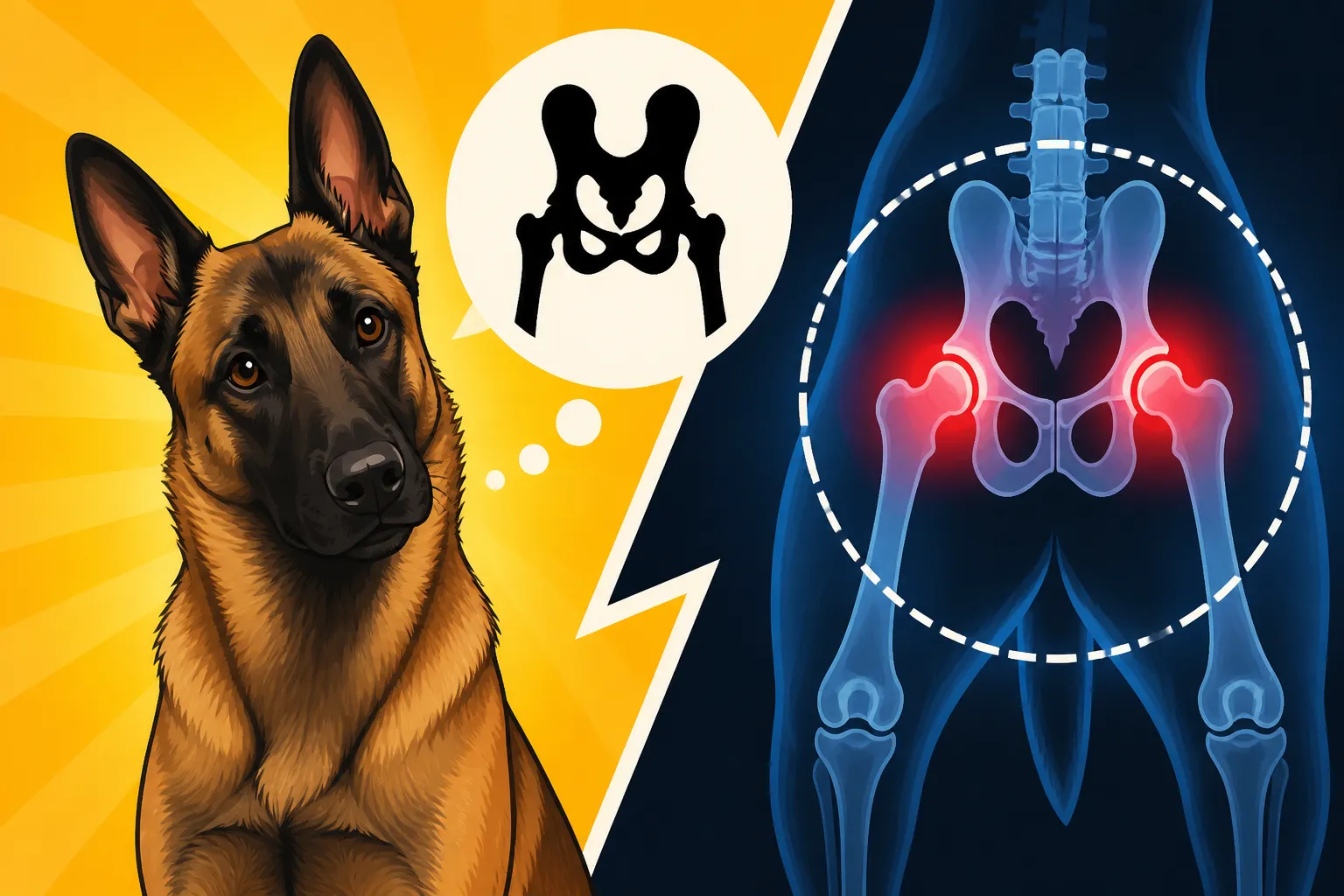
Whether Six Percent Is Low for Malinois Hips
It's incredibly frustrating when you're trying to understand complex health terms for your Belgian Malinois, especially when you hear a number like "six percent" thrown around in relation to their hips. You're left wondering, is that good? Is it bad? Does it mean my dog is prone to problems, or are they set for life? This guide is here to demystify hip evaluations, particularly what a six percent score might indicate for your athletic Malinois, and help you understand what truly contributes to their long-term joint health.
Decoding Hip Evaluations for Belgian Malinois
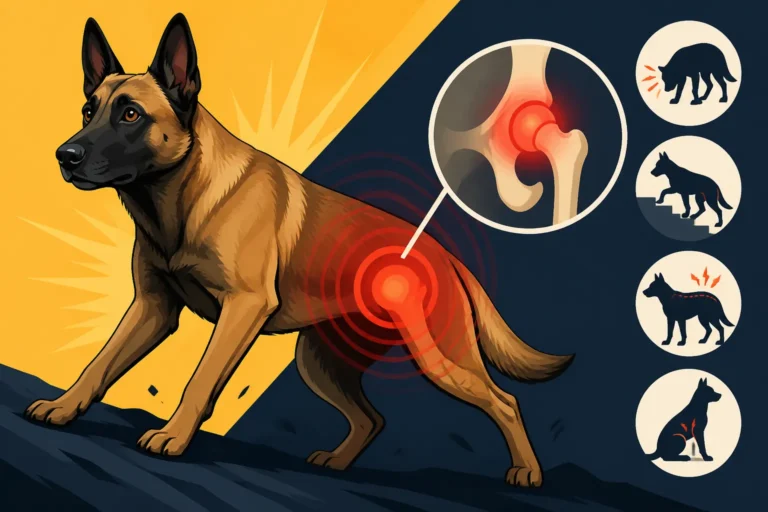
When it comes to assessing the hip health of a Belgian Malinois, there are primarily two widely recognized methods: the Orthopedic Foundation for Animals (OFA) certification and the PennHIP evaluation. Both aim to screen for Hip Dysplasia (HD), a condition where the hip joint doesn't form properly, leading to looseness and eventually arthritis. However, they approach the problem from different angles and provide different types of data. Understanding these differences is key to making sense of any hip score.
Orthopedic Foundation for Animals OFA Scoring
The OFA method is probably the one most people are familiar with. It involves taking a single, standard X-ray of your dog's hips when they are at least two years old. This X-ray is then submitted to the OFA, where it's reviewed by three independent, board-certified veterinary radiologists. These experts visually assess the hip joint's conformation, looking at factors like the depth of the hip socket, the fit of the femoral head (ball) within the socket, and the presence of any degenerative changes.
Based on their consensus, the hips are graded into one of seven categories: Excellent, Good, Fair (these three are considered "passing" or "normal" scores, indicating healthy hips), Borderline, Mild, Moderate, or Severe (these indicate varying degrees of Hip Dysplasia). An "Excellent" score is the tightest and most well-formed hip joint, while "Severe" indicates significant malformation and degenerative changes. The major takeaway here is that OFA provides a subjective, descriptive grade based on a single radiographic view. For breeders, an OFA certification of Fair, Good, or Excellent is generally sought after to ensure they're not passing on a genetic predisposition for poor hip structure. You can learn more about The Age a Malinois Is Ready for Final Hip Films if you're planning for this type of evaluation.
PennHIP and the Distraction Index
PennHIP is a different beast entirely, offering a more objective and quantitative assessment of hip laxity, or looseness. Unlike OFA, PennHIP can be performed on dogs as young as 16 weeks, although final evaluations are usually done closer to 4-6 months, or even later. It involves taking three distinct X-ray views: a standard extended view (similar to OFA), a compression view (to measure hip joint congruity), and, most importantly, a distraction view. This distraction view measures the maximum amount the femoral head can be displaced from the hip socket, indicating the passive hip laxity.
The result of a PennHIP evaluation is primarily expressed as a Distraction Index (DI). This DI is a numerical measurement, ranging from 0 to 1. A DI closer to 0 means very tight hips with minimal laxity, while a DI closer to 1 indicates a very loose hip joint, which is highly correlated with a greater risk of developing Hip Dysplasia. So, when you hear "six percent" in the context of hip scores for a Malinois, it's almost certainly referring to a PennHIP Distraction Index of 0.06. This is a crucial distinction, as a low number in PennHIP is excellent, whereas a low descriptive score (like "Mild") in OFA is poor. This quantitative approach often gives a more precise picture of a dog's genetic predisposition to hip laxity than the visual assessment of OFA. For those looking for the most in-depth information, Whether PennHIP Tells a Malinois Buyer More is a great resource.
Here's a quick comparison of the two main hip evaluation methods:
| Feature | OFA Evaluation | PennHIP Evaluation |
|---|---|---|
| Primary Metric | Descriptive Grades (Excellent, Good, Fair, etc.) | Quantitative Distraction Index (DI: 0 to 1) |
| Focus | Visual conformation and degenerative changes | Measurement of passive hip laxity (looseness) |
| Minimum Age | 24 months for final certification | 16 weeks, but often performed around 4-6 months for screening |
| Views Taken | One extended view | Three views: extended, compression, and distraction |
| Interpretation | Higher grades (Excellent) are better | Lower DI (closer to 0) is better |
| Predictive | Less predictive in young dogs | More predictive of HD risk, even in puppies |
What a Six Percent Distraction Index Means for a Malinois
Now, let's get down to the brass tacks: what does a "six percent" DI, or more accurately, a 0.06 Distraction Index, truly mean for your Belgian Malinois? In short, it's fantastic news. This number places your Malinois's hips in an exceptionally healthy category, far better than the average for most breeds, including their own.
Interpreting PennHIP's 0.06 Score
A PennHIP Distraction Index of 0.06 is, without exaggeration, an outstanding score. To put it into perspective, the average DI for Belgian Malinois typically falls in the range of 0.30 to 0.40. Some sources even state that a DI below 0.30 is considered excellent for most breeds, indicating a low susceptibility to developing hip dysplasia. Therefore, a 0.06 DI means your Malinois has incredibly tight hips, significantly tighter than the breed average, and is at a much lower genetic risk for developing Hip Dysplasia.
This isn't just a "good" score; it's a "near-perfect" score in terms of hip laxity. It indicates that the ball of the femur fits very snugly and deeply within the hip socket, with minimal room for abnormal movement. This tight fit reduces the wear and tear on the joint cartilage over time, which is the primary mechanism by which hip dysplasia leads to painful arthritis. For a prospective puppy buyer, a parent with a 0.06 DI would be highly desirable, as it suggests a strong genetic predisposition for sound hip structure. When you are trying to understand Reading a Belgian Malinois Hip Result, seeing a DI this low is a huge green light.
The Importance of a Low DI for Working Malinois
For a Belgian Malinois, especially one involved in working sports, police work, or military service, having hips with such a low Distraction Index is an immense asset. Malinois are renowned for their incredible athleticism, explosive power, and demanding work ethic. These activities—think high jumps, rapid directional changes, hard bites on sleeves, scaling walls, and long hours of tracking—put immense strain on their joints.
Excellent hip structure is fundamental to a working Malinois's long-term soundness and career longevity. Dogs with looser hips are not only more prone to developing Hip Dysplasia early in life, but they are also at a higher risk for other orthopedic injuries because their joints aren't providing stable support. A Malinois with a 0.06 DI has a far greater chance of performing at peak levels for many years without joint pain or debilitating arthritis. This soundness allows them to train harder, compete longer, and recover more efficiently from strenuous activities. It means fewer veterinary visits for lameness issues and more years of being able to do the "job" they were bred for. It contributes directly to keeping a Belgian Malinois sound past twelve, allowing them to truly enjoy their active lives.
Beyond the Numbers Comprehensive Hip Health
While a low PennHIP Distraction Index like 0.06 is a fantastic indicator of genetic potential for healthy hips, it's important to remember that hip health is a multifaceted issue. Genetics lay the groundwork, but environmental factors, diet, exercise, and overall care play crucial roles in how those hips hold up over a dog's lifetime. No single score, no matter how good, is a guarantee against all future problems. A holistic approach ensures your Malinois remains healthy and active.
Considering Other Factors Beyond the Score
Firstly, genetics are more than just one score from one parent. When considering a puppy, look at the hip scores of both parents, grandparents, and even siblings. A consistent history of excellent hip health throughout the lineage provides even greater confidence. Responsible breeders will openly share this information and often screen for other genetic conditions too. You might want to consider Asking a Breeder for Malinois Ataxia Results as part of your comprehensive genetic inquiry.
Secondly, conformation refers to the physical structure of the dog. Even with a good DI, a Malinois with poor overall conformation – such as a straight shoulder, overly long back, or cow hocks – can still be more prone to joint stress and injury. A well-built Malinois will have a balanced, athletic frame that distributes weight and impact efficiently, supporting healthy joint function. This includes proper angulation in the front and rear, and a strong, level topline.
Finally, lifestyle and environment play a massive role, especially during a Malinois's critical growth phase. Over-exercising a puppy, particularly engaging in high-impact activities like excessive jumping or forced running on hard surfaces, can damage developing joints, even in a dog with excellent genetic potential for hip health. It’s important to understand Whether Jumping Damages a Young Malinois's Joints and moderate activities until growth plates have closed. Similarly, poor nutrition, especially feeding a diet that promotes too rapid growth in a puppy, can negatively impact joint development.
The Role of Preventative Care and Ongoing Management
Even with stellar genetics, preventative care is paramount for maintaining robust hip health throughout your Malinois's life.
Dietary considerations are foundational. Feed a high-quality, balanced diet appropriate for their age and activity level. For working Malinois, a diet formulated for highly active dogs can provide the necessary energy and nutrients without excess calories. It's also vital to maintain The Lean Condition a Belgian Malinois Should Carry. Excess weight puts incredible strain on joints, accelerating wear and tear and potentially negating the benefits of naturally tight hips. Talk to your vet about appropriate weight management strategies.
Supplements can also be beneficial, particularly as your Malinois ages or if they have an exceptionally demanding working schedule. Ingredients like glucosamine, chondroitin, MSM, and omega-3 fatty acids (found in fish oil) are commonly used to support joint cartilage health and reduce inflammation. Brands like Nutramax's Dasuquin or Cosequin are popular choices, but always consult with your veterinarian before adding any supplements to your dog's regimen. They can advise on the best products and dosages for your individual dog, especially if you are considering Joint Supplements for a Working Belgian Malinois.
Appropriate exercise is crucial. While Malinois need a lot of physical activity, it needs to be structured and appropriate for their age and physical condition. Regular, moderate exercise helps build strong supporting muscles around the joints, improving stability. Swimming, canicross, and controlled retrieve games on soft surfaces are excellent low-impact options. Avoiding extreme, repetitive high-impact activities on hard surfaces can save wear and tear.
Lastly, regular veterinary check-ups are non-negotiable. Your vet can monitor your Malinois's gait, check for any signs of discomfort or lameness, and discuss preventative strategies. They can also advise on pain management or physical therapy if any issues arise later in life. Consider pet insurance from providers like Healthy Paws, which can help cover unexpected veterinary costs related to accidents or illnesses, including potential joint issues that may develop despite the best preventative care. Planning for your Malinois's long-term health is part of being a responsible owner.
Disclaimer
This article is for general informational purposes only and does not constitute professional advice. Laws, prices and regulations vary by location and change over time. Consult a qualified professional for guidance on your specific situation.