Whether a Belgian Malinois Should Meet Strange Dogs
As Belgian Malinois owners, we often find ourselves in a unique position when it comes to dog-on-dog interactions. It's a common scenario: you're out with your highly focused, often intense Malinois, and another dog owner, perhaps with a much more laid-back breed, approaches, asking, "Can they say hi?" Your heart probably sinks a little, because you know it's rarely a simple "yes" or "no." The truth is, whether a Belgian Malinois should meet strange dogs is a nuanced question, fraught with considerations that aren't always obvious to those unfamiliar with the breed. This guide aims to unpack those complexities, helping you understand the underlying instincts of your Malinois and how to navigate these encounters safely and responsibly, for both your dog and others.
The Malinois Instinct: More Than Just Play
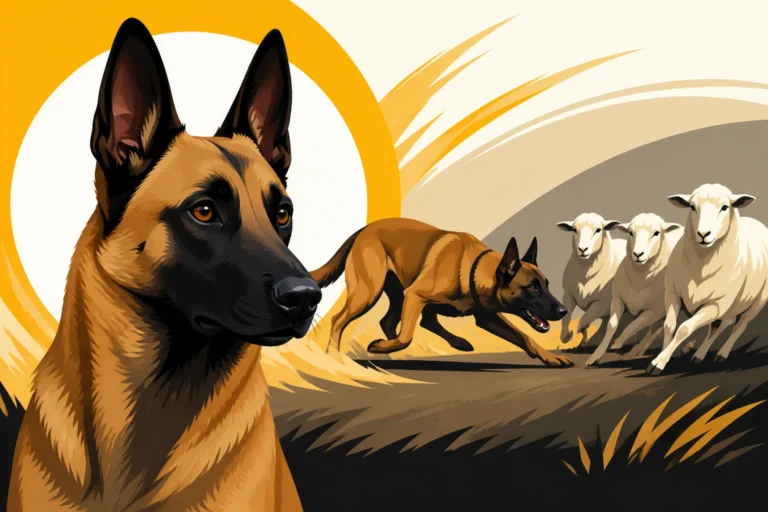
Understanding your Belgian Malinois's inherent nature is the first step in deciding how to approach interactions with strange dogs. These aren't your average, happy-go-lucky greeters often seen in the local park. Malinois were historically bred for herding and protection work, roles that require intense focus, a strong prey drive, and often, a discerning nature toward strangers—both human and canine. This isn't a flaw; it's a feature of their genetics.
A Natural Reserve and Protective Tendencies
Unlike many breeds that might rush in for a boisterous greeting with any new dog, a Malinois often possesses a natural reserve. This isn't shyness or fear, but rather a characteristic caution. They are assessing, observing, and often, guarding. This protective instinct, so valued in their working roles, means they don't necessarily view every approaching dog as a potential playmate. Instead, their default might be to size up the other dog, determine its intent, and be ready to respond if they perceive a threat to themselves or their handler. This can manifest as stiffness, staring, or even a low growl, which is easily misinterpreted by other owners as aggression rather than a "stay-away" signal.
Think about it from their perspective: their job, even in a pet home, is often to be vigilant. They are constantly "on duty," scanning their environment. A sudden, uncontrolled approach from an unknown dog can be jarring and violate their personal space, triggering an ingrained response. This is why well-meaning, but pushy, greetings can go south quickly. It’s not that they hate other dogs; it's that their threshold for tolerating unknown, uninvited advances is often much lower than breeds bred purely for companionship or casual dog park interactions. A Belgian Malinois That Reacts to Other Dogs dives deeper into understanding and managing these responses.
High Drive and Redirected Energy
Belgian Malinois are bundles of intense energy and drive. This drive, whether it's prey drive, defense drive, or simply their boundless enthusiasm for doing something, can be a double-edged sword in dog-on-dog greetings. In high-arousal situations, that intense energy can sometimes redirect. What starts as an over-excited lunge to "play" can escalate rapidly if the other dog isn't receptive, or if the Malinois becomes frustrated by restraint.
For example, imagine your Malinois sees another dog and becomes hyper-focused. They might pull hard on the leash, whine, and bark, exhibiting what looks like eagerness. However, if that other dog gives an unfriendly snap or your Malinois is repeatedly prevented from reaching it, that pent-up energy and frustration can manifest in unwanted ways. They might redirect a quick bite or an intense bark at you, the leash, or even another nearby object. This isn't malicious, but a primal release of frustrated energy. It's why careful management, rather than casual introductions, is paramount. Providing appropriate outlets for this drive, like structured training or Flirt Poles and a Belgian Malinois's Drive, can help manage these tendencies.
Assessing the Risks and Rewards of Dog-on-Dog Greetings
While some dogs thrive on meeting every new canine they encounter, a Malinois often operates differently. Weighing the potential risks against the actual rewards of these casual "hellos" is crucial for responsible ownership.
The Risks: A Spectrum of Potential Problems
The risks associated with letting your Malinois meet strange dogs are significant and should not be underestimated. First and foremost is the potential for an actual dog fight. Even if your Malinois has a generally stable temperament, their intensity, directness, and potential for a quick, hard correction can be overwhelming or misinterpreted by other dogs, leading to a negative interaction. A Malinois isn't one to back down easily, and once a scuffle starts, separating them can be incredibly challenging and dangerous for both dogs and handlers. The consequences of such an event, including vet bills, potential injury to yourself, and legal liabilities, are substantial.
Beyond outright aggression, there's the risk of creating negative associations. If your Malinois has repeated unpleasant encounters with strange dogs (e.g., being growled at, snapped at, or having another dog react poorly to its intensity), it can quickly learn that other dogs are something to be wary of, or even confrontational towards. This can lead to leash reactivity, where your dog barks, lunges, and strains every time it sees another dog, making walks stressful and unpleasant for everyone. This can be a self-fulfilling prophecy: a Malinois that expects trouble from other dogs is more likely to find it. This is why the advice that "they need to work it out" or "just let them say hi" is often disastrous for this breed.
Consider the physical strain on your Malinois, too. A sudden, high-impact interaction, even one that doesn't result in injury, can put undue stress on their joints and muscles, especially if they are already prone to issues like those discussed in Elbow Problems in a Jumping Belgian Malinois. Moreover, repeated over-arousal without a positive resolution can lead to chronic stress, impacting their overall health and well-being.
| Interaction Type | Potential Risks | Potential Rewards |
|---|---|---|
| Uncontrolled Greetings | Fights, injuries, leash reactivity, negative associations, stress for dog and handler, legal liability | Minimal, often leads to worse behavior |
| Controlled Greetings | Still requires vigilance, potential for miscommunication | Positive social experience, confidence building (if successful) |
| No Greetings | None related to direct interaction | Peace of mind, focus on handler, prevents negative experiences |
The Rewards: Often Overstated for the Malinois
For many breeds, meeting new dogs offers socialization benefits and enrichment. For a Belgian Malinois, these "rewards" are often minimal or can even be counterproductive if not handled with extreme care. A Malinois's primary social bond should be with its handler. Its fulfillment comes from working, training, and engaging with you, not from a casual sniff-and-go with a stranger's poodle.
While a well-socialized Malinois should be neutral to other dogs—meaning they can exist calmly in the same space without reacting—it doesn't mean they need to be best friends with every dog on the block. Forced or frequent interactions with unknown dogs can actually erode this neutrality, pushing them towards reactivity or aggression.
The true "reward" of dog-on-dog interactions for a Malinois lies in highly structured, supervised play with known, stable, and equally matched dogs, or in environments where they learn to calmly coexist with others without direct interaction. This could be in a controlled training class, a structured group walk, or playdates with a carefully selected, compatible canine friend. The kind of casual "playdate" that works for a Labrador might be entirely inappropriate for a Malinois. Instead of prioritizing quantity of interactions, focus on the quality and appropriateness of any canine companionship. Whether a Belgian Malinois Needs Dog Park Time further elaborates on this concept.
Mastering the Art of Canine Communication (and Avoidance)
Given the potential downsides, a crucial skill for any Belgian Malinois owner is the ability to confidently and politely manage or avoid interactions with strange dogs. This isn't about being antisocial; it's about being a responsible advocate for your dog's well-being and maintaining control.
Proactive Avoidance and Creating Space
The easiest and often safest strategy is proactive avoidance. This means learning to spot other dogs and their handlers well in advance and adjusting your route or timing to create ample space. See a dog coming? Turn down a side street, cross to the other side of the road, or step behind a parked car. This isn't rude; it's a display of responsible handling. Your Malinois doesn't need to be inches away from every passing dog. In fact, providing space reinforces to your Malinois that you are in control of the situation and they don't need to be concerned with managing other dogs themselves.
When avoidance isn't possible, use verbal cues and body blocking. A firm, polite "No, we're in training!" or "My dog isn't friendly!" (even if they're just aloof, it gets the message across) usually works. Don't be afraid to put your body between your Malinois and the approaching dog, creating a physical barrier. This also demonstrates to your dog that you are handling the situation, further building their trust in your leadership. For situations where you might need to manage more intense interactions, proper Muzzle Conditioning Before a Malinois Ever Needs One can be an invaluable safety net.
Building Focus on the Handler
A strong bond and rock-solid focus on you are your best tools in managing interactions with other dogs. If your Malinois is totally engaged with you, responding to commands, and looking to you for direction, they are much less likely to be distracted or provoked by other dogs. This requires consistent, dedicated training, starting from puppyhood. Think about it: if your dog's attention is constantly on you, then the strange dog becomes irrelevant.
This means practicing engagement exercises in increasingly distracting environments. Use high-value rewards (treats, a favorite tug toy like those you can find on Amazon, or praise) to keep your Malinois's eyes and ears on you. Building Focus on a Belgian Malinois in a Crowd details exercises to achieve this. Teach a strong "look at me" or "watch" command, a reliable "heel," and a bomb-proof recall. If you can call your Malinois away from a perceived distraction or threat, you maintain control over the situation. Many owners find structured online programs, like those from BAXTER & Bella, incredibly helpful for establishing this foundational focus from a young age, before problematic behaviors emerge.
Safe Introductions: When and How to Say Hello
There are indeed times when introducing your Malinois to another dog is appropriate, beneficial, or even necessary. However, these introductions must be carefully orchestrated, never casual, and always under strict control.
The "Who" and "Where" Matters Immensely
When considering an introduction, the other dog is just as important as your Malinois. You want to introduce your Malinois to dogs that are known to be stable, calm, confident, and respectful of boundaries. Avoid dogs that are overly pushy, highly reactive, or display fear aggression. Often, a mature, balanced dog of similar size and energy level can be a good match. Avoid multiple dog introductions at once; stick to one-on-one. If you're considering expanding your household, Introducing a New Malinois to the Dog You Have offers essential guidance.
The "where" is equally critical. Introductions should never happen on a tight leash, in a confined space, or in a high-arousal environment like a busy dog park. Neutral territory is best, meaning a place neither dog considers "theirs." A large, securely fenced yard that is not your home or the other dog's home, or an empty park field, works well. Both dogs should be on long lines (a 15-30 foot line can be sourced easily from Amazon) or leashes, with handlers maintaining control and ready to intervene. This allows for natural, indirect sniffing and observation without forced proximity. Long Line Work With a Malinois in Open Ground can prepare you for these kinds of controlled scenarios.
A Controlled, Structured Protocol
Here's a general protocol for a safe, controlled introduction:
- Parallel Walk: Start by walking the dogs parallel to each other at a distance where neither is reacting. The goal isn't interaction yet, but desensitization to each other's presence. Gradually, you can decrease the distance, always observing body language.
- Scent Swapping: Before meeting in person, you can swap blankets or toys between the dogs. This allows them to get to know each other's scent in a low-pressure environment, building familiarity before the face-to-face.
- Visual Introduction (No Direct Contact): Once both dogs are calm during parallel walks, allow them to see each other through a fence or from a greater distance without direct nose-to-nose contact. This confirms their comfort with visual presence.
- Brief, Controlled On-Leash Greeting: If all previous steps show positive, relaxed body language (loose tails, soft eyes, no stiffness), you can attempt a very brief on-leash sniff. Keep leashes loose, and let them sniff for a few seconds (literally 3-5 seconds), then calmly separate them before tension can build. The goal is positive, short interactions.
- Off-Leash (if appropriate and safe): Only if several on-leash interactions have been consistently positive, and in a secure, neutral, and spacious area, consider a very brief off-leash encounter. Supervise intensely, and be ready to separate them at the first sign of tension. Play should be observed carefully; a Malinois's play can be intense and might be misconstrued by other dogs.
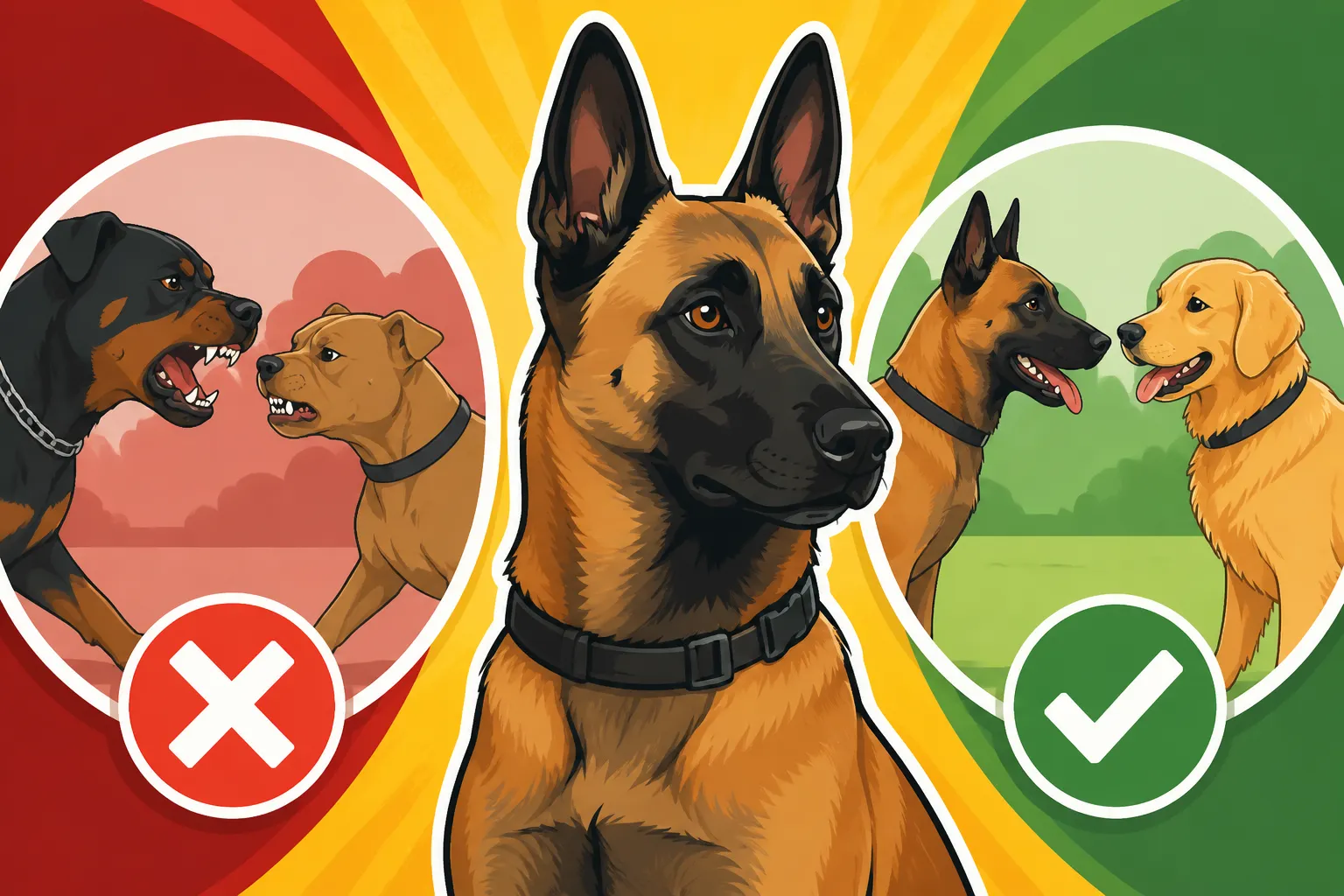
Remember, the goal for a Malinois isn't necessarily to have a new playmate every time. It's to teach them that other dogs exist, are not a threat, and that you will handle the situation. Many Malinois are perfectly content to exist neutrally in the presence of other dogs without needing to greet them directly. And for the vast majority of strange dogs encountered on a walk, the answer to "Can they say hi?" should simply be a polite but firm "No, thank you." Prioritizing safety and your Malinois's well-being is always the most responsible choice.
Disclaimer
This article is for general informational purposes only and does not constitute professional advice. Laws, prices and regulations vary by location and change over time. Consult a qualified professional for guidance on your specific situation.