Whether a GPS Collar Is Worth It on a Malinois
We all know the heart-stopping panic that sets in when your Belgian Malinois, a dog famed for its incredible speed and drive, suddenly slips past you or finds an unexpected gap in the fence. Their ability to cover ground in a blink and their single-minded focus when on a scent or target means a lost Malinois can quickly be miles away. This guide will walk you through whether a GPS collar is a genuinely worthwhile investment for these high-drive dogs, helping you understand their benefits, limitations, and how they fit into a comprehensive safety plan.
The Reality of a Malinois's Drive and Escape Potential
Owning a Belgian Malinois is an unparalleled experience, but it comes with a deep understanding of their unique nature. These aren't your average couch potatoes; they are finely tuned working machines, often with an incredible prey drive and an insatiable curiosity that can lead them straight into trouble if not managed properly. The thought of them getting lost is a nightmare that keeps many of us up at night.
Why Your Malinois Might Bolt
It's not usually about defiance or naughtiness when a Malinois takes off. More often, it's their intrinsic programming kicking in. A sudden rustle in the bushes might trigger their prey drive, sending them on a chase they simply can't ignore. A novel scent could lead them on an epic tracking adventure. Even a momentary lapse in attention from us, their devoted handlers, is often all they need. They are intelligent, quick-thinking, and physically adept. A fence that seems secure to us might be an invitation to explore for a Malinois, who can often climb, dig, or find weak spots with astonishing efficiency.
Think about it: that squirrel across the street, that deer dashing into the woods, or even the scent of another dog a mile away – these are irresistible forces for a breed bred to work with intensity. Their ability to accelerate and maintain speed means they can disappear from sight in seconds. It’s not that they don't love you or aren't trained; it’s that their instincts are incredibly powerful. This inherent drive is one of the reasons why a strong Recall on a Belgian Malinois in Full Drive is so critical, and why many owners feel that a Malinois is Whether a Malinois Is Ever Safe Off Leash is a question with a very careful answer.
The Anxiety of a Missing Malinois
The moment you realize your Malinois is gone, a cold dread washes over you. Their intensity and drive, which make them such phenomenal working and sport dogs, are precisely what make a lost Malinois so concerning. They aren't typically the type to just wander around the block and wait to be found. They can cover vast distances, cross busy roads without looking, and pursue their instincts into unfamiliar and potentially dangerous territories.
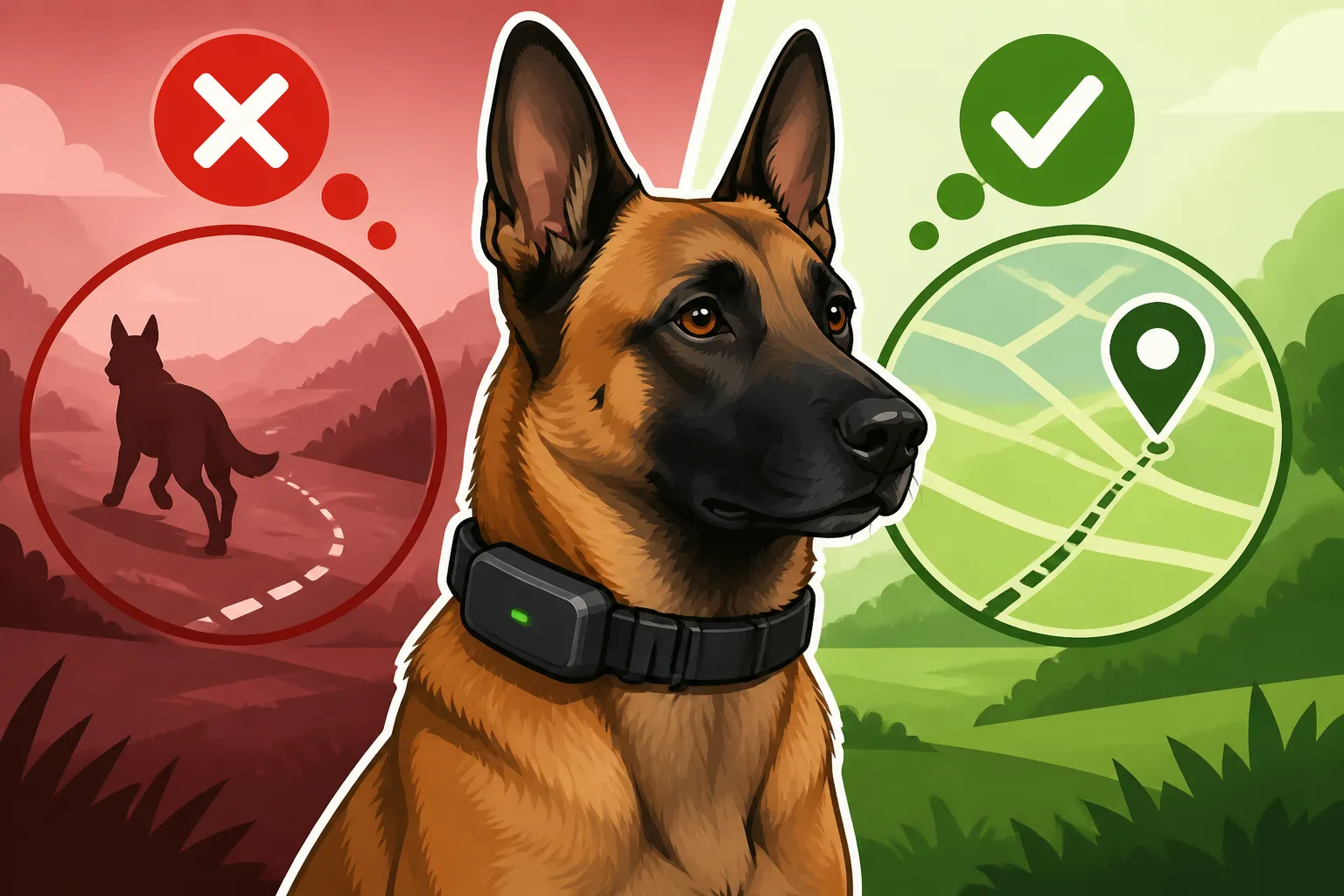
The worries multiply: are they safe from traffic? Are they encountering other dogs or people who don't understand their intensity? Are they finding food or water? Will they be mistaken for a stray or even a dangerous animal by someone unfamiliar with the breed? The hours stretch into an agonizing wait, filled with frantic calls, social media posts, and desperate searches. This is where the potential benefit of a GPS collar truly shines. It’s about more than just finding them; it's about mitigating that profound, gut-wrenching anxiety that can consume an owner. Knowing you have a tool that can provide real-time location data offers a sliver of peace in an otherwise terrifying situation.
How GPS Collars Work and What They Offer for Malinois Owners
GPS collars for dogs have become incredibly sophisticated, evolving from bulky devices to sleek, lightweight trackers that offer a wealth of information. For a Belgian Malinois owner, these aren't just gadgets; they're vital tools in managing a high-drive, often escape-prone companion.
Different Types of GPS Tracking for Dogs
When we talk about GPS collars, there are generally a few categories you'll encounter, each with its own advantages and considerations for a Malinois:
- Dedicated GPS Trackers (Cellular-Based): These are the most common and robust. They contain a GPS receiver to pinpoint the dog's location and a cellular chip to transmit that data to your smartphone app or computer. They usually require a subscription service, much like your phone, to cover the data costs. The range is essentially unlimited as long as there is cellular service. For a Malinois who can bolt miles away, this is often the preferred choice. Brands like Fi and Tractive are popular in this space.
- Radio Frequency (RF) Trackers: These systems involve a handheld receiver that picks up a signal from a transmitter on your dog's collar. They don't rely on cellular service, which can be great for remote areas, but their range is limited, usually to a few miles at most, and often line-of-sight dependent. You're actively "hunting" for the signal, which might not be ideal if your Malinois has already covered significant ground. These are sometimes used in hunting or working dog scenarios where the dog is expected to be within a certain radius.
- Hybrid Systems: Some collars might integrate both GPS and RF, or even utilize Wi-Fi and Bluetooth for closer range tracking (e.g., when your dog is in your backyard), seamlessly switching to cellular GPS when they are out of range. This offers a layered approach to tracking.
For a Malinois, given their propensity for speed and distance, a cellular-based GPS tracker with broad coverage is often the most practical choice. It means if they're spotted by someone in another town, you can still direct authorities or volunteers to their exact location.
Key Features to Look for in a Malinois GPS Collar
Choosing the right GPS collar for your Malinois involves more than just picking the first one you see. Their demanding lifestyle requires specific features to ensure the collar is effective and durable:
- Durability and Water Resistance: Malinois are active dogs, often working or playing in all sorts of environments. The collar needs to withstand mud, water, brush, and general rough-and-tumble. Look for high IP ratings (e.g., IP67 or IP68) for excellent water and dust resistance. This is crucial if your Malinois decides to take a swim or runs through a muddy field.
- Battery Life: This is paramount. A tracker is useless if the battery dies after a few hours of intensive tracking. Some collars offer multiple days of battery life, especially with adjustable tracking intervals. Consider how frequently your Malinois is off-leash or in situations where escape is possible. For example, if you're out Long Line Work With a Malinois in Open Ground and something spooks them, you want that battery to last.
- Real-time Tracking vs. Interval Tracking: While all GPS collars provide location, some offer more frequent updates ("real-time") which is incredibly valuable for a fast-moving Malinois. Others update every few minutes to conserve battery. For rapid response, real-time or near real-time tracking is a significant advantage.
- Geofencing/Virtual Fences: This feature allows you to set up virtual boundaries on a map. If your Malinois crosses this boundary, you immediately receive an alert on your phone. This is incredibly helpful for defining safe zones around your home, a training field, or even a friend's yard. It gives you a head start on recovery before they've gone too far.
- Size and Weight: While Malinois are robust, a bulky, uncomfortable collar can be distracting or even cause chafing during intense activity. Look for a lightweight, streamlined design that won't impede their movement.
- Connectivity and App Quality: A good, user-friendly smartphone app is essential. It should be intuitive, provide clear map views, allow for easy geofence setup, and offer reliable notifications. Check reviews for app stability and customer support.
- Activity Monitoring: Many GPS collars now include activity tracking, monitoring steps, sleep, and sometimes even calories burned. While not directly related to preventing escape, this can be a nice bonus for monitoring your highly active Malinois's overall health and ensuring they're getting enough mental and physical stimulation. This helps ensure they're getting Two Hours and a Job a Belgian Malinois Demands Daily or similar engagement to keep them fulfilled.
The Peace of Mind a GPS Collar Can Provide
Let's be honest, the biggest benefit of a GPS collar for a Belgian Malinois owner isn't just the technology; it's the profound sense of relief it offers. The knowledge that you have a constant link to your dog, even when they're out of sight, is truly invaluable.
Imagine this scenario: you're working in the yard, your Malinois is "helping," and suddenly a delivery truck pulls up. Before you can react, your dog, fixated on the moving vehicle, squeezes past the gate you thought was latched and is off down the road. In the past, this would trigger an immediate panic, followed by a frantic search. With a GPS collar, you get an instant alert that they've left the geofence. A quick check of your phone shows their current location, and you can immediately begin pursuit, knowing exactly where to go. This drastically cuts down on the search time and increases the likelihood of a safe recovery.
For those of us with working or sport Malinois, who spend a lot of time in open fields or unfamiliar environments for training or trials, a GPS collar adds an extra layer of security. During tracking exercises or off-leash obedience in large areas, an unexpected distraction could send them further than anticipated. The collar provides that critical backup. It's not a substitute for training or proper containment like Fencing That a Belgian Malinois Cannot Clear or secure Housing a Belgian Malinois in a Kennel or a Crate, but it's a powerful supplement to these measures. It allows us to give our Malinois the freedom to be dogs, within a framework of safety that wasn't possible just a few years ago.
Weighing the Investment: Costs, Limitations, and Alternatives
While the benefits of a GPS collar for a Belgian Malinois are clear, it's also important to approach the decision with a realistic understanding of the full investment, potential limitations, and what other safety measures should always be in place. This isn't just about buying a device; it's about integrating it into a holistic approach to your Malinois's well-being.
Understanding the Financial Commitment
The initial purchase price of a GPS collar can vary significantly. You'll find options ranging from more budget-friendly choices to premium models with advanced features. However, it's crucial to remember that the sticker price is usually just the beginning. Most cellular-based GPS trackers require a monthly or annual subscription fee to cover the data transmission.
These subscription costs can add up over time, so factor them into your overall budget. Sometimes, paying for a longer subscription upfront (e.g., a year or two) can offer a discount compared to monthly payments. While you might initially balk at another recurring expense, consider it an ongoing insurance policy for your dog's safety. When you think about the potential cost of a lost dog – advertising, rewards, or even emergency vet bills if they get injured – the subscription fee often pales in comparison. Many pet owners budget for various expenses, whether it's routine food from Chewy or considering What Pet Insurance Runs on a Working Malinois; a GPS collar subscription is another aspect of responsible pet ownership.
It’s also wise to consider accessories, such as extra charging cables or robust collar attachments, which might be needed over time. The hardware itself needs to be replaced eventually, either due to wear and tear or technological obsolescence. View it as a valuable piece of your Malinois management toolkit, alongside their quality food, training equipment, and veterinary care.
When a GPS Collar Isn't Enough
As powerful as GPS collars are, they are not a magic bullet. They are a recovery tool, not a preventative one. They don't teach your Malinois recall, nor do they fix holes in your fencing. Relying solely on a GPS collar without addressing underlying training or containment issues is setting yourself up for potential disappointment and continued stress.
Here are some scenarios where a GPS collar has its limits:
- No Cellular Service: If your Malinois bolts into an area with poor or no cellular reception (e.g., deep wilderness, certain rural areas, or dense urban canyons), the collar might not be able to transmit its location data. While most popular brands strive for wide coverage, it's not foolproof.
- Battery Depletion: While modern collars have good battery life, extreme cold, constant real-time tracking, or simply forgetting to charge it can lead to a dead battery. A dead collar is as useless as no collar.
- Damage or Removal: A determined Malinois, especially one thrashing through brush or caught on something, could potentially damage the device or even lose the collar entirely. A collar that comes off is obviously no help.
- Immediate Danger: A GPS collar tells you where your dog is, but it can't prevent them from running into immediate danger, such as traffic, aggressive animals, or hazardous materials. It buys you time to intervene, but it doesn't eliminate all risk.
- The "Why": A GPS collar helps you find your dog, but it doesn't tell you why they bolted. Understanding the triggers – moving things, a strong scent, separation anxiety when alone The Hours a Malinois Tolerates Being Alone – is critical for addressing the root cause and preventing future escapes.
Complementary Safety Measures
A GPS collar should always be part of a layered approach to your Malinois's safety. Think of it as one crucial piece of a much larger puzzle. Here are some essential complementary measures:
- Impeccable Recall Training: This is, arguably, the single most important safety tool you have. A Malinois with a rock-solid recall, even in high-distraction environments, is far less likely to get truly lost. Consistent, positive reinforcement training, often starting with Long Line Work With a Malinois in Open Ground, is non-negotiable.
- Secure Containment: Your home environment must be Malinois-proof. This means high, secure fencing that cannot be climbed or dug under. Double-checking gates, securing doors, and ensuring proper crate training or Housing a Belgian Malinois in a Kennel or a Crate for times when you can't supervise are vital. Even a well-behaved Malinois can have a moment of instinct.
- Microchipping and Registration: This is a basic, yet incredibly effective, safety net. If your Malinois is found without a collar (or loses its GPS collar), a microchip scan at a vet or shelter will link them directly back to you. Always keep your registration information up to date.
- Visible ID Tags: Even with a GPS collar, a physical ID tag with your current phone number is crucial. It's the quickest way for a good Samaritan to contact you without needing special equipment or apps.
- Appropriate Leash and Collar/Harness: Always use a secure leash and a well-fitting collar or harness, especially in unfamiliar or high-traffic areas. For strong pullers like Malinois, a well-made harness or slip lead can offer better control. Consider Crash Tested Transport Crates for a Malinois for vehicle safety, which prevents escapes during travel.
- Consistent Exercise and Mental Stimulation: An under-exercised or under-stimulated Malinois is a bored Malinois, and a bored Malinois is often a mischievous, escape-prone Malinois. Ensuring they get their daily The Structure a Belgian Malinois Needs Every Day and mental work can reduce their desire to "self-employ" by exploring beyond your property.
By combining the proactive measures of training and secure containment with the reactive power of a GPS collar, you create the strongest possible safety net for your extraordinary Belgian Malinois.
Making the Decision for Your Malinois
Deciding whether a GPS collar is right for your Belgian Malinois isn't a simple yes or no. It's a nuanced consideration that weighs your dog's individual personality, your lifestyle, and your comfort level with the potential risks of a lost dog. For many Malinois owners, given the breed's unique characteristics, the answer leans heavily towards "yes."
Assessing Your Malinois's Specific Needs
Every Malinois is an individual, even within the breed's generally high-drive nature. Take a moment to think about your own dog:
- Are they an escape artist? Have they, even once, found a way out of a seemingly secure yard or slipped past you at an inopportune moment? A single incident is often enough to justify the investment.
- What is their prey drive like? Do they go deaf and blind when they spot a squirrel, a rabbit, or a bird? If so, their impulse to chase is strong, making them more likely to ignore your calls if something catches their eye.
- Where do you typically exercise them? Do you frequent open fields, hiking trails, or dog parks where they might be off-leash or in less contained environments? The more time they spend in such places, the higher the risk of them getting disoriented or taking off.
- How good is their recall under distraction? Be brutally honest with yourself. Is their recall 100% reliable even when a deer bounds across their path, or when they see another dog they desperately want to "work"? If not, a GPS collar provides a crucial layer of backup.
- Are they prone to anxiety or stress? Some Malinois can become disoriented or bolt if they are suddenly scared by a loud noise, a new environment, or unexpected events. A tracker can help locate them if they panic and run.
If you find yourself nodding "yes" to several of these points, a GPS collar isn't just a gadget; it's a practical and responsible tool for managing your Malinois. It's about empowering yourself with information and providing a faster, safer resolution should the unthinkable happen.
Integrating a GPS Collar into Your Safety Plan
Bringing a GPS collar into your Malinois's life shouldn't be a standalone action. It's a commitment to enhancing their safety within a broader, existing framework.
- Introduce it Gradually: Just like any new piece of equipment, let your Malinois get used to wearing the GPS device, ensuring it's comfortable and not causing any irritation. Many devices clip onto an existing collar, so pick one your dog already wears happily.
- Practice Monitoring: Get comfortable with the app. Set up your geofences for your home and any regular training spots. Practice checking their location, even when they're safely in the backyard, so you're not fumbling with the technology in a crisis.
- Charge Regularly: Make charging the collar a part of your routine. Some owners plug it in nightly, others every few days, depending on usage and battery life. Treat it like charging your phone – essential for functionality.
- Educate Your Household: Ensure everyone in your home knows how the GPS collar works, how to check the app, and what to do if an alert comes through. In a panic situation, clear communication and a plan are vital.
- Maintain Other Safety Measures: Never let the presence of a GPS collar diminish your vigilance regarding secure fencing, diligent leash handling, or ongoing training. The collar is a "break glass in case of emergency" tool, not an excuse to relax your everyday safety protocols.
Ultimately, a GPS collar for your Belgian Malinois is an investment in peace of mind. It acknowledges the incredible drive and intelligence of the breed while providing a modern solution to the age-old fear of a lost pet. For many Malinois owners, it moves from being a "nice to have" to an "essential," offering a vital bridge between a moment of panic and a swift, safe reunion.
Disclaimer
This article is for general informational purposes only and does not constitute professional advice. Laws, prices and regulations vary by location and change over time. Consult a qualified professional for guidance on your specific situation.