Whether a Malinois Is Built for Bloat
One of the most terrifying emergencies a dog owner can face is bloat, or Gastric Dilatation-Volvulus (GDV), a condition that can turn fatal in mere hours. For Belgian Malinois owners, whose dogs are often lean, deep-chested, and intensely driven, the worry about this silent killer is a very real and valid concern. This guide aims to thoroughly explore whether the Belgian Malinois's physiology and lifestyle predispose them to bloat, what signs to watch for, and the crucial steps you can take to protect your vigilant companion.
Understanding Gastric Dilatation-Volvulus (GDV)
Let's start by getting a solid grasp on what we're actually talking about when we say "bloat." It's not just a little gas after dinner; it's a life-threatening crisis that demands immediate action. Many owners hear the word and immediately picture a big, distended belly, but the reality is far more complex and insidious, especially in a breed as stoic and high-drive as the Malinois.
What Exactly is Bloat and Why It's So Dangerous
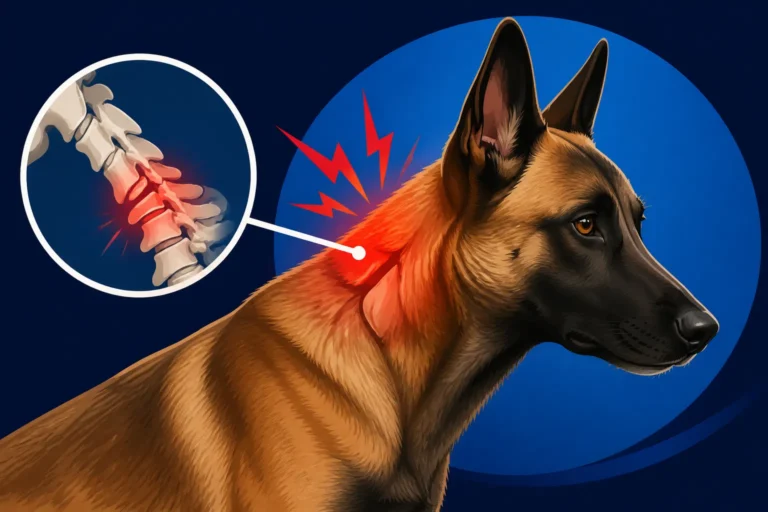
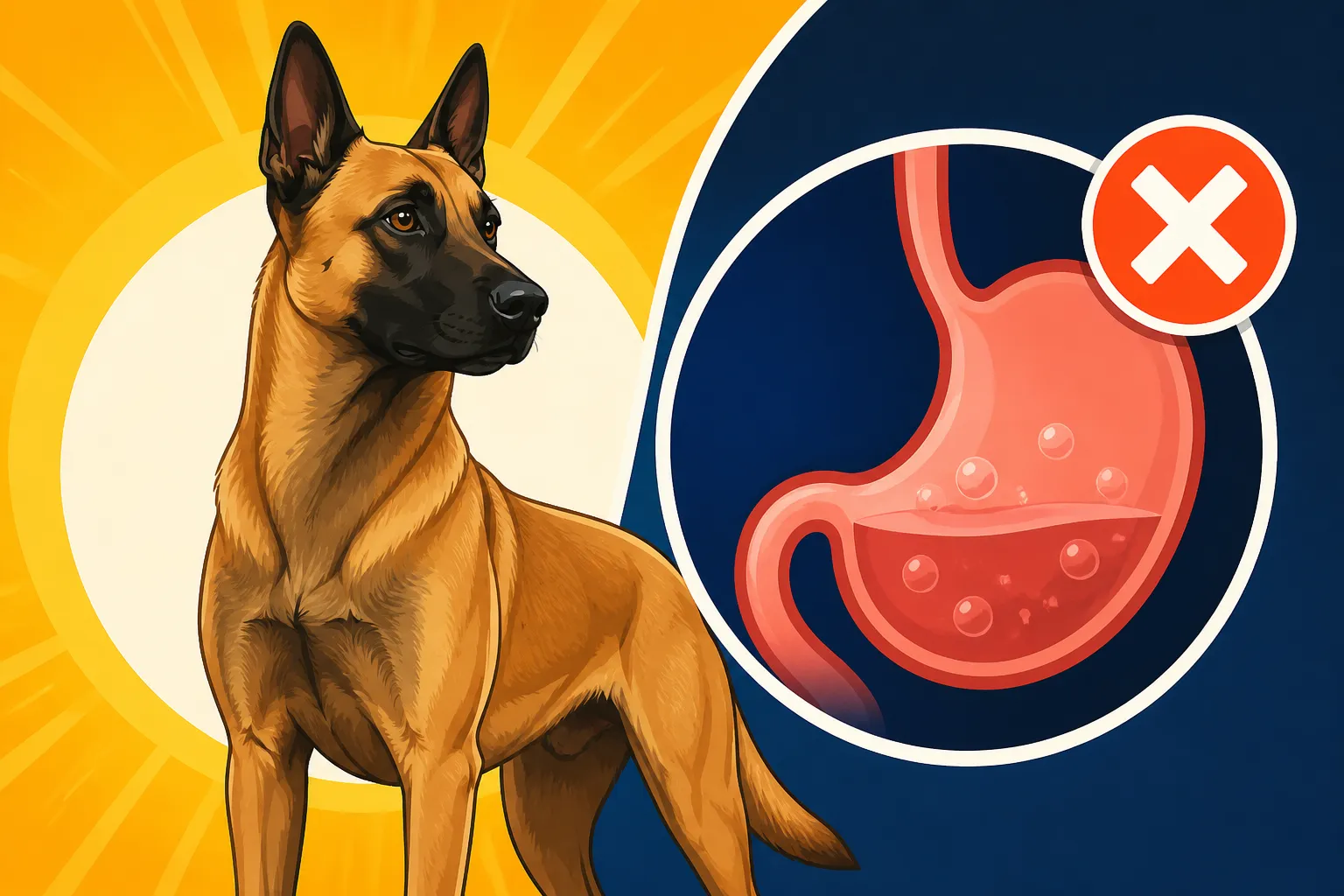
Gastric Dilatation-Volvulus, or GDV, is a condition where a dog's stomach fills with gas, food, or fluid, causing it to expand (dilate). This dilatation alone is painful and dangerous, putting pressure on surrounding organs and restricting blood flow. But the really terrifying part, the "volvulus," is when the distended stomach then twists on its axis. Imagine your dog's stomach, which is usually anchored at both ends, suddenly free to rotate. When it twists, it seals off both the entrance and exit, trapping everything inside. It also cuts off blood supply to the stomach tissue itself, leading to tissue death, and impacts major blood vessels, sending the dog into shock.
This isn't something that happens slowly over days. GDV can progress from mild discomfort to a full-blown emergency in as little as 30 minutes to an hour. The pressure on the diaphragm makes breathing difficult, and the lack of blood flow to the stomach can cause the organ walls to rupture, spilling contents into the abdominal cavity, which is almost always fatal. For a high-drive Belgian Malinois, who might be pushing themselves physically, the onset can feel even more sudden and devastating. It's truly a race against time.
Common Symptoms and How to Recognize the Emergency
Recognizing bloat symptoms early is the single most critical factor in your Malinois's survival. However, because Malinois are often so stoic and dedicated to their work, they might not show overt signs of pain until the condition is quite advanced. This makes vigilant observation absolutely essential for any Malinois owner.
One of the most classic signs is unproductive retching or gagging. Your dog will try to vomit, but nothing comes up, or perhaps just foamy saliva. This is because the twisted stomach prevents anything from passing. You might hear your dog making loud gulping sounds as they try to swallow air. Another key symptom is abdominal distension. While a Malinois is naturally lean, you might notice their belly looks unusually swollen or tight, especially on the left side, just behind the last rib. If you tap it gently, it might sound like a drum.
Other signs include restlessness, pacing, or an inability to settle. Your Malinois might stand with an arched back or refuse to lie down. They may whimper, groan, or look at their side. As the condition worsens, they might become weak, lethargic, drool excessively, have pale gums, or show signs of shock, such as a rapid heart rate and difficulty breathing. Some dogs even collapse. If you see any combination of these signs, especially unproductive retching and a distended abdomen, it's not a "wait and see" situation. It's a "get in the car and go to the emergency vet now" situation. Every minute truly counts.
The Critical Urgency of Veterinary Intervention
I cannot stress enough how critical immediate veterinary intervention is for bloat. This isn't a condition you can treat at home or wait until your regular vet opens in the morning. GDV is a full-blown surgical emergency. When you suspect bloat, call your emergency veterinary clinic or animal hospital on the way so they can prepare for your arrival. Tell them explicitly you suspect GDV, and describe the symptoms your Malinois is exhibiting.
Upon arrival, the veterinary team will immediately assess your dog's condition, often starting with X-rays to confirm if the stomach is dilated and twisted. They'll also begin stabilizing your dog for shock with intravenous fluids and pain medication. If GDV is confirmed, surgery (called gastropexy) is necessary to untwist the stomach and then tack it to the abdominal wall to prevent future twisting. Even with prompt treatment, the mortality rate for GDV can be significant, ranging from 15% to 30%. This statistic is a stark reminder of why prevention and rapid response are paramount for Malinois owners. For pet parents relying on pet insurance like Healthy Paws, understanding what their policy covers for emergency procedures can provide peace of mind during such a stressful time.
Belgian Malinois's Physical Predispositions to Bloat
It’s a cruel irony that some of the physical traits that make Belgian Malinois such exceptional working dogs – their athleticism, their lean build, their deep chests – are also the very same characteristics that put them at a higher risk for Gastric Dilatation-Volvulus. It's not just a random occurrence; there's a definite correlation with specific body types.
The Deep Chest Conformation and Its Role
One of the primary physical factors that make the Belgian Malinois prone to bloat is their distinctive deep chest conformation. If you look at a Malinois, especially a well-conditioned working dog, you'll notice their chest is much deeper than it is wide. This creates a larger volume in the thoracic cavity (where the heart and lungs are) and relatively less space in the abdominal cavity, particularly the area where the stomach sits.
Think of it like this: in a dog with a broad, shallow chest, the stomach is held more horizontally, with less room to "swing" or twist. In a deep-chested dog like a Malinois, the stomach hangs more vertically. This vertical orientation, combined with the extra space around it, gives the stomach more freedom to rotate when it dilates. This isn't unique to Malinois; breeds such as Great Danes, German Shepherds, Irish Setters, and Weimaraners, all known for their deep chests, also top the list for bloat susceptibility. Understanding this anatomical predisposition is the first step in recognizing why your Malinois might be at risk.
Body Type Compared to Other High-Risk Breeds
When we compare the Belgian Malinois's body type to other breeds known for high bloat risk, we see a striking pattern. Breeds like the Great Dane, often considered the poster child for bloat risk, share that profound chest depth and a relatively lean frame. German Shepherds, another close relative in terms of working dog lineage and conformation, also have a high incidence of GDV. The common denominator is consistently that deep, narrow chest combined with a taut, athletic build.
Unlike some heavier-boned, deep-chested breeds, Malinois also carry very little excess body fat. While this is ideal for their demanding work, it means there's less internal padding or tissue to potentially hold organs in place or absorb some of the impact of sudden movements. Their high metabolic rate also means they process food rapidly, and any factors that encourage faster eating or gulping of air can be magnified by their particular structure. It's a combination of form and function that, while excellent for performance, unfortunately creates a vulnerable internal environment when it comes to bloat.
Genetic Factors and Breed-Specific Risk
Beyond physical conformation, there's growing evidence to suggest that genetics play a role in bloat susceptibility, though the exact genes are still being researched. Certain bloodlines within high-risk breeds seem to have a higher incidence of GDV, indicating a hereditary component. While it's not as clear-cut as some other genetic health conditions like the Two Ataxia Genes Belgian Malinois Are Tested For, it's a factor that responsible breeders consider.
If your Malinois comes from a line where bloat has been reported, their risk might be slightly elevated. It's always a good idea to discuss health history with your breeder, and while bloat isn't something that can be genetically "cleared" like hip and elbow scores, knowing the prevalence in a dog's pedigree can help inform your preventative measures. Some studies have also pointed to temperament, linking anxious or fearful dogs to a higher bloat risk, which can be particularly relevant for highly sensitive or stressed Malinois.
Lifestyle and Environmental Factors Increasing Malinois Bloat Risk
While conformation certainly plays a significant role in a Belgian Malinois's susceptibility to bloat, their intense lifestyle and certain environmental factors can push them further into the danger zone. Malinois are not sedentary dogs; they are always on the go, highly stimulated, and incredibly driven. These very traits, if not managed carefully, can contribute to bloat.
The Impact of High Energy Levels and Stress
A Belgian Malinois is a powerhouse of energy. They thrive on activity, mental stimulation, and a defined job. However, this high energy can sometimes translate into rapid, almost frantic, behaviors around food and water. A Malinois might gulp down their meals or water quickly, especially after an intense training session, inadvertently swallowing a significant amount of air. Swallowed air is one of the primary components of the gas that builds up in the stomach during bloat.
Furthermore, stress and anxiety are increasingly recognized as contributing factors to GDV. A Malinois under pressure – perhaps from a demanding training schedule, changes in routine, or general environmental stressors – can experience physiological changes that affect digestion. Their sympathetic nervous system, often associated with the "fight or flight" response, can impact gut motility and increase stomach contractions, potentially making them more vulnerable to the stomach twisting. For a dog that needs a tremendous amount of mental and physical stimulation, but also a balanced and calm environment, managing this high energy and potential stress is a delicate balance. It's not just about physical health; it's about their overall well-being affecting their gut health.
Feeding Habits That Raise a Malinois's Torsion Risk
The way a Malinois eats can significantly influence their risk of bloat. As mentioned, rapid eating is a major concern. If your Malinois inhales their food in minutes, they're likely taking in a lot of air along with it. This swallowed air can contribute to stomach distension, a precursor to the deadly twist. Larger meals, fed once a day, are also thought to increase risk compared to smaller, more frequent meals. The sheer volume of food in the stomach at one time can put more strain on its ligaments and make it more prone to twisting if the dog is active shortly after.
Providing a single, large meal that encourages rapid ingestion, especially when your Malinois is very hungry after a long stretch without food, sets up a problematic scenario. Owners should also be mindful of the type of food. While there's debate on specific ingredients, some studies suggest that diets with high fat content listed among the first four ingredients, or those primarily moistened with water, might be associated with higher risk. However, this research is not conclusive, and good quality kibble, even performance formulas for active Malinois, can be managed safely with proper feeding protocols. For a deeper dive into this specific risk factor, you might find valuable information in our guide on Feeding Habits That Raise a Malinois's Torsion Risk.
Exercise Timing Around Meals
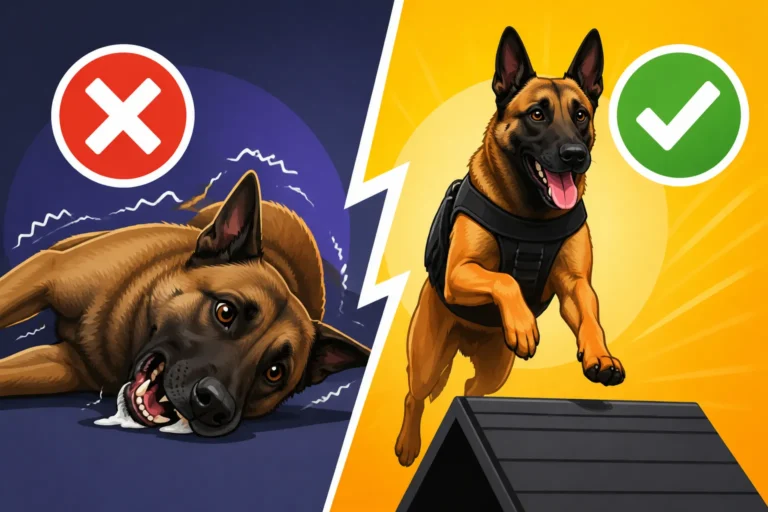
This is perhaps one of the most widely cited and crucial environmental factors for bloat prevention: the timing of exercise relative to meals. Vigorous exercise, especially running, jumping, and rolling, when a Malinois has a full stomach, is a significant risk factor. The jostling and movement can literally help the stomach twist. Imagine a heavy bag full of water swinging around – that's essentially what a full stomach can become during intense activity.
Therefore, it is strongly recommended to avoid strenuous exercise for at least one hour before a meal and for at least two hours after a meal. This gives the stomach time to empty and digest its contents without being subjected to forces that could cause it to rotate. For a Belgian Malinois owner, whose dog often has an insatiable drive to work, this means careful planning. You can't just throw a ball right after breakfast or expect them to do a full training session immediately after dinner. Instead, schedule work sessions, runs, or play for times when their stomach is relatively empty. A quick, calm potty break is fine, but anything more should be avoided.
Proactive Measures to Reduce Bloat Risk in Your Malinois
Given the severe nature of bloat and the Malinois's predisposition, taking proactive steps is not just a good idea – it's an essential part of responsible ownership. While no measure can guarantee complete prevention, a combination of strategies can significantly lower your dog's risk and offer you greater peace of mind.
Dietary Strategies and Food Management
Implementing smart dietary strategies can make a real difference. First and foremost, avoid feeding one large meal a day. Instead, divide your Malinois's daily food ration into at least two, preferably three, smaller meals. This reduces the volume of food in the stomach at any given time, making it less likely to distend excessively.
Slow down their eating. For dogs who gulp their food, consider using a slow-feeder bowl or a puzzle feeder. These devices are designed with obstacles or mazes that force the dog to eat around them, significantly extending mealtime and reducing the amount of air they swallow. Some owners even place a large, heavy, smooth rock (too big to swallow) in the food bowl to make them eat around it.
Additionally, ensure consistent access to fresh water, but discourage rapid, excessive drinking, especially after exercise or when they are very excited. If your Malinois is prone to chugging water, offer smaller amounts more frequently. While the link between diet composition and bloat is complex and debated, feeding a high-quality, balanced diet appropriate for an active working dog is always a good foundation for overall health.
| Risk Factor | Mitigation Strategy | Details |
|---|---|---|
| Deep-Chested Conformation | Prophylactic Gastropexy | Surgical procedure to tack the stomach to the abdominal wall, significantly reducing torsion risk. Does not prevent dilatation. |
| Rapid Eating / Gulping Air | Slow Feeder Bowls / Puzzle Feeders | Devices that make dogs eat slower, reducing air intake. |
| Large, Single Meals | Multiple Smaller Meals | Divide daily food into 2-3 meals to reduce stomach volume at any one time. |
| Vigorous Exercise Post-Meal | Restrict Activity Around Meals | No strenuous exercise 1 hour before, 2 hours after meals. Calm potty breaks are fine. |
| Stress/Anxiety | Consistent Routine / Enrichment | Provide mental stimulation, structured training, and a predictable environment to minimize stress, which can impact digestion. |
| Excessive Drinking | Controlled Water Access | Offer smaller, more frequent water servings, especially after exercise. |
Managing Stress and Excitement Around Feeding
For a high-drive Malinois, mealtime can be an incredibly exciting event, often accompanied by high arousal. This excitement can lead to frenzied eating and gulping. Implementing a calm routine around feeding is vital. Have your Malinois perform a "place" command or a "sit-stay" away from the food bowl while you prepare it. Only release them to eat when they are calm and you give a release cue. This not only reinforces good manners but also helps bring down their arousal level before they start eating.
Consider the environment where they eat. A quiet, undisturbed location away from other pets or household commotion can help them focus on eating calmly. If your Malinois eats with other dogs, feed them separately to prevent competition and rushed eating. Remember, stress can contribute to gastric issues, and a calm, predictable feeding routine is part of a holistic approach to managing their health. Understanding their sensitive nature and managing their stress is also critical for things like Anesthesia Protocols for a Lean Belgian Malinois, where their temperament can heavily influence recovery.
The Role of Gastropexy Surgery
For Malinois owners, especially those with dogs actively involved in bite sports or other demanding work, prophylactic gastropexy is a serious consideration. Gastropexy is a surgical procedure where the stomach is permanently tacked or sewn to the abdominal wall. It does not prevent the stomach from dilating (bloating with gas), but it does prevent it from twisting (volvulus), which is the fatal component of GDV.
This surgery is often performed electively, sometimes at the same time as a spay or neuter, or as a standalone procedure. There are several techniques, including traditional open surgery and minimally invasive laparoscopic methods, which typically involve smaller incisions and quicker recovery times. Discussing the pros and cons with your veterinarian, weighing the risks of surgery against the potentially fatal risk of bloat, is crucial. While it is an upfront cost, many owners find the peace of mind invaluable. It's a significant preventative measure that can literally save your Malinois's life, especially given that breeds like Malinois are highly susceptible. For many, the investment in a gastropexy is something that pet insurance providers like Healthy Paws can often help with, as preventive care for high-risk breeds is increasingly recognized.
What to Do in a Bloat Emergency
Despite all the best preventative measures, emergencies can still happen. Being prepared for a bloat emergency in your Belgian Malinois is just as important as prevention. Knowing exactly what to do can shave precious minutes off response time and dramatically improve your dog's chances of survival.
Immediate Actions and Preparing for the Vet
If you suspect your Malinois is bloating, the absolute first step is to stay calm, as difficult as that may be. Panic will only slow you down. Immediately call your nearest emergency veterinary clinic or animal hospital. Explain your concerns clearly and tell them you are bringing in a suspected GDV case. This allows them to prepare their team and equipment for your arrival, potentially saving critical minutes.
While en route, ensure your Malinois is as comfortable as possible. Avoid trying to make them vomit or give them anything by mouth, as this could worsen the situation or lead to aspiration. Keep them quiet and still. If you have an emergency contact list, quickly inform a family member or friend so they can be ready to help if needed, whether that’s driving, handling other pets, or waiting at the clinic. Speed is of the essence. The quicker your Malinois receives professional medical attention, the higher their chance of survival. Even minor delays can lead to irreversible damage. Many owners regret not acting sooner, so trust your gut if something feels off with your Malinois.
Post-Emergency Care and Long-Term Management
If your Malinois undergoes surgery for GDV and recovers, the journey isn't over. Post-operative care is crucial for a full recovery. Your dog will likely stay at the veterinary hospital for several days, requiring pain management, intravenous fluids, and close monitoring for complications such as cardiac arrhythmias, tissue damage, or infection. Follow all discharge instructions meticulously, including medication schedules, wound care, and activity restrictions.
Long-term management will involve a renewed commitment to all the preventative measures discussed: feeding smaller, more frequent meals, using a slow-feeder, avoiding exercise around meals, and managing stress. Even with a gastropexy, your Malinois is still at risk for gastric dilation (bloat without the twist), so these dietary and lifestyle changes remain important. Regular vet check-ups, including annual bloodwork for a working Malinois, will help monitor their overall health and address any emerging concerns. You may also want to discuss specific supplements with your vet, such as probiotics, to support digestive health. The ordeal of bloat can be traumatic for both dog and owner, but with diligent care, your Malinois can go on to live a full and active life. However, it's a stark reminder of what could be among What Most Belgian Malinois Die Of if not caught in time.
Disclaimer
The information provided in this article is for general informational purposes only and is not intended as a substitute for professional veterinary advice. Always seek the advice of your veterinarian or other qualified animal health provider with any questions you may have regarding a medical condition or treatment for your Belgian Malinois.