Whether a Red Belgian Malinois Exists
It's incredibly common for people to wonder about the full spectrum of colors a Belgian Malinois can come in, especially when they've seen images that might appear to be a vibrant "red." You might see a stunning dog online, bathed in golden hour light, and swear it’s a fiery red, only to then hear that Malinois are typically fawn. This guide is here to clear up that confusion, diving deep into what the breed standard truly dictates for Malinois coat colors and why some might mistakenly perceive a "red" version.
Understanding Belgian Malinois Coat Colors According to the Standard
When we talk about the Belgian Malinois, we're talking about a breed with a very specific, and relatively narrow, range of acceptable coat colors as defined by breed standards worldwide. It's not like some breeds where you have a rainbow of options. For the Malinois, tradition and function have largely dictated their visual presentation, especially their coat.
The Official Fawn to Mahogany Spectrum
The core of the Belgian Malinois's coat color lies within a spectrum often described as fawn to mahogany. This isn't just one static color, but a range of warm, earthy tones. Imagine walking through a sun-drenched field in late autumn; the colors you see in the dried grasses and fallen leaves – that's often the kind of natural palette we're talking about.
- Fawn: This is the lighter end of the spectrum. Think of a very light, sandy tan or a pale biscuit color. It's a soft, almost golden hue that can look incredibly striking, especially against a deep black mask. Some fawn Malinois might even appear almost cream-colored in certain lights, though never truly white. This lighter shade is perfectly acceptable and often seen in successful working and show dogs.
- Rich Fawn: As you move up the scale, you get to rich fawn. This color has more depth, a bit more saturation than the standard fawn. It's still clearly a tan, but with a noticeable warmth and intensity. It might remind you of caramel or a lightly toasted marshmallow. These dogs often have a more pronounced black overlay, which really makes their rich fawn stand out.
- Mahogany: This is the darkest, richest end of the acceptable color range, and it's likely where the confusion about "red" Malinois often originates. Mahogany in a Malinois is not the bright, primary red you might think of when you hear "red dog." Instead, it's a deep, warm reddish-brown, often with a hint of orange or russet. Picture a beautifully polished piece of mahogany wood furniture – it has that deep, burnished quality. In strong sunlight, particularly golden hour light, a mahogany Malinois can indeed appear to have a strong red tint. But if you were to put it next to a truly red dog, like an Irish Setter, you'd immediately see the difference. The mahogany color is highly prized for its striking appearance and often comes with a very heavy black charbonnage, or overlay, which adds to its intensity. The black mask, of course, is a non-negotiable part of this picture, grounding the rich body color. This range, from fawn to mahogany, is what judges look for in the show ring and what breeders strive for in their lines, always with the understanding that the black points are essential. For more about this, see Fawn to Mahogany and the Black Malinois Mask.
The Importance of the Black Mask and Ears
While the body color runs from fawn to mahogany, what truly defines the Malinois's distinctive appearance, and is absolutely mandatory within the breed standard, is the presence of a deep, solid black mask and black ears. This isn't just an optional accessory; it's a critical identifying feature of the breed.
The black mask starts around the muzzle, extends up over the eyes, and can sometimes reach as far back as the forehead. The ideal mask is solid and clearly defined, creating a striking contrast with the lighter body color. This mask gives the Malinois its intense, intelligent, and often serious expression, which is part of its allure. A Malinois without a sufficient black mask is considered a fault in the breed standard and would not be competitive in conformation events. It's more than just aesthetics; it's a hallmark of the breed's heritage and type.
Similarly, the ears must be predominantly black. This black pigment covers the outside of the ears, and often the tips, adding to the masked effect. This strong black pigmentation on the ears and face ties the entire head together and emphasizes their alert, pricked ear carriage. These black points, coupled with the fawn to mahogany body, are what you're looking for when identifying a purebred Belgian Malinois. Without them, you're either looking at a different breed, a mix, or a dog that deviates significantly from the established type.
Beyond the mask and ears, many Malinois also possess what is called charbonnage, or a black overlay. This manifests as black tipping on the fawn or mahogany hairs, giving the coat a shaded, almost sooty appearance, particularly over the back and shoulders. This isn't a solid black blanket like you might see on some German Shepherds, but rather individual hairs that are black-tipped, adding depth and intensity to the coat. A heavy charbonnage can make a mahogany Malinois appear even darker and more "reddish-brown." The Black Overlay on a Belgian Malinois Coat further explains this unique characteristic.
These strong black accents are not merely cosmetic. They are considered fundamental to the Malinois's breed type and are crucial indicators of a well-bred individual adhering to the standards.
Why People Might Perceive a "Red" Malinois
It’s easy to look at a photograph or catch a glimpse of a dog and interpret its color differently, especially when light plays tricks on the eyes. The idea of a "red" Belgian Malinois often stems from a combination of these visual illusions and comparisons to other breeds.
Confusion with Other Breeds and Rich Hues
One of the primary reasons people might perceive a "red" Malinois is often due to an unconscious comparison with other shepherd breeds, particularly the German Shepherd Dog. German Shepherds come in a much wider variety of colors, including vibrant red and black, often with a very distinct red saddle or blanket. When someone sees a Belgian Malinois with a particularly deep, rich mahogany coat, especially if it has heavy charbonnage, their mind might automatically jump to the "red" descriptor from their familiarity with other breeds.
However, as we’ve discussed, the Malinois mahogany is a reddish-brown, not a true red. It lacks the intense, primary red pigment found in some German Shepherds or other genuinely red breeds. The "redness" in a Malinois is always nuanced, deeply intertwined with brown, and softened by the characteristic black overlay.
Another factor is simply the richness of the hue itself. A truly well-pigmented mahogany Malinois can be absolutely stunning, with a warmth that can appear almost fiery in the right conditions. This depth of color, combined with their athletic build and intense expression, can evoke a sense of "red" even when the actual pigment is a dark fawn or brown. It's like seeing a dark cherry wood – it has red undertones, but you wouldn't call it a red piece of furniture. It's a rich, deep brown with red highlights.
Furthermore, Malinois puppies can sometimes present with coats that are lighter or even slightly different in tone than their adult coats. As they mature, their true adult color, including the development of charbonnage and the deepening of their fawn or mahogany, comes through. A puppy might have a brighter, more vivid tan that an owner might describe as "reddish" before it fully settles into its mature coloring. For details on this, you can check out Whether Malinois Puppies Darken With Age.
The Role of Lighting and Photography in Color Perception
In today's visually driven world, much of our exposure to dogs comes through photographs and videos. And let me tell you, as a blogger who's taken countless photos of dogs, lighting and camera settings can be absolute magicians – or tricksters – when it comes to coat color.
- Golden Hour: This is the photographers' favorite time of day – early morning or late afternoon, when the sun is low in the sky, casting a warm, golden glow on everything. A Malinois with a rich fawn or mahogany coat photographed during golden hour will look incredibly warm, with all those reddish-brown tones amplified. What might be a deep brown in midday sun suddenly transforms into a vivid, almost glowing "red" in a photograph. The camera picks up on and exaggerates these warm tones, making the dog appear much redder than it would in person under neutral light.
- Artificial Lighting: Indoor lighting, especially incandescent bulbs, often has a yellow or orange cast, which can also warm up a Malinois's coat color, pushing it towards a more "red" appearance. Even modern LED lights can have different color temperatures that affect how we perceive shades.
- Photo Editing and Filters: Let's be real, a lot of photos shared online are edited. Filters, saturation boosts, and color adjustments can dramatically change a dog's coat color. A breeder or owner might subtly enhance the warmth of their Malinois's coat to make it more eye-catching, inadvertently contributing to the perception of a "red" Malinois. Even simply viewing a photo on different screens – a phone, a tablet, a calibrated monitor – can alter color perception.
- Environmental Context: The surroundings can also influence how we see color. If a Malinois is standing in a field of dry, reddish-brown leaves, its own coat will blend in and appear more "red" by association. Our brains are constantly making comparative judgments, and the context matters.
So, while you might genuinely believe you've seen a "red" Belgian Malinois, it's highly likely that you were either seeing a dog at the deepest end of the mahogany spectrum, influenced by lighting and photography, or perhaps even a mixed breed. The official standard for the breed remains steadfast: fawn to mahogany with black points.
Non-Standard Colors and Their Implications
Sometimes, a dog that looks like a Malinois might appear in a color that doesn't fit the standard fawn-to-mahogany description. This can raise questions about purity, health, and what these variations mean for the dog and its potential lineage.
Beyond Fawn: Sable, Brindle, and Other Variations
While the accepted colors for the Belgian Malinois are strictly within the fawn to mahogany range with a black mask, occasionally other coat patterns or colors can appear. It's important to understand that these are generally considered non-standard and would disqualify a dog from conformation showing.
- Sable: This is a coat pattern where each individual hair is banded with multiple colors, typically fawn at the base, then black, then fawn again at the tip. The overall effect is a grizzled, shaded appearance, often giving the dog a darker, smokier look. While sable is a recognized color in some other shepherd breeds, including other Belgian Shepherd varieties, it's not standard for the Malinois. A Malinois with a true sable pattern, rather than just heavy charbonnage (black tipping), would be considered non-standard. If you're curious about this, you can read more in Whether a Sable Belgian Malinois Is Standard.
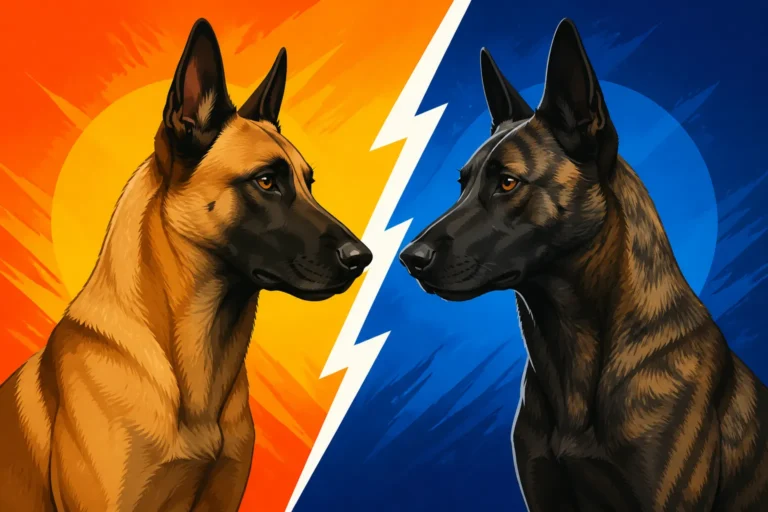
- Brindle: This is a striped pattern, like a tiger, where darker stripes overlay a lighter base coat. Brindle is a defining characteristic of the Dutch Shepherd, a breed often confused with the Malinois due to similar build and working drive. While extremely rare, brindle genes could theoretically surface in a Malinois lineage if there was historical outcrossing or a very distant common ancestor, but it is certainly not an accepted Malinois color. Seeing a brindle dog that otherwise looks like a Malinois often means it's a Dutch Shepherd or a mix.
- Other Rarities: Occasionally, very light "washed out" fawns, or even dogs with excessive white markings (beyond a small patch on the chest or toes, which is sometimes permissible) might appear. These are also deviations from the standard. It's crucial to remember that the Belgian Malinois is one of The Four Belgian Varieties the Malinois Belongs To, each with its own specific coat color and length requirements. For example, the Groenendael is always solid black, and the Tervuren is long-haired fawn to mahogany with a black mask, very similar in color to the Malinois, but different in coat length. The Malinois Against the Tervuren delves into these distinctions.
When you encounter a Malinois-type dog with a non-standard color, it usually means one of a few things:
- It's a purebred Malinois, but from lines where strict adherence to color standards isn't prioritized, or it's a genetic anomaly. These dogs are still purebred but wouldn't meet conformation show requirements.
- It's a mixed breed. This is quite common, especially if the dog was adopted from a shelter. The visual cues of a Malinois (erect ears, athletic build, black mask) can be dominant, leading people to label a mix as a purebred Malinois.
- It's actually another breed entirely, like a Dutch Shepherd.
For someone looking to get a purebred Malinois, understanding the breed standard is important, and Reading a Belgian Malinois Pedigree Before Paying can offer insights into verifying lineage and adherence to breed type.
Health and Temperament vs. Coat Color
For most Malinois enthusiasts and owners, especially those focused on performance and working capabilities, health and temperament will always trump coat color. While a non-standard coat color might prevent a dog from competing in conformation shows, it generally has little to no bearing on its health, working ability, or suitability as a companion, assuming the dog comes from responsible breeding.
- Health Implications: Unlike some breeds where certain dilute colors (like blue or merle) can be linked to specific health issues, the variations that might lead to a "red" or sable appearance in a Malinois typically don't carry inherent health risks. The genetic basis for fawn, mahogany, sable, and brindle are generally separate from genes governing health conditions. Of course, this assumes the dog is otherwise from a reputable breeder who prioritizes genetic health screening for issues like hip and elbow dysplasia, eye diseases, and other concerns relevant to the breed. Don't assume a non-standard color means an unhealthy dog, but also don't assume it means a healthy one without proper due diligence on the breeder and health clearances.
- Temperament and Drive: A Malinois, regardless of whether its fawn leans more towards "rich" or "mahogany," is still fundamentally a Belgian Malinois. This means it will possess the same incredible drive, intensity, intelligence, and need for a job that the breed is famous for. Coat color doesn't alter that fundamental wiring. Whether a dog is a lighter fawn or a deep mahogany, its need for rigorous physical exercise and consistent mental stimulation remains paramount. The Kind of Owner a Belgian Malinois Requires highlights this fact: this breed is not for the faint of heart, regardless of its shade.
- Working Ability: For those involved in protection sports, detection work, or other demanding roles, a non-standard color is often irrelevant as long as the dog exhibits the desired traits of courage, intelligence, athleticism, and trainability. In these arenas, performance is king, not superficial appearance. The Ears and Expression of a Belgian Malinois are often more indicative of their attentiveness and focus than the exact shade of their coat.
Ultimately, while the breed standard clearly defines the acceptable colors, understanding why these variations occur and what they mean (or don't mean) can help you appreciate the breed's diversity and focus on what truly matters: a healthy, well-tempered, and driven companion ready to take on the world with you. When purchasing dog food or accessories, remember that brands like Chewy offer a vast selection, ensuring you can find everything needed for your Malinois regardless of its coat shade.
Summary of Belgian Malinois Colors vs. Perceived "Red"
To summarize the nuances of Belgian Malinois coat colors and the common misconception of a "red" Malinois, here's a quick comparison:
| Feature | Standard Belgian Malinois Colors | Perceived "Red" Malinois (Often Misidentified) |
|---|---|---|
| Accepted Range | Fawn, rich fawn, mahogany | No true "red" in the breed standard |
| Mask & Ears | Always present and black | Essential, regardless of perceived redness |
| Black Overlay | Often present (charbonnage), adds depth and intensity | Can contribute to a "reddish" appearance |
| Underlying Pigment | Yellow-brown spectrum (phaeomelanin) | Yellow-brown, not true primary red |
| Visual Appearance | Warm tan, brown, or reddish-brown tones | Might appear red due to strong mahogany, lighting, or photo editing |
| Typical Confusion | With German Shepherds, Dutch Shepherds, or lighting effects | Often confused with actual red German Shepherds |
When shopping for anything for your Malinois, whether it's high-quality kibble or durable toys that stand up to their powerful jaws, online retailers like Chewy make it easy to find what you need. They understand that every Malinois, regardless of its exact shade of fawn or mahogany, deserves the best.
Disclaimer
This article is for general informational purposes only and does not constitute professional advice. Laws, prices and regulations vary by location and change over time. Consult a qualified professional for guidance on your specific situation.